
When comparing popular GU10 LED brands in Singapore, the differences in energy efficiency and light output come down to three core factors: luminous efficacy, thermal engineering, and driver quality. While many brands claim high performance, their actual efficiency (measured in lumens per watt) and light delivery vary based on the quality of their internal components. To find the right balance for your home, you must look beyond the brand name and evaluate how each manufacturer balances power consumption against actual light output under local operating conditions.
In Singapore’s residential spaces, from HDB flats to private condominiums, GU10 bulbs are the standard choice for recessed downlights and track lighting. Because these bulbs operate in enclosed ceiling voids that trap heat, choosing a brand with superior thermal management is just as important as choosing one with high energy efficiency. By understanding how to read and verify manufacturer specifications, you can make an informed decision that ensures long-lasting, cost-effective illumination.
Understanding GU10 LED Specifications for Downlights
Before comparing specific brands, it is essential to understand the physical and electrical baseline of the GU10 format. A GU10 bulb features a bi-pin base with two pins spaced 10 millimeters apart, utilizing a twist-and-lock mechanism to secure the bulb into the socket. This design is highly popular in Singapore for directional lighting, particularly in recessed downlight canisters and adjustable track light fixtures.
Products mentioned in this guide
![[3 Year Warranty] [Authorized Dealer] Philips GU10 LED Spotlight Bulb Philips Essential LEDspot MV 4.7W GU10](https://img.lazcdn.com/g/p/f05426a137fb394924178754ffb22158.png_400x400q80.png_.webp)
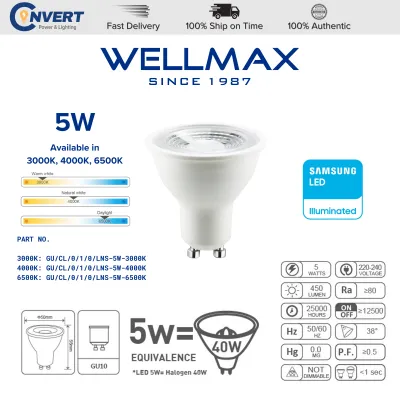
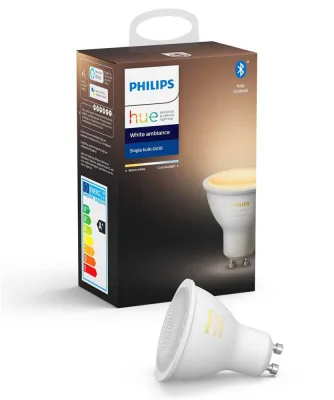
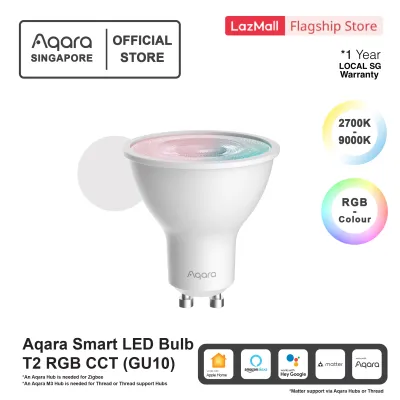
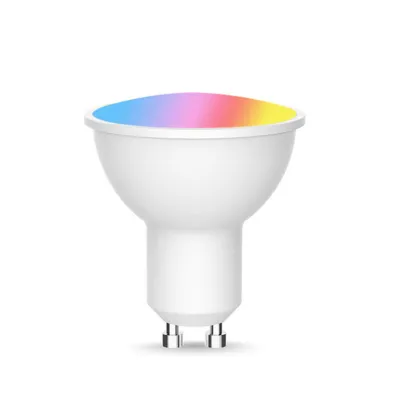
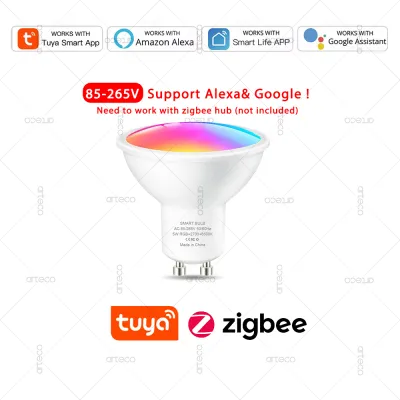
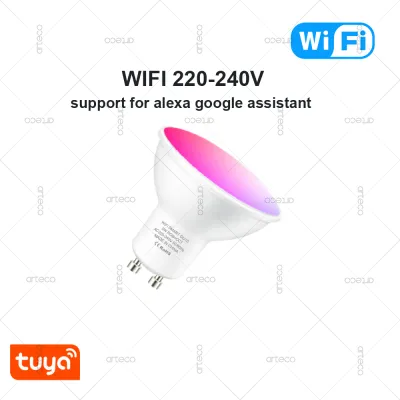
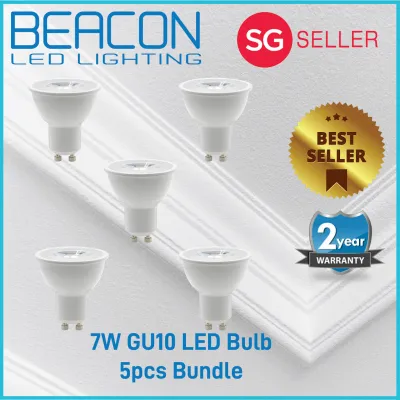
Prices are valid at publication and may change. Please refer to the product page for the latest price.
When shopping for GU10 LEDs, you must verify the physical dimensions of the bulb against your existing fixtures. While the diameter of a standard GU10 bulb is typically 50 millimeters, the overall depth can vary significantly between brands, especially for smart bulbs or high-output models that require larger heat sinks. If your false ceiling has a shallow recess, a bulb that is even a few millimeters too deep may protrude or fail to fit entirely.
Electrical compatibility is another critical baseline. Singapore’s standard mains electricity operates at 230V and 50Hz. You must ensure that any GU10 bulb you purchase is rated for this voltage range. Importing bulbs from regions with different voltage standards can lead to immediate failure or safety hazards. Brand comparisons are only valid when you are comparing bulbs designed for the same voltage and physical application, ensuring a fair assessment of their performance.
Key Metrics to Compare Across Leading Brands
To objectively compare GU10 LED bulbs from different manufacturers, you need to look at the technical specifications printed on the packaging or detailed in the product data sheets. The most reliable way to assess a brand’s performance is to analyze how efficiently it converts electrical power into visible light, rather than relying on marketing buzzwords.

Luminous efficacy, expressed in lumens per watt (lm/W), is the primary metric for evaluating energy efficiency. This value tells you how much light (lumens) the bulb produces for every watt of electricity it consumes. A higher efficacy rating means the bulb is more efficient, allowing you to achieve the desired brightness while keeping your monthly electricity bills lower.
While efficiency is crucial, the quality of the light output is equally important for creating a comfortable living environment. Color temperature, measured in Kelvin (K), determines the color appearance of the light. In Singapore homes, warm white (2700K to 3000K) is commonly preferred for bedrooms and living rooms to create a cozy atmosphere, while cool white (4000K) or daylight (6500K) is favored for kitchens, study rooms, and bathrooms where task clarity is essential.
Additionally, you should check the Color Rendering Index (CRI or Ra) of the bulb. The CRI measures how accurately a light source reveals the true colors of objects compared to natural sunlight. For residential spaces, a CRI of 80 or higher is standard, but brands offering a CRI of 90 or above are highly recommended for dining areas, kitchens, and art displays where color accuracy significantly enhances the visual experience.
Evaluating Energy Efficiency and Wattage
To calculate and compare the true energy savings of different GU10 models, you should not rely solely on the “halogen equivalent” wattage printed on the box. Instead, perform a simple calculation: divide the stated lumen output by the actual wattage of the LED bulb. For example, a GU10 bulb that produces 400 lumens while consuming 5 watts has an efficacy of 80 lm/W, whereas a model that produces 350 lumens at 5 watts has an efficacy of 70 lm/W.
The difference between equivalent halogen wattage and actual LED power draw is a common source of confusion. A traditional 50-watt halogen GU10 bulb can typically be replaced by an LED bulb consuming between 4.5 and 7 watts. By focusing on the actual wattage consumed rather than the equivalent rating, you can accurately estimate your energy consumption and calculate the long-term savings on your utility bills.
When purchasing bulbs in Singapore, look for local energy rating labels on the packaging. The National Environment Agency (NEA) administers energy labelling schemes that help consumers identify energy-efficient appliances and lamps. Checking for these official labels provides a quick, verified way to compare the efficiency of different brands without having to perform manual calculations in the retail aisle.
Analyzing Light Output and Beam Angles
The perceived brightness of a GU10 bulb in your room depends heavily on its beam angle, which dictates how the light is distributed. GU10 bulbs are directional light sources, meaning they project light in a specific cone rather than radiating it in all directions. A narrow beam angle (typically 24 to 36 degrees) creates a concentrated spot of light, ideal for highlighting artwork, architectural features, or specific work surfaces.
Conversely, a wider beam angle (60 degrees or more) distributes the light over a larger area, making it more suitable for general ambient lighting in living rooms and corridors. If you install a narrow-beam bulb in a high-traffic area, the room may feel dark and shadowy, even if the bulb has a high lumen rating. Therefore, matching the beam angle to the room’s layout is essential for achieving balanced illumination.
You should also consider lumen maintenance, which refers to how well the bulb retains its brightness over its lifespan. Over time, all LEDs gradually lose brightness. Manufacturers specify this using the L70 or L80 standard, which indicates the number of operating hours after which the bulb will still produce 70% or 80% of its initial light output. High-quality brands design their bulbs to maintain their initial brightness for a longer period, preventing the premature dimming that often plagues cheaper, unbranded alternatives.
Evaluating Longevity and Thermal Management
The lifespan of a GU10 LED bulb is directly linked to its thermal management system. Because GU10 bulbs are compact and often installed in recessed ceiling fixtures, heat can build up rapidly around the base and the driver. If this heat is not dissipated effectively, the LED chips and internal electronics will degrade quickly, leading to premature failure or a rapid drop in light output.
When comparing brands, pay close attention to the materials used in the bulb’s housing and heat sink. Premium brands often utilize aluminum, ceramic, or high-grade thermal plastics that conduct heat away from the sensitive electronics. Cheaper bulbs may rely on low-grade plastics that trap heat inside the casing. In Singapore’s warm and humid tropical climate, robust thermal design is even more critical to ensure the bulb reaches its rated lifespan.
Rather than simply trusting the total lifespan hours printed on the packaging—which are often tested under ideal laboratory conditions—you should use the manufacturer’s warranty terms as a practical indicator of confidence. A brand that offers a multi-year warranty is demonstrating that its thermal engineering and component quality are robust enough to withstand real-world operating conditions. Always check the warranty terms and keep your purchase receipts to protect your investment.
Verifying Compatibility and Safety Standards
Electrical safety is paramount when selecting GU10 LED bulbs for your home. In Singapore, you should look for the Safety Mark issued by Enterprise Singapore on the product packaging or the bulb itself. This mark indicates that the product has been tested and certified to meet local safety standards, reducing the risk of electrical fires, short circuits, or electrical shocks.
If you plan to use dimmable GU10 bulbs, compatibility is a major factor to consider. Unlike traditional halogen bulbs, which dim smoothly on almost any circuit, LED bulbs require compatible electronic dimmers. Leading lighting brands publish comprehensive dimmer compatibility lists on their websites, detailing which specific dimmer switch models have been tested and verified to work with their bulbs without flickering, buzzing, or dropping out.
To avoid performance issues, you should never mix different brands, models, or wattages of GU10 bulbs on the same dimmer circuit. Different manufacturers use different driver designs, and mixing them can cause uneven dimming, flickering, or even damage to the dimmer switch itself. For the best results, equip each dimming zone with identical bulbs from the same production batch.
Decision Framework: Choosing the Right GU10 Bulb
To help you navigate the selection process, use this conditional decision framework to match your specific household needs with the right GU10 specifications:
Choose a high-efficacy model (80 lm/W or higher) if you are outfitting high-use areas like living rooms, corridors, or home offices where the lights remain on for several hours daily. In these scenarios, prioritizing energy efficiency will yield the most significant savings on your electricity bills over time.
Choose a high-CRI model (CRI 90 or higher) if you are installing lights in kitchens, dining areas, dressing rooms, or over artwork. The superior color rendering will ensure that food looks appetizing, clothing colors are represented accurately, and decorative elements in your home are displayed in their true tones.
Verify first if your installation environment involves enclosed fixtures or damp locations, such as bathrooms or outdoor balconies. For these areas, you must confirm that the bulb is rated for enclosed use and carries an appropriate Ingress Protection (IP) rating to withstand moisture. If you plan to integrate your lighting into a smart home system, verify that the bulbs support your preferred protocol (such as Zigbee or Wi-Fi) and are compatible with your existing smart hub before making a bulk purchase.
Frequently Asked Questions (FAQ)
Can I mix different GU10 LED brands in the same room?
Mixing different GU10 LED brands in the same room is generally not recommended due to the high likelihood of visual and electrical inconsistencies. Even if two brands claim the same color temperature, such as 3000K, their actual color rendering and light binning can differ, resulting in noticeable color mismatches across your ceiling. Additionally, if the lights are connected to a dimmer switch, mixing brands with different driver designs can cause flickering, buzzing, or uneven dimming levels.
Do higher wattage GU10 LEDs always produce more light?
No, higher wattage does not automatically guarantee more light output. Wattage measures the amount of electrical power the bulb consumes, while lumens measure the actual amount of visible light produced. Because different brands use different qualities of LED chips and drivers, a highly efficient 5-watt bulb from a reputable manufacturer can produce the same or even more lumens than a less efficient 7-watt bulb from another brand. Always compare the lumen rating and the luminous efficacy (lumens per watt) rather than relying on wattage alone.
Community discussion
Share your experience or ask a question. Comments are reviewed before publication.