
To find the most energy-efficient GU10 Zigbee bulbs in Singapore, you must look beyond brand names and evaluate specific technical metrics: luminous efficacy (lumens per watt) and standby power consumption. Because smart lighting brands source components from various manufacturers and update their product lines frequently, relying solely on brand reputation can lead to suboptimal energy savings. To find the most efficient option for your home, you must look closely at specific technical specifications. Evaluating the relationship between light output and actual power consumption, alongside the standby power drawn by the smart radio, is the only reliable way to determine true efficiency.
In Singapore’s residential landscape, where recessed spotlights and track lighting are highly popular in modern HDB flats and condominiums, GU10 bulbs are a staple. However, because these bulbs are often installed in clusters, small differences in energy efficiency can quickly multiply on your monthly utility bill. By understanding how to read spec sheets and verify local compliance, you can build a smart lighting system that minimizes energy consumption without sacrificing brightness or color quality.
Key Specifications to Check for Energy Efficiency
To accurately compare the energy efficiency of different GU10 Zigbee bulbs, you must calculate their luminous efficacy. This metric represents the amount of visible light produced per unit of electrical power consumed, measured in lumens per watt (lm/W). To find this value, divide the bulb’s total lumen output by its actual active wattage. For example, a bulb that produces 350 lumens while drawing 5 watts of electricity has an efficacy of 70 lm/W. When comparing brands, always prioritize the model with the higher lm/W ratio, as it delivers more brightness for every watt of electricity drawn from the grid.
Products mentioned in this guide
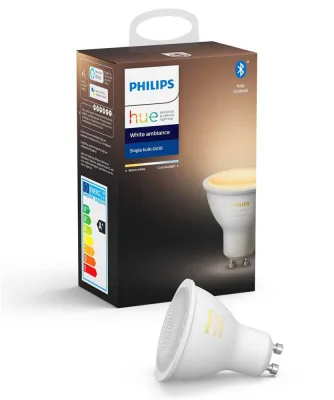
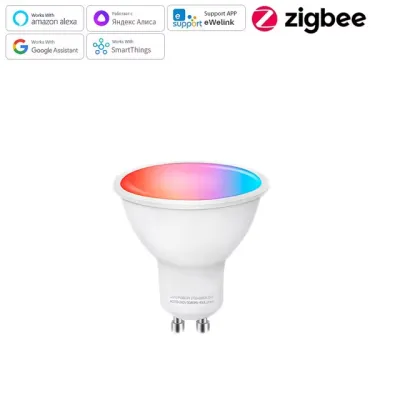
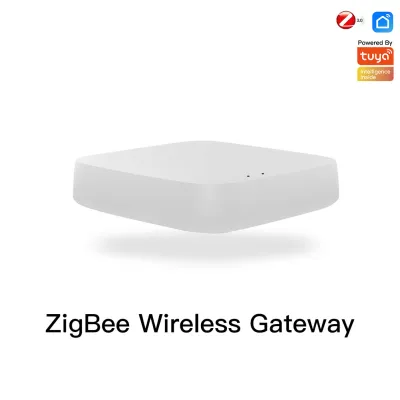
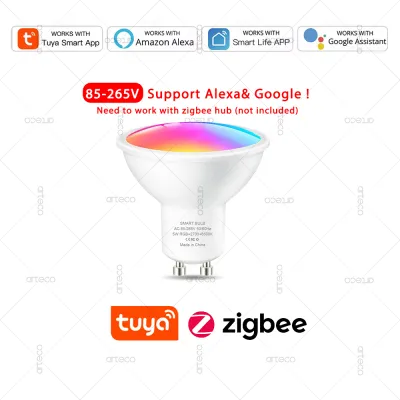
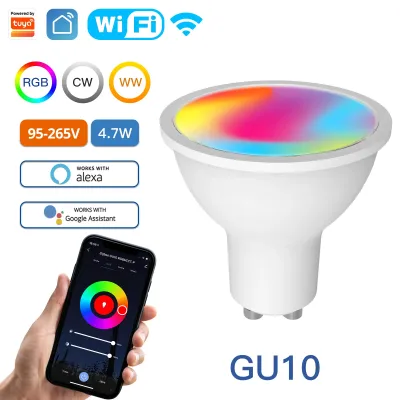
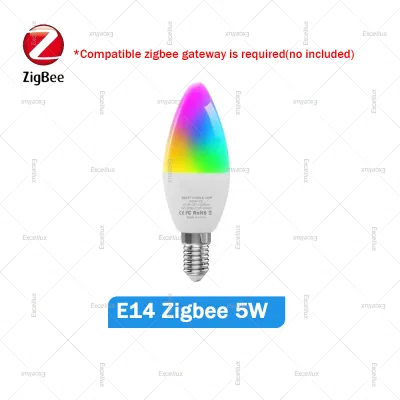
Prices are valid at publication and may change. Please refer to the product page for the latest price.
It is crucial to distinguish between marketed equivalent wattage and actual power draw. Packaging often prominently displays terms like “50W halogen equivalent” to help consumers transition from legacy lighting. However, this equivalent rating is purely comparative and has no bearing on actual energy consumption. Instead, look for the actual power consumption listed in watts (W) on the technical specification sheet. This figure represents the power drawn by both the LED diodes and the internal driver during operation, which is the actual value used to calculate your energy costs.
When shopping in Singapore, look for energy efficiency labels or registration details. While not all smart bulbs carry the same voluntary or mandatory local energy labels, you can check the National Environment Agency (NEA) database or look for recognized international energy labels on the packaging. These ratings provide a standardized baseline for comparing energy consumption across different lighting products, helping you identify which models meet strict efficiency thresholds before making a purchase.
Smart Features and Standby Power Draw
Unlike traditional LED bulbs, smart GU10 Zigbee bulbs are never truly turned off unless the physical wall switch is cut. To remain responsive to wireless commands from your smart home hub, app, or voice assistants, the bulb’s internal Zigbee radio must remain continuously active. This continuous state of readiness requires a small amount of electricity, known as standby power draw or phantom load. When evaluating energy efficiency, this standby power must be factored into your overall consumption calculations.

Fortunately, the Zigbee protocol is highly optimized for low-power communication. Unlike Wi-Fi smart bulbs, which must maintain a direct, power-hungry connection to your home router, Zigbee bulbs operate on a low-power mesh network. In a Zigbee setup, bulbs communicate with a central hub and route signals through neighboring devices. This cooperative routing allows individual bulbs to operate with minimal transmission power, keeping standby power draw exceptionally low—typically well under 0.5 watts per bulb. This makes Zigbee a far more energy-efficient choice than Wi-Fi for whole-home smart lighting installations.
To maximize your net energy savings, you can leverage the smart features of Zigbee bulbs to offset their standby power draw. By integrating motion sensors, you can ensure that spotlights in hallways, bathrooms, or kitchens only turn on when someone is present. Furthermore, setting automated schedules to turn off lights during daylight hours or dimming bulbs to 50% brightness during evening hours significantly reduces active power consumption. Because dimming an LED directly lowers its wattage draw, these smart automations often result in much lower overall energy use compared to traditional, non-dimmable lighting.
Compatibility and Installation Checks for GU10 Fittings
Before purchasing any GU10 Zigbee bulbs, you must verify that they are electrically compatible with Singapore’s standard electrical grid. Singapore operates on a 230V mains supply at a frequency of 50Hz. Ensure that the smart bulbs you select are rated for 220V–240V or feature wide-voltage drivers capable of handling local grid conditions. Using a bulb designed solely for lower-voltage regions can damage the internal driver, cause immediate failure, or pose a safety hazard.
Physical dimensions are another critical factor when upgrading to smart GU10 bulbs. While traditional halogen GU10 bulbs share a standardized compact shape, smart GU10 bulbs are often slightly longer or wider. This extra bulk is necessary to house the internal Zigbee radio chip, antenna, and LED driver electronics. Measure the depth and diameter of your existing recessed downlight cans or track light fixtures. Ensure there is sufficient clearance for the smart bulb to fit securely into the twist-and-lock socket without pressing against the fixture’s housing.
Heat dissipation is a major concern for smart LEDs, especially in Singapore’s warm, humid climate. Although LEDs generate far less heat than halogens, the sensitive electronic components in a smart bulb’s driver are highly vulnerable to thermal stress. If you install a smart GU10 bulb in a tightly enclosed or heavily insulated ceiling fixture, heat can build up rapidly. This trapped heat degrades the driver and the Zigbee chip, leading to flickering, connection drops, and premature bulb failure. Always check the manufacturer’s instructions to see if the bulb is rated for use in enclosed fixtures.
Finally, you must address existing wall dimmers. Traditional wall dimmers control brightness by chopping the incoming AC voltage. If you connect a smart GU10 bulb to a circuit controlled by a legacy wall dimmer, the fluctuating voltage will starve the smart driver of power, causing severe flickering, wireless disconnection, or permanent hardware damage. To safely install smart bulbs, any existing wall dimmers must be bypassed or replaced with standard on/off switches. All dimming functions must then be controlled digitally via your Zigbee app, wireless smart switches, or voice commands.
Evaluating Brands Without Standardized Test Data
When independent energy efficiency rankings or standardized test data are unavailable for specific brands, you can use other quality indicators to guide your purchase. Start by prioritizing brands that display recognized safety certifications. In Singapore, look for the Safety Mark issued by Enterprise Singapore. This mark indicates that the product has been tested by an accredited laboratory and complies with local safety standards. Choosing certified bulbs reduces the risk of electrical shorts, overheating, and potential fire hazards in your home.
Another reliable indicator of component quality is the manufacturer’s warranty. Because smart bulbs contain complex electronics alongside the LED light source, a standard warranty that only covers the LED diode is insufficient. Look for brands that offer a comprehensive warranty of at least two years, explicitly covering both the LED light source and the internal smart driver. A long, comprehensive warranty demonstrates the manufacturer’s confidence in the durability of their smart components and protects your investment.
User feedback and community forums can also provide valuable insights into long-term performance. Look for reviews that discuss lumen depreciation, which is the gradual loss of brightness over time. High-quality bulbs maintain their brightness and color consistency for years, whereas lower-quality alternatives may dim or shift in color temperature within a few months. Additionally, pay attention to user reports regarding wireless stability; a bulb that frequently drops off the Zigbee network will consume more power as it constantly attempts to reconnect to the hub.
Decision Framework: Choosing the Right GU10 Zigbee Bulb
To make the right purchasing decision, align your choice of GU10 Zigbee bulbs with your specific usage patterns and lighting priorities. If your spotlights are installed in high-use areas like the living room, kitchen, or home office where lights remain on for many hours a day, prioritize high-efficacy models. In these scenarios, choosing a bulb with a high lm/W ratio will yield noticeable energy savings over time, quickly offsetting any higher upfront cost.
If your primary goal is creating ambiance, color tuning, or setting dynamic scenes, you might prioritize feature-rich models over absolute energy efficiency. For decorative or accent lighting in bedrooms or dining areas, a bulb that offers smooth dimming, a wide range of color temperatures (from warm white to cool daylight), or full RGB color options may be more desirable. While these multi-color models might have a slightly lower lm/W rating when producing specific colors, the ability to dim them and integrate them into smart scenes still allows for efficient energy management.
Before finalizing your purchase, perform a quick pre-installation check of your home’s physical setup. Confirm that your fixtures are open-air or well-ventilated to prevent heat buildup, and ensure that any legacy wall dimmers on the circuit have been safely bypassed. Additionally, verify that your Zigbee hub is positioned centrally or that you have enough mains-powered Zigbee devices nearby to establish a stable, reliable mesh network throughout your living space.
Frequently Asked Questions (FAQ)
Do GU10 Zigbee bulbs consume power when turned off?
Yes, GU10 Zigbee bulbs consume a very small amount of power when they are turned off via an app, smart switch, or automation. This is known as standby power, and it is required to keep the internal Zigbee radio active so the bulb can listen for wireless commands. Typically, this standby draw is under 0.5 watts per bulb. While this continuous draw exists, it is generally offset by the significant energy savings achieved through smart scheduling, motion-activated lighting, and automated dimming routines.
Can I use a GU10 Zigbee bulb in an enclosed spotlight fixture?
Generally, you should avoid installing GU10 Zigbee bulbs in tightly enclosed or insulated fixtures unless the manufacturer explicitly states that the bulb is rated for enclosed use. Smart bulbs contain sensitive electronic drivers and wireless chips that are highly vulnerable to heat. Enclosed fixtures trap the heat generated by the LEDs, raising the internal temperature of the bulb and potentially causing premature component failure, wireless connection drops, or flickering. Always check the product specifications for thermal limits and ventilation requirements before installation.
Community discussion
Share your experience or ask a question. Comments are reviewed before publication.