
When comparing popular LED bulb brands in Singapore for home use, there is no single universally superior brand for energy efficiency and lifespan. Performance varies significantly by specific product lines and models rather than just the manufacturer name. To identify the most efficient and durable option, you must look beyond brand marketing and verify specific technical specifications, such as lumens per watt (lm/W), rated lifespan hours, and compliance with local mandatory energy labelling schemes. This guide provides the exact metrics and decision frameworks needed to evaluate and compare LED bulbs across different brands.
Key Specifications to Compare LED Bulb Efficiency
To accurately assess how much light a bulb produces relative to the electricity it consumes, you must look at its luminous efficacy, which is measured in lumens per watt (lm/W). Wattage alone only indicates power consumption, not light output. A highly efficient bulb might produce 800 lumens of light using only 7.5 watts, resulting in an efficacy of approximately 106 lm/W, whereas a less efficient model might require 10 watts to produce the same brightness, yielding only 80 lm/W. Comparing this ratio across different brands allows you to identify which bulb delivers the most light for every dollar spent on your monthly electricity bill.
In Singapore, the National Environment Agency (NEA) regulates household appliances and lamps under the Mandatory Energy Labelling Scheme (MELS). When shopping, look for the MELS energy label affixed to the packaging, which displays a tick rating system. Bulbs with a higher number of ticks are verified to have superior energy efficiency under standardized testing conditions. This local certification provides a reliable, independent benchmark that cuts through varying marketing terminology used by different international manufacturers.
Products mentioned in this guide
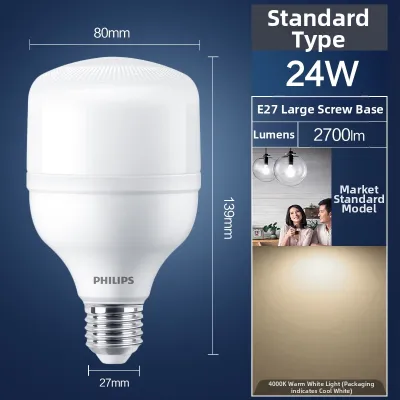
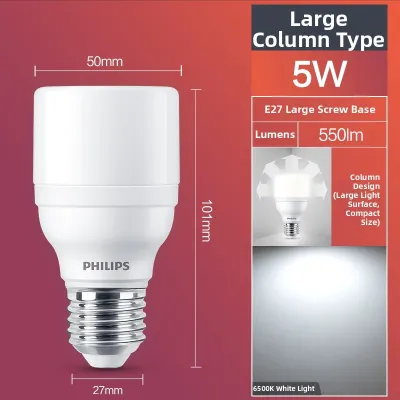
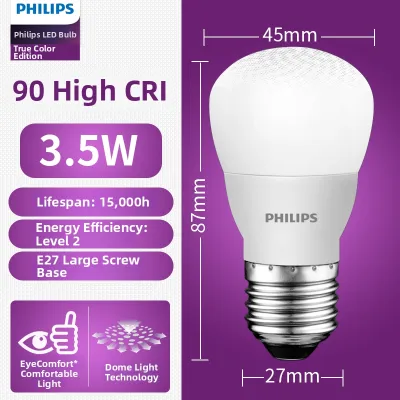
Prices are valid at publication and may change. Please refer to the product page for the latest price.
It is also important to distinguish between initial brightness and maintained brightness over the lifetime of the bulb. All LED light sources experience lumen depreciation, meaning they gradually dim as they age due to material degradation. High-quality bulbs maintain their brightness much longer, whereas lower-grade alternatives may lose a significant percentage of their light output within the first year of use. Checking the manufacturer’s specifications for lumen maintenance ratings can help ensure your spaces remain adequately illuminated over the long term.
How to Verify Energy Efficiency Claims Across Brands
When comparing different brands on online marketplaces or in local lighting shops, always compare models that offer equivalent light output. If you are replacing a traditional 60-watt incandescent bulb, you should look for an LED bulb that outputs approximately 800 lumens. By aligning the lumen output across candidate bulbs, you can directly compare their rated wattages to see which brand requires the least power to achieve your desired brightness level.

If you are considering smart LED bulbs, you must account for standby power consumption. Unlike standard bulbs that draw zero power when switched off at the wall, smart bulbs must maintain a continuous wireless connection to your home Wi-Fi or smart hub. This standby power draw, often referred to as vampire load, occurs 24 hours a day. When comparing smart options, check the standby wattage specification on the packaging; a lower standby rating is crucial for minimizing passive energy consumption over the course of a year.
To ensure that efficiency and safety claims are legitimate, verify that the product carries recognized testing certifications. In Singapore, look for the Safety Mark, which indicates that the bulb has been tested and certified to meet local electrical safety standards. Additional international certifications, such as CE, RoHS, or TÜV SÜD, provide further assurance that the manufacturer complies with strict environmental and performance standards, reducing the risk of purchasing substandard or hazardous counterfeits.
Decoding Lifespan and Durability Specifications
Manufacturer packaging often boasts lifespans of 15,000 to 50,000 hours, but these figures require careful interpretation. The industry standard for measuring LED lifespan is the L70 rating, which indicates the number of operating hours after which the bulb’s light output is expected to fall to 70% of its original brightness. A bulb rated at 15,000 hours under the L70 standard does not necessarily burn out at that point; rather, it simply becomes noticeably dimmer. Understanding this distinction helps you set realistic expectations for when bulbs will actually need replacement.
Thermal management is the single most critical factor determining the physical durability of an LED bulb. Although LEDs do not project heat forward in the light beam, they generate substantial heat at the semiconductor junction inside the base. If this heat is not dissipated, it degrades the electronic driver components and the LED chips, leading to premature failure. High-quality bulbs utilize robust heat sinks made of aluminum, ceramic, or advanced thermally conductive plastics, which are essential for surviving Singapore’s warm and humid ambient climate.
Because consumers cannot easily inspect internal driver components, the manufacturer’s warranty serves as a practical proxy for real-world durability. A brand offering a two-year or three-year warranty demonstrates greater confidence in their product’s thermal design and component quality than a brand offering only a six-month warranty or no warranty at all. When comparing purchase costs in S$, factoring in the warranty length can help you calculate the true value and expected operational lifespan of the investment.
Decision Framework: Choosing the Right LED Bulb
Selecting the ideal LED bulb requires matching the bulb’s specifications to the specific demands of the installation environment. For high-traffic, long-duration areas such as living rooms, kitchens, and study rooms, prioritize bulbs with the highest lm/W ratings and extended warranties. Because these lights remain on for many hours each day, the energy savings and reduced replacement frequency will quickly offset a higher initial purchase price.
For utility spaces, storerooms, or transitional areas where lights are only turned on briefly, energy efficiency is less critical to your overall utility bill. In these locations, standard-efficiency bulbs with basic specifications are highly cost-effective. However, if you are installing bulbs in outdoor fixtures, balconies, or corridors exposed to the elements, prioritize models with robust built-in surge protection and appropriate Ingress Protection (IP) ratings to withstand humidity, dust, and occasional voltage fluctuations.
Before finalizing your purchase, always verify compatibility with your existing fixtures and control systems. If you plan to use dimming switches, you must select bulbs explicitly labeled as dimmable. Standard LEDs paired with incompatible dimmers—such as older leading-edge phase dimmers—will often flicker, buzz, or fail prematurely. Additionally, decorative preferences like color temperature (such as warm white for cozy bedrooms or daylight for task-oriented workspaces) should be chosen based on personal comfort, as color temperature is a stylistic preference rather than a measure of energy efficiency.
Installation and Safety Checks to Maximize Lifespan
To protect your investment and ensure home safety, perform a series of physical and electrical checks before installing any new bulb. Verify that the bulb’s base type matches your fixture exactly, whether it is an E27 screw, B22 bayonet, GU10 twist-lock, or E14 small screw. Additionally, check the physical dimensions of the bulb to ensure there is adequate clearance within the fixture shade or housing, as tight spaces can restrict airflow and cause heat to build up around the electronics.
Never install standard, non-rated LED bulbs inside fully enclosed fixtures, such as tight ceiling globes or recessed cans. Enclosed fixtures trap the heat generated by the LED driver, raising the operating temperature far beyond safe limits and drastically shortening the bulb’s operational life. If your fixture is completely sealed, you must source bulbs that are explicitly certified by the manufacturer for enclosed-fixture use.
For all installation and maintenance tasks, safety must be your primary concern. Always isolate the electrical power at the main distribution board or circuit breaker before replacing a bulb or handling any fixed wiring, as relying solely on the wall switch can still leave live current at the fixture. For complex installations, work at significant heights, damp environments like bathrooms, or when retrofitting older fixtures, always consult a qualified licensed electrician to ensure the work complies with local electrical safety regulations.
Frequently Asked Questions (FAQ)
Do smart LED bulbs consume more energy than standard ones?
Yes, smart LED bulbs consume slightly more energy than standard bulbs because they require a continuous supply of standby power to remain connected to your home wireless network. This standby draw typically ranges from 0.2 to 0.5 watts and occurs even when the light is turned off via an app or voice command. While this power draw is very low for a single bulb, the cumulative consumption can become noticeable if you install dozens of smart bulbs throughout your home.
Can I use a standard LED bulb in an enclosed fixture?
No, you should not use a standard LED bulb in a fully enclosed fixture unless the product packaging explicitly states it is rated for enclosed use. Standard bulbs rely on ambient airflow to dissipate the heat generated by their internal driver components. In a sealed fixture, this heat becomes trapped, causing the internal temperature to rise rapidly, which degrades the electronic components and leads to premature bulb failure.
Does turning LED bulbs on and off frequently reduce their lifespan?
Unlike older fluorescent lamps, standard LED bulbs are highly resistant to frequent power cycling and do not suffer significant degradation from being turned on and off. Their operational lifespan is determined by cumulative burning hours and thermal stress rather than the frequency of switching. This makes LED technology exceptionally well-suited for integration with motion sensors, smart home automation, and high-traffic areas where lights are cycled often.
Community discussion
Share your experience or ask a question. Comments are reviewed before publication.