
When shopping for LED bulbs in Singapore, you will quickly find that no single brand holds a universal monopoly on energy efficiency. While international giants like Philips and Panasonic frequently lead the market in premium luminous efficacy and long-term lumen maintenance, local or house brands present a highly compelling alternative with lower upfront costs and respectable baseline efficiency. The most cost-effective choice for your home does not depend on brand name alone, but on how your specific usage patterns, daily operating hours, and fixture types align with each bulb’s technical specifications.
To make an informed decision, you must look beyond marketing buzzwords and evaluate the actual performance metrics printed on the packaging. By understanding how to calculate real-world efficiency and lifetime operating costs, you can determine whether paying a premium for high-end engineering will actually save you money over time, or if budget-friendly local options are more than adequate for your household needs.
How to Evaluate LED Bulb Energy Efficiency
To accurately compare the energy efficiency of different LED bulbs, you must look at the relationship between light output and power consumption. Many consumers mistakenly rely on wattage as a measure of brightness, which is a holdover from the days of incandescent lighting. In the world of LEDs, wattage represents only the electrical power consumed, while lumens indicate the actual amount of visible light emitted by the bulb.
Products mentioned in this guide
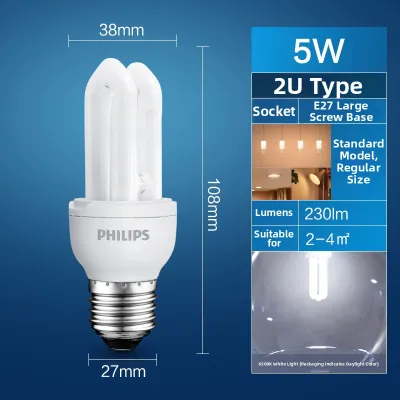
![[HomeBox] 🇸🇬 MUYISO 6W | 8W LED bulb GU10 Spot Light / Track Light Bulb Cool White Nature White Warm White (6500K 4000K 3000K)](https://img.lazcdn.com/g/p/1675473c10c402e452f87ff60dd0a30a.png_400x400q80.png_.webp)
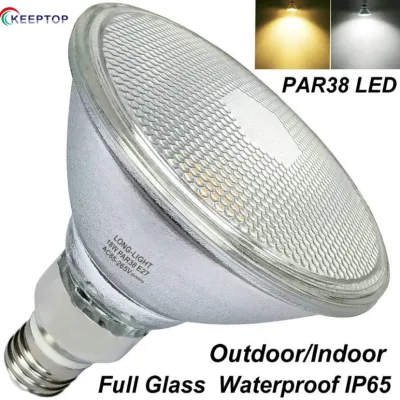
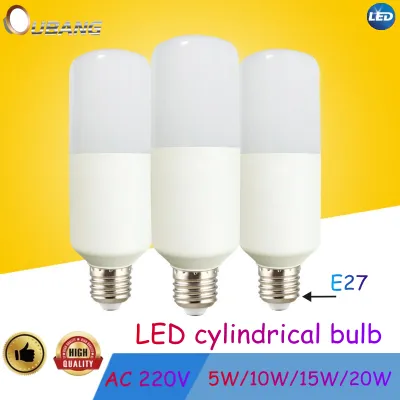
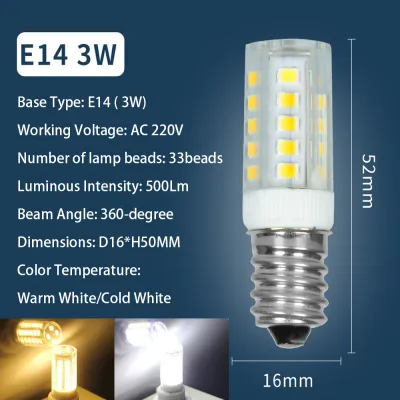
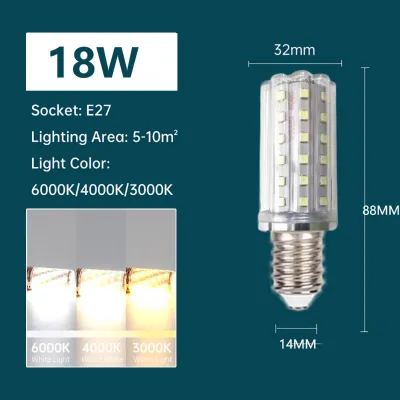
Prices are valid at publication and may change. Please refer to the product page for the latest price.
The true metric of energy efficiency is luminous efficacy, which is measured in lumens per watt (lm/W). You can easily calculate this yourself by dividing the total lumen output listed on the packaging by the bulb’s rated wattage. For example, a bulb that delivers 800 lumens while consuming 8 watts has an efficacy of 100 lm/W. A higher lumens-per-watt ratio means the bulb produces more light using less electricity, making it more energy-efficient.
When shopping in Singapore, you should also look for official energy rating labels and safety certifications. The National Environment Agency (NEA) administers an energy labeling scheme for lamps, where a higher number of ticks indicates greater energy efficiency. Additionally, because LED bulbs contain sensitive electronic drivers, you must verify that any bulb you purchase carries the local SAFETY Mark. This certification ensures the product has been tested to meet local electrical safety standards, reducing the risk of short circuits or electrical hazards in your home.
Comparing Philips, Panasonic, and Local Brands
Philips is widely recognized for its focus on premium efficiency and advanced light quality. Their product lines often feature high luminous efficacy, sometimes exceeding standard market averages, and they invest heavily in specialized optical designs that minimize glare and eye strain. Many Philips LED bulbs also offer advanced features, such as compatibility with smart home ecosystems or specialized dimming technologies. However, because their product catalog is vast, you should always verify the specific lumens-per-watt rating on the individual box, as efficiency can vary between their budget-friendly basic lines and their high-end architectural series.

Panasonic takes a highly systematic approach to LED design, focusing on long-term reliability and consistent lumen maintenance. Their bulbs are engineered to maintain a steady light output over thousands of hours of operation, minimizing the gradual dimming that affects lower-quality LEDs. Panasonic typically offers standard to high energy efficiency ratings, making them a dependable choice for general household lighting. When evaluating Panasonic options, it is highly recommended to check the manufacturer’s warranty terms, as a longer warranty period often reflects the brand’s confidence in the bulb’s thermal management and driver durability.
Local and supermarket house brands in Singapore cater primarily to budget-conscious consumers by offering low upfront purchase prices. These bulbs generally provide baseline energy efficiency that meets standard regulatory requirements, making them highly practical for everyday use. While they may not feature the cutting-edge optical engineering or the ultra-high efficacy of premium international brands, they offer a functional and economical solution. When purchasing local brands, you must be diligent in verifying that the packaging displays both the official SAFETY Mark and an accurate lumen rating, rather than relying solely on generic wattage equivalents.
How to Calculate Long-Term Cost-Effectiveness
Determining which bulb is truly the most cost-effective requires looking beyond the retail price tag to calculate the total cost of ownership. A cheaper bulb with lower efficiency may end up costing you more in electricity bills over its lifespan than a premium, highly efficient bulb. To find the true value, you can estimate the lifetime energy cost of any bulb using a simple mathematical formula.
To calculate the annual operating cost of an LED bulb, use the following formula:
Annual Cost = (Wattage / 1000) Daily Operating Hours 365 * Electricity Tariff (S$ per kWh)
For instance, if you run a 10-watt bulb for 5 hours a day in a living room, and your current electricity tariff is S$0.30 per kWh, the calculation would be:
(10 / 1000) 5 365 * 0.30 = S$5.475 per year
By comparing this operating cost against a more efficient 8-watt bulb that provides the same lumen output, you can determine the exact annual savings. The 8-watt bulb would cost:
(8 / 1000) 5 365 * 0.30 = S$4.38 per year
This represents an annual saving of S$1.095 per bulb. If the premium 8-watt bulb costs S$3.00 more upfront than the 10-watt bulb, it will take approximately three years of daily use to break even. This break-even analysis is crucial when deciding where to deploy different brands. High-usage areas like living rooms, kitchens, and corridors—where lights remain on for many hours daily—will benefit significantly from the higher efficiency and longer lifespans of premium brands. Conversely, low-usage spaces like storerooms, bomb shelters, or guest bathrooms are ideal candidates for lower-cost local brands, as the minimal daily runtime means you will rarely recoup the premium price of a high-efficiency bulb.
Decision Framework: Choosing the Right Brand
To simplify your purchasing decision, you can use a structured framework based on your specific household priorities and installation environments.
You should choose Philips if your primary goals are maximizing energy savings in high-use areas, achieving precise color rendering for tasks like cooking or reading, or integrating your lighting into a broader smart home system. Their premium lines are highly suited for spaces where light quality and maximum luminous efficacy directly impact your daily comfort and utility bills.
You should choose Panasonic if you want a reliable, set-and-forget lighting solution that balances steady energy savings with exceptional physical durability. Panasonic is particularly well-suited for standard ceiling fixtures and areas where replacing bulbs is physically difficult, as their robust thermal management helps ensure the bulb will reach its full rated lifespan without premature failure.
You should choose local or supermarket brands if you are outfitting low-traffic areas, managing a tight upfront renovation budget, or replacing bulbs in temporary rental properties. These brands provide a highly practical, cost-effective solution where basic energy efficiency is perfectly adequate and the lights are only switched on occasionally.
Regardless of the brand you select, always verify the specific requirements of your light fixtures before buying. Some fixtures may require dimmable bulbs, enclosed-rated designs, or specific voltage ranges. Failing to match these requirements can lead to flickering, buzzing, or immediate bulb failure, rendering any energy efficiency calculations irrelevant.
Installation and Compatibility Checks
Before purchasing and installing your new LED bulbs, you must perform several physical and electrical compatibility checks to ensure safe and efficient operation. First, identify the exact base type required by your fixture. The most common types in Singapore are screw-in bases like E27 and E14, or twist-and-lock bayonet bases like B22. You must also measure the physical dimensions of the bulb, especially if you are installing it inside a compact downlight canister or a decorative glass shade, to ensure it fits comfortably without touching the sides.
If your light fixtures are connected to dimmer switches, you must verify that the LED bulb is explicitly labeled as “dimmable.” Installing a non-dimmable LED bulb on a dimming circuit can cause severe flickering, audible buzzing, and rapid degradation of the internal electronic driver. Even when using dimmable bulbs, compatibility with older leading-edge dimmers can vary, so it is wise to test a single bulb before purchasing them in bulk for your entire home.
Thermal management is another critical factor for LED longevity and efficiency. Unlike traditional bulbs that radiate heat forward, LEDs draw heat away from the light source using internal heat sinks. If you install an LED bulb in a tightly enclosed fixture without adequate ventilation, the trapped heat will build up rapidly, degrading the electronic components and drastically shortening the bulb’s lifespan. Always check the packaging to confirm if the bulb is rated for use in enclosed fixtures.
Finally, always prioritize safety during installation. For standard bulb replacements, ensure the wall switch is turned off and the old bulb has cooled down completely before handling it. If you are dealing with fixed wiring, installing heavy suspended fixtures, or working in damp environments like bathrooms or outdoor balconies, always isolate the power at the main distribution board (DB box). For complex electrical work, high-ceiling installations, or if you are unsure about your home’s wiring compatibility, always hire a licensed electrical worker to perform the installation.
Frequently Asked Questions (FAQ)
Do LED bulbs lose brightness over time, affecting efficiency?
Yes, all LED bulbs experience a gradual decline in light output over time, a process known as lumen depreciation. This degradation occurs as the LED chips and internal phosphors age under thermal stress. The industry measures this using a metric called lumen maintenance, often designated as the L70 rating, which indicates the number of operating hours a bulb can run before its brightness drops to 70% of its original output. While the bulb may continue to draw the same amount of wattage, its luminous efficacy decreases as the light output fades. Premium brands like Philips and Panasonic typically invest in superior thermal designs and high-quality components to maintain their brightness longer, whereas budget local brands may experience faster lumen depreciation, reducing their true cost-effectiveness over the long term.
Is it worth replacing working older bulbs with LEDs now?
In almost all cases, replacing older incandescent bulbs or halogen spotlights with LEDs immediately is highly cost-effective due to the massive difference in energy consumption. Incandescent bulbs convert only about 10% of their energy into light, wasting the rest as heat, whereas LEDs use up to 80% less energy to produce the same level of brightness. If you are currently using compact fluorescent lamps (CFLs), the energy savings from upgrading to LEDs are more modest, but LEDs still offer instant-on brightness, contain no hazardous mercury, and typically last significantly longer. To decide if an immediate upgrade is justified, calculate the payback period by comparing the upfront cost of the new LED bulb against the monthly electricity savings based on how many hours that specific light is used each day.

Community discussion
Share your experience or ask a question. Comments are reviewed before publication.