
Finding the most energy-efficient LED cove lights for a Singapore home requires looking beyond brand names to evaluate the system’s luminous efficacy, driver efficiency, and thermal management. While many homeowners search for a single dominant brand, the residential lighting market is highly fragmented, with many reputable brands sourcing components globally. In Singapore’s tropical climate, where ambient temperatures remain high, heat accumulation in enclosed plasterboard coves can rapidly degrade LED efficiency. Identifying the most efficient setup involves comparing key performance metrics on product datasheets and matching them to your specific spatial layout.
To achieve the best balance of energy savings and light quality, you must understand how the components of a cove lighting system interact. The system consists of the flexible LED strip itself, the driver that regulates the power, and the physical cove structure. By focusing on verifiable technical specifications rather than marketing claims, you can design a lighting setup that minimizes electricity consumption while delivering excellent illumination.
Core Criteria for Evaluating LED Cove Light Energy Efficiency
To accurately compare the energy efficiency of different LED cove lights, the primary metric to evaluate is luminous efficacy, measured in lumens per watt (lm/W). This ratio tells you exactly how much visible light an LED strip produces for every watt of electricity it consumes. High-efficiency residential LED strips typically deliver between 100 to 150 lm/W, whereas lower-quality alternatives may drop below 80 lm/W, requiring more electricity to achieve the same brightness.
Products mentioned in this guide

![[SG Seller] Premium 12V COB LED Light Strip 480LEDS 5M | Guan Seng Electrical](https://img.lazcdn.com/g/p/802f05faa9f38494dfa3097c2db7942e.png_400x400q80.png_.webp)
Prices are valid at publication and may change. Please refer to the product page for the latest price.
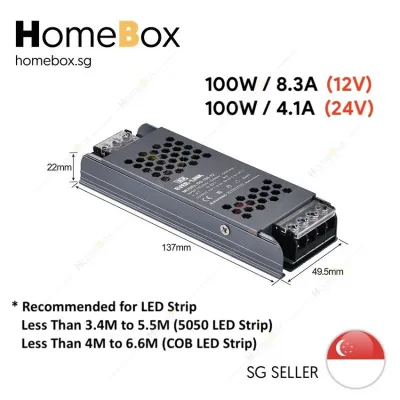
When reviewing product specifications, distinguish between the nominal wattage of the LED strip itself and the total system wattage, which includes the power lost by the LED driver. The driver acts as a transformer, converting 230V alternating current (AC) mains electricity from your home into the low-voltage direct current (DC) required by the LEDs. A low-quality driver might have an efficiency rating of only 70%, meaning 30% of the consumed energy is wasted as heat before it even reaches the lights. Look for high-quality drivers with an efficiency rating of 85% or higher and a power factor close to 0.9.
Verifying these claims requires examining the manufacturer’s official product datasheets rather than relying on retail packaging summaries. Reliable brands publish detailed photometric reports and electrical specifications. Check the datasheet for the system power consumption and compare it against the delivered lumens rather than the source lumens, as the physical design of the cove itself will inevitably block or absorb some of the emitted light.
Key Brand Comparison Dimensions for Residential Installation
Beyond raw energy metrics, the physical build quality and thermal design of the LED strip play a critical role in maintaining efficiency over time. As LEDs heat up, their light output drops and their power consumption can shift, a phenomenon known as thermal droop. Premium brands address this by using thicker copper flexible printed circuit boards (PCBs) and recommending aluminum profile housings to draw heat away from the diodes.

Color quality is another essential dimension that directly impacts perceived efficiency. The Color Rendering Index (CRI) measures how accurately a light source reveals the true colors of objects compared to natural sunlight. Achieving a high CRI (such as CRI 90 or above) often requires more energy than producing low-CRI light, as the phosphor coatings on the LEDs must filter and balance a wider spectrum of light. When comparing brands, look for those that maintain high efficacy even at CRI 90+, ensuring you do not have to sacrifice visual comfort for energy savings.
Furthermore, consider color temperature consistency, often measured using the Standard Deviation of Color Matching (SDCM) or MacAdam ellipses. A lower SDCM rating (such as 3-step or lower) ensures that the light color remains uniform across the entire length of the cove, preventing unsightly yellow or blue patches. Finally, evaluate the dimming compatibility and warranty terms; efficient dimming systems (like pulse-width modulation controlled via compatible smart home protocols) allow you to lower energy consumption further when full brightness is not required.
Electrical Safety and Installation Requirements in Singapore
In Singapore, residential electrical systems operate at a nominal voltage of 230V AC at 50Hz. Because most LED cove lights operate on low-voltage DC (typically 12V or 24V), the LED driver is a critical safety component. Any driver or power supply connected directly to the mains wiring must carry the Safety Mark issued by Enterprise Singapore. This certification ensures the device has been tested and registered to meet local safety standards, protecting your home from electrical fires and short circuits.
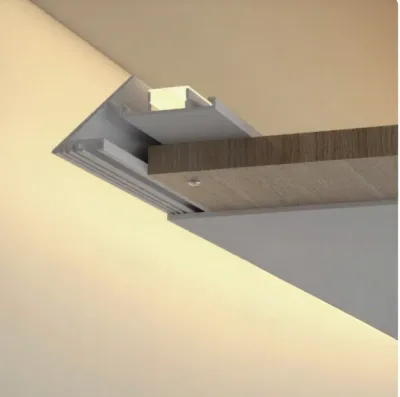
Heat management is particularly critical in the enclosed spaces of plasterboard or wooden coves. Without adequate ventilation, the heat generated by even highly efficient LEDs can accumulate, raising the ambient temperature within the cove. This heat buildup not only reduces the immediate efficiency of the system but also accelerates the degradation of the LED phosphors and driver capacitors. Always ensure there is a minimum clearance space within the cove structure to allow natural air circulation, and mount the strips on aluminum channels to act as heat sinks.
While mounting adhesive LED strips inside a pre-built cove can sometimes be managed as a DIY project, any work involving fixed electrical wiring must be handled with extreme caution. Connecting drivers to the mains power supply, installing new wall switches, or modifying your home’s distribution board requires isolating the power at the main circuit breaker. For these tasks, or when working at heights on high ceilings, you must engage a licensed electrical worker (LEW) registered with the Energy Market Authority (EMA) to ensure compliance with local electrical codes and safety regulations.
Decision Framework: Matching Brands to Your Home Lighting Goals
To choose the right LED cove light setup, you must align your brand selection with your primary household goals. If your main priority is minimizing monthly utility bills and integrating your lighting into a broader smart home ecosystem, focus on brands that offer high-efficacy strips (above 120 lm/W) paired with smart drivers. These systems allow you to program automated schedules, dim the lights during off-peak hours, and monitor real-time energy usage through mobile applications.
If your priority is creating a luxurious, visually comfortable living space where color accuracy and ambiance are paramount, select brands that specialize in high-CRI architectural lighting. While these options may have a slightly lower efficacy rating (around 90 to 100 lm/W) due to the dense phosphor coatings required for superior color rendering, the visual payoff in living rooms and dining areas is significant. Ensure these premium strips are paired with high-efficiency drivers to offset the minor drop in diode efficacy.
For homes with complex architectural features, such as curved coves or exceptionally long runs, prioritize brands that offer flexible, high-voltage linear systems or highly customizable driver configurations. In these scenarios, verifying driver compatibility with your chosen dimming protocol (such as TRIAC or digital addressable lighting interfaces) is crucial. Choosing a robust, well-ventilated driver system prevents flickering and ensures the entire installation operates at peak efficiency without overloading the circuits.
Cost and Value Assessment for LED Cove Lighting
When calculating the true cost of LED cove lighting, look beyond the initial retail price of the strips and drivers. A more accurate metric is the price per lumen, which measures the value of the actual light output you receive for your investment. A cheap, low-efficiency strip may seem attractive upfront, but it will require more power to illuminate your space and will likely need to be replaced much sooner than a premium alternative.
To estimate your long-term energy savings, consider your daily usage patterns alongside Singapore’s electricity tariffs. For example, if you run a 15-meter cove light system rated at 10 watts per meter for 5 hours a day, the total daily consumption is 750 watt-hours, or 0.75 kilowatt-hours (kWh). At a typical local tariff rate of approximately S$0.32 per kWh, this equates to roughly S$0.24 per day, or about S$87.60 per year. Upgrading to a highly efficient system that delivers the same brightness at only 7 watts per meter reduces the annual cost to approximately S$61.32, yielding clear savings over time.
Additionally, factor in the physical difficulty of replacing failed components. Cove lighting is typically installed in recessed ceiling pockets that are hard to reach without ladders or scaffolding. If a low-quality driver or strip fails prematurely, the cost of hiring professional help to replace it can easily wipe out any initial savings. Investing in reliable, certified components with long warranties is the most cost-effective strategy for long-term residential installations.
Frequently Asked Questions (FAQ)
Do LED cove lights consume more electricity than standard LED bulbs?
LED cove lights do not inherently consume more electricity per unit of light, but their total power draw is often higher because they are installed in continuous runs rather than as single point sources. A standard LED bulb typically draws between 9 to 15 watts to illuminate a specific area. In contrast, a cove lighting setup utilizes flexible LED strips that draw power per meter, typically ranging from 5 to 15 watts per meter.
To calculate the total expected consumption of your cove lighting, multiply the rated wattage per meter of the strip by the total length of the installation. For instance, a 10-meter run of a strip rated at 8 watts per meter will draw 80 watts of power when running at full brightness. While this is higher than a single bulb, it distributes light evenly across the entire room, often replacing the need for multiple individual ceiling fixtures.
Can I install energy-efficient LED cove lights myself?
You can perform a DIY installation if you use low-voltage, plug-and-play LED strip kits that connect directly to an existing wall outlet via a pre-wired power adapter. These kits operate on safe, low-voltage DC power (usually 12V or 24V) and do not require any direct contact with your home’s mains wiring. They typically feature adhesive backings that allow you to easily mount the strips inside the cove channel yourself.
However, if your installation requires hardwiring the LED drivers directly into your home’s electrical conduits, modifying existing wall switches, or connecting the system to a centralized dimmer switch, you must not attempt a DIY installation. Working with 230V mains electricity poses severe risks of electrical shock and fire if done incorrectly. For all fixed wiring installations, you must hire a licensed electrical worker to ensure the work is completed safely and complies with Singapore’s electrical standards.
Community discussion
Share your experience or ask a question. Comments are reviewed before publication.