
Finding the most energy-efficient LED E17 bulb for your home in Singapore requires looking past flashy marketing labels and focusing on verifiable technical specifications. The E17 base is an intermediate screw size, often found in imported appliances, range hoods, or decorative light fixtures. Because it is less common locally than E14 or E27 bases, the market is flooded with various parallel imports and third-party brands on online marketplaces. To achieve the best energy efficiency and safety, consumers must verify the luminous efficacy (lumens per watt) and ensure the bulb is rated for Singapore’s 230V electrical grid.
Evaluating the efficiency of LED E17 220V bulb brands in Singapore is not as simple as choosing the most recognizable logo. Because the E17 base is a specialized intermediate size, independent brand-wide testing data is limited, and efficiency can vary significantly between different product lines from the same manufacturer. To identify the true energy savers, you must look at the luminous efficacy—the ratio of light output (lumens) to power consumed (watts)—rather than generic marketing slogans.
Direct Answer: Evaluating E17 220V LED Brands for Efficiency
Established lighting brands like Philips, Osram, and reputable Japanese manufacturers like Panasonic generally offer the highest energy efficiency and reliability. These brands invest in premium LED chips and high-quality drivers that maintain their efficiency over years of use. In contrast, unrecognized budget brands often use cheaper components that degrade rapidly, leading to a significant drop in brightness and efficiency within a few months.
Products mentioned in this guide
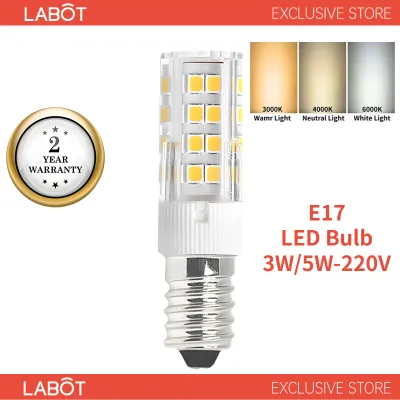
Prices are valid at publication and may change. Please refer to the product page for the latest price.
For Singaporean homeowners, the most practical approach is a conditional one. Choose recognized, certified brands when you need guaranteed long-term efficiency, consistent brightness, and safety for hard-to-reach fixtures. If you are considering budget-friendly alternatives for infrequently used fixtures, you must independently verify the technical specifications, voltage compatibility, and safety certifications printed on the packaging before making a purchase.
Crucial Compatibility Checks: E17 Base and 220V-240V in Singapore
Before comparing the energy efficiency of different E17 LED brands, you must ensure the bulbs are physically and electrically compatible with Singapore’s infrastructure. Singapore’s standard mains electricity is supplied at a nominal voltage of 230V AC with a frequency of 50Hz. On product packaging and specification sheets, this is commonly grouped under the 220V-240V range. Purchasing a bulb that does not explicitly support this voltage range can lead to immediate product failure or severe safety hazards.

The E17 base, which features a screw thread diameter of 17 millimeters, is an intermediate size that occupies the middle ground between the smaller E14 candelabra base and the larger E27 medium base. In Singapore, E17 sockets are relatively rare compared to the standard E27 or E14 sockets found in most local light fixtures. They are typically found in imported Japanese or American appliances, specialized cooker hoods, microwave interiors, refrigerator compartments, or intricate imported chandeliers.
Because these fixtures are often imported from regions with different electrical standards, verifying both the physical base and the voltage is paramount. A common and dangerous mistake is purchasing an E17 bulb designed for the North American or Japanese markets, where the standard voltage is 110V-120V. If you insert a 110V-120V E17 bulb into a Singaporean 230V socket, the excessive voltage will instantly overwhelm the bulb’s internal driver. This can cause the bulb to pop, smoke, melt, or even start an electrical fire. Always physically inspect the bulb’s base or the original packaging to confirm it is rated for 220V-240V before installation.
Furthermore, physical dimensions can vary significantly between brands. Some E17 bulbs have a longer neck or a wider profile, which may not fit into the tight recesses of cooker hoods or appliance compartments. Always measure the clearance inside your fixture before purchasing a replacement bulb, as a bulb that is too large may touch the fixture’s housing, trapping heat and accelerating thermal degradation.
Key Metrics to Compare Energy Efficiency Across Brands
To objectively compare the energy efficiency of different LED E17 220V bulb brands, you must look past the creative marketing terms on the packaging and analyze the hard technical data. Brands often use confusing terminology to make their products appear more efficient than they actually are. By understanding three core technical metrics, you can easily cut through the noise and identify which bulb will actually lower your electricity bill.
Luminous Efficacy (Lumens per Watt)
Luminous efficacy is the ultimate metric for measuring how efficiently a bulb converts electricity into visible light. It is expressed in lumens per watt (lm/W) and is calculated by dividing the total light output (measured in lumens) by the actual power consumed (measured in watts). A higher lm/W ratio means the bulb produces more light while drawing less electricity from your home’s outlets.
When comparing brands, always perform this quick calculation if the efficacy is not explicitly stated on the spec sheet. For example, if Brand A offers an E17 bulb that produces 400 lumens while consuming 4 watts of electricity, its luminous efficacy is 100 lm/W. If Brand B offers a bulb that produces the same 400 lumens but consumes 5 watts, its efficacy is only 80 lm/W. Even though both bulbs provide the exact same level of brightness, Brand A is 25% more energy-efficient than Brand B, resulting in lower long-term operating costs.
Wattage Equivalence vs. Actual Power Draw
Many manufacturers prominently display terms like “40W equivalent” or “60W equivalent” on their packaging to help consumers estimate brightness based on old incandescent standards. However, these equivalence claims are highly subjective and can vary wildly between different brands. One brand’s “40W equivalent” might produce 350 lumens, while another brand’s equivalent might produce 450 lumens.
To find the true energy saver, you should completely ignore the equivalence marketing and focus solely on the actual wattage and lumen output. Compare the real power draw of the bulbs you are considering for the specific level of brightness you require. If you need a bulb that produces around 400 lumens, compare the actual wattages of the competing brands (such as 3.5W versus 4.5W) to determine which model will consume the least amount of energy during operation.
Power Factor and Thermal Design
While luminous efficacy tells you how efficiently the LED chips convert power to light, the power factor and thermal design determine how efficiently the bulb’s internal electronics operate over time. Power factor (PF) is a measure of how effectively the bulb’s driver converts the incoming AC power into usable DC power. A power factor closer to 1.0 (such as 0.9 or higher) indicates that the bulb wastes very little electricity in the conversion process, whereas a low power factor (such as 0.5) draws more current than necessary, putting unnecessary strain on your home’s electrical wiring.
Premium brands typically use advanced switch-mode power supply (SMPS) drivers that achieve a high power factor, whereas budget brands often rely on cheaper linear drivers that have a lower power factor and generate significant excess heat. This heat is the primary enemy of LED efficiency. As the temperature inside the bulb rises, the efficiency of the LED chips decreases, and they produce less light per watt.
High-quality brands design their E17 bulbs with robust thermal dissipation mechanisms, such as ceramic bodies or aluminum heat sinks, to draw heat away from the electronics. Cheaply constructed bulbs with poor thermal design trap heat inside, leading to rapid efficiency loss, dimming, and premature component failure. This is especially critical for E17 bulbs, which are often installed in enclosed appliance spaces or tight fixtures where airflow is severely restricted.
Verifying Brand Claims: Certifications and Energy Labels
With a vast array of E17 LED bulbs available on various e-commerce platforms and in local hardware stores across Singapore, verifying manufacturer claims is essential to avoid substandard products. Many budget-friendly brands make bold claims about energy savings and lifespans that are not backed by independent testing. To protect your home and your wallet, you must look for recognized certifications and safety marks.
In Singapore, the key safety standard to look for is the SAFETY Mark, issued by Enterprise Singapore. While individual light bulbs sold separately are not always classified as controlled goods requiring a mandatory SAFETY Mark, many reputable brands undergo voluntary testing to secure this certification for their products or their integrated drivers. A SAFETY Mark indicates that the product has been rigorously tested to meet local electrical safety standards, ensuring it can safely handle Singapore’s 230V grid without posing a risk of shock or fire.
In addition to local safety marks, look for internationally recognized certifications such as CE (Conformité Européenne), RoHS (Restriction of Hazardous Substances), and TÜV SÜD. The CE mark indicates compliance with European safety, health, and environmental protection standards, while RoHS guarantees that the bulb does not contain hazardous materials like lead or mercury. TÜV SÜD certification provides independent verification of the product’s performance and safety claims. Be highly skeptical of brands that only display generic “eco-friendly” or “energy-saving” logos without any of these official certification marks, as these claims are often completely unverified.
When shopping on online marketplaces, pay close attention to the seller’s reputation and product documentation. Reputable manufacturers will readily provide detailed specification sheets, including photometric reports that detail the exact lumen output, color rendering index (CRI), and power consumption. If a seller cannot provide these basic technical details, it is highly likely that the bulb’s efficiency claims are exaggerated.
Value for Money: Lifespan, Warranties, and Hidden Costs
When comparing LED E17 220V bulbs, evaluating value for money requires looking beyond the initial purchase price to consider the total cost of ownership. A cheap, unbranded bulb might save you a few dollars upfront, but it can quickly become more expensive if it consumes more electricity, dims prematurely, or fails within a few months of installation.
To understand the true cost impact, consider a practical example using Singapore’s electricity tariffs. If you have a decorative fixture that uses six E17 bulbs, and you run them for five hours a day, choosing a highly efficient 4W LED (100 lm/W) over a less efficient 6W LED (66 lm/W) saves 12 watts of total power. Over a year, this small difference saves approximately 21.9 kilowatt-hours of electricity. At a standard Singapore tariff of S$0.31 per kWh, this translates to roughly S$6.80 in annual savings. Over the typical lifespan of the bulbs, the energy savings alone can easily cover the price difference of a premium brand.
The lifespan of an LED bulb is typically measured using the L70 standard, which indicates the number of operating hours before the bulb’s light output drops to 70% of its original brightness. Reputable brands usually offer E17 bulbs with an L70 lifespan of 15,000 to 25,000 hours, which translates to several years of typical household use. Cheap alternatives often have lifespans of 5,000 hours or less, and their brightness can degrade significantly faster. Investing in a slightly more expensive bulb with a higher luminous efficacy and a longer rated lifespan will yield greater energy savings and fewer replacements over time.
Warranty terms are another crucial indicator of a brand’s confidence in its product’s durability. Established brands typically offer a 1-year to 3-year warranty that can be claimed locally in Singapore. This provides peace of mind and ensures you can easily get a replacement if the bulb fails prematurely. Always check the warranty details and return policies, especially when purchasing from online retailers, to ensure you are covered.
Additionally, you must consider dimmable compatibility, as this is a common source of hidden costs and premature bulb failure. If your fixture is connected to a dimmer switch, you must purchase an E17 bulb that is explicitly labeled as dimmable. Using a non-dimmable LED bulb on a dimmer circuit will cause severe flickering, buzzing, and extreme thermal stress on the internal driver, which can destroy the bulb within days. Always check the applied product’s label and the treated item’s manufacturer instructions. If the instructions conflict, the item is unidentified, or the use is not covered, stop and consult the manufacturer or a qualified professional.
Decision Framework: Matching Bulb Specs to Your Fixture
To make the best decision for your home, you should match the specifications of the E17 LED bulb to the specific requirements of your light fixture and usage patterns. Use this conditional framework to guide your final purchase:
- Choose established, certified brands if you are installing the bulb in a fixture that is used frequently (such as a kitchen range hood or living room chandelier), is difficult to access, or is fully enclosed. These brands offer the guaranteed energy efficiency, thermal management, and long-term reliability needed to ensure safe and continuous operation without the hassle of frequent replacements.
- Choose budget-friendly alternatives if the bulb is for a fixture that is rarely used (such as a guest room closet or a decorative accent light), is easily accessible for quick replacement, and you can independently verify the luminous efficacy, 220V-240V voltage compatibility, and safety certifications on the product packaging.
- Verify first if your fixture requires dimming capabilities, has space constraints that limit the physical size of the bulb, or requires a high Color Rendering Index (CRI) for task lighting. These specific environmental and performance requirements will significantly narrow down your options, helping you select a bulb that delivers both optimal energy savings and the precise lighting quality you need.
Community discussion
Share your experience or ask a question. Comments are reviewed before publication.