
When searching for the most energy-efficient PLL LED tube brands in Singapore, you will find that specific performance rankings and lumens-per-watt (lm/W) data change frequently with every new product release. Because of this rapid technological pace, there is no single permanent “most efficient” brand on the market. Instead of relying on static brand recommendations or outdated marketing claims, the most reliable way to secure long-term energy savings is to understand how to evaluate technical specifications, verify fixture compatibility, and calculate the true system-wide power consumption.
PLL LED tubes, which typically feature a 4-pin 2G11 base, are designed to replace older, power-hungry compact fluorescent lamps (CFLs). Transitioning to LED technology can significantly reduce your electricity bills, but the actual savings depend heavily on the specific product you select and how it is installed. By learning to read specification sheets and understanding the electrical requirements of your fixtures, you can confidently identify the most efficient options available in Singapore’s retail stores and online marketplaces.
Understanding True Energy Efficiency in PLL LED Tubes
To accurately compare the energy efficiency of different PLL LED tube brands, you must look beyond the wattage rating printed on the packaging. Wattage simply indicates how much electrical power the tube consumes, not how much light it produces. Luminous efficacy, expressed in lumens per watt (lm/W), is the true measure of efficiency. Lumens represent the total volume of visible light emitted, so dividing this by the wattage gives you the efficiency ratio.
Products mentioned in this guide
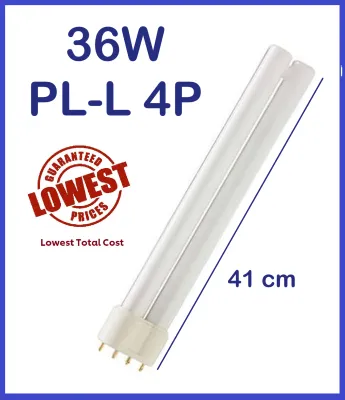
Prices are valid at publication and may change. Please refer to the product page for the latest price.
Comparing raw wattage without checking the lumen output often leads to poor purchasing decisions. For example, a 15-watt tube from one manufacturer might produce 1,500 lumens (100 lm/W), while a more advanced 15-watt tube from another brand produces 1,800 lumens (120 lm/W). Choosing the latter delivers 20% more light for the exact same electricity consumption, allowing you to illuminate your space effectively without increasing your utility bills.
It is also essential to distinguish between initial efficacy and maintained efficacy over the tube’s operational lifespan. All light sources experience some degree of lumen depreciation, meaning they gradually lose brightness as they age. High-quality PLL LED tubes are engineered with superior components that maintain their brightness for tens of thousands of hours, whereas lower-quality alternatives may dim rapidly after just a few thousand hours of use.
Furthermore, system-level efficiency is distinct from individual lamp efficiency. When you install an LED tube into an existing fixture, the overall energy consumption is influenced by auxiliary components like ballasts. To achieve the highest possible efficiency, you must consider how the tube interacts with your fixture’s electrical system, as some installation methods introduce unnecessary power losses that undermine the benefits of the LED upgrade.
Key Specifications to Compare Across Brands
When evaluating different PLL LED tube brands, reviewing the official product datasheet or packaging is the most reliable way to verify performance claims. Start by looking at the luminous efficacy rating. For commercial applications in Singapore, where lights often run for extended periods, aim for tubes that deliver at least 110 to 130 lm/W. For residential spaces, an efficacy of 100 lm/W or higher is generally sufficient to provide excellent energy savings while maintaining a comfortable environment.

Next, identify the correct wattage equivalent to replace your existing fluorescent tubes. Traditional CFL PLL tubes are commonly rated at 36 watts or 55 watts. When upgrading to LED, a 36-watt CFL is typically replaced by an LED tube drawing between 15 and 18 watts, while a 55-watt CFL is replaced by an LED tube drawing between 22 and 24 watts. Always cross-reference the total lumen output of the replacement tube with your old lamp to ensure you do not inadvertently reduce the light levels in your room.
You must also balance high energy efficiency with light quality metrics, such as the Color Rendering Index (CRI) and color temperature. CRI measures how accurately a light source reveals the true colors of objects, rated on a scale up to 100. High-CRI tubes (CRI 80 or CRI 90+) require more sophisticated phosphor coatings, which can slightly lower the overall lm/W efficacy. Perceived color temperature—whether you prefer warm white (3000K), cool white (4000K), or daylight (6500K)—is a matter of personal preference and spatial effect, though cooler color temperatures sometimes exhibit slightly higher raw efficacy ratings on paper.
Finally, always verify that the PLL LED tube carries recognized safety and quality certifications. In Singapore, electrical products must comply with local safety regulations. Look for the Safety Mark issued by Enterprise Singapore on the packaging or product body. This mark ensures that the tube has undergone rigorous testing for electrical safety, insulation, and thermal management, protecting your property from electrical hazards while guaranteeing that the performance specifications are accurate.
Verifying Ballast Compatibility and Installation Types
The electrical compatibility of a PLL LED tube with your existing light fixture is a critical factor that affects both installation costs and overall energy efficiency. LED tubes are generally categorized into three main installation types: Type A, Type B, and Type C. Understanding these distinctions is vital before making a purchase, as they dictate how the tube interacts with the fixture’s ballast.
Type A tubes are plug-and-play options designed to work directly with your existing electronic or magnetic ballast. While this installation method is incredibly simple and requires no rewiring, it is not the most energy-efficient choice. The old ballast remains active in the circuit and continues to consume power, a phenomenon known as ballast loss. This loss can add an extra 2 to 10 watts of power consumption per fixture, reducing the overall system efficiency and leaving an old, prone-to-failure component in your ceiling.
Type B tubes require a direct-wire installation, where the existing ballast is completely bypassed or removed from the fixture. The mains voltage (typically 220V to 240V in Singapore) is wired directly to the lamp holders. This method completely eliminates ballast loss, maximizing the energy efficiency of the system and removing the ballast as a potential point of failure. However, it requires modifying the internal wiring of the fixture.
Type C tubes utilize an external LED driver that replaces the existing ballast entirely. The driver is mounted inside the fixture and connected to the tube, offering high efficiency and precise control over dimming and power delivery. While Type C systems are highly reliable, they carry a higher upfront hardware cost and require more complex installation procedures compared to Type A and Type B options.
Because working with mains electricity carries inherent risks, establishing a strict safety boundary is essential. Before attempting any inspection, maintenance, or installation, always isolate the power supply at the main distribution board. If the fixture wiring is unclear, the existing ballast type cannot be identified, or if local electrical codes require certified professionals for fixed wiring modifications, stop immediately. You must consult a licensed electrical worker (LEW) or a qualified professional to perform the installation safely and ensure compliance with Singapore’s electrical standards.
Calculating Long-Term Savings and Electricity Costs
To determine which PLL LED tube brand offers the best value for your specific situation, you can calculate the projected electricity savings using a straightforward formula. This calculation helps you look past the initial purchase price and focus on the total cost of ownership over the lifespan of the product.
To begin the calculation, gather the necessary variables: the daily operating hours of the light fixture, the current electricity tariff in Singapore (expressed in S$ per kilowatt-hour, or kWh) from your latest utility bill, and the wattage difference between your old fluorescent setup and the new LED tube. For a highly accurate calculation, remember to add the estimated ballast draw (typically around 5 to 8 watts) to the wattage of your old fluorescent tube if you are comparing it to a direct-wire (Type B) LED setup.
The formula to calculate annual energy consumption is: (Wattage of the Lamp Daily Operating Hours 365 Days) / 1,000. This gives you the annual consumption in kWh. By calculating this value for both your old tube and the prospective LED replacement, you can find the difference in kWh saved per year. Multiplying this difference by your current electricity tariff in S$ will reveal your estimated annual financial savings for a single fixture.
When evaluating these savings, you must factor in the upfront cost of the LED tube and any associated installation fees. If you choose a Type B tube that requires an electrician to bypass the ballast, the labor cost must be added to the initial investment. In some cases, a premium tube with the absolute highest lm/W rating might not offer the best return on investment if its purchase price is disproportionately high, especially in residential spaces where lights are only used for a few hours each day.
Decision Framework: Selecting the Right Tube for Your Space
Selecting the ideal PLL LED tube requires balancing installation convenience, long-term efficiency goals, and the physical environment of your space. By establishing a clear decision framework, you can narrow down your options and choose the product that best aligns with your priorities.
If your primary goal is to minimize upfront installation labor, avoid immediate rewiring costs, and prevent disruption to your daily routine, a plug-and-play (Type A) tube is the most convenient choice. This option allows you to simply swap the old fluorescent tube for the new LED model. However, you must accept slightly lower system efficiency due to ongoing ballast loss, and you must be prepared to replace the ballast or rewire the fixture in the future if the old ballast eventually fails.
If you are focused on maximizing long-term energy savings and eliminating future maintenance hassles, a direct-wire (Type B) tube is the superior option. Bypassing the ballast ensures that every watt of electricity drawn goes directly into producing light, providing the cleanest and most efficient setup. This approach is highly recommended for commercial spaces, offices, and high-use residential areas where the long-term utility savings quickly offset the initial cost of rewiring.
Before finalizing your purchase, you must also verify the physical installation environment. If the fixture is located in a high-moisture area like a bathroom, a high-heat environment, or a fully enclosed ceiling fixture, thermal management becomes critical. Heat buildup can degrade the internal driver of an LED tube, drastically shortening its lifespan. Ensure the tube you select is explicitly rated for enclosed fixtures and check for appropriate Ingress Protection (IP) ratings if the installation area is exposed to dampness or dust.
Frequently Asked Questions (FAQ)
Can I mix different brands of PLL LED tubes in the same fixture?
Mixing different brands of PLL LED tubes within a single multi-tube fixture is generally not recommended due to compatibility and aesthetic risks. Even if multiple brands claim to offer the same specifications, such as a 4000K cool white color temperature, their actual color rendering and visual appearance can vary slightly. This mismatch can create an inconsistent, unappealing look across the fixture.
Additionally, different manufacturers use distinct internal driver designs and electrical components. Mixing brands in a fixture that shares a single ballast or wiring circuit can lead to electrical imbalances, resulting in flickering, uneven light distribution, or premature component failure. For the best visual consistency and operational reliability, always install identical tubes from the same brand and production batch within a single fixture.
Do PLL LED tubes lose brightness faster than traditional fluorescent tubes?
PLL LED tubes do not lose brightness faster than traditional fluorescent tubes; in fact, they maintain their light output much better over time. Traditional fluorescent lamps experience rapid lumen depreciation, often losing a significant percentage of their initial brightness within the first few thousand hours of operation. LEDs degrade at a much slower and more predictable rate.
To verify how well a specific PLL LED tube will retain its brightness, check the L70 or L80 lifespan ratings on the manufacturer’s datasheet. An L70 rating of 50,000 hours indicates that the tube is expected to retain 70% of its original light output after 50,000 hours of use. Premature dimming is rarely a fault of the LED technology itself; instead, it is usually caused by poor thermal management in enclosed fixtures or the use of low-quality internal drivers that degrade under heat stress.
Community discussion
Share your experience or ask a question. Comments are reviewed before publication.