
Quick Answer: Choosing the Right Study Lamp Brand
Selecting the ideal study lamp brand in Singapore requires balancing your physical workspace constraints, study habits, and budget. Because no single manufacturer excels in every category, your choice should depend on a conditional framework. If you regularly work with large physical textbooks, architectural drawings, or extensive paperwork, prioritize brands that specialize in wide, uniform light distribution and high Color Rendering Index (CRI) ratings. These brands focus heavily on optical engineering to minimize shadows across a broad surface.
Conversely, if your study sessions extend late into the night, prioritize brands that offer adjustable color temperatures and automated ambient light sensors. These features allow you to shift from stimulating cool white light during the day to warm, sleep-friendly tones in the evening. For highly dynamic workspaces where the lamp must be frequently adjusted or angled, focus on manufacturers renowned for heavy-duty metal construction, weighted bases, and robust friction joints. Budget-conscious users can find reliable illumination from functional brands, provided they verify basic eye-safety certifications and electrical compliance before purchasing.
Core Comparison Metrics: Brightness, Eye Care, and Build
To evaluate any study lamp brand objectively, you must look beyond aesthetic designs and focus on three interconnected technical dimensions: brightness, visual comfort, and physical durability. A lamp that provides high brightness but lacks glare control will cause rapid eye strain, while a highly durable lamp with poor light uniformity can lead to headaches during long sessions. Understanding how these metrics interact allows you to cut through marketing claims and select a lamp that truly supports prolonged cognitive focus.
Products mentioned in this guide
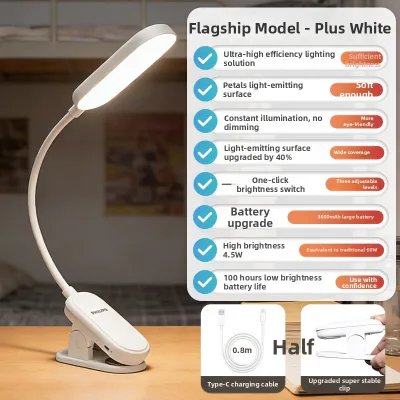
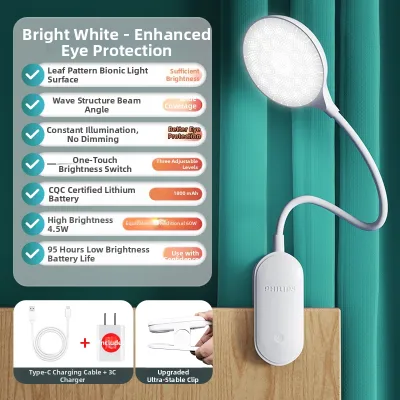
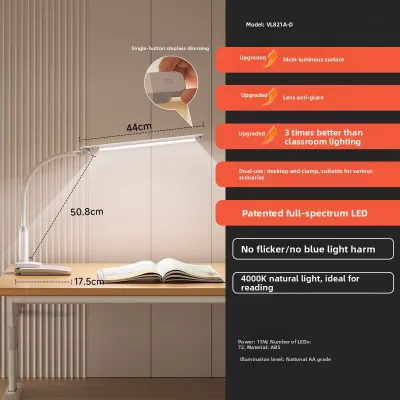
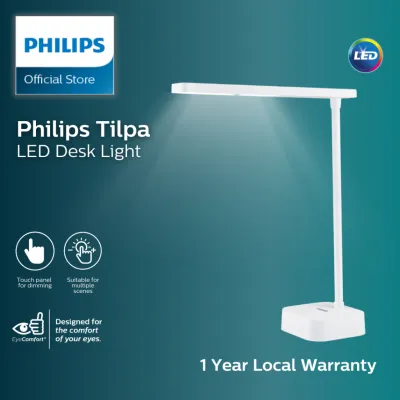
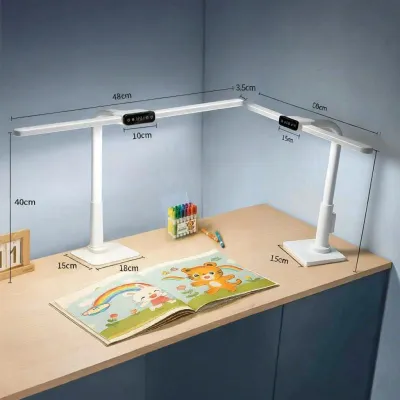
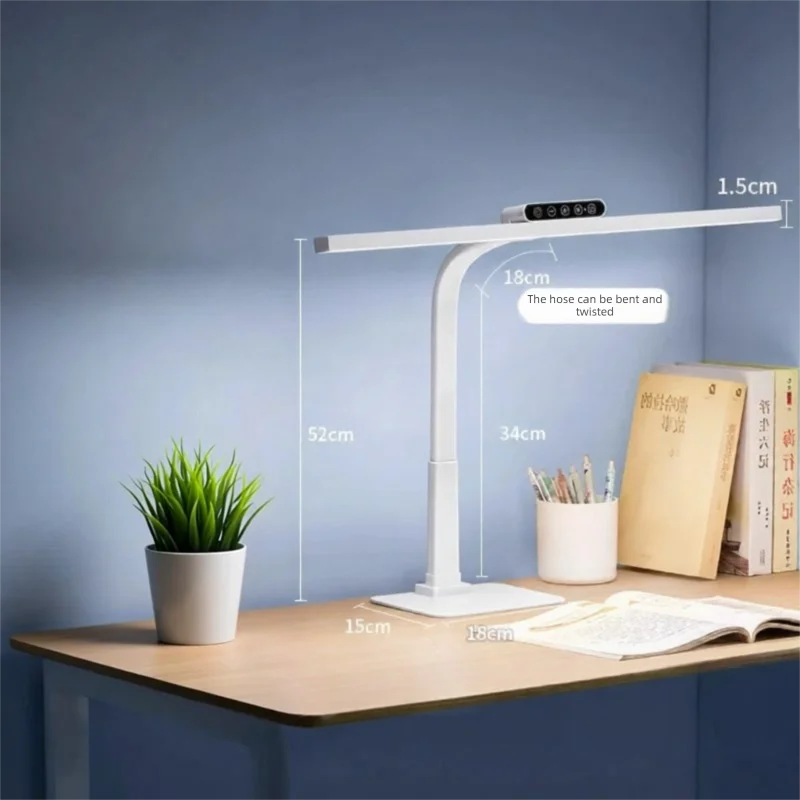
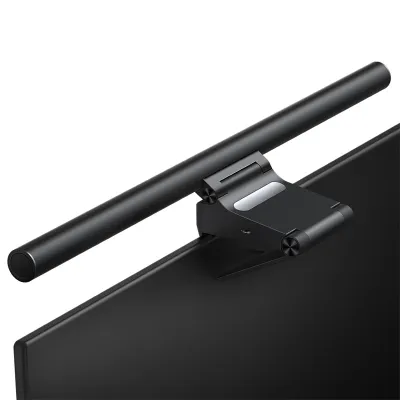
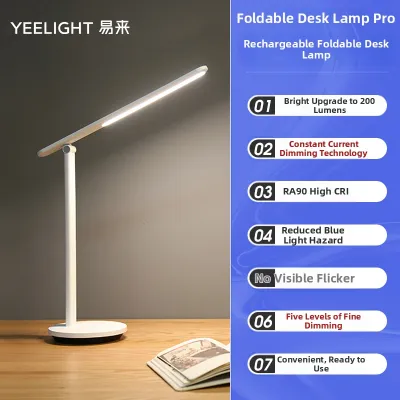
Prices are valid at publication and may change. Please refer to the product page for the latest price.

Brightness and Illumination Coverage
Evaluating brightness requires distinguishing between three key metrics: lumens, lux, and the Color Rendering Index (CRI). Lumens measure the total amount of light emitted by the source in all directions, whereas lux measures the intensity of that light falling on a specific surface area (one lux equals one lumen per square meter). For studying, lux is the more critical metric because it determines how well your actual reading material is illuminated. A high CRI (measured as Ra, with a maximum score of 100) indicates how accurately the light reveals the true colors of objects; a rating of Ra 90 or higher is highly recommended for reading and detailed task work to prevent visual distortion.
Uniformity of light distribution is equally important. High-quality study lamps are engineered to spread light evenly across a desk, avoiding intense “hotspots” directly under the bulb and harsh shadows at the periphery. When your eyes move between highly illuminated and dim areas of a desk, your pupils must constantly dilate and constrict to adjust to the shifting contrast. This continuous muscular adjustment is a primary driver of eye fatigue. When comparing brands, check the manufacturer’s specifications for illuminance levels at specific distances—ideally, the lamp should maintain consistent lux levels across a standard 1.2-meter desk surface.
Eye Protection and Visual Comfort
Many brands market their products as “eye-safe” or “eye-care” lamps, but these claims should always be verified against objective standards. A critical factor is flicker-free performance. Invisible, high-frequency flickering from low-quality LED drivers can cause headaches, eye strain, and general fatigue, even if you cannot consciously perceive the flicker. To verify a lamp’s flicker-free status, look for compliance with standards such as IEEE 1789 or certifications from independent testing bodies like TÜV Rheinland. Avoid relying on the common “smartphone camera test” (looking for rolling dark bands on your phone screen), as modern camera software automatically adjusts exposure and frame rates, making it an unreliable way to diagnose high-frequency flicker.
Blue light management is another essential component of visual comfort. Exposure to cool, blue-enriched light (above 5000 Kelvin) promotes alertness during daytime hours but suppresses melatonin production if used in the evening, disrupting your sleep cycle. Premium and mid-range brands address this by offering adjustable color temperatures, allowing you to select cool white light for daytime focus and warm, amber light (around 2700K to 3000K) for night-time study. Additionally, physical design elements such as frosted diffusers, honeycomb louvers, and recessed LED beads help direct the light downward, preventing direct glare into your eyes and reducing reflective glare off glossy paper or computer screens.
Build Quality, Ergonomics, and Durability
An effective study lamp must be physically adjustable and stable enough to maintain its position over years of daily use. Evaluate the construction of the joints, the weight of the base, and the overall reach of the arm. Premium lamps often feature multi-axis articulation with adjustable tension screws or internal steel springs, allowing you to position the light head precisely where it is needed. The base must contain a heavy ballast—typically cast iron or weighted steel plates—to ensure the lamp does not tip over when the arm is fully extended across your desk.
Material selection directly influences both physical durability and the lifespan of the internal LEDs. LEDs are highly sensitive to heat; prolonged exposure to high temperatures accelerates light decay, causing the lamp to dim prematurely and shift in color temperature. Brands that utilize aluminum alloy or high-grade metal casings provide superior heat dissipation, acting as passive heat sinks that draw warmth away from the delicate LED chips. Conversely, cheap ABS plastic bodies tend to trap heat, which can degrade the LEDs faster and cause the plastic joints to become brittle and crack over time. Finally, consider the control interface: touch-sensitive panels offer a modern, wear-free experience, while physical dials and buttons provide reliable tactile feedback.
How to Evaluate Leading Brands in the Local Market
When shopping in Singapore, study lamps generally fall into three distinct market segments. Understanding these segments helps you narrow down your options based on your specific priorities and budget:
- Premium Professional Lamps: These lamps prioritize advanced optical engineering, exceptional color accuracy (Ra 95+), and heavy-duty metal construction. They are designed for professional drafting, extensive reading, and long-term durability, though they command a higher price point.
- Mid-Range Smart Lamps: This segment focuses on modern technology integration, offering features like ambient light sensors, automatic dimming, app-based controls, and automated color temperature adjustments. They are highly suited for tech-focused users who balance physical writing with digital screens.
- Budget-Friendly Functional Lamps: These lamps provide basic, reliable illumination with simpler mechanical designs, manual switches, and plastic frames. They are highly compact and cost-effective, making them suitable for casual study tasks or smaller workspaces.
To cut through marketing hyperbole, always cross-reference brand claims with recognized international certifications. Look for the IEC 62471 photobiological safety standard, which certifies that the optical radiation from the lamp does not pose a hazard to the eyes or skin. Brands that have undergone independent testing will readily display these certifications on their product packaging or technical data sheets.
Additionally, evaluate the local support infrastructure in Singapore. A long warranty period (typically 2 to 5 years for premium brands) is a strong indicator of manufacturing quality. Ensure the brand has an authorized local distributor or service center in Singapore. This makes it much easier to claim warranty replacements, seek repairs, or purchase replacement parts such as proprietary power adapters if the original is damaged.
| Brand Segment | Typical Strengths | Key Specs to Verify | Best For |
|---|---|---|---|
| Premium Professional | High CRI (Ra > 95), durable aluminum build, wide uniform light spread, long warranties | IEC 62471 certification, lux distribution maps, warranty duration | Detailed drafting, extensive physical reading, and long-term durability |
| Mid-Range Smart | App integration, auto-dimming sensors, sleek designs, color temperature tuning | Smart home compatibility, sensor response times, dimming ranges | Tech-focused setups, dual screen-and-paper workspaces, and automated ambient adjustments |
| Budget Functional | Low cost, simple operation, compact footprints, lightweight designs | Safety Mark certification, physical switch durability, base stability | Basic study tasks, small desks, and secondary light sources |
Matching Lamp Specifications to Your Study Environment
Your physical study environment should dictate the specifications of the lamp you choose. In Singapore, residential study spaces vary widely, from compact built-in desks in HDB flats to large, shared dining tables. If you work at a compact desk (under 1 meter wide), a lamp with a massive base will clutter your workspace; instead, look for brands that offer clamp-on bases or highly compact footprints. For large desks (1.2 meters or wider), you need a lamp with a long, articulating arm and a wide light head to ensure the illumination reaches the outer edges of your work area without requiring you to constantly shift the lamp base.
It is also vital to integrate your study lamp with the ambient lighting of the room. A common mistake is studying with a bright desk lamp in an otherwise dark room. This setup creates extreme contrast glare, forcing your eyes to work harder to adjust every time you look away from your book. This high contrast leads to rapid eye strain and fatigue. To prevent this, always use your study lamp in conjunction with soft, indirect room lighting. The desk lamp should act as task lighting to supplement, not replace, the general illumination of the space.
Your primary study medium should also guide your lamp settings. Reading physical books or writing on paper requires high contrast and excellent color rendering; for these tasks, adjust your lamp to a neutral white light (around 4000K) and a higher brightness level. If you are working on a laptop, tablet, or desktop monitor, your screen is already illuminated. In this scenario, lower the brightness of your study lamp and shift it to a warmer color temperature (around 3000K) to reduce the contrast between the screen and your physical desk. Position the lamp arm so the light head is angled away from the screen to prevent reflective glare from bouncing off the glass into your eyes.
Electrical Safety, Setup, and Daily Maintenance
Operating electrical appliances safely is paramount, especially in a home environment. In Singapore, always verify that the study lamp’s power adapter carries the Singapore Safety Mark. This registered mark indicates that the product has been tested and certified to meet the safety requirements established by local regulatory bodies, protecting you against electrical short circuits, overheating, and fire hazards.
Verify that the lamp is compatible with Singapore’s local electrical grid, which operates at 230V and 50Hz, and comes equipped with a compatible Type G three-pin plug. If you are purchasing a study lamp from international online marketplaces, double-check these specifications carefully. Avoid using high-wattage step-down transformers or loose, uncertified travel adapters for long-term daily use, as these can fail under load and present significant electrical safety risks.
To maintain optimal light output and extend the lifespan of your study lamp, establish a simple cleaning routine. Over time, dust can accumulate on the light diffuser, reducing the brightness and altering the light distribution. Always unplug the lamp from the wall socket before performing any maintenance. Use a dry or slightly damp microfiber cloth to gently wipe down the diffuser and the outer casing. Never spray liquid cleaners or water directly onto the lamp, particularly near touch-sensitive control panels, joints, or power ports, as moisture can easily seep into the housing and permanently damage the internal electronic circuitry.
If your study lamp experiences electrical faults—such as persistent flickering, a burning smell, or a completely unresponsive power switch—stop using it immediately and disconnect it from the power source. Do not attempt to open the casing, repair internal wiring, or replace integrated LED boards yourself. Modern LED study lamps contain complex, integrated driver boards that are not user-serviceable, and attempting DIY repairs can void your warranty and compromise electrical safety. Always consult the manufacturer’s authorized local service center or a qualified professional electrician to resolve any technical issues.
Frequently Asked Questions (FAQ)
How many lumens do I need for a study desk?
For focused reading and writing, you should aim for a desk surface illuminance of 500 to 750 lux. Because lux measures the light landing on your actual workspace, look for a study lamp that delivers this range at your typical working height (usually 40 to 50 centimeters above the desk). To achieve this level of surface illuminance, a dedicated study lamp emitting between 500 and 1000 lumens of total light output is generally sufficient for a standard-sized desk.
Are smart study lamps worth the extra cost?
Smart study lamps are worth the additional investment if you frequently study across changing daylight conditions. Their built-in ambient light sensors automatically adjust the lamp’s brightness to maintain a consistent light level on your desk as natural light fades, reducing eye strain. They also allow you to schedule automatic color temperature transitions to support your sleep cycle. However, if you prefer a distraction-free environment and do not mind adjusting settings manually, a high-quality manual lamp with physical controls will provide the same optical performance at a lower price point.
Can I use a standard desk lamp for prolonged studying?
While standard decorative or basic desk lamps are fine for short, casual tasks, they are generally not suitable for prolonged study sessions. Standard lamps often lack advanced optical diffusers, leading to uneven light distribution, harsh hotspots, and distracting glare. They also frequently use lower-quality LED drivers that exhibit high-frequency flicker. A dedicated study lamp is engineered specifically to provide uniform, flicker-free, and glare-controlled illumination, which is essential for protecting your visual health and maintaining focus over long periods.
Community discussion
Share your experience or ask a question. Comments are reviewed before publication.