
When searching for the most energy-efficient silver LED bulb in Singapore, the ideal choice is not defined by a single brand name, but rather by how a brand balances luminous efficacy against upfront cost. Luminous efficacy, measured in lumens per watt (lm/W), tells you exactly how much light a bulb produces for every watt of electricity it draws. Premium international brands typically lead the market in this metric due to their advanced thermal management and high-performance LED chips, whereas value-oriented regional brands offer a lower initial purchase price that can make them highly competitive for budget-conscious projects.
Because silver bulbs—whether they feature a reflective silver cap or a decorative silver-dipped finish—rely on coatings that physically block or redirect light, they inherently experience a slight reduction in overall light transmission compared to standard clear or frosted bulbs. To maximize your energy savings without sacrificing brightness, you must evaluate brands based on their verified lm/W ratings and ensure they carry the appropriate local safety certifications for Singapore’s electrical grid. Furthermore, Singapore’s tropical climate means that indoor spaces can experience high ambient temperatures, making the thermal efficiency of your bulb choice a critical factor in preventing premature failure.
What Are Silver LED Bulbs and How Do They Affect Efficiency?
A silver bulb is a specialized lighting product characterized by a metallic, reflective silver coating applied to a portion of its glass envelope. Unlike standard LED bulbs that aim for uniform, multi-directional light dispersion, silver bulbs are designed to control the direction of light or serve as distinct decorative elements within a space. Understanding the mechanical and optical differences between these designs is the first step in assessing their energy footprint.
Products mentioned in this guide
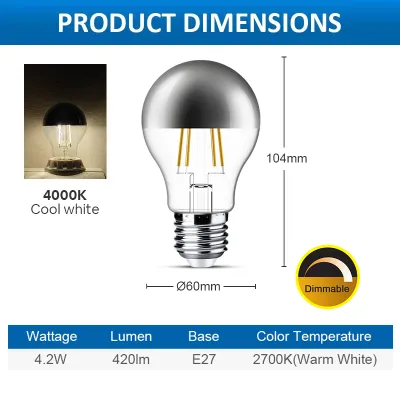
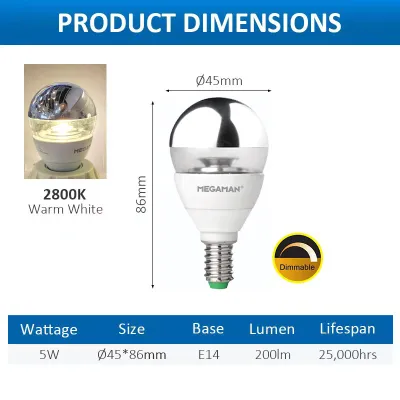
![[✅💡NEA Energy Label &AuthorizedSeller]High-Quality E14 5W FROSTED LED CANDLE Bulb GOLD/SILVER (Set of 2)](https://img.lazcdn.com/g/p/297b16453f2a5ba7cb6dda9cc472b5cc.png_400x400q80.png_.webp)
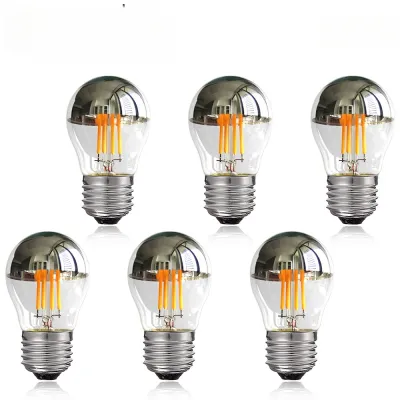
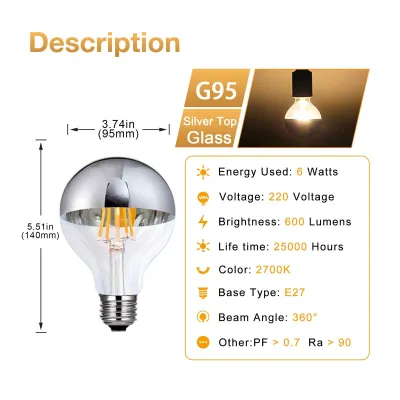
Prices are valid at publication and may change. Please refer to the product page for the latest price.
Silver Cap/Bowl vs. Decorative Silver Dipped
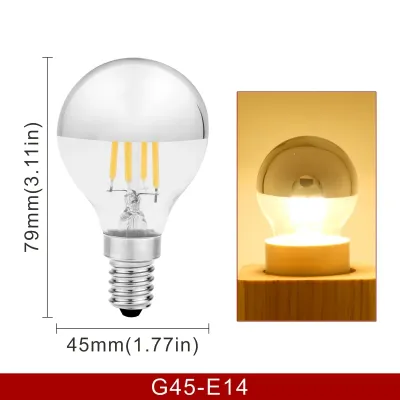
Silver bulbs generally fall into two primary design categories, each serving a distinct functional or aesthetic purpose. The first category is the silver cap or silver bowl bulb, which features a mirror-like silver coating on the top half of the glass dome. This reflective crown blocks direct light from shining downward, instead bouncing it backward into the fixture’s internal reflector to create soft, indirect illumination. These are commonly installed in dining room pendants, exposed eye-level fixtures, and task lights where preventing direct glare is essential for visual comfort.
The second category consists of decorative silver-dipped vintage bulbs, where the silver coating is applied in stylized patterns, gradients, or around the base to complement exposed LED filaments. These bulbs are chosen primarily for their aesthetic appeal in industrial, modern, or minimalist interior designs, acting as visual focal points rather than high-output light sources. Because these two types utilize different glass structures and heat-dissipation techniques, their operational efficiency and thermal profiles can vary significantly.
How Silver Coatings Impact Light Output and Efficiency
The presence of an opaque, reflective silver coating introduces a physical barrier that directly impacts the bulb’s overall luminous efficiency. In a standard clear or frosted LED bulb, light waves escape the glass envelope with minimal obstruction. In contrast, the silver coating on a silver bulb absorbs and redirects a portion of the generated light waves, meaning some of the initial lumen output is lost as internal reflection and minor heat.
Consequently, a silver bulb often requires a slightly higher wattage or a more advanced, highly efficient LED chip to achieve the same perceived brightness in a room as an unobstructed clear bulb. When comparing brands, you cannot rely solely on wattage as a measure of brightness. Instead, you must look closely at the rated lumen output on the packaging; a highly efficient brand will use premium LED diodes that generate more lumens per watt, offsetting the light loss caused by the silver coating and ensuring your electricity bills remain low.
Key Dimensions for Comparing Brand Efficiency
To make an informed purchase that delivers genuine long-term savings, you need a structured framework to evaluate different silver bulb options. Relying on vague marketing terms like “eco-friendly” or “high-efficiency” is rarely sufficient. By focusing on verifiable technical specifications, you can objectively compare the performance of any brand sold in Singapore.

Luminous Efficacy (lm/W) and Brightness
The most reliable metric for comparing the energy efficiency of silver bulbs is luminous efficacy, which is calculated by dividing the total light output (lumens) by the power consumption (watts). For instance, if a silver cap bulb produces 600 lumens while drawing 6 watts of electricity, its luminous efficacy is 100 lumens per watt (lm/W). Another model that produces the same 600 lumens but draws 8 watts has an efficacy of only 75 lm/W, making it 25% less efficient.
When conducting this comparison, ensure you are comparing bulbs with similar color temperatures, such as Warm White (2700K to 3000K) or Cool White (4000K). Cooler color temperatures naturally exhibit slightly higher efficacy ratings due to the chemical composition of the phosphors used on the LED chips. Additionally, verify that the beam angles are comparable, as a highly concentrated beam can sometimes appear brighter than a wide-angle flood, even if the total lumen output is identical.
Lifespan and Lumen Maintenance
The rated lifespan of an LED bulb—typically ranging from 15,000 to 25,000 hours—is a crucial factor in its overall efficiency and value. However, a bulb’s lifespan is only half the story; you must also consider lumen maintenance, which describes how well a bulb maintains its brightness over time. Over thousands of hours of operation, all LED chips gradually degrade and lose brightness, a phenomenon often measured by the L70 standard, which indicates the point at which a bulb’s light output drops to 70% of its original rating.
Because silver coatings reflect light back into the bulb, they can trap a small amount of heat within the glass envelope. Premium brands mitigate this issue by using superior thermal dissipation materials, such as ceramic bases, advanced aluminum heat sinks, or specialized cooling gases inside the envelope. Brands with poor thermal management will experience rapid diode degradation, causing the bulb to dim prematurely or fail completely long before reaching its rated lifespan, thereby wiping out any projected energy savings.
Price-to-Performance and Long-Term Savings
Evaluating energy efficiency requires balancing the upfront purchase price against the ongoing operational costs. To do this, you can calculate the cost per 1,000 lumens and factor in Singapore’s residential electricity tariffs. The regulated electricity tariff managed by SP Group serves as an excellent benchmark for these calculations, typically ranging between S$0.30 and S$0.35 per kilowatt-hour (kWh) depending on seasonal adjustments and fuel costs.
Consider a practical scenario: if you run ten silver bulbs in your living room for an average of 6 hours per day, they will operate for approximately 2,190 hours over a year. Replacing ten inefficient 8W silver bulbs (totaling 80W) with ten highly efficient 5W silver bulbs (totaling 50W) reduces your hourly consumption by 30 watts. Over a year, this saves approximately 65.7 kWh of electricity, translating to direct savings of roughly S$19.71 to S$23.00 annually on your utility bill, assuming a tariff rate of S$0.30 to S$0.35 per kWh. Over a five-year lifespan, these savings compound, easily offsetting a higher initial purchase price for the more efficient models.
Evaluating Silver LED Bulb Brands Available in Singapore
The Singapore retail market offers a diverse array of lighting brands, ranging from household global names to regional value brands. Navigating these options requires understanding what each tier offers in terms of build quality, specification accuracy, and local compliance.
Premium International Lighting Brands
Premium international brands, which are widely stocked in major Singapore lighting showrooms, department stores, and official brand boutiques, are characterized by their heavy investment in research and development. These manufacturers utilize top-tier LED drivers, high-performance phosphors, and robust thermal designs. As a result, their silver bulbs frequently achieve superior luminous efficacy, often exceeding 90 to 100 lm/W, while maintaining a high Color Rendering Index (CRI) of 80 or 90+, which ensures that colors in your home look rich and natural.
When purchasing premium brands, you can expect highly accurate, third-party-verified specification sheets and comprehensive warranties that typically span two to five years. Crucially, these bulbs are fully certified to meet local safety standards, bearing the Singapore SAFETY Mark issued by Enterprise Singapore. While these premium options command a higher initial price—often ranging from S$10 to S$25 per bulb—their long-term reliability, consistent light output, and lower energy consumption make them an excellent investment for primary living spaces.
Value-Oriented and Regional Brands
Value-oriented and regional brands, commonly found in neighborhood hardware shops, DIY centers, and online marketplaces, present a highly budget-friendly alternative. These brands typically price their silver bulbs between S$4 and S$8, making them highly attractive if you need to purchase bulbs in bulk for a large renovation or a commercial fit-out. Many of these manufacturers have made significant strides in efficiency, offering models that deliver respectable performance for everyday residential use.
However, consumers must exercise greater caution when evaluating this tier. Luminous efficacy in value-oriented brands may be slightly lower, often hovering around 70 to 80 lm/W, meaning they will draw slightly more power to produce the same amount of light as a premium counterpart. Additionally, specification accuracy on packaging can occasionally vary, and warranties may be limited to a single year or absent entirely. It is absolutely vital to inspect the packaging of these bulbs to verify that they display clear lumen and wattage ratings, and that they carry the mandatory Singapore SAFETY Mark to guarantee they have been tested for electrical safety under local grid conditions.
Decision Framework: Which Brand Tier Should You Choose?
To finalize your purchasing decision, you must align the technical capabilities of these brand tiers with your specific household requirements, aesthetic goals, and budget constraints.
- Choose premium international brands if: The silver bulb will be installed in high-ceiling pendants, heavy chandeliers, or other hard-to-reach fixtures where replacing a failed bulb requires significant effort or specialized equipment. These brands are also ideal for primary living areas, such as dining rooms, kitchens, or living rooms, where high color rendering, consistent brightness, and excellent glare control are essential for daily comfort and visual appeal.
- Choose value-oriented brands if: You are outfitting secondary rooms, guest bedrooms, hallways, or low-traffic areas where the lights are only turned on for short periods each day, making the long-term energy savings of premium chips less financially impactful. This tier is also suitable if you are working within a strict upfront budget for a large-scale project or temporary installation where minimizing initial capital expenditure is the primary objective, provided you verify that the specific models carry the mandatory Singapore SAFETY Mark.
- Verify first if: You intend to use your silver LED bulbs in conjunction with existing wall dimmers or smart home automation systems. Because silver-coated bulbs rely on specific internal LED drivers, compatibility with older phase-cut dimmers or modern smart switches can vary widely. Always check the manufacturer's official dimmer compatibility list before purchasing to prevent issues like flickering, buzzing, or premature driver failure.
Installation, Compatibility, and Safety Checks
Ensuring that your chosen silver LED bulbs operate safely and efficiently requires careful attention to physical and electrical compatibility before and during installation.
First, verify the base type of your existing light fixtures. The most common interfaces in Singapore are the E27 Edison screw base and the B22 bayonet cap, though smaller fixtures may require E14 screw bases. Additionally, measure the physical dimensions of the bulb’s glass envelope and heat sink; because some silver bulbs feature unique shapes or larger bases to manage heat, they may not fit inside narrow glass shades or tight decorative cages.
Second, confirm that the bulb is rated for Singapore’s standard electrical system, which operates at 230V and 50Hz. Installing a bulb designed solely for 110V systems will cause immediate electrical failure and potential safety hazards.
Finally, always adhere to strict electrical safety boundaries. Before replacing any light bulb, turn off the mains power at your home’s main distribution board (DB box) rather than relying solely on the wall switch. If your installation requires modifying fixed wiring, mounting heavy fixtures at heights, installing bulbs in damp environments like bathrooms or outdoor balconies, or if you are unsure of the fixture’s maximum wattage limits, stop immediately and consult a licensed electrician. Never attempt to modify a bulb’s base or force a misfit bulb into a fixture, as this can compromise electrical insulation and lead to short circuits or fire hazards.
Community discussion
Share your experience or ask a question. Comments are reviewed before publication.