
Quick Answer: Which Desk Lamp Brand Tier Suits Your Study Routine?
Finding the right study desk lamp in Singapore is not a matter of identifying a single, universally superior brand. Instead, the ideal choice depends on a conditional framework that balances your daily study duration, desk layout, and budget. For students facing long hours of intensive reading, premium eye-care brands offer unmatched optical uniformity and glare reduction. If you prefer automated adjustments and smart home integration, tech-focused brands provide convenient scheduling and color temperature tuning. For casual, short-term tasks, budget-friendly brands offer reliable basic illumination at a fraction of the cost. Ultimately, matching the brand’s engineering focus to your specific study routine ensures the best balance of performance and value.
Core Comparison Dimensions for Student Desk Lamps
Light Quality (Illuminance, Uniformity, and CRI)
To evaluate desk lamps objectively, you must look past generic marketing terms such as “eye-protection” or “anti-blue light” and examine verifiable physical metrics. The primary measurement of brightness on a surface is illuminance, measured in lux. For standard reading and writing, the study surface should achieve an illuminance of at least 500 lux. For highly detailed work, such as technical drawing or fine art, this requirement can rise to 1000 lux. However, high brightness alone is insufficient without optical uniformity. Uniformity refers to how evenly light is distributed across the desk. If a lamp creates a harsh, bright hotspot directly underneath the bulb while leaving the surrounding areas dark, your pupils must constantly dilate and constrict as your eyes move across the desk, leading to rapid visual fatigue.

Another critical metric is the Color Rendering Index (CRI), measured as Ra. This index rates how accurately a light source reveals the true colors of objects compared to natural sunlight, which has a CRI of 100. For studying, a lamp with a CRI of Ra 90 or higher is highly recommended, as it prevents color distortion when viewing textbooks, anatomical diagrams, or colorful illustrations. When comparing brands, always check the official manufacturer specification sheets for these exact metrics rather than relying on vague promotional claims.
Products mentioned in this guide
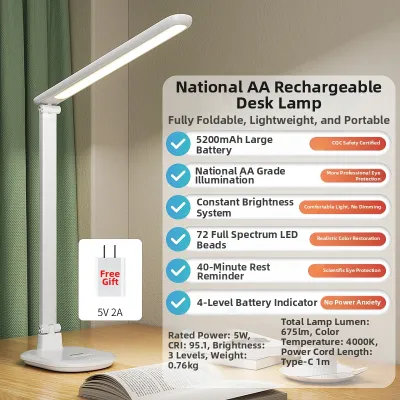
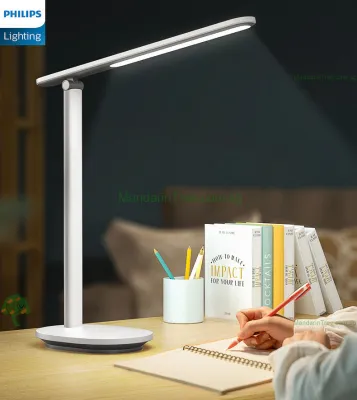
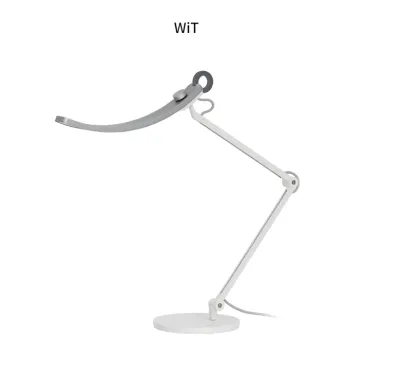
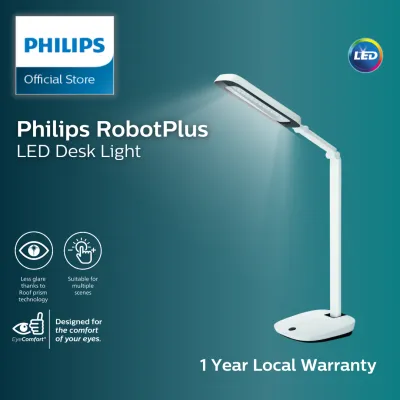
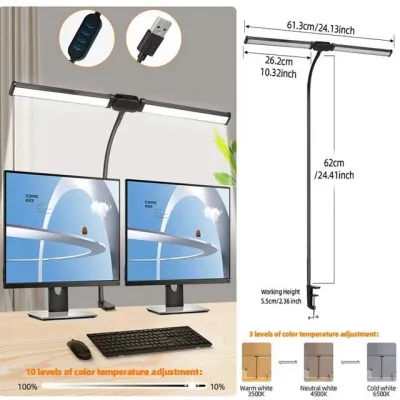
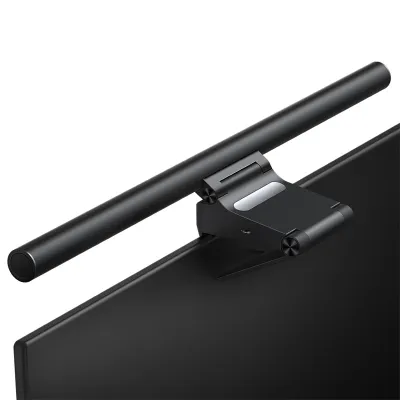
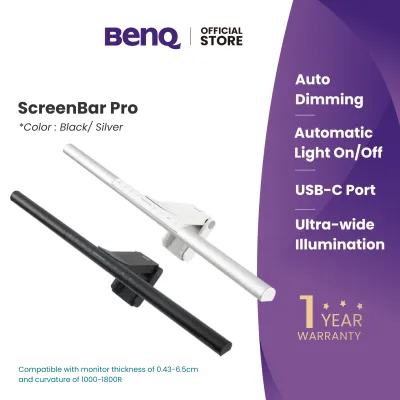
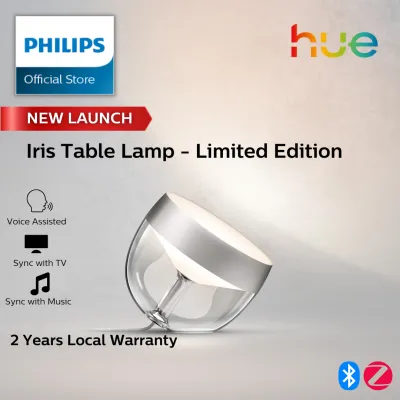
Prices are valid at publication and may change. Please refer to the product page for the latest price.
Ergonomics and Adjustability
The physical design of a desk lamp dictates how effectively it illuminates your workspace without cluttering your desk. Traditional articulated lamps feature multi-jointed arms that allow you to adjust the height, angle, and direction of the light source. While highly flexible, these designs require robust mechanical joints and heavy bases to prevent tipping when fully extended.
In contrast, modern asymmetric desk lamps or monitor light bars project light at a specific angle to illuminate the desk surface while avoiding the computer screen. This design minimizes screen glare, which is a major contributor to eye strain during mixed-media studying. When evaluating a brand’s ergonomics, consider the physical footprint of the lamp base. In typical Singaporean study spaces, such as compact bedrooms in HDB flats, desk real estate is limited. A lamp with a bulky base can severely restrict your writing area, making clamp-on bases or space-saving designs highly advantageous.
Smart Features vs. Manual Controls
The choice between smart features and manual controls is a trade-off between automated convenience and long-term mechanical simplicity. Smart desk lamps often feature built-in ambient light sensors that automatically adjust the lamp’s brightness in real-time as natural daylight fades. Some tech-integrated brands also offer app connectivity, allowing you to schedule color temperature changes that align with your circadian rhythm, transitioning from cool white light during the day to warm white light in the evening.
On the other hand, manual controls—such as physical dials, buttons, or simple touch sliders—offer immediate and reliable operation. Manual lamps are completely independent of home Wi-Fi networks, firmware updates, or proprietary software applications. For students who want a straightforward, distraction-free study environment, a high-quality manual lamp with stepless dimming is often more reliable and less prone to technical issues over years of daily use.
Brand Tier Comparison: What to Expect at Different Price Points
Premium Eye-Care and Ergonomic Brands
Premium brands, typically priced between S$150 and S$300+, justify their cost through advanced optical engineering and superior build materials. Manufacturers in this tier focus on wide-angle illumination and precise asymmetric light distribution. These lamps use custom-engineered lenses or reflectors that guide light across a wide horizontal arc, ensuring that even large desks receive uniform illumination from edge to edge.
In addition to optical performance, premium lamps feature high-grade structural components, such as counterbalanced aluminum arms and heavy steel bases. This robust construction ensures the lamp remains perfectly stable at any angle without sagging over time. While these premium options represent a substantial financial investment and often occupy more physical space, they are highly recommended for students who engage in intensive, multi-hour study sessions every day.
Smart and Tech-Integrated Brands
Smart and tech-integrated brands, generally priced from S$50 to S$150, focus on connectivity, automation, and modern aesthetics. Brands in this segment offer seamless integration with popular smart home ecosystems, including Apple Home, Google Assistant, and proprietary mobile applications. These lamps allow users to customize lighting scenes, set study timers, and automate color temperature adjustments based on the time of day.
The primary trade-off with smart lamps is their reliance on software and wireless networks. Setting up these features requires a stable 2.4GHz Wi-Fi connection, and occasional firmware updates are necessary to maintain compatibility and security. For tech-savvy students who appreciate a connected study environment, these brands offer excellent versatility, though they may introduce unnecessary complexity for those who prefer a simple plug-and-play experience.
Budget and Value-Oriented Brands
Budget brands, typically priced under S$50, cater to casual users and those with basic lighting needs. Brands in this category provide adequate brightness and basic color temperature switching at a highly accessible price point. Many of these lamps feature compact, lightweight designs that are easy to move or clamp onto the edge of a desk.
However, budget-tier lamps often compromise on material quality and advanced optical engineering. They frequently utilize plastic joints that can loosen or degrade after repeated adjustments, and their optical designs may produce more direct glare or less uniform light distribution. When purchasing a budget lamp, it is essential to look past the low price and verify that the product meets basic electrical safety standards and does not exhibit visible light flicker, which can cause headaches during prolonged use.
Essential Checks for Buying Desk Lamps in Singapore
Before finalizing your purchase, you must verify that the desk lamp is fully compatible with Singapore’s electrical infrastructure and living environments. Singapore operates on a standard mains voltage of 230V at a frequency of 50Hz, utilizing Type G three-pin electrical plugs. If you are purchasing a direct-wall plug lamp from an international online marketplace, ensure it is rated for 230V and includes a certified Type G plug to avoid the safety hazards associated with loose, uncertified travel adapters.
Fortunately, many modern LED desk lamps bypass direct mains voltage by utilizing low-voltage external power adapters or USB-C inputs. A USB-C powered lamp offers excellent versatility, as it can be powered directly from a laptop, a monitor, or a standard multi-port USB charger. However, if the lamp relies on an external AC/DC power adapter plugged into the wall, you must look for the Enterprise Singapore Safety Mark on the adapter. This safety label guarantees that the electrical component has been tested and certified safe for domestic use, protecting your home from short circuits and fire hazards.
Additionally, consider the physical layout of your study area. Many HDB bedrooms feature built-in study desks with overhead shelving or limited depth. Measure the clearance height and the depth of your desk before buying. A lamp with a long, non-adjustable vertical stem may clash with overhead cabinets, while a deep base might push your keyboard too close to the edge of the desk.
Finally, always prioritize safety when setting up and maintaining your lighting. Before cleaning your desk lamp or adjusting any structural joints, disconnect the power supply entirely. Follow the manufacturer’s specific care and maintenance instructions, and never use wet cloths near electrical connections or exposed LED components.
Final Decision Framework: Matching the Lamp to the Student
To choose the right study desk lamp, begin by assessing your physical workspace constraints. If your desk has limited depth or is crowded with books and computer monitors, prioritize space-saving designs, such as clamp-on lamps or asymmetric monitor light bars. If you have a spacious, dedicated study desk, a traditional articulated lamp with a heavy, stable base will provide the greatest flexibility in directing light exactly where it is needed.
Next, evaluate your daily study habits. If you study for four or more hours nightly, investing in a premium eye-care brand is highly justified to protect your eyes from fatigue caused by uneven illumination and glare. If your study sessions are shorter or highly varied, a mid-range smart lamp or a high-quality budget lamp will offer sufficient performance without overextending your budget.
Lastly, consider visiting physical lighting showrooms or home goods stores in Singapore to test candidate lamps in person. This allows you to physically feel the resistance of the hinges, observe the actual warmth of the light, and check for any distracting glare on a simulated desk surface. If purchasing online, always verify the seller’s return policy and warranty terms to ensure you can easily exchange the product if it does not fit your physical setup.
Frequently Asked Questions (FAQ)
Is a monitor light bar a better alternative to a traditional desk lamp for studying?
Monitor light bars are excellent space-saving alternatives that attach directly to the top of your screen, projecting light downward to illuminate the immediate desk area while eliminating screen glare. This design is ideal if your study routine is heavily centered on computer work and digital reading. However, because monitor light bars project light in a fixed, narrow beam close to the screen, they may not provide sufficient, uniform illuminance for reading large physical textbooks or writing on papers placed further away from the monitor. For heavy paper-based studying, a traditional desk lamp remains the superior choice.
What color temperature is best for late-night studying?
For late-night study sessions, a warm white light with a color temperature between 3000K and 4000K is highly recommended. Cooler, blue-toned light (above 5000K) suppresses the production of melatonin, a hormone essential for sleep, which can disrupt your natural sleep cycle. A warmer color temperature provides a relaxing visual environment while still offering sufficient contrast for reading. Conversely, cooler light (4000K to 5000K) is ideal for daytime focus and alertness. To accommodate both daytime and nighttime study schedules, choose a desk lamp that offers adjustable color temperature controls.
Community discussion
Share your experience or ask a question. Comments are reviewed before publication.