
When planning a home lighting upgrade in Singapore, transitioning to T5 LED technology is one of the most practical steps you can take to lower your household electricity bills. T5 LED tubes are highly popular for residential applications, particularly for cove lighting in living rooms, under-cabinet illumination in kitchens, and backlighting in study areas. However, determining which brand offers the most energy-efficient option requires looking beyond brand names and marketing slogans.
True energy efficiency is not a static brand characteristic; it is determined by the specific engineering, driver quality, and thermal management of individual product lines. To find the most efficient T5 LED tube light, you must compare key technical specifications—such as luminous efficacy, power factor, and driver efficiency—across the models available in the local market. By learning how to read and verify these specifications on product packaging or manufacturer datasheets, you can make an informed decision that delivers the lowest operating costs and the best long-term value for your home.
Key Specifications to Verify for Energy Efficiency
To accurately assess the energy efficiency of different T5 LED tube light brands, you must look at the relationship between light output and power consumption. The most critical metric to evaluate is luminous efficacy, which is expressed in lumens per watt (lm/W). This ratio tells you exactly how much visible light a tube produces for every watt of electricity it draws from your home’s electrical system. When comparing brands at local lighting shops or on online marketplaces, always calculate or locate this figure; a tube with an efficacy of 140 lm/W is significantly more efficient than one rated at 100 lm/W, even if both are advertised as energy-saving models.
Products mentioned in this guide
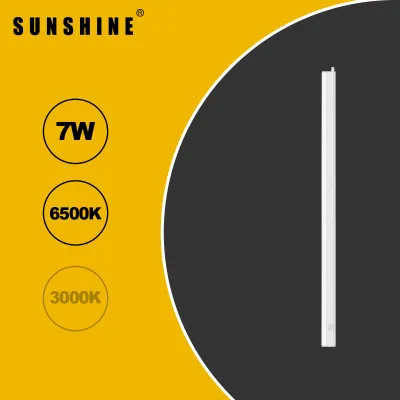
![LED PRO LED LIGHT Led T5 Led Tube/ Led Tube Tri-Tone Daylight/Cool White/Warm White [300mm/600mm/900mm/1200mm]](https://img.lazcdn.com/g/p/88326b36ba15a5b70e2b9bb596605a3d.jpg_400x400q80.jpg_.webp)
![[Buy 2 Free 1] BWL LED LIGHT LED Tube T5 LED Tube TRI-TONE/3000K/4000K/6000K](https://img.lazcdn.com/g/p/2718f00f73afda62d0ec0525659e883f.jpg_400x400q80.jpg_.webp)
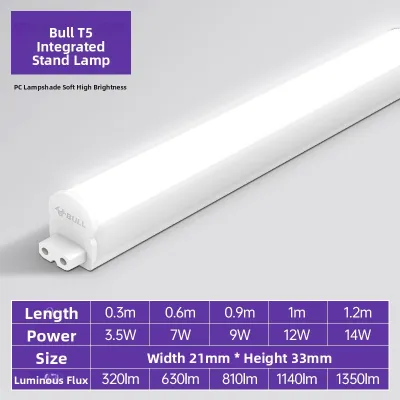
![[SG STOCK]High Grade LED T5 Tube Light Drop Curve Ceiling Light Lampu Plaster Siling Mentol T5](https://img.lazcdn.com/g/p/a2ad1752d35f6b5e9207ddb8cccebcd6.jpg_400x400q80.jpg_.webp)
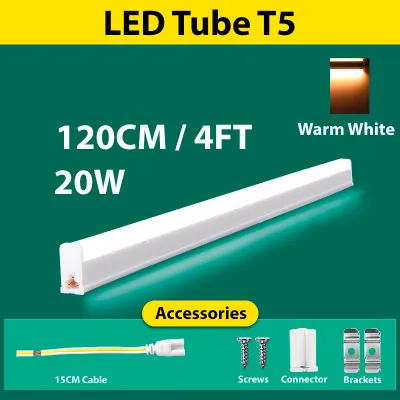
![[2pcs bundle] Philips T5 LED Batten tube for Cove Light/ Cabinet Lighting/Long tube light/ 2pin hole](https://img.lazcdn.com/g/p/2be230f94c21aa9682e6a8192e6f588e.jpg_400x400q80.jpg_.webp)
Prices are valid at publication and may change. Please refer to the product page for the latest price.
Another important factor is matching the wattage to the standard physical lengths of T5 tubes. In residential spaces, T5 tubes typically come in standard lengths such as 2 feet, 3 feet, and 4 feet (approximately 549mm, 849mm, and 1149mm respectively). While a longer tube naturally consumes more total power because it contains more LED chips, the luminous efficacy should remain consistently high across the entire product line. Be cautious of lower-wattage tubes that achieve their low power consumption simply by reducing the light output to inadequate levels, as this may force you to install additional fixtures to achieve the desired brightness.
Beyond basic wattage and lumens, the efficiency of the internal LED driver plays a massive role in overall energy consumption. The driver converts incoming alternating current (AC) from your home’s mains into the direct current (DC) required by the LED chips. Look for brands that specify a high power factor (PF), ideally 0.9 or above. A low power factor (such as 0.5) means the driver draws more current from the grid than it actually converts into useful light, which increases the electrical load on your home’s wiring and can lead to higher indirect energy costs over time.
Essential Features for Singapore Homes
While energy efficiency is a primary consideration, the quality of the light and the durability of the tube in local environmental conditions are equally important. Color temperature, measured in Kelvin (K), and the Color Rendering Index (CRI) determine how comfortable and visually accurate the lighting will be. For Singaporean homes, warm white (3000K) is highly favored for creating a cozy atmosphere in living rooms and bedrooms, while cool white (4000K) or daylight (6500K) is preferred for task-oriented areas like kitchens and home offices. Ensure the brand you choose offers a high CRI (Ra 80 or above) so that colors in your home appear natural and vibrant.

Singapore’s warm and humid tropical climate presents a unique challenge for LED electronics. High ambient temperatures can cause heat to build up rapidly within slim T5 fixtures, especially when they are tucked away in tight cove lighting recesses. Excessive heat accelerates the degradation of both the LED chips and the driver components, leading to premature dimming or early failure. When comparing brands, look for those that incorporate robust heat dissipation designs, such as aluminum backings, thermal-conductive plastics, or ventilated end caps that allow heat to escape efficiently.
Visual comfort is another essential feature that directly impacts your daily well-being. High-quality T5 LED tubes utilize advanced driver circuits that deliver flicker-free performance, preventing the rapid, invisible strobing that can cause eye strain, fatigue, and headaches during prolonged exposure. Additionally, look for tubes with high-quality frosted or diffused polycarbonate covers. These covers help distribute the light evenly and minimize harsh glare, which is particularly important in HDB flats and condominiums with standard ceiling heights where light fixtures are closer to eye level.
Installation Compatibility and Electrical Safety
Before purchasing any T5 LED tube light, you must verify how it will integrate with your existing electrical fixtures. Traditional fluorescent T5 fixtures rely on electronic ballasts to regulate the electrical current. LED T5 tubes are generally divided into two main categories: plug-and-play (ballast-compatible) and direct-wire (ballast-bypass) models. Understanding the differences between these two types is crucial for both safety and energy efficiency.
Plug-and-play T5 LED tubes are designed to be inserted directly into your existing fluorescent fixtures without any rewiring. While this offers a quick and convenient installation process, the old electronic ballast remains active in the circuit and continues to draw a small amount of residual power, typically between 1 and 3 watts. Over several fixtures, this parasitic power draw can noticeably reduce your overall energy savings. Furthermore, if the old ballast eventually fails, the LED tube will stop working, requiring you to replace the ballast anyway.
Direct-wire T5 LED tubes bypass the existing ballast entirely, connecting the mains voltage directly to the tube’s sockets. This method maximizes energy efficiency by eliminating ballast power loss and removes a common point of electrical failure. However, direct-wiring requires modifying the fixture’s internal wiring. Because Singapore’s standard residential electrical supply operates at 230V and 50Hz, any modification to fixed wiring must be handled with extreme care. Always isolate the power at the main distribution board before attempting any installation work, and if you are working at height or feel uncomfortable with electrical wiring, always engage a licensed electrical worker (LEW) to ensure the job is completed safely and in compliance with local regulations.
Evaluating Long-Term Value and Warranties
When comparing different T5 LED tube light brands, looking only at the initial purchase price in S$ can lead to poor long-term decisions. A cheaper, low-efficiency tube may save you a few dollars upfront, but a highly efficient model will quickly offset its higher initial cost through lower monthly electricity bills. To evaluate the true value, compare the projected energy savings over the estimated lifespan of the product against the retail price difference.
To understand how long a T5 LED tube will maintain its performance, look for the manufacturer’s lifespan ratings, typically designated as L70 or L80. An L70 rating of 50,000 hours indicates that the tube is expected to retain at least 70% of its original brightness after 50,000 hours of cumulative use. Brands that provide clear, verified L70 or L80 metrics offer much greater predictability, ensuring you won’t have to replace dimming tubes prematurely.
Finally, always verify the warranty terms and the availability of local customer support. A long lifespan rating is only reliable if it is backed by a robust manufacturer’s warranty, which typically ranges from 1 to 5 years for reputable brands. When buying T5 LED tubes in Singapore, ensure that the warranty can be claimed locally through an authorized distributor or service center. Having a local point of contact makes the replacement process straightforward and saves you from the high shipping costs and long waiting times associated with overseas claims.
Decision Framework: Choosing the Right T5 LED Brand
To select the ideal T5 LED tube light brand for your home, use a structured decision framework based on your specific installation preferences and efficiency goals:
- Prioritize Direct-Wire Models for Maximum Savings: If your main goal is to achieve the lowest possible electricity bills and eliminate future maintenance hassle, choose brands that offer high-efficacy (above 120 lm/W) direct-wire T5 LED tubes. Bypassing the ballast ensures that no energy is wasted by old electrical components.
- Opt for Plug-and-Play for Quick Upgrades: If you want a fast, tool-free installation and prefer not to modify your existing fixtures, look for plug-and-play T5 LED tubes. Before purchasing, always check the manufacturer's ballast compatibility list to ensure the LED tube will work safely with the specific electronic ballast installed in your home.
- Verify Physical Dimensions and Clearance: Measure the physical space inside your light troughs or under-cabinet recesses. In some cases, purchasing an integrated T5 LED fixture—which combines the tube and the housing into a single, slim unit—may be more practical and aesthetically pleasing than retrofitting an old fluorescent casing.
Frequently Asked Questions (FAQ)
Can I replace a fluorescent T5 tube with an LED T5 tube directly?
Yes, but the installation method depends entirely on the type of T5 LED tube you purchase. Plug-and-play (ballast-compatible) T5 LED tubes can be installed directly into your existing fluorescent fixtures without any rewiring, provided your existing electronic ballast is compatible with the new tube. Alternatively, direct-wire (ballast-bypass) T5 LED tubes require you to disconnect or bypass the old ballast, routing the 230V mains power directly to the G5 pin sockets. Direct-wiring is highly recommended for superior energy efficiency and long-term reliability, though it requires basic electrical knowledge or professional assistance.
Does a higher wattage T5 LED tube always mean it is brighter?
No, wattage only measures the amount of electrical power the tube consumes, not the amount of light it emits. The actual brightness of an LED tube is measured in lumens. A highly efficient T5 LED tube with a high luminous efficacy (such as 140 lm/W) can produce the same or greater brightness while consuming fewer watts than an older or lower-quality LED tube with an efficacy of only 90 lm/W. When comparing different brands, always look at the lumen output and the luminous efficacy ratio rather than the wattage to ensure you get the brightest light for the lowest energy consumption.
Community discussion
Share your experience or ask a question. Comments are reviewed before publication.