
When looking for the most energy-efficient UFO LED lights in Singapore, there is no single brand that holds a permanent monopoly on efficiency. Instead, the true efficiency of a “ufo light” is determined by specific product lines, driver designs, and system efficacy measured in lumens per watt (lm/W). Premium lighting manufacturers design high-bay UFO series optimized for maximum system efficacy, while standard commercial brands often prioritize upfront cost-effectiveness over absolute energy savings.
To find the lowest energy consumption for your specific space—whether it is a warehouse in Tuas, a workshop in Ubi, or a commercial facility in Jurong—you must evaluate the system efficacy, driver efficiency, and thermal management of individual models. Relying solely on brand reputation can lead to mismatched specifications and higher-than-expected electricity bills. The most efficient setups typically combine high-efficacy fixtures with smart dimming capabilities and occupancy sensors.
The True Metrics of UFO LED Energy Efficiency
Evaluating a UFO LED light requires looking past the bold marketing headlines on product packaging. Many buyers mistakenly equate higher wattage with better performance or assume that all LED fixtures are inherently optimized for low power consumption. In industrial and commercial settings where high-bay lights operate for twelve to twenty-four hours a day, minor differences in efficiency translate to thousands of dollars in annual energy costs.
Products mentioned in this guide
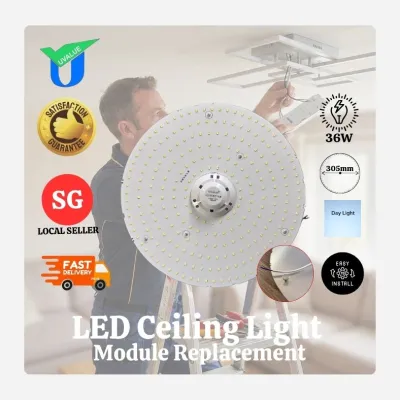
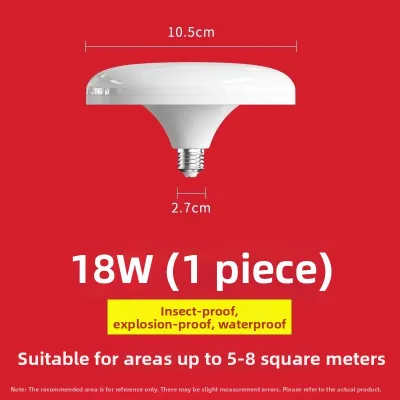
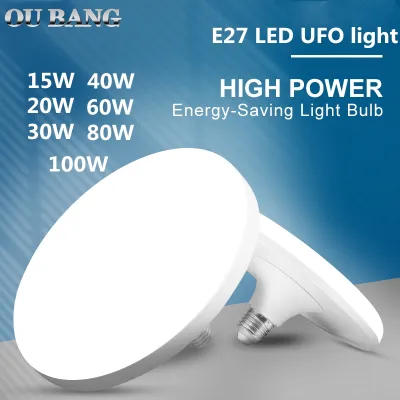
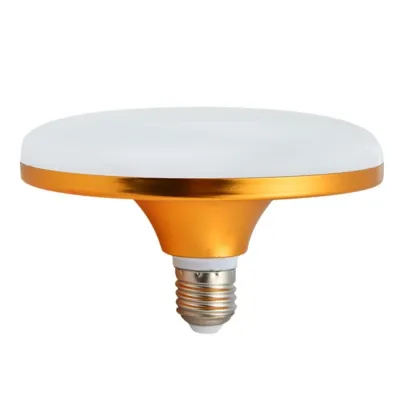
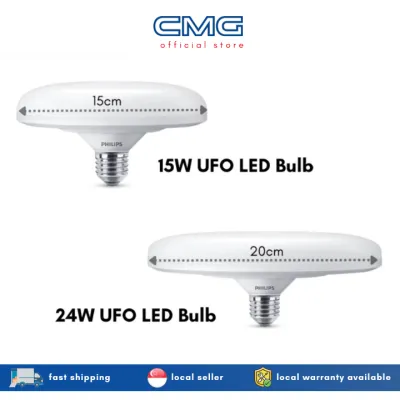
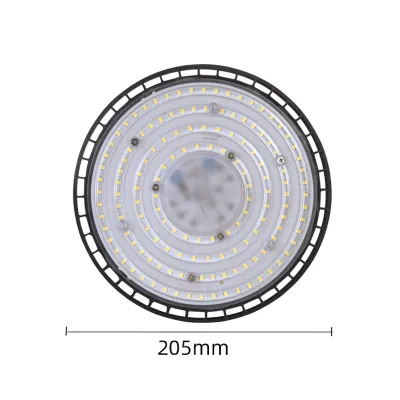
![[In stock]200W 300W 500W LED High Bay Light High Brightness Industrial Lighting 6500K Workshop Warehouse Garage LED UFO Lamp AC220V](https://img.lazcdn.com/g/p/9b4cf1c1ef143a25b47ec6a34955aba1.jpg_400x400q80.jpg_.webp)
Prices are valid at publication and may change. Please refer to the product page for the latest price.
To make an informed decision, you must learn to read the technical specification sheets provided by manufacturers. These sheets contain verified laboratory measurements that reveal how effectively a fixture converts electrical energy into visible light. Understanding these metrics prevents you from overpaying for power that is wasted as heat rather than projected as useful illumination.
System Efficacy vs. LED Chip Efficacy
When comparing UFO LED lights, you will often see impressive figures like 200 lumens per watt (lm/W) advertised on promotional materials. It is critical to distinguish between raw LED chip efficacy and overall system efficacy. The chip efficacy refers only to the light output of the bare light-emitting diode under ideal laboratory conditions. However, once that chip is integrated into a complete fixture, several factors reduce its actual output.
System efficacy—also known as fixture efficacy—is the only valid metric for comparing actual energy consumption. This value is calculated by dividing the total delivered lumens of the complete fixture by the total system wattage consumed, which includes the power lost through the LED driver and the optical lenses. The driver, which converts alternating current (AC) to direct current (DC), always experiences some energy loss as heat. Additionally, the protective glass or polycarbonate lens that shapes the beam absorbs and scatters a portion of the light.
To protect your investment, always look for “delivered lumens” or “fixture efficacy” on the product’s official specification sheet. A fixture with highly efficient chips but a cheap, low-grade driver may have a system efficacy of only 110 lm/W, whereas a well-engineered fixture with a premium driver can achieve a system efficacy of 140 lm/W to 180 lm/W or higher. This difference represents a significant reduction in continuous power draw for the same level of brightness.
Thermal Management and Long-Term Efficiency
Thermal management is a critical factor in determining the long-term energy efficiency and operational lifespan of a UFO LED light, particularly in Singapore’s tropical climate. High-bay fixtures generate substantial heat during operation. If this heat is not rapidly dissipated away from the sensitive LED chips and driver components, the system’s operating temperature will rise, causing the driver to work harder and the light output to degrade prematurely.
This degradation, known as lumen depreciation, means the fixture will produce fewer lumens over time while continuing to draw the same amount of electricity. In warm, humid environments like Singapore warehouses or industrial workshops, poor thermal design accelerates this process. High-quality UFO lights feature robust, heavy-duty die-cast aluminum heat sinks with advanced fin designs that maximize surface area and encourage natural convective airflow.
When comparing brands, always check the L70 or L80 lifespan ratings on the specification sheets. An L70 rating of 50,000 hours indicates that the fixture will maintain at least 70% of its original light output after 50,000 hours of operation. Fixtures with superior thermal management systems often carry L80 or L90 ratings at higher operating temperatures, ensuring that your energy-efficient lighting setup remains bright and cost-effective for many years without requiring early replacement.
How to Verify UFO Light Efficiency Claims and Certifications
To avoid falling victim to exaggerated marketing claims, you must know how to verify the technical specifications provided by manufacturers. Genuinely efficient UFO LED lights are backed by rigorous third-party testing and international certifications. One of the most reliable benchmarks for commercial and industrial lighting is the DesignLights Consortium (DLC) Premium listing. A DLC Premium certification guarantees that the fixture has undergone independent testing to verify its high system efficacy, color quality, and lumen maintenance over time.

In the local market, you should also align your lighting choices with Singapore’s National Environment Agency (NEA) energy guidelines and the Building and Construction Authority (BCA) Green Mark certification requirements. For commercial and industrial buildings seeking Green Mark certification, installing highly efficient lighting systems is a key pathway to earning points. Checking for compliance with local electrical safety standards is equally vital. Ensure that any UFO light you purchase complies with international safety standards such as IEC 60598, which verifies that the fixture is electrically safe for continuous operation.
Beyond the fixture’s light output, examine the specifications of the integrated LED driver. The driver’s power factor (PF) and total harmonic distortion (THD) are critical indicators of electrical efficiency. A high-quality driver should have a power factor of 0.90 or higher, meaning that at least 90% of the supplied electricity is actively used to power the light, rather than being lost as reactive power. Additionally, look for a THD rating of less than 20% (ideally under 15%) to prevent electrical noise and harmonic distortion from disrupting other sensitive equipment on your facility’s electrical grid. Always verify that the driver’s input voltage matches Singapore’s standard single-phase 230V or three-phase 400V electrical supply at 50Hz.
Decision Framework: Matching UFO Light Efficiency Tiers to Your Facility
Choosing the right UFO LED light involves balancing the upfront purchase price against the long-term savings on your electricity bills. High-efficacy, premium fixtures often command a higher initial capital investment, but they deliver lower operational costs over their lifespan. Conversely, standard commercial fixtures offer lower upfront costs but may consume slightly more energy to produce the same level of illumination.
To determine the most financially sound option for your facility, you must analyze your operational patterns, ceiling heights, and corporate sustainability goals. Applying a structured decision framework helps ensure that you do not overspend on unnecessary premium features or underspecify your lighting, which can lead to high energy bills and frequent maintenance issues.
Choose Premium High-Efficacy Brands If…
Investing in premium, high-efficacy UFO LED lights is highly recommended if your facility operates on a 24/7 schedule or has exceptionally long daily operating hours, such as logistics hubs, cold storage facilities, or continuous manufacturing plants. In these scenarios, the rapid accumulation of operating hours means that the energy savings achieved by a fixture with 160 lm/W compared to one with 120 lm/W will quickly offset the higher initial purchase price, often resulting in a payback period of less than eighteen months.
Premium fixtures are also essential for spaces with very high ceilings—typically nine meters or higher—where high-lumen output is required to project sufficient light down to the floor level. These fixtures utilize advanced optical lenses to focus the light precisely, reducing wasted illumination on walls and ceilings. Furthermore, if your company is striving to meet strict corporate sustainability targets, reduce its carbon footprint, or achieve a prestigious BCA Green Mark Gold or Platinum rating, premium high-efficacy models provide the verifiable performance data needed to document your energy reduction achievements.
Choose Standard Commercial Brands If…
Standard commercial UFO LED lights are a more practical and cost-effective choice for facilities with intermittent or low-frequency usage. If your space is a secondary storage warehouse, a retail backroom, or an assembly area that is only occupied for a few hours a day, the potential energy savings from a premium fixture may take many years to cover the initial cost difference. In these cases, a standard commercial fixture with a system efficacy of 110 lm/W to 130 lm/W offers an excellent balance of performance and affordability.
These standard models are also highly suitable for spaces with moderate ceiling heights—between five and eight meters—where extreme light projection is not required. While their efficacy ratings may be lower than those of premium tiers, modern standard LED fixtures still deliver massive energy savings of up to 60% to 70% when replacing legacy metal halide, high-pressure sodium, or fluorescent high-bay lights. If your immediate capital budget is strictly limited, standard commercial brands allow you to upgrade your lighting system and start saving energy immediately without a heavy upfront financial burden.
Verify First If…
You must pause and conduct a thorough verification or consult a qualified lighting designer and licensed electrical professional if your facility presents complex environmental or operational challenges. For instance, if your space is subject to extreme ambient temperatures—such as commercial cold rooms or high-heat manufacturing zones—standard UFO lights may fail prematurely or experience severe efficiency drops. Specialized fixtures with certified operating temperature ranges, robust IP (Ingress Protection) ratings like IP65 or IP66, and corrosion-resistant coatings are required for these harsh environments.
Additionally, if you plan to integrate your lighting with a complex building management system (BMS) or require specialized chemical exposure resistance (such as in food processing facilities), standard off-the-shelf fixtures may not be compatible. Remember that modifying fixed electrical wiring, working at significant heights to mount heavy high-bay fixtures, or installing lights in damp or outdoor areas requires strict adherence to local safety regulations. Always ensure that power-isolation protocols are followed and that the installation is carried out by a qualified professional to guarantee safety and maintain product warranties.
Real-World Variables That Affect Actual Power Consumption
While the technical specifications on a UFO LED light’s packaging provide a baseline for comparison, your actual electricity bills will be heavily influenced by real-world installation and operational variables. Simply purchasing an efficient fixture is not enough; you must also ensure that the lighting system is designed and maintained to operate at peak efficiency within your specific physical environment.
One of the most critical variables is the mounting height and the choice of beam angles. UFO LED lights are available with various beam angles, typically ranging from 60 to 120 degrees. If you install a fixture with a wide 120-degree beam angle on a very high ceiling, much of the light will scatter into the upper walls and empty space, requiring you to install more fixtures or use higher-wattage models to achieve the necessary lux levels on the floor. Conversely, using a narrower 60-degree or 90-degree beam angle focuses the light directly onto work surfaces and aisles, maximizing useful illumination and allowing you to use lower-wattage fixtures to achieve the same operational brightness.
Integrating your UFO lights with smart controls offers massive potential for additional energy savings. Equipping fixtures with microwave occupancy sensors ensures that lights are automatically dimmed or turned off in unoccupied aisles, which is particularly effective in large warehouses where foot traffic is sporadic. Implementing daylight harvesting sensors near skylights or large windows allows the UFO lights to automatically adjust their brightness based on the available natural light, preventing unnecessary power draw during bright daylight hours.
Finally, regular maintenance plays a vital role in preserving the designed efficiency of your lighting system. In industrial environments, dust, oil mist, and airborne particulates naturally accumulate on the fixture’s heat sink and optical lens over time. A dirty lens can reduce light transmission by up to 20%, forcing operators to run the lights at higher power levels or add extra fixtures to compensate. Regular cleaning of the heat sink and lens—following the manufacturer’s care instructions and ensuring the power is fully isolated before maintenance—helps maintain optimal heat dissipation and light output, ensuring the system continues to operate at its rated efficiency.
Frequently Asked Questions (FAQ)
Is a higher wattage UFO LED light always more energy-efficient?
No, a higher wattage does not mean a UFO LED light is more energy-efficient. Wattage measures the amount of electrical power the fixture consumes, not the amount of light it produces. To evaluate energy efficiency, you must look at the system efficacy, which is measured in lumens per watt (lm/W). A highly efficient 100-watt UFO light with an efficacy of 150 lm/W will produce 15,000 lumens of light. In contrast, a less efficient 150-watt fixture with an efficacy of 100 lm/W will produce the exact same 15,000 lumens but will consume 50% more electricity to do so. To minimize your energy consumption, always select the lowest wattage fixture that delivers the required lumen output for your space.
Do UFO LED lights require special dimmers to save energy?
Yes, UFO LED lights require compatible commercial dimming systems to safely and effectively adjust their light output and save energy. Not all UFO LED fixtures are dimmable, so you must verify the product specifications before purchasing. Dimmable high-bay LEDs typically utilize 0-10V dimming or Digital Addressable Lighting Interface (DALI) protocols rather than standard residential phase-cut dimmers. Using an incompatible dimmer can lead to flickering, buzzing, or permanent damage to the LED driver. Always consult a qualified electrician to ensure that your control gear, wiring, and dimming switches are fully compatible with your chosen UFO LED fixture.
How does Singapore's climate affect UFO LED efficiency?
Singapore’s high ambient temperatures and humidity can place significant thermal stress on UFO LED lights, directly affecting their efficiency and lifespan. When an LED fixture operates in a warm, unconditioned space like a typical industrial warehouse, heat can build up rapidly around the driver and LED chips. If the fixture lacks high-quality thermal management—such as a robust die-cast aluminum heat sink—the elevated operating temperature will cause the driver to operate less efficiently and accelerate lumen depreciation. To ensure consistent energy efficiency in Singapore’s climate, it is essential to choose fixtures with superior heat dissipation designs and verify that their rated operating temperature range is suitable for your facility’s environment.
Community discussion
Share your experience or ask a question. Comments are reviewed before publication.