
A quality crystal tortoise is a timeless decorative piece, often placed on study desks, living room consoles, or altars in Singapore homes to invite a sense of stability and longevity. When shopping for one, the ideal material depends on your goals: genuine natural quartz offers unique geological beauty and long-term value, while optical glass provides flawless clarity, and synthetic resins offer an affordable, lightweight alternative. Distinguishing between these materials requires a careful eye, as marketing terms can sometimes blur the lines between natural stone and manufactured glass. By understanding the physical properties of each material and knowing what to look for during a physical inspection, you can confidently select a piece that matches both your aesthetic preferences and your budget.
Common Materials Used in Crystal Tortoise Figurines
When browsing decor shops or online marketplaces, you will encounter three primary material categories. The first is natural crystal, which is geologically formed silicon dioxide, commonly known as quartz. Natural quartz crystals develop over millions of years under immense heat and pressure, resulting in a crystalline structure that often features subtle internal characteristics. These can include tiny mineral veils, microscopic fissures, and color zoning. Because no two natural stones are identical, a tortoise carved from genuine quartz is entirely unique.
The second category is leaded glass and optical glass, often marketed under terms like “K9 crystal” or “optical crystal.” Despite the name, these are high-quality manufactured glasses rather than natural minerals. Lead or other metal oxides are added to the glass melt to increase its refractive index and density, giving it a brilliant sparkle and a satisfying weight that closely mimics natural quartz. Optical glass is highly valued for its uniform perfection, offering complete clarity without the internal “flaws” found in natural stone.
Products mentioned in this guide
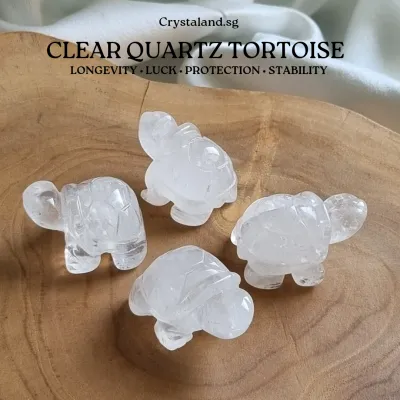
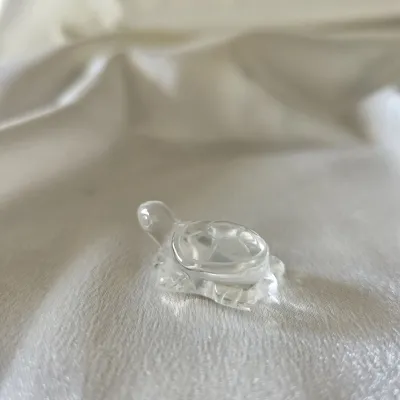
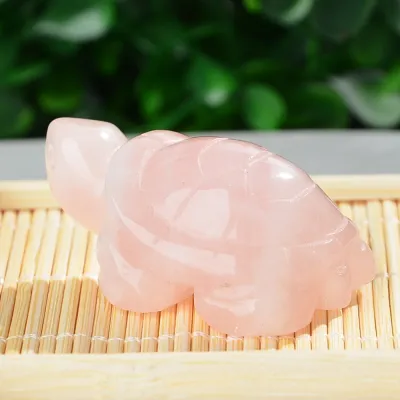
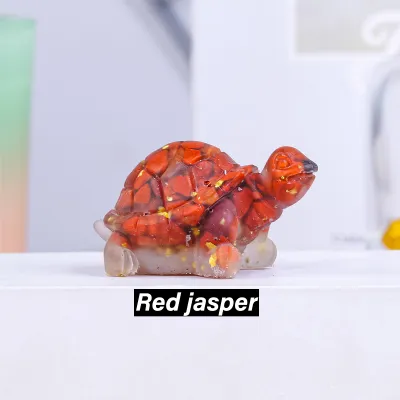
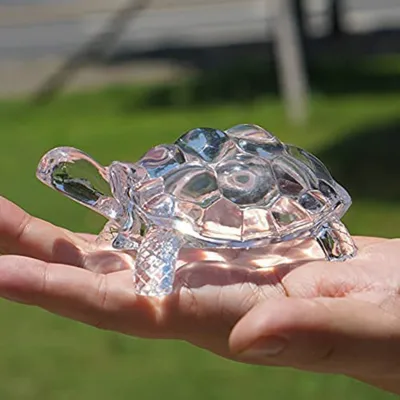
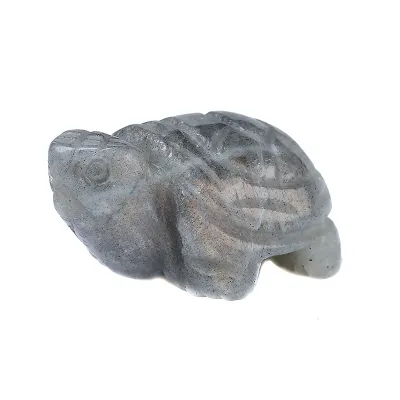
Prices are valid at publication and may change. Please refer to the product page for the latest price.
The third category consists of synthetic resins and acrylics. These polymer-based materials are primarily used for mass-produced, budget-friendly figurines. Resin tortoises are created by pouring liquid plastic into molds, allowing for highly detailed shapes at a fraction of the cost of carved stone or glass. However, they lack the cold feel, weight, and scratch resistance of genuine minerals or high-quality glass.
Because product listings on ecommerce platforms can sometimes use confusing terminology—such as labeling a glass figurine as “natural clear crystal glass”—it is crucial to verify the material. Always check the detailed manufacturer specifications, material safety data sheets, or explicit material disclosures rather than relying solely on the product title.
How to Tell Natural Crystal from Glass and Synthetics
Identifying the true material of a crystal tortoise does not require destructive testing. Instead, you can use several reliable, non-destructive observation methods to evaluate the piece before finalizing your purchase.

First, examine the figurine’s visual clarity and internal structure. Natural quartz almost always contains minor internal characteristics, often referred to as “inclusions.” These may look like tiny wisps of white thread, small cloudy patches, or subtle color bands. If a large crystal tortoise is completely flawless and lacks any internal variations, it is highly likely to be glass or synthetic. Conversely, if you spot perfectly spherical bubbles trapped inside the material, this is a definitive sign of glass, as natural crystals do not form with round air bubbles.
Second, inspect the surface for mold lines and seams. Synthetic resin and molded glass figurines are produced using two-part molds, which often leave a faint, raised line where the mold halves met. These seams are typically found running along the center of the tortoise’s shell, under its belly, or along the sides of its limbs. A genuine natural crystal tortoise must be individually carved from a solid block of stone, meaning its surface will be entirely free of molded seams, though you may see very fine, directional polishing lines left by the artisan’s tools.
Third, observe how the material interacts with light. Under directed natural light or a bright flashlight, high-quality leaded glass will exhibit strong light dispersion, splitting the light into bright, rainbow-like flashes. Natural quartz also refracts light but generally shows a more subdued, natural glow rather than intense rainbow fire. While these visual cues are helpful, keep in mind that definitive optical testing—such as measuring the refractive index—requires professional gemological equipment.
Finally, consider temperature and weight perception. Natural quartz has high thermal conductivity, meaning it draws heat away from your skin quickly and feels distinctly cold to the touch, even in a warm room. Glass and especially resin warm up much faster when held. Additionally, resin is significantly lighter than both glass and natural crystal. To use these tactile checks effectively, you need a known baseline for comparison, such as a verified piece of glass or natural stone of similar size, as these sensations are subjective and cannot serve as absolute proof on their own.
Assessing Craftsmanship and Carving Quality
Beyond the raw material, the skill of the artisan determines the overall beauty and value of a crystal tortoise. Evaluating the carving quality requires a close look at the symmetry, detail, and finish of the piece.
Begin by assessing the symmetry and proportion of the figurine. A well-crafted tortoise should have a balanced shape, with the shell centered perfectly over the body. The head, limbs, and tail should be proportional to one another, creating a harmonious silhouette from every angle. In hand-carved natural crystal, achieving this balance requires immense skill, as the carver must work around the stone’s natural cleavage planes and internal structures to avoid fracturing the material.
Next, examine the sharpness of the details and the quality of the polish. High-quality carvings feature crisp, clean lines defining the scutes of the tortoise shell, the texture of the skin, and the facial features. The transitions between carved details and smooth surfaces should be seamless. Run your fingers gently over the carving; a premium piece will have a high-gloss, mirror-like polish that enhances the material’s natural luster, with no rough patches, dull spots, or visible tool marks left behind.
Finally, check the stability and finish of the base. The bottom of the tortoise should be ground perfectly flat so that it sits securely on a flat surface without wobbling. This is particularly important if you plan to display the figurine on a glass shelf or a polished wooden sideboard. The base should also be smoothly finished and free of sharp edges to prevent it from scratching your display surfaces.
Pricing Factors and Avoiding Overpayment
The price of a crystal tortoise can vary widely, from under S$10 for a small molded resin piece to several hundred dollars for a large, hand-carved natural quartz sculpture. Understanding the factors that drive these price differences will help you avoid overpaying.
The primary value drivers are material authenticity, size, and the amount of raw material wasted during the carving process. Carving a detailed tortoise from a solid block of natural quartz involves grinding away a significant portion of the stone, which increases the cost of production. Artisan skill also plays a major role; a piece hand-carved by a master lapidary artist commands a premium over a machine-carved or molded item.
Be alert to red flags that suggest misrepresentation. An unusually low price for a large, completely flawless “natural clear quartz” tortoise is a strong indicator that the item is actually glass. Vague product descriptions that use contradictory terms like “natural glass crystal” or fail to specify the exact material are also warning signs.
To protect your investment, especially when purchasing high-value natural crystal pieces, always request detailed material disclosures from the seller. Reputable dealers should be able to confirm the exact mineral type and provide clear return policies. For exceptionally rare or expensive specimens, asking for a certificate of authenticity from an independent gemological laboratory is a wise step to ensure you are getting exactly what you pay for.
Frequently Asked Questions (FAQ)
How should I clean and maintain a natural crystal tortoise?
To keep your natural crystal tortoise looking its best, regular dusting with a soft, dry, lint-free microfiber cloth is usually sufficient. For a deeper clean, you can wash the figurine in lukewarm water mixed with a few drops of mild, fragrance-free dish soap. Gently wipe the surface with your fingers or a soft-bristled brush to remove dust from the carved crevices, then rinse thoroughly and dry it immediately with a clean towel. Avoid using harsh household chemicals, abrasive scrubbers, or ultrasonic jewelry cleaners, as these can damage the polished surface, react with natural mineral inclusions, or strip away any subtle surface treatments.
Does the color of the crystal tortoise affect its material value?
Yes, color plays a significant role in the value of natural crystal tortoises. Genuine, vibrant colors that occur naturally—such as deep purple amethyst, rich golden citrine, or delicate rose quartz—are highly sought after and generally command higher prices than common clear quartz. However, you must be cautious of artificial enhancements. Some sellers artificially dye low-grade quartz or glass to mimic rare colors; you can often spot this by looking closely at the cracks and carved crevices of the figurine, where dyed liquids tend to pool and create unnaturally dark lines. Reputable sellers should always disclose whether a material has been heat-treated or dyed, as these treatments lower the overall value compared to completely natural, untreated stones.

Community discussion
Share your experience or ask a question. Comments are reviewed before publication.