
Selecting the right outdoor illumination for your property requires a clear understanding of how these fixtures detect activity. A high-quality solar light sensor ensures your outdoor areas light up the moment someone steps onto your property, deterring intruders while guiding your path safely. However, not all sensors operate on the same principles, and choosing the wrong technology can lead to constant false alarms or missed activity.
Modern solar security lights rely on distinct physical mechanisms to monitor their surroundings. By understanding how these technologies function, you can select a system that performs reliably in your specific environment, handles local weather patterns, and manages its stored solar energy efficiently.
Decoding Solar Light Sensor Technologies: PIR, Microwave, and Dual-Tech
Passive Infrared (PIR) sensors are the most common motion detectors found in residential solar security lights. These sensors operate by measuring changes in infrared radiation—essentially heat signatures—within their field of view. When a warm object, such as a human or a vehicle, moves across the sensor’s detection zones, the sensor registers a rapid change in infrared energy and triggers the light. PIR sensors are highly energy-efficient because they do not emit any energy themselves; they merely sit in a passive state waiting to detect heat.
Products mentioned in this guide
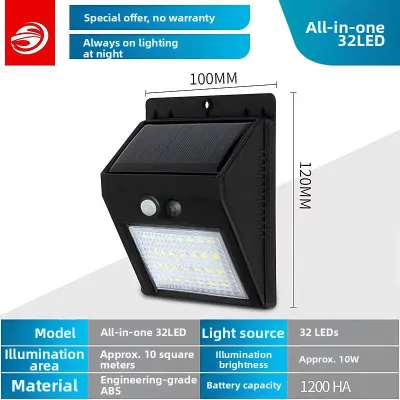
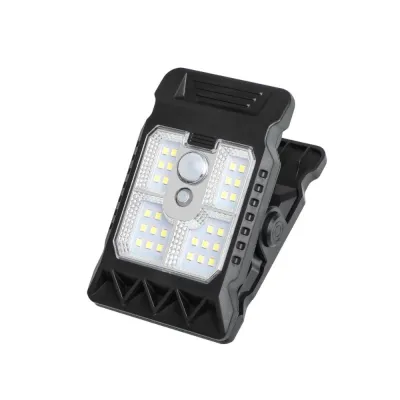
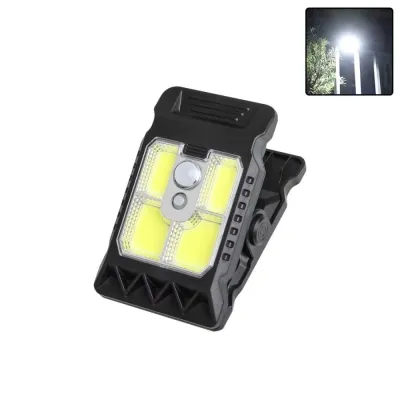

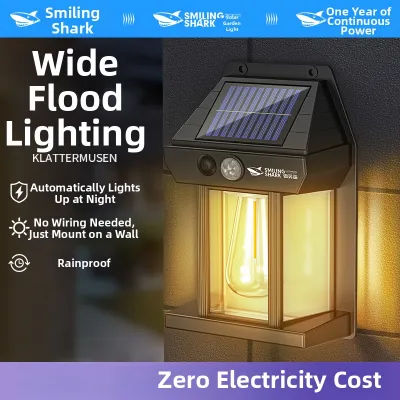
Prices are valid at publication and may change. Please refer to the product page for the latest price.
While PIR sensors are excellent at ignoring wind-blown debris, falling leaves, and heavy rain, they have notable limitations. Their detection range is typically limited to a direct line of sight, meaning solid obstacles like glass windows, acrylic panels, or thick foliage will block them entirely. Furthermore, their sensitivity is highly dependent on the temperature difference between the moving object and the surrounding environment. In tropical climates where ambient temperatures regularly reach 32°C or higher, the contrast between human body heat and the background environment decreases, which can noticeably reduce the sensor’s effective range and responsiveness.
Microwave sensors, also known as radar sensors, take an active approach to motion detection. These devices continuously emit low-power, high-frequency radio waves and measure the time it takes for those waves to bounce back to the receiver. When a moving object enters the coverage area, it alters the frequency of the reflected waves—a phenomenon known as the Doppler shift—which instantly triggers the light. Because microwave sensors actively scan the environment, they offer an exceptionally wide, omnidirectional coverage area and can detect motion through non-metallic barriers such as glass, wood, drywall, and thin plastics.
This high level of sensitivity comes with specific trade-offs. Active radio wave emission requires significantly more battery power than passive infrared detection. Additionally, because microwave signals can penetrate solid objects, they are highly susceptible to false alarms. A microwave sensor mounted near a window or a thin boundary fence may constantly trigger due to swaying tree branches, heavy rain, passing cars, or even movement inside your own home.
Dual-technology, or hybrid, sensors combine both PIR and microwave detection methods into a single unit to maximize reliability. In a standard dual-tech configuration, both the PIR sensor (heat detection) and the microwave sensor (physical motion detection) must register an event simultaneously before the security light turns on. This sequential logic virtually eliminates false alarms caused by wind, pets, or temperature fluctuations, making them ideal for high-security areas.
While dual-tech sensors offer superior accuracy, they are more complex and expensive to manufacture. They also demand careful calibration, as a failure in either sensing element can prevent the light from turning on when needed. For most standard residential installations, choosing between a standalone PIR or a microwave sensor depends on your property layout and budget, while dual-tech remains reserved for specialized security zones.
When browsing product listings, it is helpful to clarify what a manufacturer means by “solar light sensor.” While the term usually refers to the motion detector, it also encompasses the integrated photocell, often called a lux sensor. The photocell measures ambient light levels to ensure the motion sensor and main light only activate after dark, preventing unnecessary daytime battery drain.
Matching Detection Specs to Your Property and Climate
Selecting the right sensor technology requires analyzing your property’s physical layout. For narrow walkways, side corridors, and HDB balcony spaces, a PIR sensor is highly effective. Its focused, cone-shaped detection field ensures that the light only triggers when someone is directly in the path, preventing annoying light spillage or false triggers from neighboring units.

For wide driveways, open carports, and expansive backyard gardens, a microwave sensor is often the superior choice. Its broad, omnidirectional reach allows it to detect an approaching vehicle or pedestrian from a much greater distance, providing early illumination before the visitor reaches your door. This makes microwave sensors excellent for open landed properties where early warning is a priority.
Local climate conditions also play a decisive role in sensor performance. In tropical regions characterized by high humidity, intense afternoon heat, and sudden monsoon downpours, sensor behavior changes. High ambient heat can cause PIR sensors to struggle, as the thermal contrast between a human body and the warm air is minimal. Conversely, heavy, wind-driven tropical rain can easily trigger a sensitive microwave sensor, causing the light to cycle on and off repeatedly throughout a stormy night.
To help you make the right choice, consider this straightforward decision framework:
- Choose PIR for standard, low-traffic pathways, narrow entryways, and areas where you want localized, predictable detection without false alarms from nearby roads or neighbors.
- Choose Microwave for large, open outdoor areas where early detection is vital and where the sensor can be mounted away from busy roads, swaying trees, or metal fences.
- Choose Dual-Tech for high-security entry points or areas where false alarms are highly disruptive, provided you have the budget for a premium fixture.
Remember that physical obstructions will dictate your mounting options. If you must mount a light behind a glass partition or a decorative wooden screen, a PIR sensor will not work, as it cannot detect heat through these materials. In this specific scenario, a microwave sensor is required because its radio waves can easily pass through non-metallic barriers to monitor the area beyond.
Crucial Sensor and Power Specs to Verify Before Buying
Before purchasing a solar security light, you must verify several technical specifications to ensure the unit fits your operational needs. Start by checking the manufacturer’s stated detection angle and maximum range. PIR sensors typically offer a detection angle of 120 to 180 degrees with a range of 5 to 10 meters. Microwave sensors can cover up to 360 degrees and reach distances of 12 to 15 meters. Keep in mind that a wider detection angle covers more ground but can sometimes reduce the sensor’s sensitivity to smaller targets at the outer edges of its range.
Adjustability is another vital feature to look for in a quality fixture. Premium solar security lights feature physical dials or digital settings that allow you to customize the sensor’s behavior. These typically include a sensitivity control (often labeled SENS) to prevent small animals or wind from triggering the light, a delay timer (TIME) to control how long the light stays on after motion stops (typically adjustable from 15 seconds to several minutes), and an ambient light threshold (LUX) to determine exactly how dark it must be before the system activates.
An efficient lux sensor integration is critical for maintaining battery health. Without a properly calibrated photocell, your solar security light might trigger during a gloomy afternoon or during early morning hours, wasting precious stored energy that is needed to keep your home secure throughout the night.
Because microwave sensors draw continuous power to emit radio waves, they demand robust battery support. When selecting a microwave or dual-tech solar light, verify that the solar panel wattage (ideally 2W to 5W or higher) and the lithium-ion battery capacity (measured in milliampere-hours, such as 2000mAh to 4400mAh) are adequately sized. This is especially important during overcast monsoon seasons when solar charging efficiency drops significantly.
Placement Rules for Accurate Detection and Safety
To maximize the performance of your solar security light, mount the fixture at an optimal height of 2 to 3 meters above the ground. Angling the sensor slightly downward ensures that the detection zone covers the ground where people actually walk, rather than pointing straight out toward the horizon where it might pick up distant, irrelevant movement.
Avoid placing PIR sensors near external heat sources, such as air conditioning condenser units, dryer vents, or highly reflective glass surfaces that can create thermal anomalies and trigger false alarms. For microwave sensors, avoid pointing the detector directly at busy public roads, metal fences, or large moving structures that can cause erratic signal reflections and constant triggering.
Always ensure that the mounting surface—whether concrete, brick, or timber—can safely support the weight of the solar light fixture, especially if you are installing a heavy model with a separate, heavy-duty solar panel. If you are drilling into walls near existing electrical conduits, always isolate the local power supply first. For complex installations involving high-altitude mounting, masonry drilling, or fixed-wire hybrid systems, consult a qualified professional to ensure a safe and secure setup.
Frequently Asked Questions (FAQ)
Do solar motion sensors work reliably in heavy rain?
PIR sensors generally ignore rain because raindrops do not match the moving thermal signature of a human body, though heavy water pooling on the sensor lens can temporarily distort its field of view. Microwave sensors, however, can misinterpret heavy, wind-driven rain as physical motion if their sensitivity is set too high, which may require you to lower the sensitivity dial during wet monsoon seasons.
Can microwave sensors detect motion through walls or glass?
Yes, microwave sensors emit high-frequency radio waves that can easily penetrate non-metallic materials such as glass, wood, drywall, and thin plastics. While this allows you to install the sensor discreetly behind decorative panels, it also means you must carefully adjust the sensitivity setting to prevent the light from triggering due to indoor movement or activity on the other side of a boundary wall.
Community discussion
Share your experience or ask a question. Comments are reviewed before publication.