
Choosing between a digital and analog chess clock depends on your playing style, the specific time controls you use, and where you plan to play. If you participate in competitive tournaments or play with modern increment time controls, a digital clock is practically essential. Conversely, if you enjoy casual games at home, appreciate classic aesthetics, and prefer a battery-free setup, a traditional analog clock offers a tactile and timeless experience.
Both types of clocks serve the same fundamental purpose of regulating game time, but they do so through entirely different mechanisms. Understanding these differences will help you select the instrument that best complements your chess board and enhances your playing sessions.
Core Differences Between Digital and Analog Chess Clocks
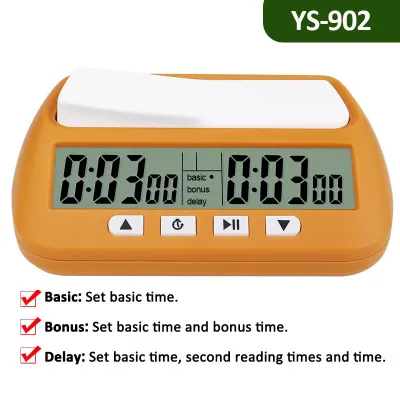
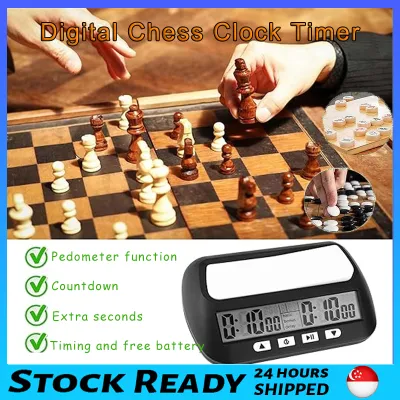
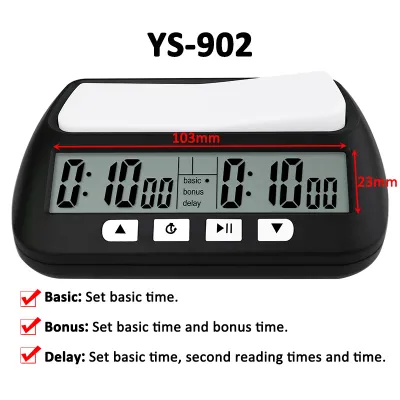
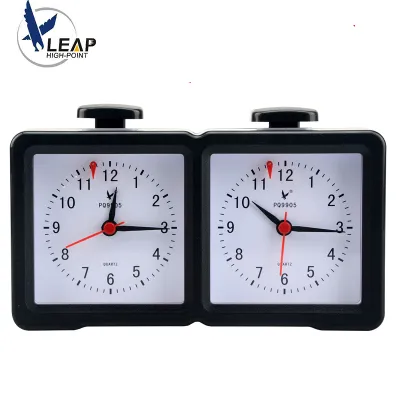
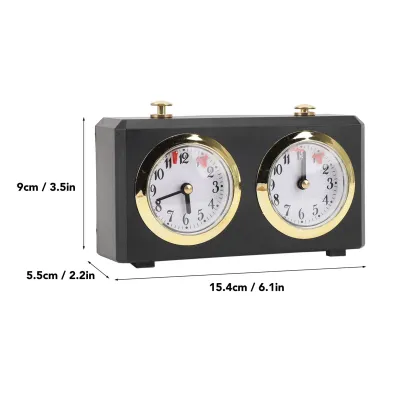
Analog chess clocks rely on internal mechanical gears, requiring manual winding to store potential energy in a mainspring. They feature two distinct clock faces with physical hands and physical levers or plungers on top that players press to pause their own side and start the opponent’s. Digital clocks utilize electronic microprocessors and liquid crystal displays (LCD) or light-emitting diode (LED) screens, powered by batteries, with electronic push-buttons or rocker switches to toggle between turns.
Products mentioned in this guide
![[Xin Ngó ]3-in-1 Chess Clock 5 Timing Modes (Basic/Bonus/Delay/Byo-Yomi/Count-Up) Timer for Chess Go Shogi & Tournament Use Auto-Save 999-Step Recording Adjustable Voice Prompts](https://img.lazcdn.com/g/p/25318191c6e671bec42ac58ee278694a.jpg_400x400q80.jpg_.webp)

Prices are valid at publication and may change. Please refer to the product page for the latest price.
Auditory and tactile feedback is another major differentiator. Analog clocks produce a continuous, rhythmic ticking sound as the escapement wheel moves, culminating in the physical drop of a small red plastic or metal flag when a player’s time expires. This mechanical flag drop provides an unmistakable visual and auditory cue that is highly satisfying for traditionalists. Digital clocks operate in near-total silence, though most models include optional electronic beeps or LED light indicators to signal when time has run out or when a move is completed.
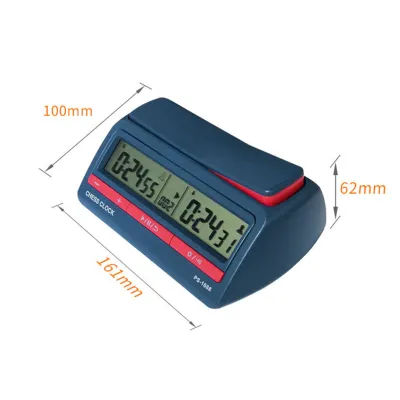
Setting the time also differs significantly. Analog clocks require you to manually turn the hands on the back of the casing to the desired starting position, which can make precise sub-minute setups challenging. Their physical footprint is often larger and heavier, designed to sit stably on a wooden table without sliding during rapid play. Digital clocks require navigating menus or pressing button combinations to program specific time limits, but they offer unmatched precision down to the fraction of a second and are typically lighter and more compact.
Key Features to Compare Before Buying
Time control compatibility is the most critical technical factor. Modern chess frequently employs increment (Fischer) or delay (Bronstein) systems, where a set number of seconds is added to a player’s clock after each move or before their main time begins ticking down. Digital clocks are uniquely capable of executing these complex mathematical calculations in real time. Analog clocks cannot dynamically add or pause time based on individual moves, limiting them strictly to sudden-death time controls where players must complete all moves within a fixed block of time.

Readability and visual indicators affect how comfortably you can monitor your remaining time during a tense match. Digital screens can sometimes suffer from glare under bright overhead lighting or outdoor sunlight, and low-contrast LCDs may be difficult to read from a distance or at sharp angles. However, they often feature large, bold digits and clear indicators for low-battery warnings. Analog dials offer high-contrast, classic clock faces that are easily readable from across a room, though tracking exact seconds becomes difficult once the minute hand moves away from the final five-minute marker.
Power requirements and maintenance routines represent another trade-off. Digital clocks rely on standard alkaline batteries, such as AA or AAA cells, which must be monitored and replaced periodically to prevent unexpected shutdowns mid-game. It is always wise to inspect battery compartments for corrosion and keep spares on hand. Analog clocks require no batteries, relying entirely on manual winding before a session. However, they may require occasional physical servicing, such as internal cleaning or lubrication of the gears, to maintain accurate timekeeping over several years of use.
Additional functionalities can greatly enhance your playing experience. Many digital models come equipped with built-in move counters, multi-phase time tracking (which transitions the clock to a secondary time control after a specific number of moves), and customizable preset memory slots. These features allow players to save their favorite time controls for instant access. Analog clocks are strictly single-phase devices with no capacity to count moves or store settings, requiring manual intervention to reset the hands for every new game.
Matching the Clock to Your Playing Environment
For casual home play and beginners, simplicity and aesthetic appeal are often the primary considerations. An analog clock serves as a beautiful decorative piece on a study desk or living room table, blending seamlessly with classic wooden chess sets. The straightforward operation of winding the clock and pushing the buttons makes it highly approachable for casual players who do not want to navigate digital menus. However, beginners who wish to practice under the exact conditions found in modern online or local club play may still prefer a basic digital clock for its preset convenience.
In club play and competitive tournaments in Singapore, the requirements shift dramatically. Local chess clubs and tournament organizers almost universally mandate digital clocks that support precise increment tracking and multi-phase time controls. To participate in rated events, your equipment must comply with the standards set by international governing bodies or local tournament directors. These rules often specify that the clock must clearly show the active player’s remaining seconds throughout the entire game and handle sudden-death phases automatically.
Educational settings and school clubs present unique durability challenges. When children play chess, especially fast-paced blitz games, they tend to press the clock buttons with significant force. Analog clocks with robust plastic or wooden casings and heavy-duty mechanical levers can withstand a fair amount of enthusiastic play, but their internal gears can be damaged by severe impacts. Digital clocks made from high-impact plastic are often highly durable, but they must be kept away from liquids, and their battery covers must be securely fastened to prevent children from accessing or losing the batteries.
Decision Framework: Which Chess Clock Should You Buy?
To finalize your decision, consider how your primary playing style aligns with these two distinct technologies.
You should choose a digital chess clock if you plan to play in official tournaments, require increment or delay time controls (such as Fischer or Bronstein modes), want to track move counts automatically, or prefer the absolute precision of a digital display.
You should choose an analog chess clock if you primarily play casual games at home, appreciate the classic aesthetic of mechanical dials, prefer a battery-free device that is always ready to use, or enjoy the physical feedback of a ticking clock and a dropping flag.
Before purchasing any clock for competitive use, always verify the specific rules of your local chess club, school league, or tournament organizer. Some organizations maintain lists of certified digital models that are approved for rated play, ensuring your investment aligns perfectly with your competitive goals.
Frequently Asked Questions (FAQ)
Do official tournaments require a specific type of chess clock?
Yes, the vast majority of official, rated chess tournaments require digital chess clocks. This requirement exists because modern competitive chess relies heavily on increment time controls, which add a specific number of seconds to a player’s clock after each move to prevent games from ending purely due to physical speed limitations. While some local clubs may allow analog clocks for casual or unrated sections, serious competitive play almost always mandates a digital clock that meets the technical specifications of the relevant chess federation.
How long do batteries typically last in digital chess clocks?
Battery life in digital chess clocks varies widely depending on the display technology, how often the clock is used, and whether audible alerts are enabled. Many standard digital models can run for hundreds of hours on a single set of AA or AAA alkaline batteries because LCD screens consume very little power. To avoid unexpected interruptions during a match, it is best to check the screen for low-battery indicators before starting a game and always keep a spare set of batteries in your chess bag.
Can analog clocks handle increment time controls?
No, analog chess clocks are mechanically incapable of handling increment or delay time controls. Because they rely on physical gears and hands that rotate continuously in one direction, they cannot automatically add seconds back to a player’s remaining time after a move is made. Analog clocks are strictly limited to sudden-death time controls, where each player is allocated a single, fixed block of time to complete all of their moves.
Community discussion
Share your experience or ask a question. Comments are reviewed before publication.