
Upgrading your home lighting to energy-efficient LEDs is one of the simplest ways to lower your electricity bills and customize your living space. However, stepping into a hardware store or browsing online marketplaces reveals a confusing array of technical specifications. Among these, the E27 designation is the most common bulb base you will encounter. Understanding what these specifications mean ensures you buy a bulb that fits your fixture perfectly, provides the right amount of light, and operates safely in your home.
What "E27" Actually Means: Base Size and Fixture Compatibility
The “E” in E27 stands for Edison screw, named after Thomas Edison, who designed the threaded mounting system still used today. The number “27” refers to the exact diameter of the threaded base in millimeters. This screw-in design is the standard size for most medium-sized domestic light fixtures, including pendant lights, floor lamps, and wall sconces.
It is easy to confuse the E27 base with other common light bulb fittings. For example, the E14 base is a smaller Edison screw measuring 14 millimeters in diameter, frequently found in chandeliers and small bedside lamps. Another common local standard is the B22 bayonet mount, which uses a push-and-twist mechanism rather than a screw thread. Because these bases are entirely incompatible, buying the wrong one will leave you with a useless bulb.
Products mentioned in this guide
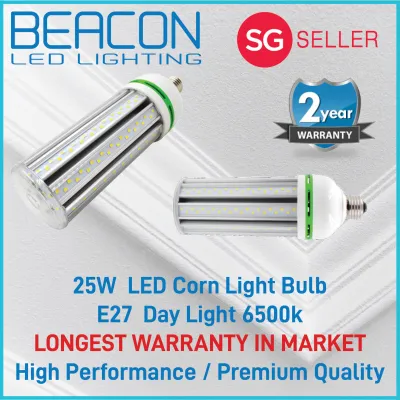
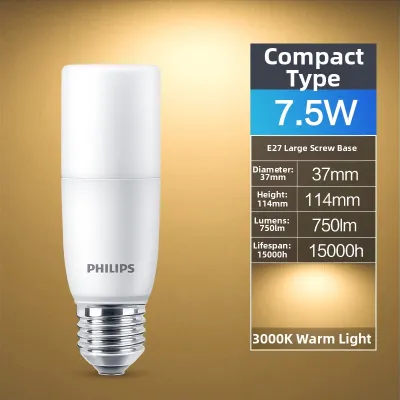
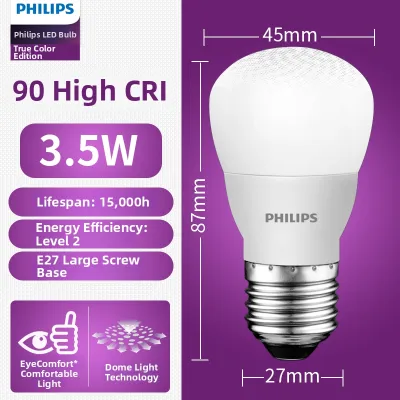
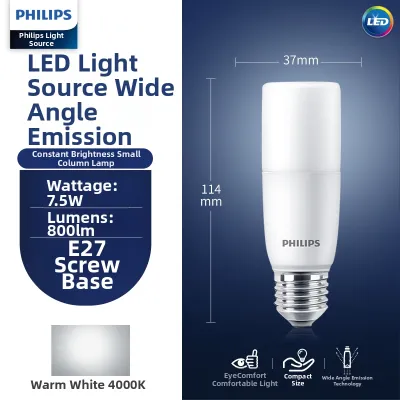
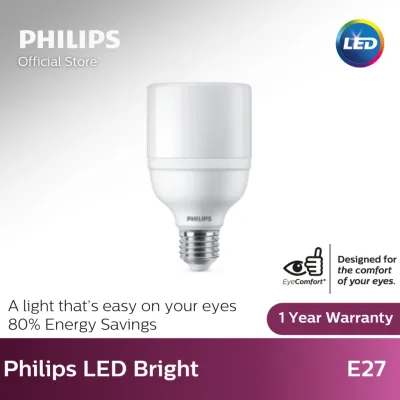
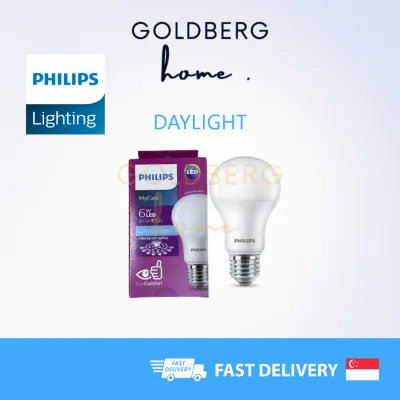
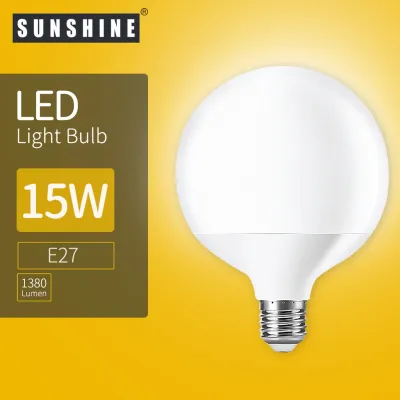
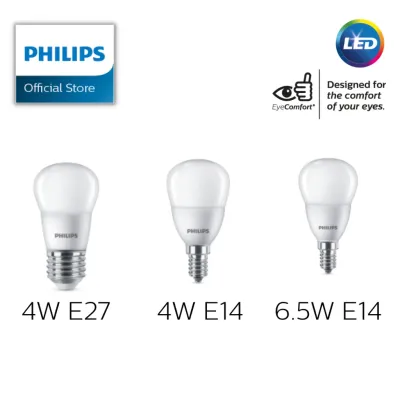
Prices are valid at publication and may change. Please refer to the product page for the latest price.
Before purchasing, visually inspect your existing fixture or check the manufacturer’s safety label inside the lamp shade to confirm the socket type. Be aware that some decorative fixtures use adapters to convert smaller sockets to fit larger bulbs. While these adapters work, they can cause the bulb to protrude past the shade, which may look awkward or expose the hot bulb surface to accidental contact.
Lumens vs. Watts: Decoding Brightness for Your Room
For decades, we relied on wattage to determine how bright a light bulb would be. With modern LED technology, this approach is obsolete. Watts measure the amount of electrical energy a bulb consumes, not the amount of light it produces. Because LEDs are highly efficient, they require significantly less power to emit the same amount of light as older incandescent bulbs.

To find the true brightness of an LED bulb, you must look at its lumen (lm) rating. Lumens measure the total amount of visible light emitted by a source. When transitioning from incandescent to LED, you can use the following general light output equivalencies to guide your purchase:
- 250 Lumens: Replaces a 25W incandescent bulb (uses approx. 3W to 4W LED)
- 470 Lumens: Replaces a 40W incandescent bulb (uses approx. 5W to 6W LED)
- 800 Lumens: Replaces a 60W incandescent bulb (uses approx. 8W to 10W LED)
- 1100 Lumens: Replaces a 75W incandescent bulb (uses approx. 11W to 13W LED)
- 1500 Lumens: Replaces a 100W incandescent bulb (uses approx. 15W to 18W LED)
Selecting the right lumen level depends on the size of your room and what you do in it. Task areas like kitchen counters, study desks, and bathroom mirrors require focused, bright light, making bulbs with 800 to 1100 lumens ideal. For general ambient lighting in bedrooms and living rooms, a softer output of 400 to 800 lumens per bulb creates a more comfortable environment.
Keep in mind that the design of your light fixture affects how much of this light actually reaches your living space. Frosted glass globes, deep fabric shades, or dark metal enclosures absorb a portion of the emitted light. If your fixture has a heavy or dark shade, choose a bulb with a slightly higher lumen rating to compensate for this loss.
Color Temperature (Kelvin): Matching Light to Your Space
Color temperature describes the visual appearance of the light, ranging from warm yellow to cool blue. This specification is measured in Kelvin (K). Choosing the correct color temperature is essential for setting the right mood and functionality in each room of your home.
Most E27 LED bulbs fall into three primary color temperature categories:
- Warm White (2700K – 3000K): This range produces a cozy, soft yellow glow that mimics traditional incandescent lighting. It is highly recommended for bedrooms, living rooms, and dining areas where you want to promote relaxation and comfort.
- Cool White (4000K): This setting offers a clean, neutral white light that enhances focus and alertness without being harsh. It is the ideal choice for kitchens, home offices, and bathrooms where clear visibility is required.
- Daylight (5000K – 6500K): This range emits a bright, bluish-white light that closely resembles natural midday sun. It is best suited for high-utility spaces such as workshops, garages, or detailed task areas where maximum color contrast is necessary.
To maintain visual harmony, avoid mixing different color temperatures within the same open-plan area. Having a warm white dining light right next to a daylight kitchen light can feel jarring and cause eye strain.
If your rooms serve multiple purposes, consider investing in smart E27 bulbs or “tunable white” LEDs. These allow you to adjust the color temperature dynamically throughout the day, providing cool, energizing light during the afternoon and shifting to warm, relaxing tones in the evening.
Essential Checks for Singapore Homes: Voltage, Dimmers, and Size
When buying E27 LED bulbs, several technical details require careful verification to ensure safety and performance in your home.
- Voltage Compatibility: The standard residential electrical supply in Singapore operates at 230V/50Hz. Always check the voltage specifications on the bulb packaging before buying. While many modern LEDs feature wide-voltage drivers (100V-240V), importing 120V-specific bulbs from overseas will result in immediate failure, blown circuits, or fire hazards when connected to a local socket.
- Dimmer Switch Compatibility: Standard LED bulbs are not designed to work with dimmer circuits. If you install a non-dimmable LED on a dimmer switch, it will likely flicker, buzz, or fail prematurely. Always look for the word "Dimmable" on the packaging. Be aware that older dimmer switches designed for high-wattage incandescent bulbs may still cause issues with low-wattage LEDs. If flickering persists, consult a qualified electrician to upgrade your wall switch to a trailing-edge LED-compatible dimmer.
- Physical Dimensions and Shape: The E27 designation only guarantees the screw thread size, not the shape of the bulb glass. E27 bulbs come in various profiles, such as the classic pear-shaped A60, the vintage-style ST64, or the large G95 globe. Measure the physical opening and depth of your light fixture's shade or enclosure to ensure the bulb fits comfortably inside without touching the sides or sticking out.
- Color Rendering Index (CRI): CRI measures how accurately a light source reveals the true colors of objects, scored out of 100. For standard home lighting, a CRI of 80+ is perfectly sufficient. If you are lighting a wardrobe, an art display, or a makeup mirror, look for a CRI of 90+ to ensure colors appear natural and accurate.
Your Pre-Purchase Checklist for E27 LED Bulbs
Before finalizing your purchase, run through this quick checklist to ensure your chosen E27 LED bulb is the perfect fit:
- Base Type: Confirmed as E27 screw base.
- Lumen Output: Matched to the room size and fixture shade.
- Color Temperature: Aligned with the room's primary purpose.
- Dimmability: Verified as compatible with your wall switch.
- Physical Fit: Dimensions checked against the fixture enclosure.
- Voltage: Rated for 230V or wide-range (100-240V).
For easy reference when shopping in-store or online, take a quick photo of your light fixture’s safety label with your phone. This label usually lists the maximum allowable wattage and socket type, keeping your essential specifications handy.
Frequently Asked Questions (FAQ)
Can I safely use an E26 bulb in an E27 socket?
While E26 bulbs (standard in North America) can physically screw into an E27 socket, they are typically engineered for 120V electrical systems. Connecting a 120V-only E26 bulb to Singapore’s 230V power supply will overload the internal driver, destroying the bulb instantly and creating a serious electrical or fire hazard. Always verify that any imported bulb explicitly supports 230V or wide-range voltage before installation.
Why is my new dimmable E27 LED bulb flickering?
Flickering in dimmable LEDs is usually caused by a compatibility issue with the wall switch. Older dimmer switches require a high minimum electrical load to function properly, which low-wattage LEDs cannot provide. Alternatively, the bulb itself might not be rated for dimming. If you have confirmed the bulb is dimmable, you will likely need to have a licensed electrician replace your older dimmer switch with a modern trailing-edge LED dimmer.
Do smart E27 bulbs use electricity when turned off?
Yes, smart E27 bulbs consume a tiny amount of standby power when turned off via an app or smart assistant. This power, typically under 0.5W, keeps the bulb’s internal wireless chip (Wi-Fi, Zigbee, or Bluetooth) active so it can receive commands. While this standby draw has a negligible impact on your electricity bill, the physical wall switch must remain turned on for the smart functionality to work.
Community discussion
Share your experience or ask a question. Comments are reviewed before publication.