
Selecting the right light bulb adapter requires careful attention to mechanical compatibility, electrical safety, and physical space. An E27 to B22 adapter allows you to use a bayonet-base bulb in an Edison screw socket, but choosing a sub-standard or incorrect converter can lead to loose connections, overheating, or electrical hazards. To ensure a safe and lasting installation, you must verify the conversion direction, check the wattage and voltage limits, measure your fixture’s clearance, and evaluate the adapter’s material build.
Confirming the Correct Socket and Bulb Direction
Before purchasing an adapter, you must clearly identify the direction of the conversion. Light bulb adapters are directional, meaning they convert a specific socket type (the female receptacle wired into your wall or ceiling) to accept a different bulb base type (the male plug on the bulb itself). An E27 to B22 adapter is designed specifically to screw into an existing E27 Edison screw socket and provide a female B22 bayonet receptacle for your bulb.
To confirm what you need, visually inspect your light fixture and your bulb. An E27 socket features a threaded metal collar measuring approximately 27mm in diameter. A B22 bulb base is smooth and features two small metal pins protruding from opposite sides of its 22mm collar. If your ceiling fixture has a screw thread and your new bulb has bayonet pins, an E27 to B22 adapter is the correct choice.
Products mentioned in this guide
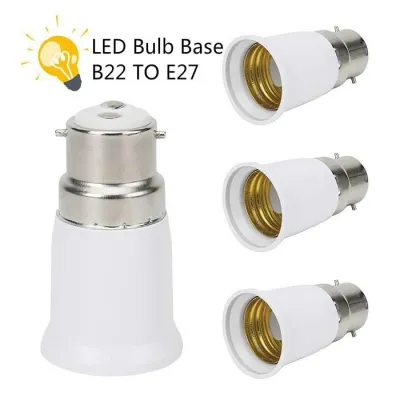
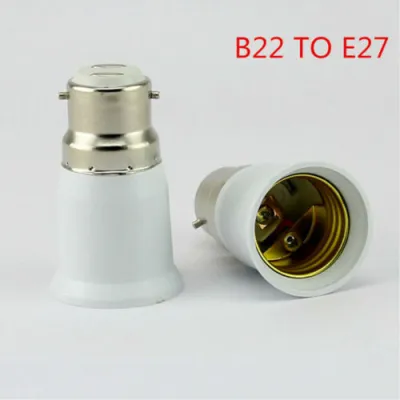
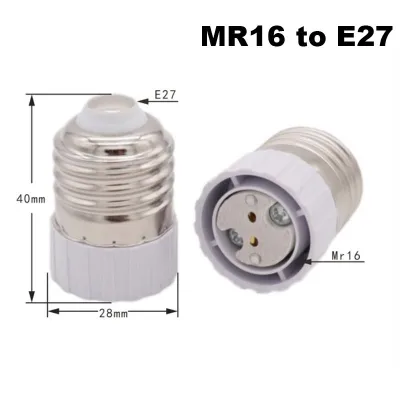
Prices are valid at publication and may change. Please refer to the product page for the latest price.
Never attempt to force incompatible bulb bases into a socket without an adapter. Forcing a bayonet bulb into a threaded socket, or trying to jam a screw bulb into a bayonet mount, can permanently deform the electrical contacts, strip the threads, or crack the socket housing. This mechanical damage can lead to poor electrical contact, localized resistance, and a heightened risk of electrical arcing.
Verifying Electrical Ratings and Power Limits
Electrical safety depends on matching the power ratings of your fixture, adapter, and bulb. In Singapore, the standard residential mains voltage is 230V. You must verify that the adapter you select is rated to handle this voltage safely. Look for the voltage and maximum wattage ratings clearly printed or stamped onto the body of the adapter, the light fixture, and the bulb packaging.

When combining these three components, you must strictly adhere to the lowest maximum wattage rating among them. For example, if your ceiling fixture is rated for a maximum of 40W, but your adapter is rated for 60W, you must never install a bulb that exceeds 40W. Exceeding the lowest rated limit can cause rapid heat buildup, degrade the wiring insulation, and potentially trigger a short circuit or electrical fire.
Modern smart bulbs and high-wattage LED or halogen bulbs require extra vigilance. While LEDs draw less power than traditional incandescent bulbs, their internal driver electronics are highly sensitive to heat. Halogen bulbs, on the other hand, operate at extremely high temperatures. Ensure the adapter’s specifications explicitly support the specific bulb type you plan to use, paying close attention to heat dissipation limits.
Always isolate the power at the main distribution board (DB box) before installing, adjusting, or removing an adapter. Working on a live fixture carries a severe risk of electric shock. If you notice any frayed wires, loose socket housings, or if the electrical ratings on your existing fixture are completely worn away or unclear, stop immediately and consult a licensed electrical worker or a qualified professional.
Measuring Physical Dimensions and Fixture Clearance
Adding an adapter to your lighting setup alters the physical profile of the bulb. An E27 to B22 adapter acts as an extension piece, which increases the overall length of the bulb assembly and sometimes widens the base area. You must measure the available space inside your light fixture to ensure the combined adapter and bulb will fit without obstruction.
In tight spaces, such as recessed downlights, flush-mount ceiling fixtures, or narrow glass lampshades, the added length of the adapter can cause the bulb to protrude past the edge of the fixture. This not only affects the aesthetic appeal and light distribution of your room but can also prevent protective glass covers from closing. If a bulb is pressed directly against a lampshade or enclosure, the lack of airflow can trap heat and shorten the lifespan of both the bulb and the adapter.
Weight is another critical factor to consider, especially for suspended or delicate fixtures. Smart bulbs and heavy glass decorative bulbs already weigh more than standard LEDs. Adding an adapter increases the downward pull on the fixture. Check that your pendant cords, track light joints, or vintage brass arms are structurally sound and capable of supporting the combined weight of the adapter and the bulb without sagging or straining the electrical connections.
Assessing Build Quality and Heat Management
Selecting an adapter made from high-quality, heat-resistant materials is essential for long-term safety. The two most common housing materials are thermoplastic and ceramic. High-temperature thermoplastics, such as Polybutylene Terephthalate (PBT), are lightweight, impact-resistant, and offer good flame-retardant properties. Ceramic adapters offer superior heat resistance and are ideal for high-wattage or high-heat applications, though they are more fragile and prone to cracking if dropped.
Examine the internal and external construction details of the adapter before installation. The internal metal contacts should be made of sturdy, highly conductive materials like brass or copper, and they must be firmly seated to ensure a tight connection with the bulb’s contact points. On the exterior, the screw threads should be clean and uniform, and the bayonet slots must hold the bulb pins securely without any wobbling or slipping.
Monitor the adapter closely during its initial weeks of use. If you detect any signs of physical degradation, such as plastic discoloration, warping, cracking, or a distinct burning smell, turn off the power at the mains immediately. Allow the entire assembly to cool completely before touching or removing the adapter. Never attempt to reuse an adapter that shows signs of thermal damage or loose internal components.
Frequently Asked Questions (FAQ)
Can I use a dimmable bulb with an E27 to B22 adapter?
Yes, you can use a dimmable bulb with an adapter, provided the entire lighting circuit is designed for dimming. The E27 to B22 adapter itself is a passive electrical conductor; it simply passes the electrical current from the socket to the bulb and does not control or alter the dimming signal. Successful dimming depends entirely on the compatibility between your dimmable bulb, the wall dimmer switch, and the mains power supply. If you experience flickering, buzzing, or a severely restricted dimming range, stop using the setup immediately, as these symptoms indicate electrical incompatibility that can damage the bulb’s internal driver.
Is it safe to use an adapter in an enclosed or outdoor fixture?
Using an adapter in enclosed or outdoor fixtures requires strict adherence to manufacturer guidelines. Enclosed fixtures trap heat, which can rapidly degrade the materials of both the adapter and the bulb; you must verify that both components are explicitly rated by their manufacturers for use in enclosed spaces. For outdoor, balcony, or bathroom installations, the fixture and the adapter must have an appropriate Ingress Protection (IP) rating to resist moisture and dust. Standard indoor adapters are not sealed against water and should never be used in damp or exposed outdoor locations, as moisture ingress can cause short circuits and electrical shocks.
Community discussion
Share your experience or ask a question. Comments are reviewed before publication.