
Choosing the right flowing sand art for your home comes down to how you wish to interact with this captivating decor piece and where you plan to display it. Manual models offer a tactile, silent, and highly portable experience, requiring you to physically flip the frame to initiate the cascade. Electric versions automate this process using a motorized base to rotate the frame, providing a hands-off, continuous visual display at the cost of being tethered to a power source. By evaluating your daily routine, spatial constraints, and tolerance for minor mechanical sounds, you can easily determine which mechanism will best enhance your living space.
Understanding the Mechanisms: Motor-Driven vs. Flip-to-Flow
To appreciate how these decorative pieces function, it helps to understand the physics governing their movement. Manual flowing sand art relies entirely on gravity and physical human intervention. The sand, liquid, and air bubbles are sealed inside a double-paned glass or acrylic frame. When you manually flip the frame upside down, gravity pulls the denser sand grains downward through the liquid. The pocket of air bubbles acts as a natural barrier, allowing only tiny streams of sand to escape through the gaps, creating intricate, slow-forming mountain ranges and desert dunes.
Electric motor-driven flowing sand art automates this physical rotation. These models feature a specialized base equipped with a small electric motor and a gear system. Depending on the design, the motor slowly and continuously rotates the circular sand frame, or it triggers a periodic automatic flip at set intervals. This automation ensures that the sand is constantly in motion or regularly refreshed without any manual effort on your part.
Products mentioned in this guide
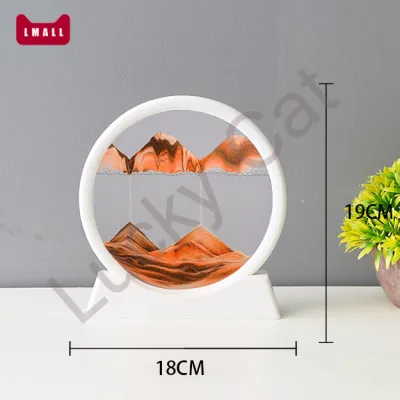
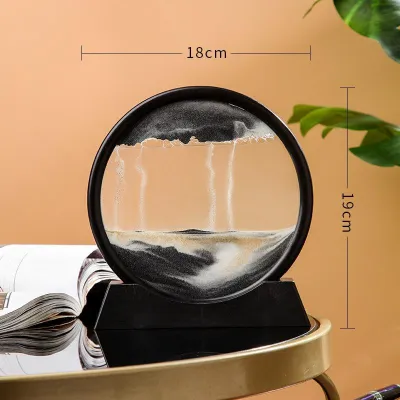
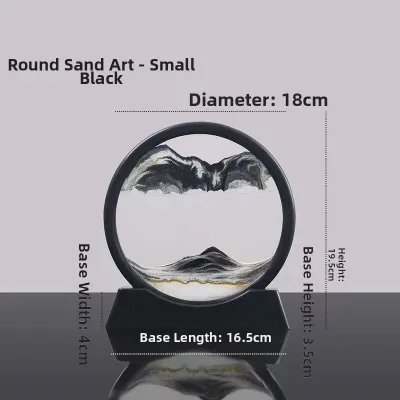
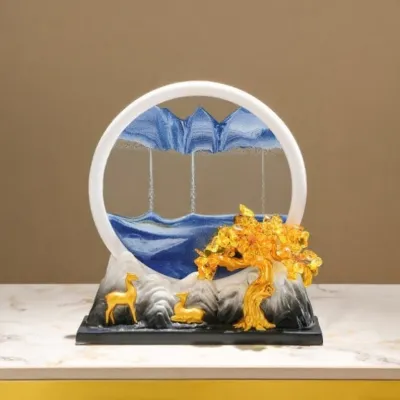
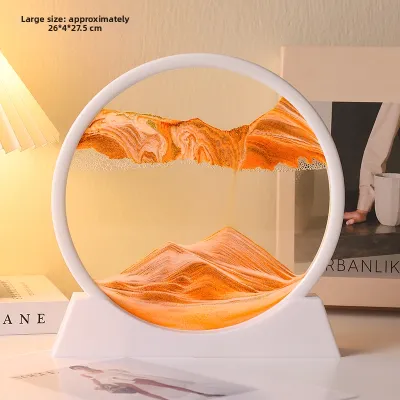
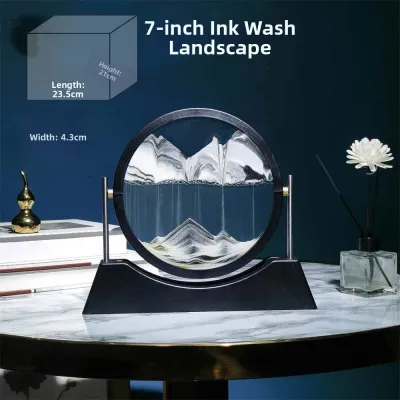
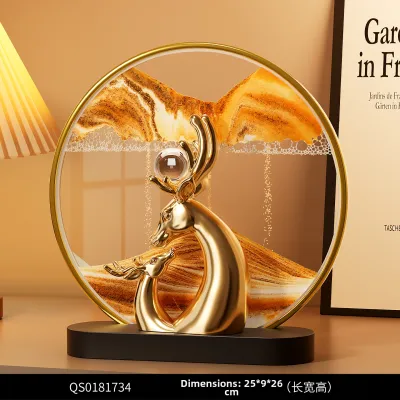
Prices are valid at publication and may change. Please refer to the product page for the latest price.
While both mechanisms deliver the same mesmerizing visual effect of cascading sand, the trigger and sustainment of the motion differ completely. The manual version is an active, intentional experience that begins and ends with your physical touch. The electric version is a passive, continuous display designed to run in the background, transforming the art piece into a dynamic, living sculpture that evolves independently throughout the day.
Key Comparison Dimensions for Your Home
Integrating a flowing sand art piece into your home requires looking beyond aesthetics. To find the perfect fit, you must evaluate how each mechanism aligns with your daily habits, your home’s electrical layout, and the acoustic environment of your preferred room.

Visual Experience and Sand Flow Dynamics
The manual flip-to-flow design is tailored for active, mindful interaction. Because the sand eventually settles completely at the bottom of the frame, the visual movement is temporary, typically lasting anywhere from ten minutes to an hour per flip. This makes manual sand art an excellent tool for focused relaxation, meditation, or a quick mental break at a study desk. Once the sand stops moving, the piece remains a beautiful, static landscape until you choose to engage with it again.
Electric models offer a persistent, ambient backdrop that requires zero physical intervention. Because the motorized base keeps the frame in a state of slow, continuous rotation or schedules regular automatic flips, the visual display is constantly active. This makes electric sand art highly suitable for high-traffic areas like living rooms, entryways, or office lobbies where you want a continuous decorative feature.
Regardless of the mechanism, the actual speed and pattern of the sand flow are dictated by internal factors such as sand grain texture, liquid density, and the volume of air bubbles inside the chamber. When purchasing, it is wise to check product specifications or user reviews to ensure the flow rate aligns with your preferences, as some models allow you to adjust the air level using a specialized syringe to speed up or slow down the cascade.
Maintenance, Noise, and Power Requirements
Manual flowing sand art is completely silent and requires no external power. It uses no batteries, cords, or electronic components, making it an environmentally friendly and highly reliable option. However, because you must physically lift and rotate the frame, manual models are subject to regular handling. This frequent interaction slightly increases the risk of accidental drops, physical impacts, or gradual wear on the frame’s outer seals over time.
Electric models introduce electrical and mechanical considerations to your space. These pieces require a continuous power source, typically drawing electricity via a USB cable, a wall adapter, or rechargeable batteries. Because they contain moving mechanical parts, electric bases can produce a faint motor hum or gear noise during operation. While often negligible in a busy living room, this subtle sound can become noticeable in a quiet bedroom or study.
Before buying an electric model, always verify the power specifications and electrical certifications. In Singapore, ensure the device is compatible with the standard 230V electrical supply and check for recognized safety marks on the power adapter. Reading user feedback on online marketplaces can also provide valuable insight into the actual noise level of the motor during quiet nighttime hours.
Placement Flexibility and Aesthetic Integration
Manual sand art offers unmatched placement flexibility. Because it is entirely cordless and lightweight, you can place it on any stable surface, including high bookshelves, narrow wall niches, floating ledges, or dining tables. You do not have to worry about hiding unsightly cables or positioning the art near an electrical outlet, allowing for a clean, minimalist presentation that blends seamlessly into any interior design style.
Electric models are naturally tethered to their power sources, which limits where they can be realistically displayed. You must plan for cable management to keep cords hidden behind desks, consoles, or shelves. Additionally, the bases of electric models are typically bulkier and heavier than manual stands because they must house the motor, gears, and electrical ports. This can result in a more prominent, modern aesthetic that may dominate smaller surfaces.
If you are considering a wall-mounted installation, manual models are generally safer and easier to manage. Mounting an electric model on a wall requires specialized routing to conceal the power cord safely and securely, which may require professional assistance. Always check the weight limits of your shelves or wall anchors before installing heavier motorized bases.
Feature Comparison at a Glance
To help you quickly compare the practical differences between these two types of flowing sand art, refer to the summary table below.
| Feature | Manual (Flip-to-Flow) | Electric (Motor-Driven) |
|---|---|---|
| Power Source | None (100% gravity-powered) | USB cable, wall adapter, or batteries |
| User Interaction | High (requires physical flipping) | Low (fully automated rotation) |
| Noise Level | Completely silent | Low mechanical hum (check manufacturer specs) |
| Placement Constraints | None; highly portable | Must be near a power outlet; requires cord routing |
| Base Aesthetics | Minimalist, slim, and lightweight | Bulkier, heavier base to house the motor |
| Maintenance Focus | Safe handling to prevent drops | Keeping motor dry; checking electrical connections |
How to Decide: Matching the Art to Your Lifestyle
Choosing the right mechanism is a matter of matching the art piece to your daily routine, your home’s layout, and your personal sensory preferences.
Choose a manual model if:
- You appreciate a clean, minimalist aesthetic without visible cords or bulky bases.
- You want to place the art on a high shelf, a central dining table, or a location far from wall outlets.
- You plan to use the art in a quiet bedroom, nursery, or meditation space where any mechanical noise would be disruptive.
- You enjoy the tactile, hands-on ritual of physically turning the frame and watching the sand settle as a form of active mindfulness.
Choose an electric model if:
- You want a hands-off, low-maintenance decorative piece that runs continuously in the background.
- You are decorating a lively communal space, such as a living room console, an office reception desk, or a TV cabinet with easy access to power outlets.
- You prefer a dynamic, ever-changing visual display that does not require you to get up and flip it every hour.
- You want to integrate the sand art into a modern smart home setup where it can turn on and off alongside your ambient lighting.
Neither option may fit if:
- You are highly sensitive to faint mechanical humming sounds but also dislike the physical responsibility of handling fragile glass or acrylic objects on a regular basis.
Before making your final purchase on any online marketplace or brand website, always verify the exact dimensions, base footprint, and weight of the model. If you are purchasing an electric model that includes integrated LED lighting, check the wattage limits, dimming capabilities, and voltage compatibility to ensure it safely integrates with your home’s electrical system.
Care and Maintenance Guidelines
Proper care and maintenance will preserve the clarity of the liquid, the vibrancy of the sand, and the structural integrity of your flowing sand art for years to come.
When cleaning the transparent panels, always use a soft, dry microfiber cloth. If deeper cleaning is necessary, apply a mild, non-abrasive glass or acrylic cleaner directly to the cloth rather than spraying it onto the frame. Avoid harsh chemical solvents, alcohol, or abrasive scrubbing pads, as these can degrade the outer silicone seals, cloud the acrylic, or damage the protective coatings on the glass.
Environmental exposure is a critical factor in preserving the life of the liquid inside. Keep your sand art out of direct, prolonged sunlight. Intense solar heat and UV rays can cause the liquid to discolor, accelerate evaporation, and cause the sand grains to clump together. In tropical climates like Singapore’s, placing the art piece directly in front of a sunny window or near a heat-emitting appliance can quickly compromise the internal air-to-liquid balance.
In the rare event of a leak, safety should be your immediate priority. If you notice any fluid seeping from the seams, stop using the art piece immediately. Isolate the item on a protective tray or plastic sheet to prevent damage to your furniture. Consult the manufacturer’s safety instructions for proper cleanup and disposal guidelines, and keep pets and children away from the area until the liquid is thoroughly cleaned.
For electric models, extra precautions must be taken to protect the motorized base. Ensure the base, power port, and electrical cord remain completely dry and free of dust. Never submerge the base in water or allow cleaning liquids to seep into the motor housing. If the motor malfunctions or begins making unusual noises, disconnect the power source immediately and contact the manufacturer rather than attempting to open the motorized housing yourself.
Frequently Asked Questions (FAQ)
Can I change the sand color or liquid in my flowing sand art?
Most commercial flowing sand art pieces are factory-sealed to prevent leaks and maintain a highly precise liquid-to-air ratio. Attempting to open the frame to change the sand color or liquid will break the airtight seal, leading to permanent leaks or improper sand flow. Unless your specific model explicitly features a user-accessible injection port and comes with an official manufacturer refill kit, you should never attempt to modify the internal components of the art piece.
Is the liquid inside flowing sand art toxic if it leaks?
The liquid compositions used in flowing sand art vary widely by manufacturer. While many brands use a harmless mixture of water, weak saline solutions, or non-toxic silicone oils, others may include chemical preservatives or surfactants to control flow speed and prevent algae growth. If a leak occurs, do not assume the liquid is safe; immediately check the product’s packaging, user manual, or Safety Data Sheet (SDS) for specific hazard information, and wash your hands thoroughly after handling.
Community discussion
Share your experience or ask a question. Comments are reviewed before publication.