
When a sudden power outage plunges your Housing & Development Board (HDB) flat into darkness, finding your way around concrete walls and narrow corridors requires a reliable light source. The ideal HDB emergency torch light prioritizes wide-beam flood illumination to light up compact rooms, versatile charging options like USB-C with power bank capabilities, and hands-free mounting options such as magnetic bases or hanging hooks. While outdoor searchlights focus on throwing a narrow beam hundreds of meters, indoor urban emergencies require soft, diffused light that fills a room and keeps your hands free to inspect your distribution board (DB) box or care for your family.
To ensure your household is fully prepared, it is helpful to understand the three distinct categories of torch lights suitable for residential spaces. High-lumen floodlights provide excellent ambient illumination for communal areas like the living room or kitchen, while compact everyday carry (EDC) lights are perfect for bedside drawers to assist with immediate navigation. For long-term emergency kits, multi-function hand-crank units offer an off-grid backup. This guide breaks down the essential technical specifications, compares these primary product categories, and outlines practical storage and battery maintenance routines to guarantee your backup lighting is ready when you need it most.
Key Specifications to Check Before Buying
Brightness (Lumens) and Beam Profile (Flood vs. Throw)
Understanding the difference between total light output (measured in lumens) and beam profile is crucial when selecting a torch light for indoor use. HDB flats feature dense concrete walls that block light from traveling between rooms, meaning a highly focused “thrower” torch light designed for outdoor search and rescue will perform poorly indoors. A narrow beam creates a blinding, high-contrast hotspot on light-colored walls while leaving the rest of the room in deep shadow. For navigating compact indoor spaces, a wide-beam “flood” profile with a beam angle of 60 degrees or wider is far more practical, as it disperses light evenly across a room.
Products mentioned in this guide
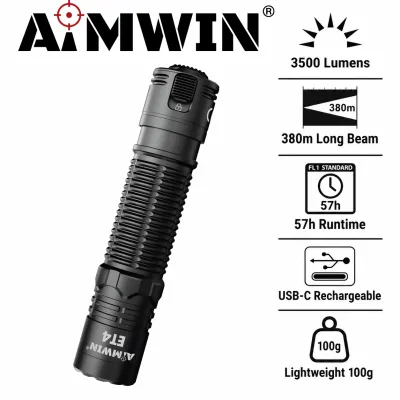
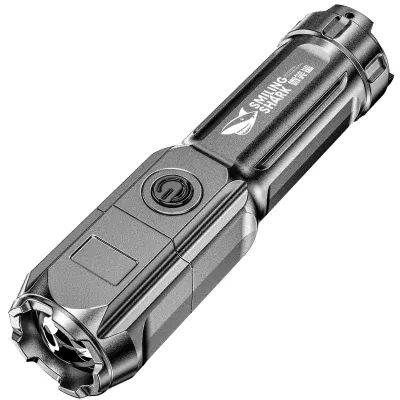
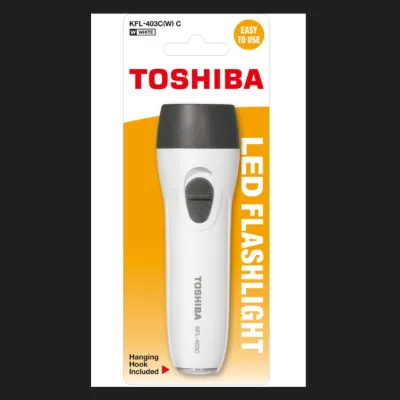
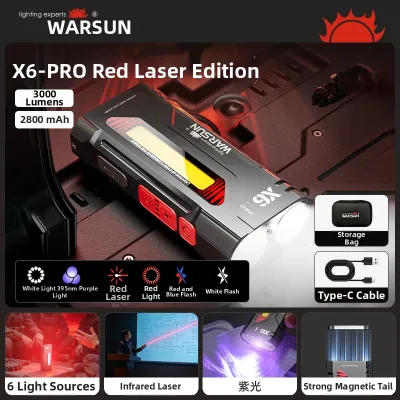
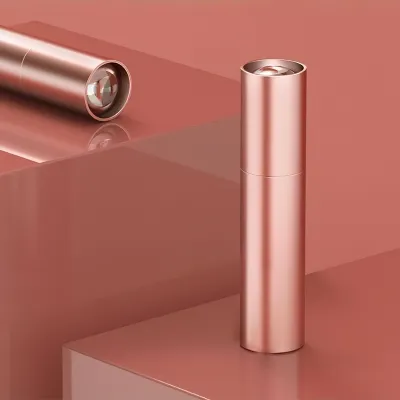
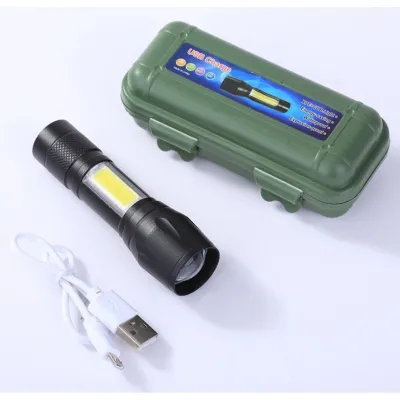
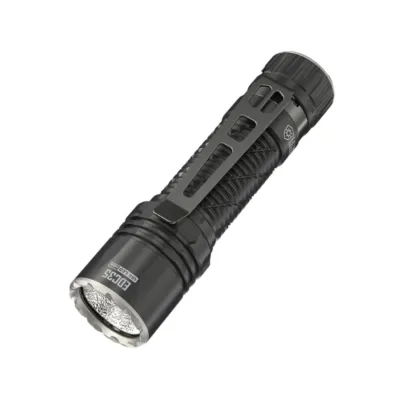
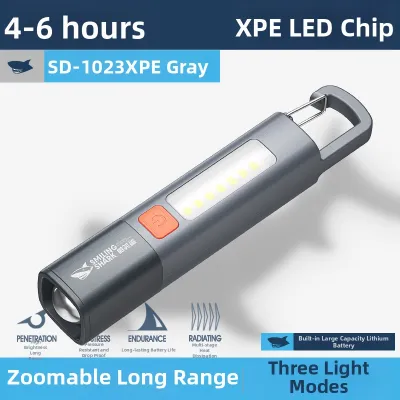
Prices are valid at publication and may change. Please refer to the product page for the latest price.
Adjustable brightness settings are essential for managing both visibility and runtime. While a maximum output of 500 to 1,000 lumens is helpful for a quick search, running a torch light at peak brightness drains the battery rapidly and generates significant heat. A lower, adjustable output of 30 to 100 lumens is perfectly sufficient for navigating corridors or preparing a meal safely, while extending the battery life to dozens of hours. Look for manufacturer specifications that guarantee a regulated output; cheap, unregulated lights dim continuously as the battery drains, whereas regulated drivers maintain a constant, pre-selected brightness level until the battery is nearly empty.
Note that color temperature is a matter of conditional preference rather than a universal performance standard. While cool white light (6000K or higher) offers high perceived brightness and is excellent for task-oriented visibility, warm white light (3000K to 4000K) or high Color Rendering Index (CRI) LEDs reduce eye strain and make navigating tight indoor spaces more comfortable.
Battery Capacity and Charging Methods
Modern urban apartments are highly integrated with USB charging infrastructure, making built-in lithium-ion (Li-ion) batteries—such as 18650 or 21700 cylindrical cells—the most convenient power source. Torch lights featuring USB-C charging ports allow you to easily top up the battery using standard smartphone chargers, wall outlets, or laptop ports. Ensure that any USB wall adapters used to charge your devices carry the appropriate regional electrical certifications, such as the Safety Mark in Singapore, to prevent charging hazards.
Bidirectional charging, or “power bank” functionality, is an invaluable feature during prolonged power outages. Keeping your mobile phone operational is critical for receiving emergency updates, contacting family, or accessing online services. A torch light equipped with a high-capacity lithium-ion battery (typically 5,000mAh or larger) can serve as a temporary power source to charge your phone via a USB output port, providing dual utility during a blackout.
For long-term emergency storage, alternative power sources offer distinct advantages. While rechargeable lithium-ion cells are ideal for active use, they slowly self-discharge over months of storage. Torch lights that accept standard, widely available replaceable alkaline cells (like AA or AAA) or lithium primary cells (like CR123A) provide exceptional shelf stability, remaining ready for use even after years in a drawer. Hand-crank (dynamo) or solar-powered options provide off-grid backup capabilities, but keep in mind the physical limitations of solar panels indoors: HDB flat layouts, shaded service yards, and tinted window glass significantly block UV light, making solar charging highly inefficient or practically impossible from inside the flat.
Form Factor, Mounting, and Hands-Free Use
During a household power failure, your primary tasks are often practical: checking the DB box, locating candles, or preparing food. These activities require the use of both hands, making a standard cylindrical torch light that must be held continuously highly inconvenient. Balancing a round torch light on its end or resting it on a flat surface often results in the light rolling away or pointing in the wrong direction.
Prioritize physical features designed for hands-free operation. A strong magnetic base allows you to secure the torch light to the metal surface of your refrigerator, steel window grilles, or the metal casing of your distribution board. Built-in folding hooks or carabiner clips allow you to hang the light from kitchen cabinet handles, door frames, or clothes racks. Lanyard loops provide a secure way to carry the light without dropping it on hard tiled floors.
Additionally, pay close attention to the physical interface of the torch light. In a pitch-black room, your tactile senses must guide you to the power switch. Avoid torch lights that rely on flush touch-sensitive screens, complex multi-tap electronic menus, or recessed buttons on a completely smooth metal cylinder. Instead, look for a prominent, raised, rubberized physical switch or a textured mechanical dial that you can easily locate by feel alone.
Best Torch Light Categories for HDB Apartments
High-Lumen Rechargeable Floodlights (Living Room & Kitchen)
High-lumen rechargeable floodlights are typically lantern-style units or thick, heavy-duty cylindrical torch lights designed to cast a broad, 360-degree ambient glow or a massive 120-degree flood beam. They utilize high-capacity rechargeable battery packs (often multiple 18650 or 21700 cells combined) and are rated for high lumen outputs.

These lights are best suited for central placement on a dining table, kitchen island, or a high shelf in the living room. This placement allows the entire household to gather in a well-lit space, facilitating communal activities, meal times, or safe movement without casting harsh, disorienting shadows.
Their large battery capacity translates to exceptional runtimes, often exceeding 24 to 48 hours on medium or low settings. The inclusion of robust USB output ports allows them to function as heavy-duty power banks to charge multiple low-power devices.
However, these units are physically bulky and heavy, making them impractical for carrying in a pocket or storing in a small bedside drawer. Before purchasing, verify the physical dimensions and weight against your intended storage shelf or cabinet to ensure it fits comfortably within your household’s layout.
Compact EDC (Everyday Carry) Torch Lights (Bedroom & Quick Access)
Pocket-sized, lightweight, and highly durable, compact EDC torch lights are typically constructed from aerospace-grade aluminum or high-strength polycarbonate. They usually measure under 12 centimeters in length and feature a simple, intuitive single-switch interface with a pocket clip.
These lights are best kept permanently in a bedside drawer, a master bedroom nightstand, or a small console drawer near the main entryway. This ensures that the moment a blackout occurs, you can immediately locate the light to safely navigate to the DB box or guide family members to safety.
Their extreme portability makes them effortless to handle, and modern LED technology allows these compact devices to produce surprisingly bright beams (often up to 1,000 lumens on turbo mode) for short bursts. They are highly reliable, easy to store in multiple rooms, and can be carried on your person throughout the outage.
On the downside, the compact body limits battery size, meaning they cannot sustain high-brightness outputs for long periods without overheating or draining the battery rapidly. Furthermore, their beam profile is naturally more focused than a lantern, which can create high-contrast shadows indoors. To maximize utility, look for models with a deeply recessed LED or an optional snap-on diffuser dome, and run them on their lowest functional setting to preserve battery life.
Multi-Function Hand-Crank & Solar Lights (Extended Blackouts)
These are specialized emergency units that integrate a moderate-output torch light with additional survival features, such as an AM/FM radio receiver, a manual hand-crank dynamo, a small built-in solar panel, and sometimes an emergency siren.
These units are best stored as a secondary backup within a dedicated household emergency kit or a household shelter (bomb shelter) storage rack, reserved for severe weather events, regional grid failures, or situations where electrical power is unavailable for several days.
They offer true energy independence. Because they do not rely on the electrical grid or pre-charged batteries to function, they provide a reliable safety net when all other power options are exhausted. The built-in radio keeps you informed of official public announcements and weather updates.
It is vital to maintain realistic expectations regarding these devices. The integrated solar panels are small and highly inefficient when placed behind window glass or in shaded HDB corridors; they require direct, unshaded outdoor sunlight over many hours to achieve a meaningful charge. Similarly, hand-cranking is physically demanding, typically requiring several minutes of vigorous cranking to generate only 10 to 15 minutes of low-power light or radio runtime. These units should be viewed as a backup of last resort rather than your primary source of daily illumination.
Feature Comparison: Which Torch Light Fits Your HDB Layout?
| Torch Light Category | Best HDB Area | Primary Beam Type | Ideal Charging Method | Main Limitation |
|---|---|---|---|---|
| High-Lumen Floodlight | Living Room / Kitchen | Wide Flood | USB-C / Power Bank | Bulky size |
| Compact EDC Light | Bedroom / Hallway | Focused / Adjustable | USB-C / Replaceable | Shorter max runtime |
| Hand-Crank / Solar | Emergency Kit Storage | Mixed / Spotlight | Dynamo / Solar | High physical effort / slow charge |
For the most practical and resilient setup in a typical HDB household, we recommend a hybrid approach: keep a few Compact EDC lights in easily accessible drawers for immediate personal navigation, and store at least one High-Lumen Floodlight in a central communal area to provide sustained, comfortable illumination for the entire family.
Storage and Maintenance Tips for Reliable Backup Lighting
An emergency torch light is only useful if you can locate it instantly in complete darkness. Avoid storing your primary emergency lights deep inside cluttered storerooms, high kitchen cabinets, or the back of wardrobe shelves. Instead, establish dedicated, highly visible “drop zones” that remain consistent. Ideal locations include a specific drawer in your TV console, a wall-mounted bracket near the main entrance, or a dedicated slot in your bedside table. Ensure that every adult and older child in the flat knows exactly where these lights are kept and understands they are not to be moved for casual use.
Lithium-ion batteries naturally degrade over time, and their lifespan is significantly shortened if they are left completely discharged (0%) or fully charged to 100% in hot environments for extended periods. To maintain optimal battery health, establish a simple biannual routine. Every 3 to 6 months, take the torch lights out of storage, check their charge level, and top them up to around 80% if possible, or fully charge them if they are dedicated emergency standbys. Using the torch light for occasional, non-emergency household tasks also helps cycle the battery and keep the internal chemistry active.
If you choose to use emergency torch lights that rely on standard AA, AAA, or C-cell alkaline batteries, never store the batteries inside the device for prolonged periods. Alkaline batteries are prone to off-gassing and leaking highly corrosive potassium hydroxide over time, which can permanently ruin the electrical contacts and render the torch light useless. Always store fresh, unused batteries in their original packaging or a dedicated plastic organizer in the same drawer as the torch light, and only insert them into the device when an outage occurs or during routine tests. Check the expiration dates on your battery stock annually.
To ensure your household is truly prepared, conduct a quick “blackout drill” once a year. Choose an evening to turn off the main circuit breakers at your HDB distribution board (DB) box for five minutes. This exercise serves multiple purposes: it tests whether your torch lights are functional and sufficiently charged, verifies that everyone can locate them in the dark, and familiarizes family members with the location and operation of the DB box.
When inspecting your HDB distribution board, remember that fixed electrical wiring and circuit breakers carry lethal voltages. Always read the manufacturer’s safety instructions for your specific DB box. If you detect a persistent electrical fault, a tripped main breaker that immediately trips again upon resetting, or a burning smell, do not attempt to service the fixed wiring yourself. Isolate the main switch if it is safe to do so, step away, and immediately contact a licensed electrical worker (LEW) or your town council’s emergency maintenance service.
Frequently Asked Questions (FAQ)
How many lumens are enough for an average HDB bedroom?
For navigating and performing basic tasks in a standard HDB bedroom (typically measuring 10 to 15 square meters), a torch light offering 50 to 150 lumens on a wide flood setting is generally sufficient and highly comfortable for the eyes. High-intensity beams exceeding 300 lumens will bounce off light-colored bedroom walls, causing harsh glare and temporary night blindness. Look for models with multiple brightness modes so you can adjust the output as needed, and always verify the manufacturer’s stated lumen output and runtime curves on lower settings.
Is a headlamp better than a handheld torch light for HDB blackouts?
Headlamps offer unmatched hands-free convenience, which is exceptionally useful when you need both hands to inspect a DB box, change batteries, or carry items. However, headlamps have a distinct disadvantage in shared indoor spaces: because the light source is mounted on your forehead, the beam points directly wherever you look. This can easily blind family members sitting across from you or lying in bed, causing discomfort. A handheld torch light featuring a strong magnetic base, a flat tail cap for candle-standing, or an integrated hanging hook is generally more versatile for communal indoor environments, while a headlamp remains an excellent secondary tool to keep in your primary emergency kit.
Do I need an IPX water-resistance rating for indoor HDB use?
High-level waterproofing certifications, such as IPX7 or IPX8 (which rate a device for continuous immersion in water), are generally unnecessary for a torch light that is kept and used strictly inside an HDB flat. However, a basic splash-resistance rating, such as IPX4, is highly beneficial. An IPX4-rated torch light is protected against splashing water from any angle, making it safe to use in a humid bathroom, near a kitchen sink, or during accidental liquid spills. Avoid paying a premium for extreme, dive-rated waterproof torch lights unless you also plan to use the device for rugged outdoor activities like kayaking or night hiking. Always check the manufacturer’s specifications to confirm the exact IP rating before making a purchase.
Community discussion
Share your experience or ask a question. Comments are reviewed before publication.