
Selecting a 22W circular ceiling light for a standard 2.6m Singapore Housing & Development Board (HDB) flat requires balancing physical clearance, light dispersion, and electrical safety. Because a 2.6m ceiling height positions the light source closer to eye level than taller private properties, choosing a brand is not about finding a universal winner. Instead, it requires verifying specific physical profiles, driver quality, and local compliance marks. A successful installation relies on matching the fixture’s physical depth and optical diffusion to the spatial realities of public housing bedrooms.
By focusing on verifiable specifications rather than marketing claims, you can identify fixtures that provide comfortable, glare-free illumination while preserving precious headroom. This guide outlines the essential spatial, optical, and electrical criteria to evaluate when shortlisting circular ceiling lights for your home.
Spatial and Optical Constraints of 2.6m Ceilings
A ceiling height of 2.6m imposes strict physical limits on any overhead fixture. When a light protrudes too far down, it visually lowers the ceiling plane, making a standard HDB bedroom feel cramped and oppressive. To maintain an open, airy atmosphere, prioritize ultra-slim surface-mounted designs. Fixtures with a total depth of 50mm or less are highly compatible with low ceilings, as they sit relatively flush against the concrete slab and minimize visual intrusion.
Products mentioned in this guide
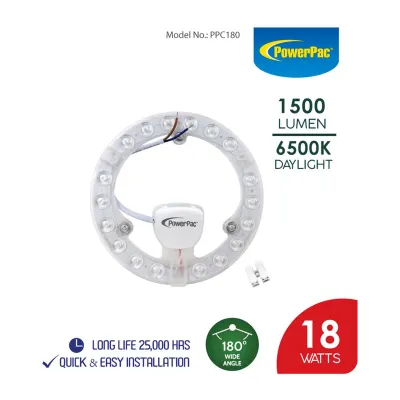
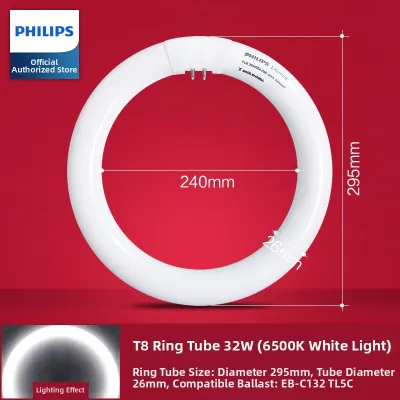
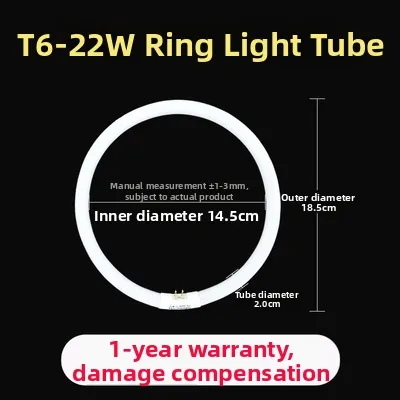
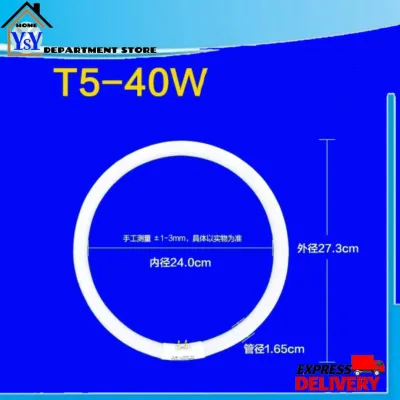
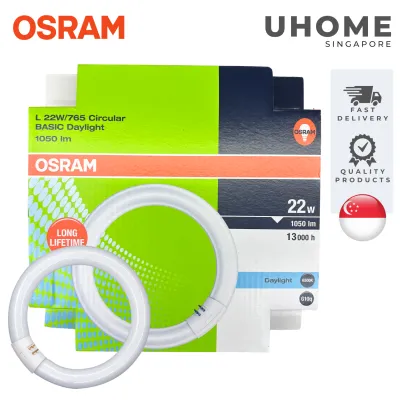
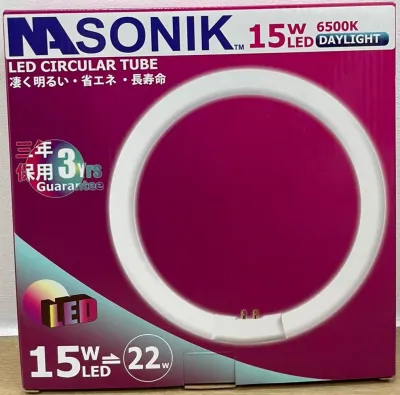
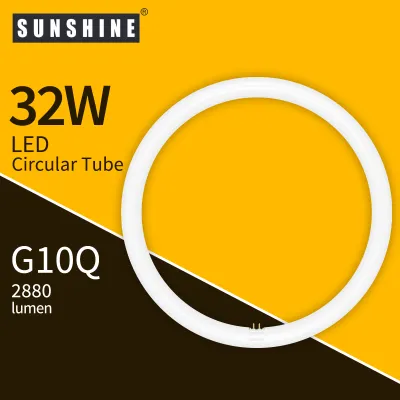
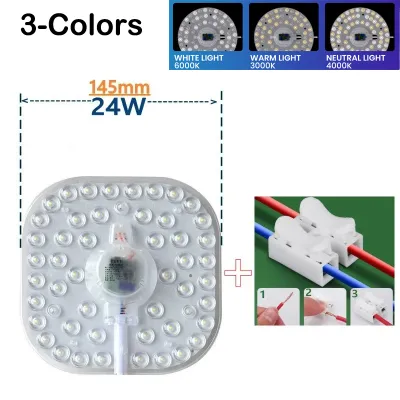
Prices are valid at publication and may change. Please refer to the product page for the latest price.
Beyond physical clearance, the proximity of the light source to eye level introduces significant optical challenges. In a room with a 2.6m ceiling, the angle of view from a bed, desk, or doorway often intersects directly with the ceiling light. Direct-lit LED arrays without adequate diffusion can create harsh hotspots, leading to visual fatigue and uncomfortable glare. Edge-lit circular designs, which direct light inward toward a light guide plate before projecting it downward, offer a highly uniform, glare-free emission pattern that is much gentler on the eyes in low-ceiling environments.
Thermal management is another critical factor influenced by ceiling height and local climate. Warm air naturally rises and accumulates near the ceiling plane, and in Singapore’s tropical environment, this pocket of air can remain warm, especially if ceiling fans are operating nearby. Enclosed circular fixtures trap heat generated by the LED chips and the internal driver. If a brand does not utilize effective heat-dissipating materials, such as aluminum backplates or specialized thermal plastics, the internal temperature will rise, accelerating lumen depreciation and shortening the lifespan of the electronic components.
Core Criteria for Evaluating Lighting Brands
When evaluating different lighting brands, the quality of the optical diffuser is a primary indicator of performance. High-quality brands typically use Polymethyl Methacrylate (PMMA) or advanced polycarbonate (PC) for their diffusers. PMMA offers excellent light transmission and resists yellowing over time when exposed to heat and UV radiation. Polycarbonate, while slightly less transmissive, provides superior impact resistance. Inspect the diffuser’s finish; a high-quality frosted or micro-prismatic texture is essential for scattering light evenly and eliminating the visible “dots” of individual LED diodes.

Build quality extends beyond the visible diffuser to the chassis and internal layout. Reliable brands construct their fixtures with a rigid metal backplate, usually made of aluminum, which serves as a passive heat sink. This construction draws heat away from the delicate semiconductor junctions of the LEDs. Conversely, lower-tier brands often rely entirely on thin plastic housings that can warp, discolor, or fail to dissipate heat effectively, leading to rapid degradation of the light output.
Warranty terms and local after-sales support are crucial indicators of a brand’s reliability in Singapore. A reputable brand should offer a clear warranty period, typically ranging from one to three years, backed by an established local distributor or physical service center. This local presence ensures that if a driver fails or a fixture begins to flicker, you can easily obtain a replacement or technical assistance without the hassle of international shipping or dealing with unresponsive online sellers on ecommerce platforms.
Sizing and Brightness Distribution for HDB Bedrooms
While wattage indicates power consumption, the actual brightness of a fixture is measured in lumens. A typical 22W LED ceiling light can produce anywhere from 1,500 to 2,200 lumens, depending on the efficiency of the driver and the optical transmission of the diffuser. For a standard HDB bedroom measuring approximately 9 to 12 square meters, a light output of 1,500 to 1,800 lumens is generally sufficient for general ambient lighting, providing adequate brightness without overwhelming the space.
Color temperature is a conditional preference that significantly affects the mood and functionality of a bedroom. Warm white (around 3000K) creates a cozy, relaxing environment suitable for winding down in the evening. Cool white (around 4000K) offers a balanced, neutral light that is excellent for reading, dressing, and general tasks. Daylight (around 6500K) provides high contrast and is preferred by some for precise tasks, though it can feel clinical in a bedroom setting. Many modern 22W fixtures offer three-tone switching, allowing users to toggle between these temperatures using a standard wall switch.
To ensure visual harmony, the physical diameter of the circular fixture must be proportioned to the room’s dimensions. For a standard HDB bedroom, a circular light with a diameter between 300mm and 400mm is visually balanced. A fixture smaller than 300mm may look lost on the ceiling, while one larger than 450mm can dominate the space visually, making the room feel smaller than it is.
Electrical Compatibility and Installation Safety
Singapore’s electrical grid operates at a standard voltage of 230V AC, 50Hz. Any ceiling light brand you consider must be rated for this voltage. Crucially, look for the Safety Mark issued by Enterprise Singapore on the product packaging or listing. This certification indicates that the product has been tested and complies with local safety standards, reducing the risk of electrical fires, short circuits, or electromagnetic interference.
Before purchasing, measure the existing mounting plate dimensions and wiring box clearance on your ceiling. HDB ceilings are typically solid concrete slabs, and replacing an existing light requires aligning the new fixture’s mounting plate with the existing screw holes or drilling new ones. Ensure there is sufficient clearance within the fixture’s housing to accommodate the incoming electrical wiring and the connector block without pinching the wires, which can cause short circuits over time.
While some homeowners attempt DIY installations, working with fixed electrical wiring poses significant safety risks. In Singapore, any modification to fixed electrical wiring must be performed by a licensed electrical worker (LEW) or a qualified professional. Additionally, working at height on a ladder to install a ceiling fixture requires proper safety precautions to prevent falls. Always isolate the power at the main distribution board (DB box) before attempting any inspection or installation.
Building Your Conditional Brand Shortlist
To build a reliable shortlist of 22W circular ceiling lights, start by downloading the official technical specification sheets from the manufacturers’ websites. Do not rely solely on retail listings on online marketplaces, which often omit critical technical details. Cross-reference the physical dimensions, especially the depth, with the 2.6m ceiling constraints, prioritizing fixtures that are under 50mm thick.
Verify technical claims regarding flicker-free drivers and dimmability. High-quality brands specify whether their drivers are flicker-free, which is essential for preventing eye strain and headaches. If you plan to use a dimmer, verify that the driver is explicitly labeled as dimmable and check which dimming protocols (such as trailing-edge or leading-edge) it supports. Incompatible dimmers can cause visible flickering, buzzing, or reduced fixture lifespan.
Be cautious of product listings that lack detailed technical specifications, do not display a valid Safety Mark, or feature generic branding with no clear manufacturer contact information. Extremely low prices often indicate compromised driver quality, poor thermal management, or sub-standard diffusers that will degrade rapidly under Singapore’s warm, humid conditions. Investing in a certified fixture from a reputable brand ensures long-term reliability and safety.
Frequently Asked Questions (FAQ)
Can I use a dimmer switch with any 22W circular ceiling light?
No, you cannot use a dimmer switch with just any 22W circular ceiling light. The LED driver inside the fixture must be explicitly designed and labeled as dimmable. Standard LED drivers are non-dimmable and will flicker, buzz, or suffer permanent damage if connected to a dimmer switch. Before installation, verify that the dimming protocol of your wall switch (such as trailing-edge or leading-edge) matches the specifications of the light’s driver.
Does a 22W circular light provide enough illumination for a master bedroom?
A 22W circular LED light producing between 1,500 and 2,200 lumens is generally sufficient for general ambient lighting in a standard HDB master bedroom. However, relying on a single central light source can create shadows in corners or near wardrobes. To create a layered and functional lighting design, consider supplementing the central fixture with task lighting, such as bedside reading lamps or wardrobe strip lights.
Are surface-mounted or recessed circular lights better for 2.6m ceilings?
For standard HDB concrete ceilings without a false ceiling, surface-mounted circular lights are the practical standard. Installing recessed lights requires cutting into a false ceiling, which reduces the overall headroom of a 2.6m room even further. Slim-profile, surface-mounted flush designs preserve the maximum possible headroom while offering straightforward installation directly onto the concrete slab.

Community discussion
Share your experience or ask a question. Comments are reviewed before publication.