
Selecting the right 36W LED ceiling light for a standard Singapore Housing & Development Board (HDB) flat with a 2.6-meter ceiling height requires balancing illumination power with spatial comfort. While many reputable brands offer 36W fixtures, the most suitable choice is not a single brand but rather any certified model that features a highly diffusive cover, a slim profile, and a reliable local warranty. Because a 2.6-meter ceiling is relatively low, a 36W LED light—which produces a substantial amount of brightness—can easily cause harsh glare or visual clutter if the fixture is too bulky or lacks proper light diffusion. Homeowners must evaluate brands based on their technical specifications, local safety marks, and physical dimensions to ensure a comfortable, well-lit living space.
Understanding the 2.6m Ceiling and 36W Lighting Dynamic
To choose the right ceiling light, you must first understand how a 36W LED light interacts with a standard 2.6-meter HDB ceiling. In LED technology, wattage measures electrical power consumption rather than direct brightness. A typical 36W LED fixture is highly efficient, producing between 2,800 and 4,000 lumens of light. Because a 2.6-meter ceiling is relatively low, the light source sits much closer to eye level than it would in private properties with higher ceilings. This proximity significantly increases the risk of direct glare and visual discomfort if the light is not properly diffused.
When a high-lumen light source is concentrated in a narrow beam, it creates a harsh spotlight effect, casting deep shadows and causing eye strain when you look across the room. To mitigate this, prioritize brands that design fixtures with a wide beam angle, typically 120 degrees or more. A wide beam angle ensures that light is dispersed evenly across the ceiling and walls, reducing harsh hotspots and creating a softer, more uniform ambient glow throughout the living space.
Products mentioned in this guide
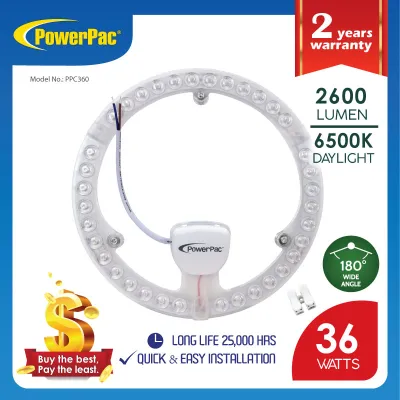
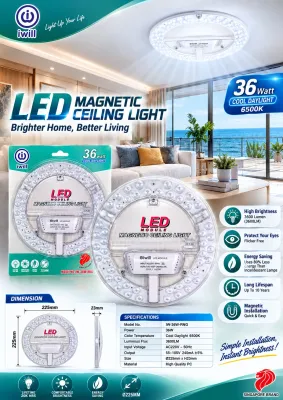
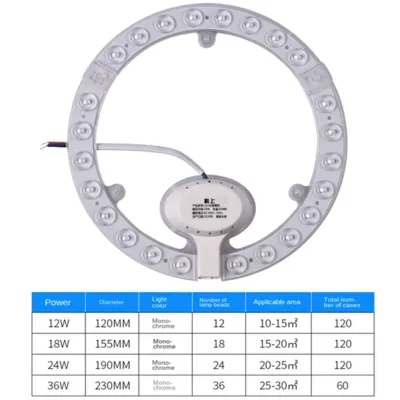
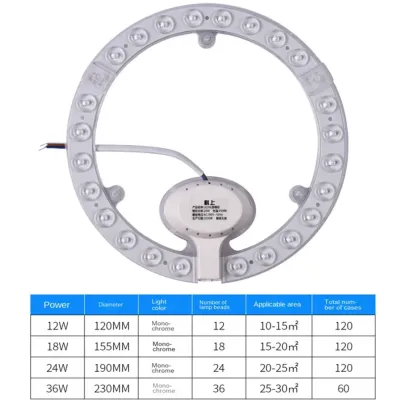
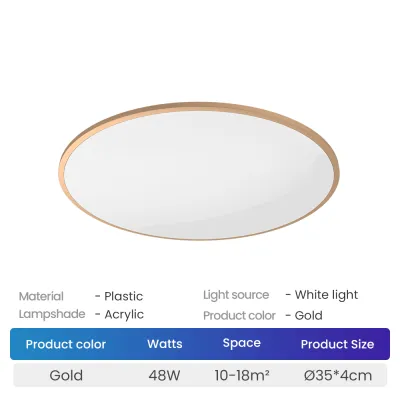
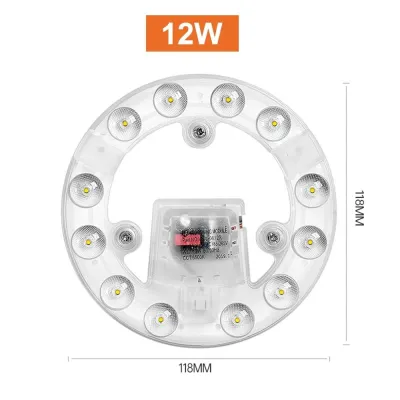
![[Bundle] LED Magnetic Module 24W 36W 40W 45W 48W 48W daylight Warm White tritone Ceiling Replacement Light Plate Panel Remote Dimmable SG Local Seller](https://img.lazcdn.com/g/p/7f3fc87c67bdfc5a3512b9f36814ab86.png_400x400q80.png_.webp)
Prices are valid at publication and may change. Please refer to the product page for the latest price.
The size and layout of your room also dictate whether a 36W light is appropriate. For a standard HDB living room, which typically ranges from 15 to 25 square meters, a 36W LED light serves as an excellent primary light source, providing ample illumination for daily activities. However, in a standard HDB bedroom measuring around 9 to 12 square meters, a non-dimmable 36W light can feel overwhelmingly bright, resembling a commercial office rather than a relaxing sanctuary. For smaller rooms, you should adjust your expectations and either opt for a lower wattage (such as 18W or 24W) or choose a 36W brand that offers robust dimming capabilities.
Core Criteria for Evaluating LED Ceiling Light Brands
When shopping at local lighting retailers or online marketplaces, you will encounter numerous brands ranging from established global manufacturers to local house brands. To evaluate these brands objectively, you must look past marketing claims and focus on concrete quality indicators, starting with local safety certifications. In Singapore, controlled electrical appliances—including LED drivers and ceiling luminaires—must carry the Safety Mark issued by Enterprise Singapore. This mark, complete with a unique 8-digit registration number, indicates that the product has been tested and certified safe from electrical shocks, short circuits, and fire hazards. Avoid any brand that cannot provide a verifiable Safety Mark for its fixtures or integrated drivers.

Warranty terms offer a clear window into a manufacturer’s confidence in their product. A reliable brand should offer at least a two-year warranty, with some premium brands providing up to five years of coverage. It is vital to check whether the warranty is “carry-in,” which requires you to dismantle the light and bring it to a service center, or “on-site,” where a technician visits your home to troubleshoot. Given that dismantling a fixed ceiling light requires electrical safety precautions, an on-site warranty or a highly accessible local service center adds significant value and convenience.
The longevity of an LED light depends almost entirely on its driver, the internal component that regulates electrical current. Cheap, unbranded drivers often fail within a year due to heat buildup, causing the light to flicker or stop working entirely. Reputable brands use high-quality capacitors and thermal management systems in their drivers, ensuring they can withstand Singapore’s warm, humid climate. When comparing brands, check the rated lifespan of both the LED chips and the driver, aiming for a minimum of 25,000 to 50,000 operating hours.
Design and Functional Features to Shortlist
To maximize comfort in a compact HDB flat, the physical design and functional features of the light fixture are just as important as its electrical specifications. Color Rendering Index (CRI) and Color Temperature (CCT) directly affect how your home looks and feels. CRI measures how accurately a light source reveals the true colors of objects compared to natural sunlight. For residential spaces, look for brands that offer a CRI of 80 or higher (CRI > 80). A lower CRI can make your home decor, food, and skin tones look dull or grayish. For color temperature, many modern 36W fixtures feature “tri-color” technology, allowing you to switch between Warm White (3000K), Cool White (4000K), and Daylight (6500K) using your standard wall switch. This versatility is highly beneficial in multi-purpose HDB living rooms, where you might want bright daylight for cleaning and warm white for evening relaxation.
Smart home integration and dimming capabilities are excellent features to shortlist. Because 36W can be intensely bright at a 2.6-meter height, the ability to dim the light to 10% or 20% of its maximum output is incredibly useful. Smart LED ceiling lights connect to your home Wi-Fi or Zigbee network, allowing you to control brightness and color temperature via a smartphone app or voice assistants. When choosing a smart brand, verify its compatibility with your existing smart home ecosystem (such as Google Home, Apple Home, or Samsung SmartThings) to avoid connectivity issues.
Physical profile is another crucial factor. A thick, dome-shaped light fixture that protrudes 10cm or more from the ceiling will visually lower the room, making a 2.6-meter ceiling feel even lower. To combat this, prioritize brands that offer ultra-slim, flat-panel designs. Many modern 36W LED ceiling lights are less than 3cm thick. These slim profiles sit flush against the concrete ceiling, drawing less attention to themselves and creating an illusion of a higher, more spacious room. Edge-lit panels are particularly effective, as they guide light sideways through a diffuser, producing a soft, even glow with minimal glare.
Pre-Purchase and Installation Verification Checklist
Before purchasing a 36W LED ceiling light, you must perform several physical and electrical checks to ensure a seamless installation process. First, measure the footprint of your existing light fixture. If you are replacing an older, round fluorescent dome light, it may have left a ring of unpainted concrete, discolored paint, or multiple screw holes on your ceiling. To avoid the hassle of patching and painting, look for a new 36W LED light with a base plate that is equal to or larger than the old fixture’s footprint. Alternatively, prepare to touch up the ceiling paint before mounting the new light.
Second, verify the electrical specifications of your home and the new fixture. Singapore’s residential electrical grid operates at a standard voltage of 230V AC at a frequency of 50Hz. The LED driver of your chosen brand must be rated to handle this input (typically labeled as 220V-240V ~ 50/60Hz). Installing a fixture designed for lower voltage markets without a proper transformer will damage the driver and pose a severe safety hazard.
Third, plan the installation process with safety as the absolute priority. Working with fixed electrical wiring carries inherent risks of electrical shock and fire. Before beginning any work, you must isolate the power supply by turning off the corresponding circuit breaker at your home’s main distribution board (DB box). Use a reliable voltage tester or test pen to confirm that the wires are completely dead before touching them.
Because HDB ceilings are made of solid, reinforced concrete, mounting a new fixture requires drilling holes using a rotary hammer drill and inserting appropriate masonry wall plugs. Standard impact drills often struggle with HDB concrete, leading to damaged drill bits and insecure mountings. If you do not own the necessary tools, lack experience with electrical wiring, or feel uncomfortable working at height, you should engage a licensed electrician. In Singapore, electrical installation work should ideally be carried out by a Licensed Electrical Worker (LEW) registered with the Energy Market Authority (EMA) to ensure full compliance with local safety standards and building codes.
Frequently Asked Questions (FAQ)
Can I use a 36W light in a small HDB bedroom?
Yes, you can use a 36W LED light in a small HDB bedroom, but it is generally not recommended unless the fixture is dimmable or features a highly effective diffuser. A standard HDB bedroom typically measures between 9 and 12 square meters. For a bedroom, a recommended illuminance level is around 100 to 150 lux, which translates to roughly 1,000 to 1,800 lumens of total light output. A highly efficient 36W LED light can produce well over 3,000 lumens, which is almost double the required amount.
If you install a non-dimmable 36W light in a small room, the space will feel excessively bright, resembling a commercial office or clinic rather than a relaxing sleeping area. This intense brightness can disrupt your circadian rhythm and cause eye strain, especially when lying in bed looking directly at the ceiling. If you must use a 36W light, ensure it is a smart model or a dimmable version so you can lower the brightness to a comfortable level (around 30% to 50%) for daily use, reserving the full 36W power only for tasks like cleaning or organizing. Alternatively, an 18W to 24W LED light is usually more than sufficient for a standard HDB bedroom.
Do slim LED ceiling lights require special HDB ceiling hooks?
No, ultra-slim surface-mounted LED ceiling lights do not require special HDB ceiling hooks. Unlike heavy crystal chandeliers or ceiling fans, which require robust, structural ceiling hooks anchored deep into the concrete, modern slim LED ceiling lights are remarkably lightweight. They typically weigh between 1 and 3 kilograms because their chassis is constructed from lightweight materials like aluminum and polycarbonate.
Instead of a hook, these lights use a flat metal mounting bracket. The bracket is screwed directly into the concrete ceiling using standard plastic wall plugs (such as size 6 or 8 plugs) and masonry screws. To install it, you hold the bracket against the ceiling, mark the screw holes, drill into the concrete with a rotary hammer drill, insert the wall plugs, and secure the bracket. The light fixture then slides or clips onto this bracket. However, always check the manufacturer’s manual for the exact weight of the fixture. If the light is surprisingly heavy or features a suspended design, you must verify that your mounting hardware and the ceiling box are rated to support the load safely.
How do I verify if a brand's LED driver is safe for local voltage?
To verify if a brand’s LED driver is safe for Singapore’s local voltage, you must inspect the physical label printed on the driver itself or the product packaging. The label must clearly state the input voltage range. In Singapore, the standard residential mains voltage is 230V AC at 50Hz. Therefore, the driver should display an input rating of 220V-240V ~ 50Hz, 230V ~ 50Hz, or a wide-voltage range of 100V-240V ~ 50/60Hz.
Beyond the voltage numbers, the most reliable way to verify safety is to look for recognized safety certification marks. In Singapore, look for the Safety Mark issued by Enterprise Singapore. This mark consists of a safety logo and a unique 8-digit registration number. You can verify this number on the official Consumer Product Safety Office registry website to ensure the certification is valid and matches the specific brand and model you are purchasing. Additionally, international safety marks such as the CE mark (for European conformity) or the TÜV SÜD mark indicate that the driver has undergone rigorous testing for electrical safety, electromagnetic compatibility, and thermal stability. Avoid any brand that lacks these clear markings or uses generic, unlabeled drivers.

Community discussion
Share your experience or ask a question. Comments are reviewed before publication.