
Selecting the right LED downlight brands for a comprehensive whole-house lighting project in Singapore requires looking beyond marketing claims. A reliable whole-home lighting scheme depends on consistent optical performance, electrical safety, and long-term durability. Because a whole-house installation involves dozens of fixtures running simultaneously, selecting a brand that offers consistent color rendering, local warranty support, and reliable performance is essential for avoiding premature failures and mismatched lighting. Homeowners must evaluate brands based on their technical specifications and suitability for Singapore’s unique residential environments, such as HDB flats and condominiums with false ceilings.
When planning a large-scale installation, the choice between integrated LED downlights and GU10 bulb-based fixtures is a fundamental decision. Integrated downlights feature built-in LED chips and dedicated external drivers, which generally offer superior thermal management and a wider variety of beam angles. On the other hand, GU10 fixtures utilize replaceable bulbs, offering simpler maintenance at the cost of slightly reduced heat dissipation efficiency. Understanding these structural differences allows you to make an informed choice that aligns with your long-term maintenance preferences and design goals.
Key Criteria for Evaluating LED Downlight Brands
Electrical safety compliance is the most critical baseline when evaluating any lighting brand in Singapore. Under the Consumer Protection (Safety Requirements) Registration Scheme managed by Enterprise Singapore, LED drivers are classified as controlled goods. Reliable brands must carry a valid Safety Mark on their drivers and packaging, complete with a unique registration number. You can verify these numbers on the official government database to ensure the equipment has undergone rigorous testing for electrical insulation, short-circuit protection, and over-temperature safety.
Products mentioned in this guide
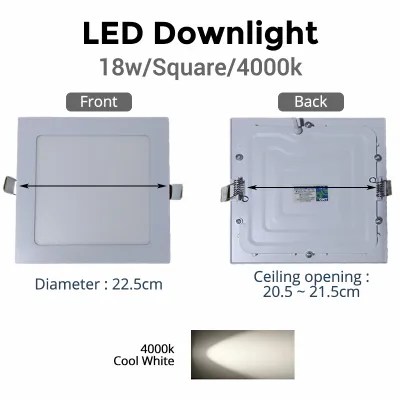
Prices are valid at publication and may change. Please refer to the product page for the latest price.
Thermal management design directly impacts the lifespan of the LED chip and prevents rapid lumen depreciation. High-quality brands construct their downlight housings from die-cast aluminum rather than cheap thermoplastics. Aluminum acts as an efficient heat sink, drawing thermal energy away from the delicate LED junction point. In Singapore’s warm, tropical climate, poor heat dissipation causes the LED phosphor to degrade rapidly, leading to premature dimming, color shifting, or total driver failure within a few thousand hours of use.
Warranty terms and the availability of local support are essential considerations for whole-home projects. A typical four-room HDB flat or condominium unit can easily require 30 to 60 downlights. If a driver or chip fails, waiting weeks for an overseas shipment from an online marketplace is highly inconvenient. Reputable brands offer multi-year warranties backed by local distributors or physical showrooms in Singapore, allowing you to secure immediate, matching replacements and maintain visual consistency across your ceilings.
Batch consistency in color temperature and brightness is another hallmark of premium brands. LED manufacturing naturally produces slight variations in light output and color, a process managed through “binning.” Top-tier brands adhere to tight MacAdam ellipse steps (typically 3-step or 4-step SDCM), ensuring that every downlight in a bulk order matches perfectly. Lower-quality brands often use wider binning tolerances, which can result in a distracting patchwork of slightly pink, green, or yellow hues across a single living room ceiling.
Matching Downlight Specifications to Room Functions
Color temperature selection is a highly subjective preference, but it should align with the primary activities in each living space. Warm white (2700K to 3000K) is highly suited for bedrooms and living rooms, where it creates a cozy, relaxing atmosphere. Cool white (4000K) offers a balanced, neutral light that enhances focus and clarity, making it ideal for kitchens, study rooms, and bathrooms. Daylight (6000K to 6500K) is best reserved for high-visibility task areas, as its strong blue-light component can feel overly clinical and disrupt sleep patterns if used heavily in evening relaxation zones.

Color Rendering Index (CRI) measures how accurately a light source reveals the true colors of objects compared to natural sunlight. For a high-quality whole-home installation, aim for a minimum of CRI 80 in general transition areas like corridors. However, in spaces where color accuracy is paramount—such as above kitchen countertops for food preparation, dining tables, and vanity mirrors—prioritize fixtures with CRI 90 or higher to ensure vibrant, natural representation of food, clothing, and skin tones.
Beam angles and lumen output must be tailored to achieve the right balance between ambient and accent lighting. Wide beam angles (60 degrees to 120 degrees) distribute light broadly, making them excellent for general ambient illumination in living areas. Narrow beam angles (24 degrees to 36 degrees) concentrate light into a tight cone, which is perfect for highlighting artwork, feature walls, or architectural details. For standard Singapore residential ceiling heights of 2.6 to 2.8 meters, downlights delivering 600 to 800 lumens per fixture generally provide sufficient brightness without overpowering the space.
Visual comfort is greatly enhanced by selecting downlights with anti-glare features and deep-recessed housing designs. Standard flat-faced downlights expose the glowing LED chip directly to your line of sight, causing eye strain and discomfort when looking across a room. Deep-recessed downlights position the light source further back inside the ceiling cavity, shielding the glare from direct view. Look for fixtures with a low Unified Glare Rating (UGR) to create a softer, more premium lighting environment in your living room and bedrooms.
Navigating Smart Lighting and Dimming Compatibility
Integrating downlights with dimming controls requires careful matching of drivers and switches to prevent performance issues. Standard, non-dimmable LED drivers operate on a constant current and will flicker, buzz, or fail prematurely if connected to a dimmer switch. If you plan to dim your lights, you must select downlights equipped with dedicated dimmable drivers, such as those compatible with Triac (leading-edge or trailing-edge), 0-10V, or DALI dimming protocols.
Smart lighting adds another layer of complexity, requiring compatibility with your chosen smart home ecosystem. Smart downlights feature built-in wireless modules operating on protocols like Zigbee, Wi-Fi, or Bluetooth. Zigbee is highly recommended for whole-home setups because it forms a local mesh network, preventing your home Wi-Fi router from becoming congested with dozens of individual light connections. Ensure that any smart brand you select integrates seamlessly with major smart home hubs and platforms.
When planning a smart system, you must choose between smart downlights and standard downlights paired with smart switches. Smart downlights allow you to adjust both brightness and color temperature (CCT tuning) dynamically, but they require constant electrical power to remain connected to the network. If someone turns off the physical wall switch, the smart light goes offline. Standard downlights paired with smart wall switches solve this issue by keeping the control at the switch level, offering a highly reliable and cost-effective solution for general lighting.
Dimmer switches also have specific minimum and maximum electrical load requirements that must be verified. Because LED downlights draw very little power (typically 7W to 12W per fixture), a small circuit with only two or three lights might not meet the minimum wattage threshold required by a traditional dimmer switch. This underloading can cause unstable power delivery, resulting in visible flickering or a limited dimming range. Always check that the total wattage of your connected downlights falls safely within the dimmer switch’s specified operating range.
Planning a Balanced Whole-Home Lighting Layout
Achieving uniform and flexible illumination requires a structured approach to spacing and layout. To calculate fixture spacing, consider your ceiling height, the beam angle of the downlights, and the desired light overlap at floor level. For a standard ceiling height of 2.7 meters and a 60-degree beam angle, spacing downlights approximately 1.0 to 1.2 meters apart ensures that the light cones overlap slightly, eliminating dark spots and creating a smooth, continuous wash of ambient light across the room.
Zoning and circuit grouping are essential for creating flexible lighting scenes and optimizing energy efficiency. Rather than wiring all the downlights in a room to a single switch, divide them into logical groups. For example, in an open-plan living and dining area, place the central ambient downlights on one circuit, the perimeter wall-washing spotlights on a second circuit, and any decorative pendant lights on a third. This allows you to adjust the lighting levels to suit different activities, such as hosting dinner parties or watching movies.
Avoiding common layout errors is crucial for maintaining visual comfort and safety. A frequent mistake in Singapore homes is placing downlights directly above the sweep path of a ceiling fan, which creates a highly distracting, high-frequency strobing effect when the fan is running. Always position downlights outside the maximum radius of the fan blades. Additionally, avoid placing downlights directly over seating areas where they cast harsh shadows on faces, or too close to walls unless you are intentionally trying to highlight the wall texture.
Your lighting layout must also be carefully coordinated with other ceiling services and structural elements. In Singapore apartments, false ceilings are frequently used to conceal structural concrete beams, air conditioning copper pipes, and ductwork. Before cutting holes for your downlights, review the ceiling plan to ensure there is no physical conflict with these hidden elements. Ensure that downlights are positioned clear of built-in wardrobe doors and kitchen cabinets so that open doors do not block the light path.
Installation Safety and Professional Boundaries
Before undertaking any electrical work, safety must be your absolute priority. Always isolate the electrical power at the main distribution board (DB box) by switching off the relevant miniature circuit breaker (MCB) before attempting to install, replace, or wire a downlight. Never rely solely on the wall switch to cut the power, as neutral wires can still carry residual current. Use a reliable, non-contact voltage tester to verify that the wires are completely dead before touching them.
Selecting the correct Ingress Protection (IP) rating is mandatory for moisture-prone areas of your home. Standard indoor living areas can safely use IP20-rated downlights, which protect against dust but offer no water resistance. However, bathrooms, wet kitchens, and outdoor balconies require higher protection. For fixtures installed directly above showers or bathtubs, use downlights with an IP44 rating or higher to prevent steam, condensation, and water splashes from penetrating the electrical housing and causing short circuits.
Proper clearance above the false ceiling is essential for safe heat dissipation. LED drivers and heat sinks require breathing room to prevent thermal buildup. Ensure there is a minimum clearance of 50mm to 75mm between the top of the downlight fixture and the concrete slab or any thermal insulation material. Never cover a standard downlight with insulation unless the fixture is explicitly certified as IC-rated (Insulation Contact), as trapped heat poses a significant fire hazard.
While simple plug-and-play bulb replacements can be done safely by homeowners, all fixed electrical wiring in Singapore must comply with strict regulatory standards. Installing new electrical points, running cables behind false ceilings, or modifying the main DB box must be performed by a Licensed Electrical Worker (LEW) registered with the Energy Market Authority (EMA). Hiring a qualified professional ensures that your installation complies with the SS 638 electrical code, preserving your home insurance coverage and guaranteeing long-term safety.
Frequently Asked Questions (FAQ)
Can I mix different LED downlight brands in the same room?
Mixing different LED downlight brands in the same room is highly discouraged due to the visual and electrical inconsistencies it creates. Even if two different brands label their products with identical specifications, such as 3000K warm white and CRI 80, their actual color rendering, light output, and spectral distribution will vary. This results in a mismatched ceiling appearance where some lights look warmer or brighter than others. Furthermore, different brands utilize different internal driver designs, which will cause uneven dimming rates and synchronization issues if connected to the same dimmer switch.
How do I clean and maintain recessed LED downlights?
To clean and maintain recessed LED downlights safely, always begin by turning off the power switch and allowing the fixtures to cool down completely to avoid thermal shock or burns. Use a dry, clean, anti-static microfiber cloth to gently wipe away dust from the outer trim and the lens. Avoid using harsh chemical solvents, abrasive cleaners, or spraying liquids directly onto the fixture, as moisture can seep into the housing and damage the electronic driver. Periodically check the visible heat sink area for dust buildup to ensure optimal thermal dissipation.
Community discussion
Share your experience or ask a question. Comments are reviewed before publication.