
Outfitting an entire home in Singapore with recessed LED downlights is a significant investment that directly shapes your daily living environment. While a single-room lighting swap carries minimal risk, a whole-home project involves dozens of fixtures operating simultaneously. In such large-scale installations, minor inconsistencies in color temperature, brightness, or driver quality quickly multiply into noticeable visual flaws and premature failures. To identify the most reliable LED downlight brands for your project, you must look beyond marketing buzzwords and evaluate concrete indicators of engineering quality, local safety compliance, and long-term support.
Core Criteria for Selecting Reliable LED Downlights
Reliability in a whole-home context means long-term performance stability across all installed units. When you turn on ten downlights in a living room, they must project an identical shade of light. This requires strict color binning, which is the process where manufacturers sort LED chips by their precise color output. Premium brands adhere to tight MacAdam ellipse standards (typically 3-step or 4-step), ensuring that any color variation between individual fixtures remains imperceptible to the human eye.
Build quality is another critical differentiator. High-quality downlights feature robust aluminum housings rather than cheap thermal plastics. Aluminum acts as an efficient heatsink, drawing heat away from the sensitive LED junction. In Singapore’s warm, humid climate, effective thermal management is essential; excess heat is the primary cause of rapid lumen depreciation and color shifting over time.
Products mentioned in this guide
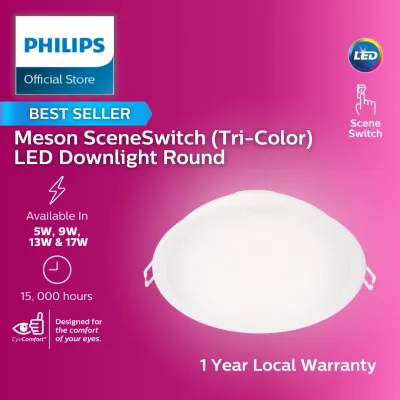
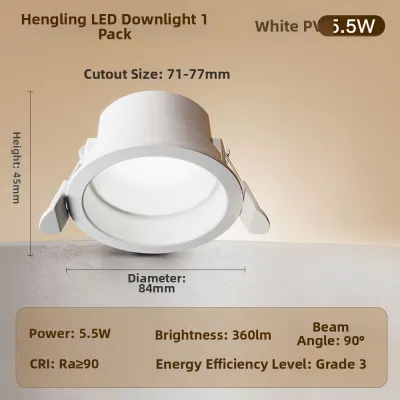
![[MIX & MATCH- 2PC] LEDVANCE LED ECO Downlight Slim Round or Square | 6Inch or 8Inch | Warm White/ Cool White/ Daylight by TWS Home](https://img.lazcdn.com/g/p/4d19e51c68ae844eed1377eba77b1e77.png_400x400q80.png_.webp)
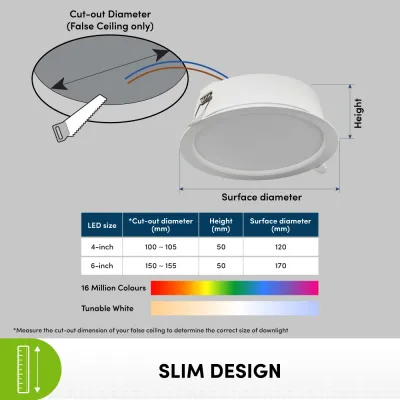
![Third generation [Ready Stock] [Superior Quality] LED Downlight 170V-265V Spotlight Tricolor 3W 5W 9W 12W 15W 18W Recessed LED Ceiling Downlight Cold & Warm White Light For Commercial Building Bedroom Decoration Spot light Led Panel Light](https://img.lazcdn.com/g/p/e3364a41b4260165d26a7fd8d72351e8.jpg_400x400q80.jpg_.webp)
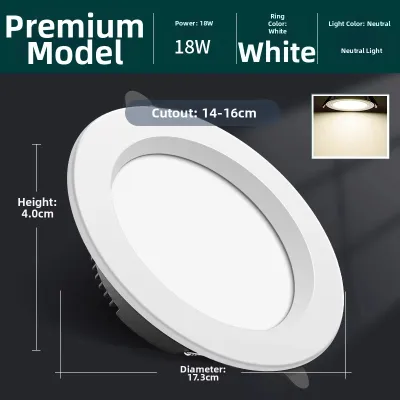
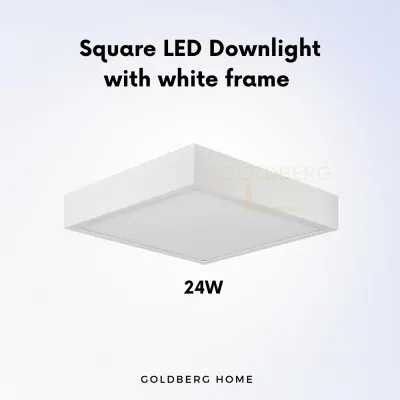
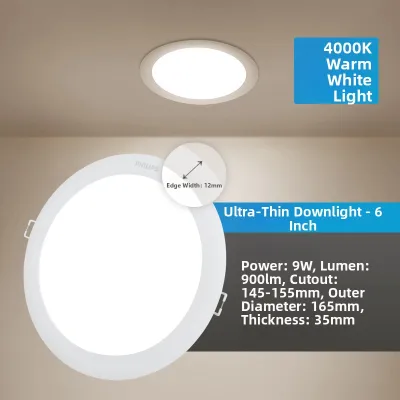
Prices are valid at publication and may change. Please refer to the product page for the latest price.
Optical design also dictates visual comfort. Reliable brands invest in precision-engineered lenses and high-grade diffusers that distribute light evenly without creating harsh hot spots or yellowing under continuous heat exposure. Cheap diffusers often degrade and discolor within a year, turning a clean white light into an uneven, muddy yellow.
Essential Technical Specifications to Verify
Before purchasing any LED downlight, verifying technical compatibility with Singapore’s electrical infrastructure is non-negotiable. The standard residential voltage in Singapore is 230V AC at 50Hz. Any downlight or external driver you select must be rated to operate safely within this range. Furthermore, under the Consumer Protection (Safety Requirements) Registration Scheme, LED downlights and drivers are classified as controlled goods. You must verify that the products carry the local Safety Mark, which ensures they have been tested and certified safe from electrical fire and shock hazards.

Physical dimensions require careful planning. Recessed downlights require a specific cut-out diameter in the plasterboard false ceiling, typically ranging from 75mm to 150mm. Equally important is the housing depth and the clearance space above the false ceiling. If your home has a shallow ceiling cavity—common in modern HDB flats and condominiums trying to maximize headroom—you will need ultra-thin downlight models. Conversely, if space permits, deeper recessed fixtures are preferable as they shield the light source from direct view, significantly reducing glare.
Dimming compatibility is a frequent source of frustration for homeowners. If you plan to install dimmer switches or smart lighting controllers, you must ensure the downlight drivers are explicitly marked as dimmable. Pairing a non-dimmable driver with a dimmer switch leads to persistent flickering, buzzing, and eventual driver failure. Even with dimmable fixtures, you must cross-reference the manufacturer’s compatibility charts to match the downlight with the correct type of dimmer, such as trailing-edge or leading-edge phase-cut dimmers.
Ingress Protection (IP) ratings must align with the installation environment. While standard IP20-rated downlights are perfectly suitable for dry areas like living rooms, bedrooms, and hallways, they are inadequate for wet or semi-outdoor zones. For bathrooms, particularly in the zone directly above the shower or bathtub, look for fixtures with at least an IP44 rating to resist moisture and water splashes. Similarly, covered balconies, service yards, and outdoor eaves require IP44 or higher to withstand high humidity, wind-blown rain, and dust accumulation.
Assessing Brand Reliability and Local Support
A brand’s reliability is only as good as its local support network. When outfitting an entire home, you should prioritize brands that offer a comprehensive local warranty, ideally spanning two to five years. It is vital to read the fine print of these warranties. Most standard residential warranties cover the replacement of the physical fixture or driver but exclude the labor costs associated with hiring an electrician to remove the defective unit and install the replacement.
To ensure your warranty is enforceable, always purchase your lighting fixtures from local authorized distributors or reputable local retail showrooms. Avoid buying parallel imports or sourcing directly from overseas online marketplaces. While parallel imports may offer a lower upfront price, they often lack the mandatory local Safety Mark, may not be optimized for Singapore’s electrical grid, and will be rejected by local service centers if a defect arises.
Long-term product availability is a critical factor that many homeowners overlook. If a downlight fails three years after installation, you want to be able to purchase an exact replacement. Established, reputable brands maintain consistent product catalogs and standardized cut-out sizes over many years. If you buy from an unbranded or generic online seller, those specific models may disappear from the market within months, forcing you to replace all the downlights in a room just to maintain visual consistency when a single unit fails.
Verifying safety compliance is a straightforward process. You can check the registration number on the Safety Mark against the public database provided by Enterprise Singapore. This step ensures that the product is genuine and has undergone rigorous testing, giving you peace of mind that your home’s lighting system is safe and compliant with national standards.
Planning Light Quality and Spatial Effects
Achieving the right ambiance across different functional zones requires a thoughtful mix of optical specifications. Color temperature, measured in Kelvin (K), dictates the warmth or coolness of the light. For cozy, relaxing spaces such as bedrooms and living rooms, a warm white light of 3000K is highly recommended. For task-oriented areas like kitchens, study rooms, and home offices, a cool white light of 4000K enhances focus and visibility. Daylight (6500K) should be used sparingly, typically in utility rooms or bomb shelters where maximum clarity is needed.
Beam angles and lumen output must be matched to the room’s layout. Wide beam angles (60 degrees to 120 degrees) are excellent for general ambient lighting as they distribute light broadly across the floor. Narrow beam angles (24 degrees to 36 degrees) create focused, dramatic pools of light, making them ideal for accentuating artwork, dining tables, or architectural features. Over-illuminating a space with excessively high-lumen downlights can make a home feel clinical and harsh; instead, aim for a layered lighting design that combines ambient downlights with accent lighting.
Visual comfort is heavily influenced by glare control. Deep recessed downlights, where the LED light source is positioned deep within the housing, are highly effective at preventing direct glare. When evaluating brands, look for fixtures that specify a low Unified Glare Rating (UGR), ideally below 19 for living areas. This design ensures that the light source is only visible when you are standing almost directly beneath it, keeping the rest of the room comfortably illuminated without straining your eyes.
To help plan your home’s lighting layout, consider this zone-based specification framework:
- Living Room: Warm White (3000K), medium to wide beam angles (36° to 60°), deep recessed anti-glare design (UGR < 19), dimmable drivers for adjustable evening ambiance.
- Kitchen: Cool White (4000K), wide beam angles (60° to 90°) for shadow-free task lighting, high lumen output, IP20 or IP44 depending on proximity to the cooking and washing areas.
- Bathrooms: Cool White (4000K) or Warm White (3000K) depending on preference, IP44 rating for moisture resistance, wide beam angles for even illumination.
- Bedrooms: Warm White (3000K), narrow to medium beam angles (24° to 36°) positioned away from the bed to avoid shining directly into your eyes when lying down, dimmable controls.
Installation Safety and Professional Boundaries
Working with electrical installations carries inherent risks of shock, fire, and severe injury. Before any physical installation, replacement, or maintenance work begins, you must isolate the power. Turn off the main circuit breaker at your home’s distribution board (DB box) and use a reliable non-contact voltage detector to confirm that the wires are completely dead before touching them. Never rely solely on the wall switch to isolate the power.
While replacing a simple plug-and-play LED driver can sometimes be done by a confident homeowner, any modification to fixed electrical wiring must be handled by a professional. In Singapore, you should hire a Licensed Electrical Worker (LEW) registered with the Energy Market Authority (EMA). A licensed professional ensures that the wiring is safely routed, connections are secure, and the overall electrical load does not exceed your home’s circuit capacity.
Heat dissipation is a critical safety consideration for recessed downlights. Even energy-efficient LEDs generate heat, which must escape from the back of the fixture. Ensure there is a minimum clearance of 50mm of free air space around and above the downlight housing within the false ceiling. Never cover a downlight with thermal insulation materials unless the fixture is explicitly certified as IC (Insulation Contact) rated. Trapping heat can cause the driver to overheat, leading to premature failure or, in worst-case scenarios, a fire hazard.
You must establish clear boundaries for when to stop and call a professional. If you encounter brittle or decaying wires, notice water stains or dampness inside the ceiling cavity, or find that the existing ceiling cut-out is unstable or crumbling, halt all work immediately. Do not attempt to force a fixture into an incompatible cut-out or bypass safety ground connections. Consulting a qualified electrician or the manufacturer’s technical support is the only safe course of action.
Frequently Asked Questions (FAQ)
Can I mix different LED downlight brands in the same room?
Mixing different LED downlight brands within the same room is highly discouraged due to the significant risk of visual inconsistency. Even if two different brands list identical specifications on their packaging—such as a 3000K color temperature and 800 lumens—they will almost certainly look different when installed side by side. This is because different manufacturers use different LED chips, phosphor coatings, and diffusion lenses, resulting in subtle but highly noticeable variations in color tint (some may look slightly pinker, others greener) and light distribution.
Furthermore, different brands utilize different driver technologies, which can cause them to dim at different rates or flicker when connected to the same dimmer switch. If you must mix brands, restrict them to completely separate rooms or distinct lighting circuits that are never turned on at the same time. For a single continuous ceiling space, always stick to a single brand and, ideally, the exact same production batch to ensure perfect visual harmony.
How do I handle a failed downlight under warranty?
If an LED downlight fails, the first step is to diagnose whether the issue lies with the LED light engine itself or the external driver. In many cases, the driver fails long before the LEDs do. If your downlights use external plug-and-play drivers, you can safely test this by turning off the power, swapping the driver of the failed light with a working driver from an adjacent fixture, and turning the power back on. If the light works, you only need to replace the driver.
To claim a warranty replacement, locate your original proof of purchase, such as a retail invoice or receipt, which clearly shows the purchase date and model number. Contact the local authorized distributor or the retail store where you purchased the lights. They will typically require you to bring the defective unit (both the light fitting and the driver) to their service center for testing. Once verified, they will issue a replacement unit. When installing the new unit, check its color output against the existing lights, as minor batch variations can sometimes occur even within the same model line.
Community discussion
Share your experience or ask a question. Comments are reviewed before publication.