
An emergency in a typical Singapore Housing & Development Board (HDB) flat usually begins with a sudden trip of the miniature circuit breaker (MCB) in your distribution board (DB) box. Navigating a pitch-black hallway to locate this box requires immediate, reliable illumination.
An ultra-compact keychain flashlight like the Nitecore TINI 3 is highly suitable as a first-line response tool for short-term, close-range indoor emergencies. Its tiny footprint means it can live on your entryway key hook or in a pocket, ensuring you are never left fumbling in the dark.
However, while a keychain light excels at immediate accessibility, you must verify the manufacturer’s stated output and runtime against your household’s specific backup plan. It is best viewed as a bridge to locate larger emergency gear rather than a total replacement for dedicated area lighting.
Products mentioned in this guide
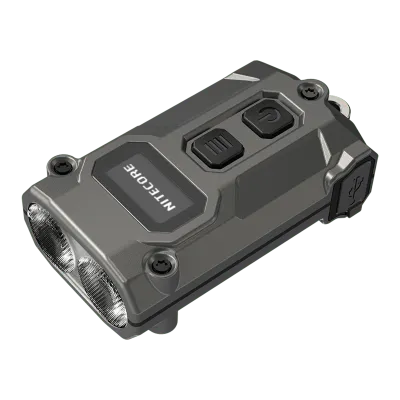
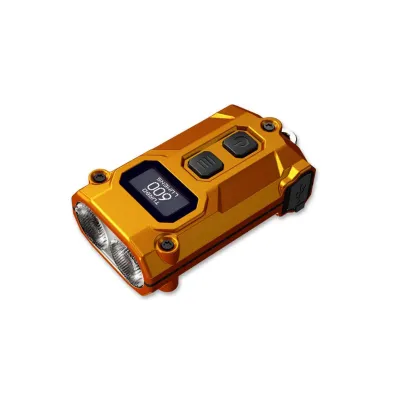
Prices are valid at publication and may change. Please refer to the product page for the latest price.
Assessing Brightness and Beam Coverage for HDB Layouts
When selecting an emergency light for an HDB flat, understanding spatial layout and light distribution is critical. HDB apartments often feature long, narrow corridors leading from bedrooms to the living area, alongside compact rooms with light-colored, reflective walls.
To determine if the Nitecore TINI 3 fits your layout, start by checking the product’s maximum lumen output and beam distance on the official specification sheet. High lumen counts are helpful, but the shape of the beam determines how that light behaves inside your home.
A close-range flood beam is ideal for indoor navigation. It disperses light widely, allowing you to see an entire room or read instructions on your DB box without having to sweep the flashlight back and forth. Conversely, a throw beam concentrates light into a tight, far-reaching spotlight. While throw beams are excellent for long outdoor paths, they can be less practical in a confined HDB flat, where you need immediate peripheral awareness.
Another critical factor is the availability of adjustable brightness levels. Using a flashlight at its maximum setting indoors can cause blinding reflections off white plaster walls or glossy kitchen tiles, straining your eyes. Lower brightness modes not only prevent this glare but also significantly preserve battery life. Ensure you verify the interface steps to confirm how easily you can cycle through these modes in a high-stress situation.
Evaluating Battery Runtime Against Typical Outage Durations
Power interruptions in Singapore residential estates generally fall into two categories: localized tripped breakers that are resolved in minutes, and wider grid maintenance or substation faults that can last several hours. Your emergency light must have the endurance to match these scenarios.

Before relying on the Nitecore TINI 3, review the manufacturer’s runtime chart across all brightness modes. Keychain flashlights utilize compact lithium-ion batteries, which naturally face physical limits on capacity. While a high-output “turbo” mode might only run for a few minutes to prevent overheating, lower modes should ideally offer several hours of continuous light.
For a brief tripped-breaker event, a quick burst of light is more than enough to guide you to the DB box to reset the switch. However, during a prolonged neighborhood blackout, you will need a sustained low-output beam to keep your living space illuminated while waiting for utility services to restore power.
To mitigate the limitations of a small internal battery, verify the device’s charging interface. Modern emergency lights typically feature a USB-C port. Confirm whether the flashlight supports “pass-through” charging—the ability to operate while plugged into an external power source. If it does, you can easily extend its runtime by connecting it to a standard portable power bank, turning a pocket-sized tool into a long-lasting emergency beacon.
Storage, Portability, and Space Efficiency in Compact Homes
Space efficiency is a primary consideration in modern HDB flats, where clutter-free living is highly valued. Large, heavy searchlights often end up relegated to deep cabinets, making them difficult to locate when the power suddenly cuts out.
The primary advantage of an ultra-compact form factor is its high accessibility. A light that fits comfortably on a keychain, in a bedside drawer, or hung next to the main door is far more likely to be within arm’s reach during a crisis. This immediate availability reduces the risk of trips and falls in the initial moments of a blackout.
Durability is equally important if the device is carried daily alongside metal house keys or stored in a packed emergency kit. Look for robust body materials, such as anodized aluminum, which protect the internal electronics from drops and impacts.
Additionally, consider the storage environment. Singapore’s humid tropical climate can affect electronic components over time. Check the manufacturer’s IP (Ingress Protection) rating to ensure the flashlight has adequate water and dust resistance, particularly if you plan to store it in areas prone to moisture, such as kitchen drawers or utility closets.
Building a Complete HDB Emergency Lighting Strategy
While a compact keychain light is an excellent personal carry tool, relying solely on a single directional flashlight is rarely sufficient for a household. A robust emergency preparedness plan requires a multi-layered approach to lighting.
A directional flashlight requires you to hold it, which limits your ability to perform hands-free tasks like preparing food, attending to children, or administering first aid. To build a complete strategy, supplement your pocket light with wider-area lanterns or wearable headlamps. Placing a static, 360-degree lantern in the living room provides ambient comfort for the entire family, while a headlamp keeps your hands free for manual tasks.
Regular maintenance is vital to ensure your equipment functions when needed. Establish a routine checklist:
- Quarterly Battery Checks: Test the flashlight every three months to verify the battery level.
- Scheduled Recharging: Top up the charge regularly, as lithium-ion batteries slowly self-discharge over time.
- Physical Inspection: Inspect the charging port for dust or debris and ensure the buttons operate smoothly.
Finally, practice safe storage. Many advanced compact flashlights feature an electronic “lockout mode.” Always engage this mode when storing the device in a drawer or pocket. This prevents accidental activation, which can silently drain the battery or generate excessive heat in confined spaces.
Frequently Asked Questions (FAQ)
Can the Nitecore TINI 3 replace a dedicated emergency lantern?
No, it is designed as a complementary tool rather than a complete replacement. A compact flashlight projects a focused, directional beam that is ideal for navigating corridors or searching for specific items. A dedicated emergency lantern, however, provides 360-degree ambient illumination to light up an entire room. For optimal safety, use the keychain light to safely locate and deploy your larger area lanterns.
How often should I charge the flashlight if it is kept in an emergency kit?
To maintain optimal lithium-ion battery health, it is generally recommended to check and top up the charge every three to six months. Storing a battery completely drained or fully charged to 100% for years can degrade its capacity. For precise storage guidelines, including recommended standby voltage and temperature limits, always consult the manufacturer’s user manual.
Community discussion
Share your experience or ask a question. Comments are reviewed before publication.