
Styling open shelves in a small apartment requires a careful balance between visual interest and spatial efficiency. Fake book decor offers an excellent way to introduce height, structure, and sophisticated color palettes to compact shelving without the physical weight or bulk of a massive library. By selecting the right formats, proportions, and finishes, you can elevate your living space, create a curated aesthetic, and even gain hidden storage. Achieving this look depends on understanding how different faux book styles interact with your existing decor, lighting, and shelf dimensions.
Identifying the Right Faux Book Formats for Compact Shelves
When selecting fake book decor, the first step is understanding the different formats available and how their physical characteristics affect your shelving. Hollow storage boxes are among the most popular choices for small apartments. Typically constructed from thick cardboard or medium-density fiberboard (MDF) and wrapped in printed paper or fabric, these boxes are exceptionally lightweight. This makes them ideal for floating shelves or wall-mounted units that have strict weight limits, while their hollow interiors provide valuable storage space for small household items. For instance, if you are styling a floating shelf mounted on a drywall partition, minimizing weight is paramount. In this scenario, hollow cardboard book boxes are the safest option, as they exert minimal downward force on the wall anchors.
Solid resin blocks offer a completely different aesthetic and structural profile. Molded from synthetic resin and painted to resemble a stack of classic volumes, these pieces are highly durable and resistant to warping. They carry a realistic physical weight, which makes them feel premium to the touch, but they offer no storage utility. Because of their weight, they are best reserved for sturdy, freestanding bookcases rather than delicate wall shelves. If you have a sturdy, floor-standing wooden bookcase, solid resin blocks or heavy paper replicas can be used without concern, providing a more substantial and realistic feel when handled.
Products mentioned in this guide
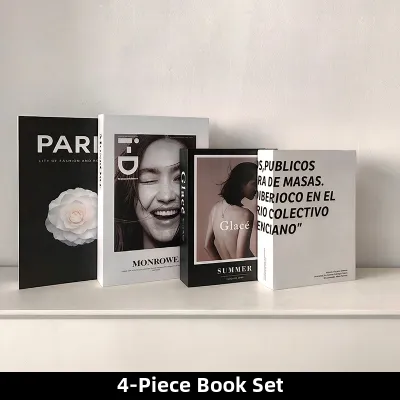
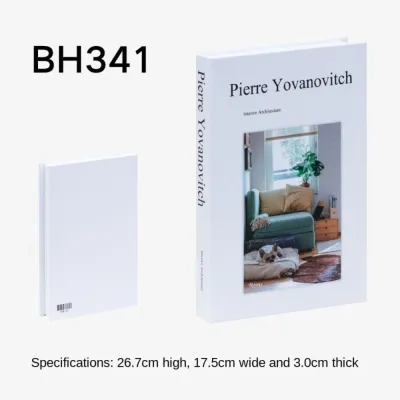
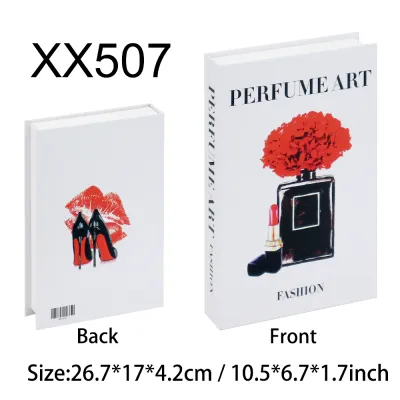
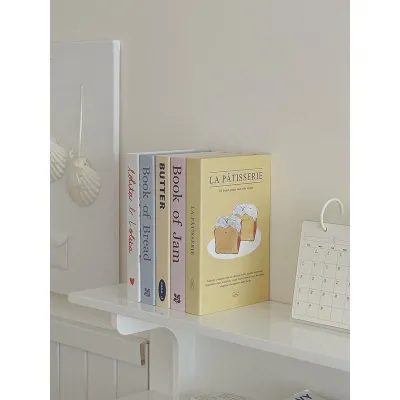
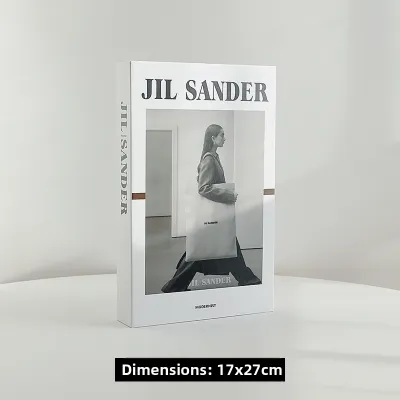
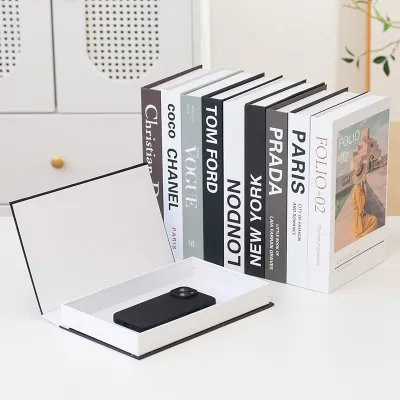
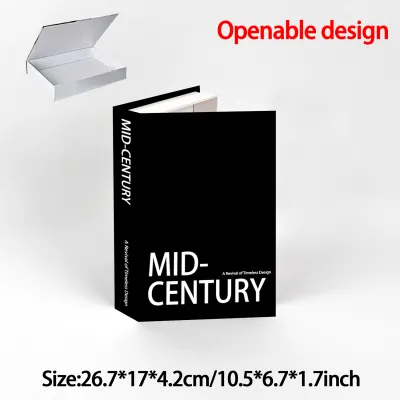
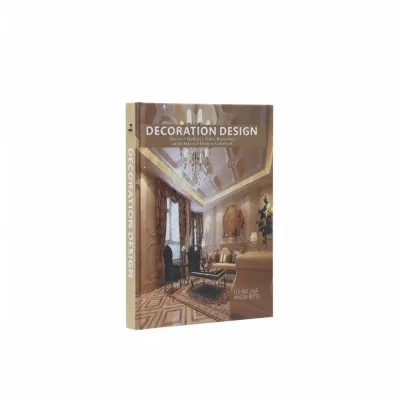
Prices are valid at publication and may change. Please refer to the product page for the latest price.
Stacked paper replicas provide the highest level of realism. These are made of actual bound paper pages, often left blank inside, and wrapped in custom decorative dust jackets. Because the page edges are genuine paper, they look completely authentic even under close inspection. They carry a moderate weight and are perfect for eye-level shelves where a plastic or cardboard edge might look artificial.
Spine designs play a crucial role in the visual cohesion of a small room. Minimalist spines, featuring clean typography and solid neutral backgrounds, help maintain a calm, uncluttered look in a compact space. Vintage spines, with faux-leather textures and gold foil stamping, add warmth and character but can look busy if overused. Modern abstract spines use bold geometric patterns or continuous color blocks across multiple volumes, creating a striking focal point that can tie a room’s color scheme together.
Depth and height constraints are typical of compact apartment shelving, such as built-in alcoves or narrow ladder shelves. These units often feature a shallow depth of 15 to 20 centimeters. Standard coffee table books or oversized decorative volumes will overhang, creating a safety hazard and a cluttered look. Height clearance between shelves is also limited, meaning you must select faux books that can stand vertically without scraping the shelf above, or lay horizontally without taking up the entire shelf width.
Sizing and Proportion Guidelines for Small Spaces
Before purchasing any decorative items, it is essential to measure your shelving unit accurately. Use a metal measuring tape to record the exact depth of your shelves from the back wall to the front edge, as well as the vertical clearance between each shelf. Be sure to account for any hanging brackets, light fixtures, or cabinet door hinges that might obstruct placement. Additionally, check the manufacturer’s weight capacity for your shelving unit, especially if it is wall-mounted, to ensure it can safely support your chosen decor.

To prevent open shelves from feeling overwhelmed, you must apply the rule of negative space. In small apartments, packing every centimeter of a shelf with books and ornaments creates visual noise and makes the entire room feel smaller and more chaotic. Aim to leave approximately 30% to 40% of each shelf empty. This empty space acts as a visual buffer, allowing the eye to rest and making the styled elements stand out. Fake books should be used to create structured groupings, not to fill every available gap.
When planning the layout of your shelves, think of each shelf as a canvas divided into three equal horizontal sections. Placing your main decorative cluster—such as a stack of faux books topped with a small object—in either the left or right third, rather than dead center, creates a more dynamic and visually pleasing composition. This technique, known as the rule of thirds, is a staple of interior design and photography, helping to guide the viewer’s eye naturally across the space.
Achieving a curated, non-uniform look requires mixing heights and widths. A row of identical faux books looks artificial and sterile, resembling a retail display rather than a lived-in home. Instead, select faux book sets that feature staggered heights and varying spine thicknesses. For example, pair a tall, slender volume with a shorter, thicker one. When arranging them, mix vertical alignments with horizontal stacks. A horizontal stack of two or three books can serve as a base, while a vertical pair nearby adds dynamic height variation.
Selecting Color Palettes and Material Finishes
In a compact living area, color choices heavily influence the perception of space. Light, neutral tones like cream, beige, soft grey, and off-white reflect natural light, making the room feel airy and expansive. If your apartment features a neutral base, choose faux books in similar tones to create a cohesive, minimalist look. If you want to introduce color, select a set with subtle accent hues—such as terracotta, sage green, or dusty blue—that complement your existing soft furnishings, like throw pillows or curtains.
In small apartments, lighting can vary dramatically throughout the day. A color that looks like a soft cream in bright morning sunlight might appear as a dull, yellowish-beige under warm evening LED lighting. To ensure your faux books look cohesive under all lighting conditions, consider the color temperature of your apartment’s light bulbs. If you use warm white lighting (around 2700K to 3000K), neutral-toned books with warm undertones will blend beautifully. If your space uses cool white or daylight bulbs, opt for crisp whites, cool greys, or muted blues to maintain a clean, modern aesthetic.
Material finishes interact with both natural and artificial light, affecting how realistic and premium the decor looks. Matte paper finishes absorb light rather than reflecting it, providing a soft, realistic appearance that mimics traditional book covers. This finish is highly versatile and works well in rooms with abundant natural light, as it won’t produce distracting glare. Glossy resin finishes reflect light, which can add a touch of modern sophistication, but under direct overhead spotlights, they can produce a strong glare that highlights their synthetic nature.
Linen-wrapped boxes offer a rich, tactile texture that elevates the entire shelf display. The woven fabric surface catches light beautifully, adding depth and a premium, high-end feel to your shelves. This texture is particularly effective at softening the hard lines of metal or glass shelving. When shopping on online marketplaces, always check customer-uploaded photos in the reviews to verify the true color representation and texture, as highly stylized product renders can be misleading.
Arrangement Techniques for a Curated Shelf Display
To create a balanced and visually appealing shelf, use visual grouping techniques like the rule of thirds and asymmetrical grouping. Instead of centering your decor, place items in off-center clusters. For instance, on a single shelf, you can place a small stack of horizontal faux books on the left side, a single vertical book with a small decorative object in the middle, and leave the right side empty. This asymmetrical balance feels organic and sophisticated, drawing the eye across the display.
Faux books are excellent styling tools because they double as pedestals. A horizontal stack of two or three linen-wrapped book boxes provides the perfect platform to elevate smaller decorative items. Top the stack with a lightweight object, such as a small potted succulent, a sleek brass tray, a scented candle, or a minimal ceramic sculpture. This layering technique adds height, texture, and dimension, turning a simple shelf into a curated work of art while keeping the overall arrangement lightweight.
When pairing faux books with other decorative objects, aim for a contrast in shapes and materials. Since books are inherently geometric and linear, pairing them with organic, rounded shapes creates a pleasing visual contrast. For example, place a round ceramic vase, a spherical glass paperweight, or a trailing plant with soft, cascading leaves next to or on top of a structured stack of faux books. This juxtaposition of hard lines and soft curves prevents the shelf from looking too rigid or clinical.
Visual weight is just as important as physical weight when styling compact shelves. Darker colors, thick spines, and solid materials look heavier to the eye. To maintain a balanced display, place these heavier-looking faux book stacks on the lower shelves of your unit or near the outer edges. This grounds the arrangement visually, preventing the shelving unit from looking top-heavy or unstable. Keep the lighter, brighter, and more delicate items on the upper shelves to maintain an open, airy feel.
Pre-Purchase Checklist for Online Faux Book Shopping
When shopping for fake books decor on online marketplaces, it is easy to be misled by attractive product photos. To avoid sizing mismatches and poor-quality items, always verify the exact dimensions of the books before purchasing. Do not rely on generic size labels like “standard size” or “decorative scale.” Always check the product specifications for the exact height, width, and depth in centimeters, and compare these numbers directly against your shelf measurements to ensure a perfect fit.
Carefully read the material descriptions and customer reviews to assess the quality of the construction. Look for details on the materials used, such as thick cardboard, MDF cores, or linen fabric wraps. Avoid listings that are vague about materials. Read customer reviews specifically searching for complaints about peeling paper edges, flimsy construction that warps under light weight, or strong chemical odors from cheap adhesives. If multiple reviews mention a strong chemical smell, it is best to look for an alternative, as these odors can persist in small, poorly ventilated apartments.
Finally, review the seller’s return policies and shipping dimensions. Because decorative book sets are often shipped as a bundle, they can arrive in relatively large, bulky packaging. Ensure the seller offers a clear return policy in case the colors do not match your existing decor in person, or if the items are damaged during transit. Checking these details beforehand saves time and ensures you receive a high-quality product that enhances your home.
Frequently Asked Questions (FAQ)
Can fake book boxes be used for hidden storage in small apartments?
Yes, hollow book boxes are highly functional for small spaces, but they have structural limitations. Typically constructed from cardboard, MDF, or lightweight plastics with magnetic closures or simple paper hinges, they are not designed to hold heavy items.
Use them to conceal lightweight, everyday clutter such as remote controls, spare keys, charging cables, coasters, or stationery. Avoid heavy metal tools, loose coins, or items that require frequent, rough handling, as this can wear out the hinges and tear the decorative paper lining over time.
How do I clean and maintain faux books to keep them looking realistic?
Paper-covered and linen-wrapped faux books are sensitive to moisture and should only be cleaned using dry dusting techniques. Use a clean, dry microfiber cloth or a soft-bristled feather duster to remove dust weekly. Avoid using damp cloths, water, or liquid sprays, which can warp cardboard, bubble paper covers, or stain fabric weaves.
For solid resin blocks or high-gloss plastic finishes, you can use a slightly damp microfiber cloth to wipe away fingerprints or smudges. Ensure the cloth is only damp, not wet, and dry the surface immediately with a clean towel. Never use abrasive scrubbers or harsh chemical cleaners, which can strip the paint or dull the finish.
Community discussion
Share your experience or ask a question. Comments are reviewed before publication.