
Finding the right spot for your prayer cabinet is one of the most important decisions when setting up a new home or reorganising your living space. In feng shui, the prayer cabinet—often housing deities, ancestral tablets, or sacred items—acts as a spiritual anchor for the household, radiating peace, protection, and positive energy. To achieve this, the cabinet should ideally be placed in a bright, clean, and quiet area of the home, such as the living room, facing outwards toward an open space or the main entrance, while being supported by a solid wall and kept at or above eye level.
Balancing traditional feng shui principles with the practicalities of modern high-rise living can sometimes feel challenging. However, by understanding the core goals of energy flow and respect, you can easily find a placement that honors your spiritual practices while fitting seamlessly into your daily life.
Core Feng Shui Principles for Prayer Cabinet Placement
At its heart, feng shui is not a set of rigid, fearful rules, but rather a practical system for cultivating clean energy flow, stability, and respect within your living environment. A prayer cabinet serves as a dedicated focal point for daily reverence, quiet reflection, and spiritual connection. Because of this sacred role, the area surrounding the cabinet must be treated with care, ensuring it remains clean, quiet, and well-lit.
Products mentioned in this guide
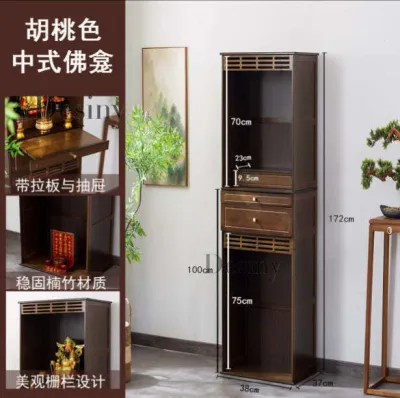
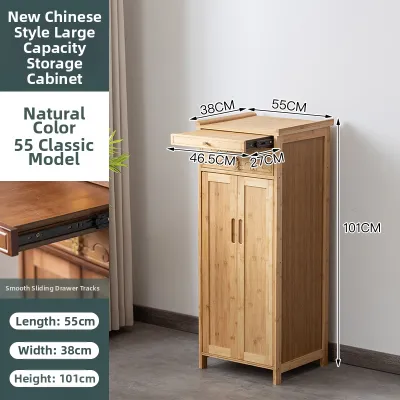
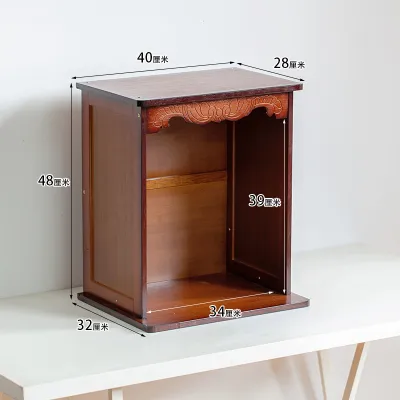
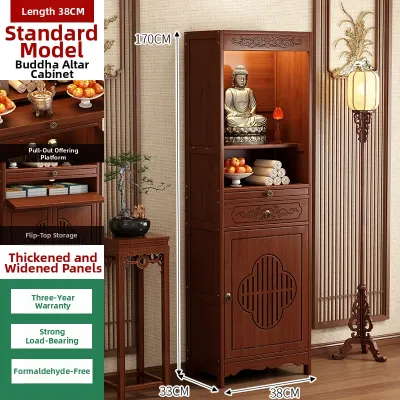
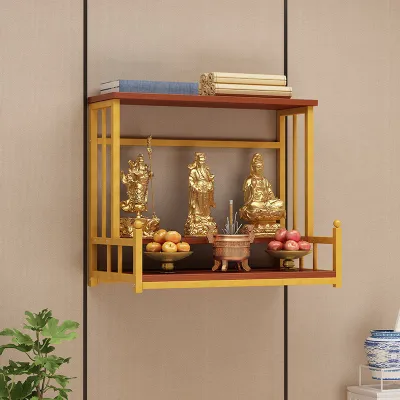
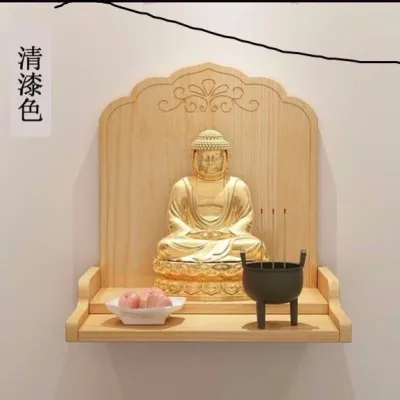
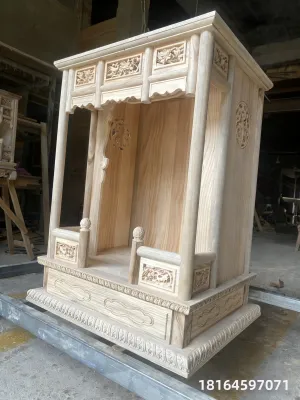
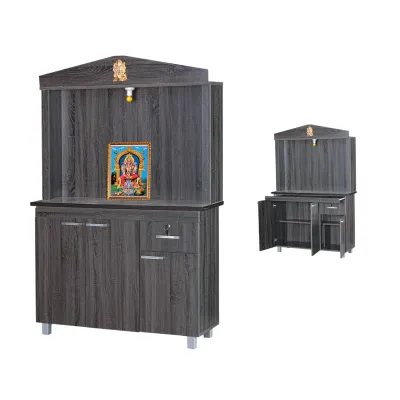
Prices are valid at publication and may change. Please refer to the product page for the latest price.
Traditional feng shui guidelines aim to create a harmonious environment where energy (qi) can circulate gently without being blocked or accelerated into harsh currents. When deciding on a location, your primary goal should be to find a spot that naturally commands respect and feels peaceful. While classical texts often assume sprawling courtyard homes with dedicated ancestral halls, modern apartments require a thoughtful balance between these traditional ideals and your household’s daily physical flow.
By focusing on the underlying purpose of these guidelines—which is to show honor to the deities or ancestors and maintain a tranquil home—you can make informed adjustments. A well-placed cabinet should bring a sense of calm and order to your home, rather than causing physical inconvenience or spatial cramping for your family.
Selecting the Best Room for Your Prayer Cabinet
Choosing the right room is the first major step in positioning your prayer cabinet. Different areas of the home carry distinct energies, and matching the cabinet with the right room ensures that your spiritual practices are supported by the surrounding environment.

Ideal Rooms and Spatial Arrangements
The living room is widely considered the most suitable and practical choice for a prayer cabinet in modern homes. As the central hub of daily life, the living room naturally possesses active, bright, and welcoming energy (yang energy). Placing the cabinet here allows the deities or ancestors to remain an integral, respected part of the household, overlooking the family’s main gathering space.
While a dedicated, private prayer room is the absolute ideal in traditional feng shui, such rooms are a rare luxury in urban environments. If you do not have a spare room to dedicate entirely to prayer, the living room remains the premier alternative. You should position the cabinet in a prominent, respectful area of the room rather than tucking it away in a dark corner, a high-traffic utility zone, or near the household shelter.
Adapting to Compact HDB and Condo Layouts
In Singapore, where 3-room, 4-room, and 5-room HDB flats or compact condominiums are the norm, space constraints require creative spatial planning. You do not need a massive room to create an auspicious setup. Instead, you can use smart interior design techniques to establish a dedicated, respectful boundary for your prayer space.
Using elegant room dividers, open-backed bookshelves, or custom console tables can help you carve out a distinct visual zone in a shared living or dining area. This physical separation helps keep daily household clutter—such as keys, mail, school bags, and shopping—away from the sacred space.
Many homeowners also opt for modern, minimalist prayer cabinets featuring clean lines and sliding or folding doors. These contemporary designs allow you to close the cabinet doors when the altar is not in use, protecting the sacred items from dust and keeping the visual environment of a small apartment clean and uncluttered.
Determining the Correct Direction and Orientation
Once you have selected the room, the next step is determining which way the prayer cabinet and the deities should face. The orientation of the cabinet plays a crucial role in how energy enters and moves through your home.
As a general rule, deities and ancestral tablets should face outwards toward the main door or toward a bright, open space within the room, often referred to in feng shui as the ming tang (bright hall). This outward-facing orientation allows the spiritual figures to symbolically welcome positive energy, opportunities, and blessings into the household while offering protection.
While some practitioners recommend calculating specific compass degrees based on the homeowner’s birth dates (using systems like Eight Mansions or Xuan Kong Flying Stars), it is important not to let these calculations compromise the liveability of your home. A peaceful, clean, and completely uncluttered view is far more beneficial than forcing a rigid compass angle that results in a blocked walkway or an awkward, unsafe layout.
Avoid placing the cabinet so that the deities face a blank wall only a few inches away, as this symbolically restricts the flow of energy and progress. Similarly, avoid orienting the cabinet so that it looks directly down a dark, narrow corridor, which can funnel harsh, rushing energy (sha qi) directly toward the altar.
Height, Backing, and Immediate Surroundings
The physical positioning of the prayer cabinet within its immediate surroundings is just as important as the room and direction you choose. Proper height, structural support, and surrounding objects all contribute to a respectful setup.
Height Requirements To show proper respect, a prayer cabinet must always be positioned at or slightly above eye level. When standing or bowing before the altar, you should not have to look down at the deities or ancestral tablets. Never place a prayer cabinet directly on the floor, as this is considered highly disrespectful and exposes the sacred space to dust and foot traffic.
Solid Structural Backing The cabinet must always be placed flat against a solid, sturdy wall. In feng shui, a solid wall represents strong backing, stability, and support in your career and family life. Avoid placing the cabinet against glass windows, hollow partition walls, or temporary folding screens, as these lack the symbolic and physical strength required to anchor the spiritual energy.
Overhead Avoidances Pay close attention to what is directly above the cabinet. Avoid placing it directly under air conditioning units, which can leak water, blow cold air directly onto the altar, or create heavy overhead energy. You should also avoid placing the cabinet directly beneath heavy structural ceiling beams, which exert a compressing, heavy energy downward. Additionally, ensure there are no bathrooms on the floor directly above the altar space.
Under-Cabinet Considerations The space directly beneath the cabinet must be kept clean and silent. Avoid placing shoe racks, trash bins, dirty laundry baskets, or noisy household electronics (such as subwoofers, Wi-Fi routers, or gaming consoles) directly below or adjacent to the cabinet. These items generate excessive heat, noise, or negative associations that disrupt the peaceful atmosphere.
Critical Placement Taboos and Practical Workarounds
In compact apartments, achieving the perfect feng shui layout can sometimes feel nearly impossible. Understanding the major placement taboos and their underlying reasons allows you to implement practical, respectful workarounds.
- The Bedroom Taboo: Placing a prayer cabinet in a bedroom is highly discouraged. A bedroom is a private space for rest, sleep, and intimacy, and mixing these energies with a sacred altar can disrupt both your sleep quality and the respect due to the deities. If space constraints leave you with no other option, use a cabinet with solid doors that can be closed completely when you are sleeping.
- The Bathroom Confrontation: A prayer cabinet should never face a bathroom door, nor should it share a wall with a toilet. Bathrooms are associated with waste, moisture, and flushing energy away. If your living room layout forces the cabinet to face a bathroom, place a solid decorative folding screen or a tall, leafy indoor plant between the cabinet and the bathroom door to break the direct line of sight.
- Under the Staircase: In multi-story homes or maisonettes, placing an altar under a staircase is a major taboo, as people walking up and down the stairs are symbolically stepping over the deities. If you must use this area, build a false ceiling or a solid overhead canopy within the alcove to symbolically shield the altar, though relocating the cabinet to a proper wall is always the preferred option.
- The Kitchen Clash: The kitchen is filled with heavy grease, smoke, and intense heat (huo or fire energy), which clashes with the serene, spiritual energy of a prayer cabinet. Avoid placing the cabinet inside the kitchen or directly facing the stove. If space is tight, ensure the cabinet is kept far from cooking appliances and use a modern, fully enclosed cabinet design to protect the altar from airborne grease.
Safe Installation and Electrical Setup
Beyond traditional layout principles, ensuring the physical safety and structural integrity of your prayer cabinet setup is a practical necessity that protects your home and family.
When choosing between a freestanding floor cabinet and a wall-mounted unit, consider the weight of your deities, incense burners, and offerings. For wall-mounted cabinets, you must verify the type of wall you are drilling into. In Singapore HDB flats, structural load-bearing walls are made of reinforced concrete and require specialized masonry drills; always ensure you are not hacking or drilling into restricted structural areas without checking local housing guidelines. For drywall or partition walls, you must locate the internal studs and use heavy-duty wall anchors or toggle bolts to support the weight. If the cabinet is heavy or complex, always hire a qualified professional carpenter or handyman to handle the installation.
Electrical safety is equally critical, especially when using electric incense, LED prayer lamps, or decorative background lighting. Always check the following parameters before turning on your lights:
- Voltage Compatibility: Ensure all electrical accessories are compatible with Singapore's standard 230V, 50Hz electrical supply.
- Safety Certification: Only use power adapters, LED strips, and plugs that carry recognized safety certifications, such as the Enterprise Singapore SAFETY Mark, to prevent short circuits and fire hazards.
- Wattage and Heat: Choose low-wattage LED bulbs rather than traditional incandescent bulbs to prevent heat buildup inside enclosed wooden cabinets.
- Cable Management: Organize all power cords neatly using plastic cable trunking or cable ties. Never run electrical cords under carpets, rugs, or across high-traffic walkways where they can wear down, present a tripping hazard, or cause electrical fires.
- Professional Wiring: If your setup requires new electrical outlets or fixed wiring modifications near the altar, always engage a licensed electrical worker (LEW) to perform the installation safely and legally.
Frequently Asked Questions (FAQ)
Can my prayer cabinet share a wall with a bathroom?
Sharing a wall with a bathroom is generally discouraged in feng shui because the dampness, moisture, and sound of running water can disrupt the peaceful, stable energy of the altar. If your home’s layout makes this sharing unavoidable, check your floor plan to ensure the toilet bowl, shower head, or main waste pipes are not positioned directly on the opposite side of the wall from your deities. To create a proper buffer, you can install a thick, double-layered wooden backing panel or a dedicated partition wall to physically and energetically separate the prayer cabinet from the bathroom wall.
Is it acceptable to place the prayer cabinet near the main door?
Yes, placing the prayer cabinet near the main door is highly acceptable and is a very common practice in many households. When the cabinet faces outward toward the main entrance, it is ideally positioned to welcome positive energy and bless everyone who enters the home. However, you must ensure the cabinet is not placed directly in the physical swing path of the door, where it could be bumped or damaged. Additionally, shield the altar from heavy outdoor drafts, excessive dust, and direct rain by keeping it a safe distance back from the immediate threshold of the doorway.
Community discussion
Share your experience or ask a question. Comments are reviewed before publication.