
Finding a reed diffuser that delivers a sustained, high-quality aromatherapy fragrance in Singapore requires looking beyond marketing slogans and brand names. While many products promise months of continuous scent, actual longevity is governed by a precise interplay of formulation chemistry, reed construction, and local environmental conditions. In Singapore’s unique climate—characterized by high ambient humidity punctuated by dry, air-conditioned indoor spaces—fragrance evaporation rates can vary dramatically. To secure a diffuser that truly lasts, you must understand how base solvents, oil concentrations, and reed materials perform under these specific conditions. This guide provides an objective framework to evaluate home fragrance brands available in the local market, helping you calculate true cost-effectiveness and optimize placement to ensure your living spaces remain beautifully scented for as long as possible.
What Actually Determines Reed Diffuser Longevity?
The carrier liquid or solvent is the unsung hero of any reed diffuser. It dictates how quickly the liquid travels up the reeds and evaporates into the air. Alcohol-based carriers, such as ethanol or isopropyl alcohol, are common because they evaporate quickly, providing an immediate and intense burst of scent. However, this rapid evaporation means the bottle empties much faster. Conversely, modern glycol-ether bases or specialized soy-based esters evaporate at a much slower, more controlled rate. These low-volatility carriers maintain a steady release of aromatherapy fragrance over several months, making them the preferred choice for longevity.
The ratio of pure fragrance oil to the carrier solvent is known as the fragrance load. High-quality formulations typically feature a fragrance load of 15% to 25%. If the concentration is too low, the scent will fade rapidly, leaving you with a bottle of faint, oily residue. If it is too high, the liquid becomes too viscous to climb the reeds effectively, leading to poor scent throw. Achieving the perfect balance ensures that the aromatherapy fragrance remains perceptible and consistent from the first day to the last drop.
Products mentioned in this guide
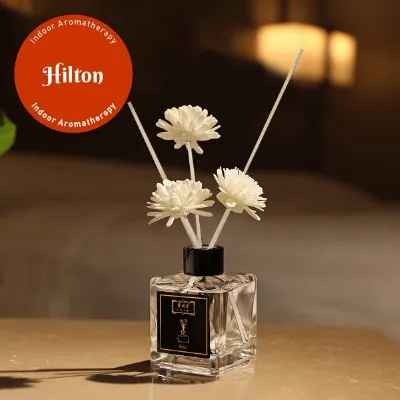
Prices are valid at publication and may change. Please refer to the product page for the latest price.
The physical channels that transport the liquid are just as critical as the fluid itself. Natural rattan reeds contain tiny, hollow micro-tubes or vascular bundles that draw the liquid upward via capillary action. While traditional and highly aesthetic, natural rattan can sometimes clog with dust or heavy oil molecules over time. Synthetic fiber reeds, engineered from polyester or nylon blends, feature highly uniform, open-pore structures. These synthetic alternatives are designed to pull liquid more rapidly and consistently, often yielding a stronger scent throw and a more predictable evaporation rate, though they may empty the vessel slightly faster than rattan.
Furthermore, the viscosity of the essential oils used in the blend plays a significant role. Heavy base notes like patchouli, sandalwood, and vanilla have larger molecular structures that evaporate slowly, naturally extending the life of the fragrance. Light top notes like citrus, eucalyptus, and bergamot evaporate much faster. Therefore, an aromatherapy fragrance rich in grounding base notes will inherently outlast a blend dominated by volatile top notes, regardless of the brand.
How to Evaluate Brand Claims for Aromatherapy Fragrances
When browsing home fragrance options in Singapore, look closely at the ingredient list on the packaging or the manufacturer’s technical data sheets. High-quality brands often specify the type of carrier base used, such as Dowanol TPM or Augeo Clean Multi, which are biodegradable, low-odor solvents known for excellent evaporation profiles. Avoid products that list high percentages of denatured alcohol or water near the top of the ingredient list, as these components accelerate evaporation without contributing to the longevity of the scent.

Reliable manufacturers usually provide an estimated lifespan for their diffusers, typically expressed in weeks or months relative to the volume of the liquid. A standard benchmark is that a 100ml diffuser should last between 4 to 8 weeks, while a 200ml vessel should endure for 12 to 16 weeks. If a brand claims a small 50ml bottle will last for several months, treat this claim with skepticism unless they specify highly restrictive usage conditions, such as using only one or two reeds.
To find the true value of a reed diffuser, look past the initial retail price and calculate the cost per milliliter (S$ per ml). Divide the retail price by the volume of the liquid. For example, a S$60 diffuser containing 200ml of liquid costs S$0.30 per ml, whereas a S$25 diffuser containing only 50ml costs S$0.50 per ml. When you factor in the evaporation rate, a slightly more expensive, larger bottle with a high-quality glycol base often proves far more economical over a six-month period than repeatedly replacing cheap, alcohol-heavy alternatives.
Because you breathe in these diffused compounds daily, safety certifications are a crucial indicator of brand integrity. Look for brands that adhere to the International Fragrance Association (IFRA) standards, which regulate the safety of fragrance ingredients and limit the use of potential allergens or harmful phthalates. Additionally, check if the product carries safety labels regarding flammability, especially if the formulation contains volatile organic compounds (VOCs) or alcohol bases that require isolation from open flames or heat sources.
Additionally, observe the packaging design. Dark or opaque glass bottles protect the delicate essential oils from light degradation. Ultraviolet rays can break down the chemical bonds of natural aromatherapy fragrance oils, altering their scent profile and reducing their longevity. Brands that invest in protective packaging demonstrate a commitment to preserving the product’s integrity over time.
Navigating Reed Diffuser Categories Available in Singapore
Readily available in local supermarkets, department stores, and online marketplaces, mass-market diffusers are highly accessible and budget-friendly. These products typically range from S$10 to S$30. To keep costs low, manufacturers often utilize alcohol-based solvents and a higher proportion of synthetic fragrance oils rather than pure essential oils. While they offer an immediate, powerful scent throw that is excellent for masking odors quickly, their lifespan is generally short—often lasting only 3 to 5 weeks. The fragrance profiles tend to be linear and simple, focusing on single notes like lavender, vanilla, or citrus.
Positioned between S$30 and S$80, the mid-range category is highly popular among Singaporean homeowners who value both aesthetics and performance. These brands often package their diffusers in beautifully designed ceramic or tinted glass vessels that complement modern interior decor. Formulations in this tier frequently employ eco-friendly, slow-evaporating glycol bases and a blend of natural essential oils and high-grade synthetic perfumery compounds. You can expect a moderate, well-balanced fragrance load that lasts between 8 to 12 weeks, offering a sophisticated scent profile without an overwhelming price tag.
Representing the luxury segment, premium and niche perfumery houses typically cost S$90 and upward, sometimes exceeding S$150 for large statement vessels. These brands focus heavily on complex, multi-layered aromatherapy fragrance structures, featuring top, middle, and base notes akin to fine personal perfumes. They utilize premium, highly concentrated essential oils and specialized, non-clogging synthetic or high-grade rattan reeds. The carrier bases are engineered for ultra-slow evaporation, allowing a 200ml bottle to easily last 4 to 6 months. While the upfront investment is high, the longevity, safety profiles, and olfactory complexity make them a preferred choice for dedicated fragrance enthusiasts.
When choosing between these categories, consider the specific room you intend to scent. A mass-market diffuser might be perfectly adequate for a small, infrequently used guest bathroom where a quick burst of freshness is all that is required. However, for main living areas, dining rooms, or master bedrooms, investing in a mid-range or premium diffuser ensures a continuous, elegant olfactory backdrop that does not require constant replacement or maintenance.
Furthermore, pay attention to the availability of refill options. Many mid-range and premium brands in Singapore now offer dedicated refill bottles at a lower price point than the original starter kit. This not only reduces environmental waste but also significantly lowers the ongoing cost of maintaining your home’s aromatherapy fragrance, making high-end options much more cost-effective in the long run.
Placement and Maintenance Tips to Maximize Fragrance Life
Singapore’s tropical climate presents unique challenges for home fragrance preservation. Placing a reed diffuser directly in the path of an air conditioning vent or a standing fan will dramatically accelerate the evaporation rate, stripping the vessel of its liquid long before its estimated lifespan. Similarly, direct sunlight streaming through windows will heat the liquid, causing the volatile top notes of the aromatherapy fragrance to flash off too quickly. For optimal longevity, position your diffuser in a high-traffic area with natural, gentle air circulation, away from direct heat sources, drafty windows, and damp, high-humidity zones like unventilated bathrooms.
To maintain a consistent scent throw without exhausting the liquid prematurely, establish a regular reed-flipping routine. Flipping the reeds once every one to two weeks is generally sufficient for most household spaces. When flipping, always use a tissue to grasp the reeds to prevent transferring natural skin oils, which can clog the pores of the reeds. Avoid flipping them daily; while this provides a temporary boost in scent intensity, it forces the reeds to draw up liquid at an accelerated rate, significantly shortening the overall lifespan of the diffuser.
Over time, airborne dust, pet dander, and microscopic debris will inevitably settle on the exposed portions of your reeds, blocking the capillary channels. If you notice the scent throw has weakened even though the bottle is still half-full, the reeds are likely clogged. Instead of discarding the remaining liquid, simply replace the old reeds with a fresh set of high-quality rattan or synthetic fiber reeds. When purchasing refills of your favorite aromatherapy fragrance, always use a brand-new set of reeds rather than reusing the old, saturated ones, as the old reeds will have lost their capillary efficiency and may distort the fresh fragrance profile.
Additionally, consider the size of the vessel relative to the room. Placing a large 250ml diffuser with ten reeds in a tiny study will result in an overwhelming scent and rapid liquid depletion. Conversely, a small 50ml diffuser in a spacious open-plan living room will struggle to make an impact, tempting you to flip the reeds constantly and waste the oil. Matching the diffuser size and the number of active reeds to the room’s square footage is a simple yet highly effective way to balance scent throw and longevity.
Frequently Asked Questions (FAQ)
Do fiber reeds last longer than natural rattan reeds?
Fiber reeds do not necessarily make the liquid last longer, but they do provide a more consistent and efficient diffusion process over their lifespan. Because synthetic fiber reeds are engineered with uniform, open pores, they absorb and release the aromatherapy fragrance at a steady, predictable rate. Natural rattan reeds, on the other hand, contain irregular organic channels that are highly susceptible to clogging from dust and heavy oil molecules. While rattan may slow down evaporation as it clogs, this results in a rapidly fading scent. Fiber reeds maintain their diffusion efficiency much longer without requiring frequent flipping, making them the superior choice for consistent, long-term performance.
Can I mix different fragrance oils to make the scent last longer?
Mixing different fragrance oils or adding external essential oils to a pre-formulated reed diffuser is highly discouraged if your goal is longevity and safety. Commercial diffusers are carefully balanced chemical systems where the ratio of solvent to fragrance oil is optimized for specific viscosity and evaporation rates. Introducing random oils can disrupt this balance, making the liquid too thick to climb the reeds or causing the ingredients to separate into unsightly layers. Furthermore, mixing incompatible chemical compounds can lead to rapid degradation of the aromatherapy fragrance profile, resulting in an unpleasant odor or accelerated evaporation.
Why does my reed diffuser stop smelling even when liquid remains?
This common issue is usually caused by a combination of physical clogging and sensory adaptation, often referred to as nose blindness. Physically, the microscopic channels within the reeds can become blocked by household dust and dried oil residue, halting the capillary action that brings the scent to the surface. Mentally, your olfactory system naturally acclimates to constant environmental scents, making the fragrance seem non-existent to you while remaining noticeable to guests. To resolve this, try moving the diffuser to a different room to reset your senses, or replace the existing reeds with a fresh set to restore proper capillary flow.

Community discussion
Share your experience or ask a question. Comments are reviewed before publication.