
Finding the right chandelier fan light for a Singapore home involves balancing the clean, organic aesthetics of Japandi design with the practical realities of tropical living and local housing constraints. The Japandi style—a harmonious blend of Japanese minimalism and Scandinavian functionality—has become a highly sought-after interior theme in Singapore. However, selecting a fixture that not only complements this aesthetic but also performs reliably requires looking beyond visual appeal. The most suitable options are those that align with local electrical standards, fit within standard ceiling heights, and feature materials capable of withstanding high humidity.
To make an informed purchase, homeowners must evaluate several technical and design factors. This guide outlines how to identify authentic Japandi design elements, assess spatial and electrical compatibility in HDB flats and condominiums, choose durable materials for a tropical climate, and safely navigate the installation process. By focusing on these verification steps, you can select a chandelier fan light that enhances your living space while ensuring long-term safety and performance.
Defining Japandi Design in Chandelier Fan Lights
Japandi design is characterized by its focus on simplicity, natural elements, and functional comfort. When applied to a chandelier fan light, this style manifests as a clean, unobtrusive fixture that serves a dual purpose without cluttering the ceiling plane. Unlike traditional decorative fans that feature ornate ironwork, heavy crystal embellishments, or highly polished metallic finishes, Japandi-inspired fixtures prioritize minimalist silhouettes. The goal is to create a sense of visual calm, allowing the fixture to blend seamlessly into the surrounding architecture.
Products mentioned in this guide
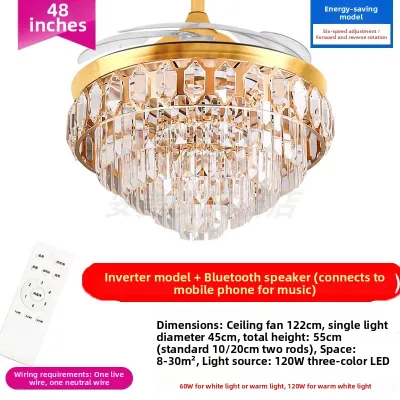
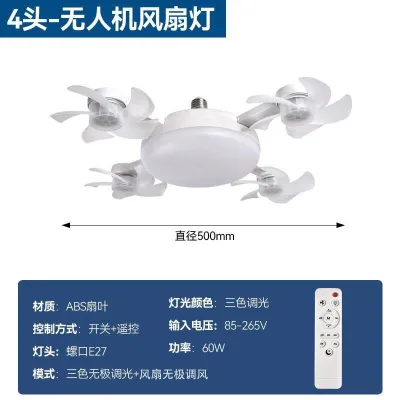
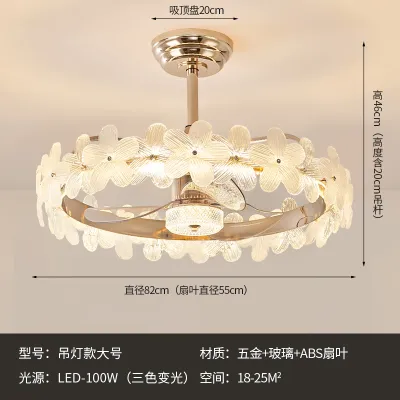
Prices are valid at publication and may change. Please refer to the product page for the latest price.
Color palettes in Japandi design are strictly curated to evoke warmth and tranquility. For ceiling fixtures, this typically means matte finishes in warm whites, soft greys, cream, and muted earth tones. Natural wood accents are a cornerstone of this style, often incorporating light oak, ash, or pale walnut tones. These organic textures introduce the Japanese concept of wabi-sabi—finding beauty in natural imperfection—while the clean, geometric lines of the fan blades and light housing reflect Scandinavian utility.
The integration of the light source is another defining feature. Instead of prominent, exposed bulbs or elaborate multi-arm light fixtures, a Japandi chandelier fan light often utilizes a streamlined, flush-mounted LED panel or a simple, frosted glass diffuser. Some designs feature retractable blades that hide away when the fan is not in use, transforming the unit into a minimalist pendant light. Others use fixed blades crafted with aerodynamic, organic curves that look like sculptural art even when stationary. By avoiding unnecessary ornamentation, these fixtures maintain a light, airy presence that is essential for creating an open, uncluttered atmosphere.
Spatial and Technical Requirements for Singapore Homes
Before purchasing any ceiling fixture, you must verify that its physical dimensions and electrical specifications are compatible with your specific living environment. In Singapore, residential properties—particularly Housing & Development Board (HDB) flats and private condominiums—typically feature standard ceiling heights ranging from 2.6 to 2.8 meters. This height constraint directly impacts your choice of ceiling fan, as maintaining adequate clearance is vital for both safety and efficient air circulation.

To ensure safe operation, the lowest point of the fan blades must hang at least 2.3 meters above the floor. For a standard 2.6-meter ceiling, this leaves a maximum allowable drop of 30 centimeters for the entire fixture. In such spaces, flush-mount or low-profile “hugger” models are highly recommended, as they sit close to the ceiling slab. If you are installing the fixture in a property with higher ceilings, such as a loft, penthouse, or landed home, you may need to use an extended downrod to position the fan at an optimal height for air distribution, which is generally between 2.4 and 2.7 meters from the floor.
Electrical compatibility is another critical factor that cannot be overlooked. Singapore’s domestic electrical grid operates on a nominal voltage of 230V at a frequency of 50Hz. Any chandelier fan light you import or purchase locally must be rated for this voltage to prevent electrical faults, overheating, or premature motor failure. Additionally, look for the Enterprise Singapore Safety Mark on the product or its packaging. This certification indicates that the appliance has undergone rigorous testing and complies with local safety standards.
The weight of the fixture must also be matched to the structural capacity of your ceiling. A chandelier fan light, which combines a motor, blades, and lighting components, is significantly heavier than a standard light fixture. Standard concrete ceiling hooks installed in HDB flats are designed to support specific weight limits, which should be verified against the manufacturer’s specifications for the fan. If the fixture exceeds these limits, or if you are mounting it on a false ceiling, additional structural support is mandatory to prevent the unit from loosening or falling during operation.
Finally, consider the blade span relative to the room’s dimensions. A fan that is too small will fail to provide adequate air movement, while an oversized fan can create an uncomfortable wind-tunnel effect and visually overwhelm the room. For smaller spaces such as study rooms or utility areas, a blade span of 36 to 42 inches is usually sufficient. For master bedrooms and standard living rooms, a span of 48 to 56 inches is more appropriate. Opting for a model with a direct current (DC) motor is highly beneficial for residential use, as DC motors generally operate more quietly and offer more precise speed control compared to alternating current (AC) motors.
Material Selection for Tropical Climates
Singapore’s tropical climate is characterized by high relative humidity, often averaging above 80%, alongside consistently warm temperatures. These environmental conditions pose unique challenges for the materials used in ceiling fixtures. While natural materials like solid wood and woven rattan are central to the Japandi aesthetic, they require careful evaluation before installation in a humid environment.
Solid, untreated wood blades are highly susceptible to moisture absorption. Over time, exposure to high humidity can cause natural timber to warp, swell, or develop mold, which can unbalance the fan and strain the motor. Similarly, natural rattan, with its porous texture and intricate weave, can trap moisture, dust, and airborne grease, making it a breeding ground for mildew and difficult to clean. If you prefer natural wood or rattan, ensure that the manufacturer has applied a high-quality, moisture-resistant sealant or polyurethane coating to protect the material from environmental degradation.
For a lower-maintenance alternative that still preserves the Japandi aesthetic, consider high-quality synthetic materials. Acrylonitrile Butadiene Styrene (ABS) plastic is widely used in modern ceiling fans due to its durability, lightweight nature, and resistance to moisture and corrosion. Many manufacturers offer ABS blades with realistic wood-grain finishes achieved through advanced hydro-dipping or laminating techniques. These faux-wood alternatives do not warp, crack, or rot, making them highly suitable for both indoor spaces and semi-outdoor areas like balconies or patios.
Dust accumulation is another common issue in tropical homes where windows are frequently left open for ventilation. The static charge generated by spinning fan blades tends to attract dust particles, which can quickly coat the surfaces. When selecting a fixture, evaluate how easy the blades and light diffuser are to clean. Smooth, non-porous surfaces like ABS or sealed wood can be easily wiped down with a microfiber cloth. Intricate designs, such as woven rattan cages or multi-layered paper shades, will require more frequent and meticulous cleaning to prevent dust buildup from dulling the light output and affecting air quality.
Sourcing and Verifying Local Options
Finding a suitable Japandi-style chandelier fan light in Singapore requires a systematic approach to sourcing and verification. Homeowners generally choose between visiting physical lighting showrooms and browsing online ecommerce platforms. Each method has distinct advantages and trade-offs that should be carefully weighed.
Physical showrooms located in retail hubs across Singapore allow you to inspect the fixtures in person. This is particularly valuable for verifying the true color temperature of the integrated LED lights, as online photos can often be misleading. You can also assess the actual texture of the wood or faux-wood finishes, observe the fan’s operation to check for motor noise or wobbling, and gauge the physical scale of the unit relative to your spatial expectations. However, physical showrooms may have a more limited selection of niche Japandi designs compared to the vast inventories available online.
Online marketplaces and specialized lighting websites offer an extensive variety of designs, often at competitive prices. When sourcing online, however, you must exercise extra caution. Carefully review the technical specifications provided by the seller to ensure the voltage is rated for 230V and that the product carries recognized safety certifications. Avoid purchasing from unverified overseas sellers who cannot provide proof of compliance with local electrical standards.
Warranty coverage and after-sales service are critical components of your purchase decision. A reputable local retailer should offer a comprehensive warranty that covers the fan motor for an extended period (often several years or even a lifetime warranty on the motor itself) and the LED driver, remote control, and other electronic components for at least one to two years. Verify whether the retailer has a local service center and if they stock spare parts. If a component fails after the warranty period, having access to local spare parts can save you from having to replace the entire fixture.
Before finalizing your purchase, read user reviews specifically targeting long-term performance. Look for feedback regarding motor hum, wind noise, light flickering, and the responsiveness of the remote control. A fan that operates quietly is essential for bedrooms, where even a faint hum can disrupt sleep. Pay attention to comments about the durability of the finishes and whether other buyers in Singapore have experienced issues with rust or warping in humid conditions.
Installation and Safety Boundaries
Installing a chandelier fan light involves working with fixed electrical wiring, working at heights, and handling heavy, suspended loads. Because of these inherent risks, safety must be your top priority throughout the process. In Singapore, it is highly recommended—and in many cases, legally required—to engage a licensed electrical worker (EMA-licensed electrician) to perform the installation.
A licensed professional will ensure that the electrical connections are wired correctly, the circuit is properly grounded, and the power supply is safely isolated at the main distribution board before any work begins. They will also verify that the existing ceiling hook or mounting point is structurally sound and capable of supporting both the static weight of the fixture and the dynamic forces generated when the fan is spinning at high speeds.
The structural limits of your ceiling must be carefully assessed. If you are mounting the fixture directly onto a concrete ceiling slab, the installation is relatively straightforward using heavy-duty expansion bolts. However, if your home features a false ceiling, you must never mount the fan directly to the plasterboard or gypsum panels. False ceilings are not designed to bear suspended, vibrating loads. In this scenario, a qualified installer must install a specialized metal support bracket (often referred to as a fan hanger or support structure) that bypasses the false ceiling and anchors securely into the concrete slab above.
There are specific conditions under which you must stop any DIY attempts or ongoing installation work and consult the manufacturer or a professional. If you discover damaged or brittle wiring, notice cracks in the concrete ceiling slab, find that the mounting bracket does not align properly with the ceiling hook, or if the fan exhibits excessive wobbling or unusual noises during its initial test run, do not attempt to fix the issue yourself. Isolate the power immediately and seek professional assistance to prevent electrical hazards or structural failure.
Frequently Asked Questions (FAQ)
Can I install a chandelier fan light on a false ceiling?
Yes, but it cannot be mounted directly onto the plasterboard of the false ceiling itself, as these materials lack the structural strength to support a heavy, rotating fixture. To install a chandelier fan light safely, a licensed installer must mount a specialized metal support bracket or hanger directly to the concrete ceiling slab above the false ceiling. This bracket extends down through a neat cut-out in the plasterboard, ensuring that the weight and rotational vibrations of the fan are fully supported by the building’s concrete structure rather than the delicate false ceiling panels.
How do I clean natural wood or rattan fan blades?
To clean natural wood or rattan fan blades without causing damage, start by turning off the power to the fixture. Use a dry microfiber cloth or a static duster to remove loose dust and debris from the surfaces. For more stubborn dirt or grease, wipe the blades gently with a microfiber cloth that has been slightly dampened with a mixture of water and a mild, pH-neutral soap. Immediately follow up with a dry cloth to remove any remaining moisture. Never use harsh chemical solvents, abrasive scrubbing pads, or excessive water, as these can strip the protective sealant, warp the wood, or cause rattan fibers to swell and rot.
Community discussion
Share your experience or ask a question. Comments are reviewed before publication.