
Establishing a sacred space at home requires a thoughtful balance of spiritual reverence and practical durability. Finding a high-quality hindu altar cabinet in Singapore involves identifying reputable sources that prioritize premium materials, structural safety, and authentic design. Because Singapore’s tropical climate presents unique environmental challenges, selecting a trusted brand or artisan ensures your home mandir remains a beautiful, structurally sound sanctuary for generations.
To make a confident purchase, buyers must look beyond generic furniture retailers. Trusted brands are distinguished by their use of climate-resilient solid hardwoods, traditional joinery techniques, and a deep understanding of Vastu Shastra design principles. Whether sourcing from specialized cultural boutiques in Little India, commissioning a custom piece from a local carpentry firm, or navigating verified online storefronts, understanding these core quality indicators is the first step toward acquiring a beautiful and lasting altar.
What Defines a Trusted Hindu Altar Cabinet Brand?
Evaluating the quality of a hindu altar cabinet requires looking closely at the raw materials used in its construction. Singapore’s tropical environment features consistently high relative humidity, which regularly hovers above 80 percent. Engineered wood products, such as medium-density fibreboard (MDF), particleboard, or low-grade plywood, absorb airborne moisture rapidly. Over time, this absorption leads to swelling, warping, sagging shelves, and eventual structural delamination. Trusted brands reject these cheap materials in favor of dense, naturally oil-rich solid hardwoods. Timber species like premium teak (Tectona grandis), rosewood (sheesham), and mahogany are highly favored because their natural oils and tight grain structures resist moisture penetration, repel wood-boring insects, and withstand environmental fluctuations without cracking.
Products mentioned in this guide
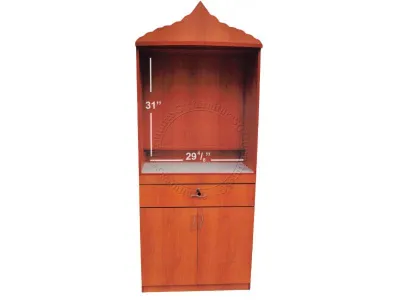
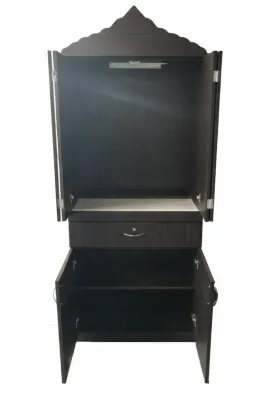
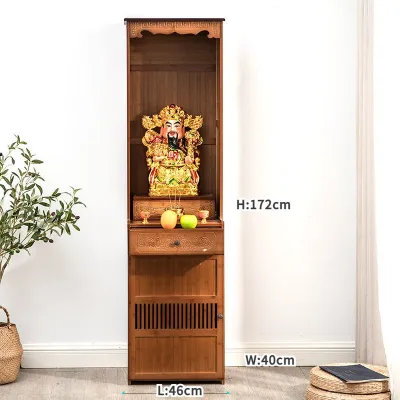
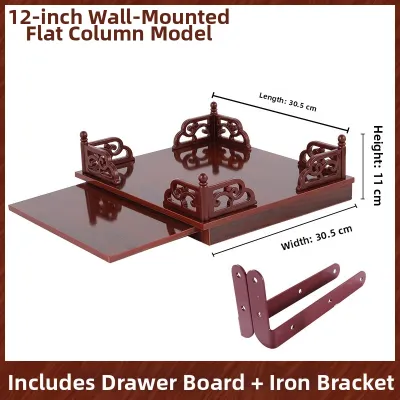
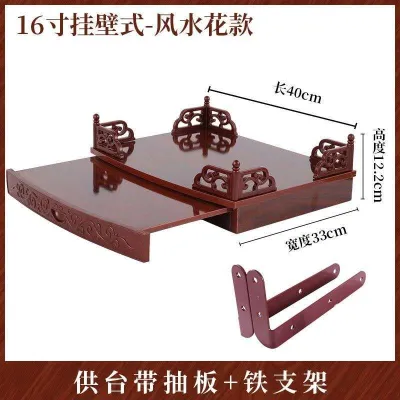
Prices are valid at publication and may change. Please refer to the product page for the latest price.
Beyond raw materials, the level of craftsmanship and joinery defines the reliability of a brand. High-end manufacturers rely on traditional woodworking joinery, such as mortise-and-tenon or dovetail joints, which allow the wood to expand and contract naturally without losing structural integrity. Cheap alternatives often rely on metal brackets, nails, or heavy adhesives that fail under the weight of the cabinet or degrade in humid conditions. When inspecting the carvings, buyers should distinguish between hand-carved details and computer numerical control (CNC) milling. While CNC milling offers precise, symmetrical sacred motifs—such as the lotus, peacock, Om symbol, or temple spires (gopurams)—hand-carving by skilled artisans adds unique depth, texture, and individual character to the wood. A reputable brand also ensures that the final polish or lacquer finish is perfectly smooth, leaving no rough patches, bubbles, or sticky residues that could trap dust or incense soot.
Spiritual and cultural alignment is another hallmark of a dedicated altar manufacturer. A home mandir is not merely standard storage furniture; it must respect traditional Vastu Shastra principles to foster positive energy. Trusted designers ensure that the cabinet’s proportions are balanced and that the main deity tier (garbhagriha) is positioned at an elevated, respectful height. They also design the cabinet to include practical, dedicated spaces for ritual items, such as pull-out trays for offering plates, sturdy shelves for a kalash, and safe zones for lighting sacred oil lamps (diyas). The dome or shikhara at the top of the cabinet should be proportionally balanced and ceremonially correct, reflecting authentic temple architecture rather than generic decorative shapes.
Where to Source Reputable Altar Cabinets in Singapore
For many homeowners, the search for a trusted hindu altar cabinet begins in cultural enclaves like Little India. Specialized religious and cultural decor stores in this district have spent decades building relationships with master woodworkers and multi-generational carving families in India. Visiting these physical showrooms allows you to inspect the weight of the furniture, smell the natural timber, and verify the authenticity of the wood grain in person. Furthermore, speaking directly with experienced store owners provides invaluable guidance; they can help you select a cabinet that aligns with your specific family traditions, spatial constraints, and Vastu requirements, ensuring a highly personalized purchase.

If your home has unique architectural constraints, or if you prefer a seamless built-in look that complements modern interior design, commissioning a bespoke cabinet from a local carpentry firm is an excellent alternative. When hiring a local carpenter, verify that they have experience fabricating religious furniture or are willing to strictly follow your precise Vastu guidelines. Customization allows you to choose the exact timber grade—such as premium A-grade Burmese teak—specify the dimensions to fit your apartment’s layout, and design personalized storage compartments for prayer books, incense holders, and daily ritual accessories. This approach guarantees that your altar is a one-of-a-kind masterpiece tailored perfectly to your living space.
Navigating online marketplaces and official brand storefronts offers unmatched convenience, but it requires a disciplined approach to verify authenticity. When shopping online, avoid generic, unbranded listings and prioritize official brand stores or highly rated specialty online retailers. Carefully read verified buyer reviews, paying close attention to user-uploaded photographs that show the cabinet in real-world home environments. Because solid wood altars are exceptionally heavy, always check the seller’s shipping, white-glove delivery, in-home assembly, and return policies before finalizing your purchase. Professional delivery and assembly are essential to ensure the heavy structure is transported and set up safely without causing damage to your home or the cabinet itself.
Essential Quality and Safety Checks Before Purchase
Before finalizing the purchase of your hindu altar cabinet, conducting a thorough physical inspection is vital to ensure long-term safety and functionality. The cabinet must possess excellent load-bearing capacity and structural stability. Traditional worship involves placing heavy brass or bronze deity idols (murtis), large brass lamps, water-filled kalash vessels, and heavy offering bowls on the main shelves. Ensure the primary deity shelf is thick and rigid—ideally constructed from solid wood at least 18mm to 25mm thick—to prevent sagging over time. Gently shake the cabinet in the showroom to test its balance; a top-heavy or wobbly mandir poses a severe safety hazard, especially in households with active children or pets.
If the cabinet features integrated lighting, such as built-in LED strips, spotlights, or backlit acrylic panels, you must perform rigorous electrical and lighting safety checks. Ensure that all electrical components, adapters, and wiring comply with local electrical safety standards and carry recognized safety certifications. The wiring must be neatly concealed behind false backings or protective conduits to prevent accidental pulling or exposure to moisture. Additionally, check that the light fixtures allow for adequate heat dissipation to avoid scorching the surrounding wood. Always isolate the power supply by turning off the main switch before installing, adjusting, or replacing any built-in light bulbs or electrical fixtures within the cabinet.
Daily prayers frequently involve burning incense sticks (agarbatti), camphor, or oil lamps, which makes ventilation and moisture management critical design considerations. Without proper airflow, smoke, soot, and heat will quickly accumulate inside the cabinet, discoloring the wood finish, leaving stubborn carbon deposits, and potentially triggering household smoke detectors. Look for cabinets designed with open-carved side panels (jali work), dome vents, or semi-open doors that facilitate natural air circulation. This ventilation not only protects the interior wood and delicate deity clothing from soot damage but also ensures that heat from lamps dissipates safely without creating a fire hazard.
Finally, inspect the quality of the hardware and moving parts, as these components dictate the daily usability of the cabinet. Test the hinges, drawer slides, and door handles multiple times to ensure they operate smoothly without catching or squeaking. High-quality brands use robust, rust-resistant hardware made of solid brass or high-grade stainless steel, which easily withstands Singapore’s humid air. Look for soft-close hinges and under-mount drawer slides; these premium features ensure that doors and drawers close quietly, preventing sudden vibrations that could disturb the serene prayer environment or cause delicate idols to shift or fall.
Caring for Your Altar Cabinet to Preserve Craftsmanship
To preserve the exquisite craftsmanship and natural beauty of your solid wood altar cabinet, establishing a consistent, low-risk maintenance routine is essential. Daily care should focus on routine dusting and gentle polishing. Use a clean, dry, non-abrasive microfiber cloth to wipe down the surfaces daily, paying close attention to the intricate crevices of hand-carved motifs where dust easily settles. When the wood begins to look dry or lose its luster, apply a high-quality, wood-safe, non-silicone polish or natural beeswax sparingly. Always check the applied cleaning product’s label and the treated item’s manufacturer instructions before application. Avoid cheap aerosol sprays containing silicone, as they leave a sticky chemical residue that builds up over time, dulls the natural grain, and attracts more dust.
Managing soot and oil residue from daily rituals requires a delicate touch to avoid stripping the wood’s protective finish. Over time, oil splatters from diyas and soot from incense will settle on the cabinet’s interior. To clean these areas safely, mix a few drops of mild, wood-friendly soap in warm water, dampen a soft microfiber cloth, and gently wipe the affected surfaces. Never saturate the wood or allow water to pool in carved crevices, as excess moisture can cause the wood fibers to swell and crack. Immediately follow up with a clean, dry microfiber cloth to remove all trace moisture and prevent water spots from forming. For stubborn wax or heavy oil buildup, consult the cabinet manufacturer’s care instructions before applying any specialty wood cleaners.
Strategic environmental placement within your home is also crucial for protecting the cabinet from structural stress. Avoid positioning the altar in direct sunlight near windows, as prolonged exposure to ultraviolet (UV) rays will fade the rich color of the wood and cause the timber to dry out and split. Additionally, keep the cabinet away from the direct path of air-conditioning vents or humidifiers. Rapid fluctuations in temperature and localized humidity levels place immense physical stress on solid wood joints, which can lead to warping, wood movement, or split seams over time. Placing your cabinet in a stable, well-ventilated area ensures the timber remains stable and beautiful for decades.
Frequently Asked Questions (FAQ)
Can I repurpose a standard wooden cabinet as a Hindu altar?
Yes, you can repurpose a standard wooden cabinet, but it requires careful physical and spiritual preparation. Before placing any deities inside, it is traditional to perform a thorough physical cleaning and a spiritual cleansing (shuddhi) of the furniture. However, standard cabinets present several practical limitations compared to purpose-built mandirs. They generally lack the necessary ventilation to let incense smoke and heat escape safely, do not feature dedicated pull-out trays for ritual offerings, and may have shelving heights that do not align with Vastu Shastra principles. If you choose to repurpose a cabinet, you should consider modifying it by drilling ventilation holes, installing heat-resistant barriers, and ensuring the structure is securely anchored.
What wood types are most resistant to Singapore's humid climate for puja cabinets?
For Singapore’s persistently humid tropical climate, dense hardwoods with high natural oil content are the absolute best choice for puja cabinets. Premium teak (Burmese or plantation teak) is highly recommended because its natural oils protect against moisture absorption, warping, and wood-boring insects. Rosewood (sheesham) is another exceptional option, prized for its extreme density and beautiful, dark grain patterns. In contrast, engineered woods like MDF, particleboard, or low-grade plywood should be avoided, as they readily absorb moisture from the air and daily ritual washings, leading to swelling, mold growth, and rapid structural degradation.
Are built-in lights necessary for a home mandir?
Built-in lights are not spiritually or functionally mandatory, though they do provide beautiful aesthetic enhancement. Integrated LED spotlights or backlit panels can illuminate the intricate details of your deities and create a serene, focused atmosphere during evening prayers (aarti). However, if you prefer a more traditional approach or wish to avoid the maintenance of internal wiring, external lighting options are highly effective. You can use standalone LED spotlights, plug-in brass lamps, or simply rely on the natural, warm glow of traditional oil lamps (diyas), provided they are placed safely away from flammable materials and the wooden surfaces of the cabinet.
Community discussion
Share your experience or ask a question. Comments are reviewed before publication.