
The Short Answer: Which Material is Best for Your Cat?
Choosing the right cat cushion cover is a balancing act between feline comfort, fabric durability, and your own cleaning sanity. There is no single material that excels in every category; instead, the ideal choice depends on your cat’s clawing habits, grooming needs, and your local climate. By understanding how different fabrics interact with sharp claws and pet hair, you can select a cover that keeps your pet cozy while ensuring the product lasts for years.
Canvas is the undisputed champion for active scratchers and warm climates. Its tight, flat weave offers no loops for claws to snag, and its high breathability makes it exceptionally comfortable in humid environments. Fleece provides unmatched insulation and plush softness, making it the perfect choice for senior, arthritic, or hairless cats resting in air-conditioned rooms, though it struggles with claw damage and hair retention. Microfiber serves as a luxurious, stain-resistant middle ground that offers velvet-like comfort, provided your cat has regularly trimmed claws and you are prepared to manage static-attracted pet hair.
Fleece Cushion Covers: Maximum Warmth, Minimum Scratch Resistance
Fleece is a synthetic knit fabric typically made from polyethylene terephthalate (PET) or other polyester blends. It is manufactured by knitting yarn into a heavy fabric, which is then chemically and mechanically brushed with wire brushes to raise a dense, lofted nap. This unique structure mimics the natural insulating properties of wool by trapping pockets of air between the fibers, providing exceptional thermal retention.
Products mentioned in this guide
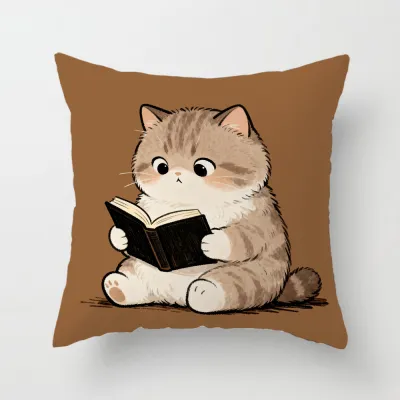
Prices are valid at publication and may change. Please refer to the product page for the latest price.

For specific feline profiles, this warmth is a major benefit. Senior cats suffering from osteoarthritis or joint stiffness often seek out warm surfaces to soothe their aches, making fleece an incredibly comforting resting place. Similarly, hairless breeds like the Sphynx rely on external heat sources to maintain their body temperature and will naturally gravitate toward fleece. However, in warm and humid climates like Singapore, fleece can easily trap too much body heat. Unless your home is constantly air-conditioned, a healthy, thick-coated cat may find a fleece cover uncomfortably hot, leading them to abandon the cushion in favor of cooler tiled floors.
When it comes to durability against claws, fleece performs poorly. The very process that gives fleece its soft loft—brushing the fibers to create a raised nap—leaves the fabric highly vulnerable to cat claws. During normal kneading, a behavior commonly referred to as “making biscuits,” a cat’s curved claws easily hook into the loose, raised fibers. Each knead pulls these fibers further out of the knit base, leading to rapid pilling, pulled threads, and a worn-out appearance. If your cat uses the cushion as a scratching surface, fleece can be torn open within weeks, exposing the inner filling.
Cleaning fleece is another significant challenge for pet owners. The fuzzy texture of the fabric creates a high amount of physical friction, which acts as a trap for loose cat fur, dander, and environmental dust. Standard vacuuming is rarely sufficient to dislodge embedded hair from fleece fibers. Consequently, these covers require frequent machine washing. However, repeated laundering accelerates the pilling process and can cause the synthetic fibers to mat together, permanently reducing the cover’s softness. Synthetic fleece also tends to absorb and retain sebum—the natural skin oils produced by your cat—which can lead to persistent, stale pet odors if not washed regularly with a specialized pet-safe detergent.
Canvas Cushion Covers: Tough Against Claws, Cooler for Warm Climates
Canvas is a heavy-duty, plain-woven fabric historically made from cotton or linen, though modern pet products often utilize synthetic polyester blends or cotton-poly mixtures. Unlike fleece, canvas is woven tightly on a loom, creating a flat, dense surface with no raised nap or exposed loops. This structural simplicity is the source of its immense strength and utility in pet-friendly households.
In terms of comfort, canvas does not offer the immediate, plush sink-in feeling of fleece or microfiber. To a human touch, it can feel stiff or coarse initially, though it softens gradually with age and repeated washing. However, cats often appreciate the firm, stable support that a taut canvas cover provides. Crucially, canvas is highly breathable. The plain-weave structure allows air to circulate freely through the fabric, preventing the accumulation of trapped body heat. This makes canvas cushion covers exceptionally comfortable for cats living in tropical climates, allowing them to lounge for hours without overheating or sweating.
For cats that scratch or knead aggressively, canvas is the most durable option available. Because the weave is incredibly tight and flat, a cat’s claw cannot find a loose thread or loop to snag. When a cat attempts to scratch canvas, the claws simply slide off the surface without causing structural damage. This high resistance to abrasion makes canvas the premier choice for multi-cat households, high-energy kittens, or cats that habitually target furniture with their claws. Investing in a heavy-duty canvas cover can save you money over time by eliminating the need for frequent replacements.
Maintaining a canvas cat cushion cover is remarkably easy. Because the fabric surface is smooth and dense, loose cat hair cannot weave its way into the material. Instead, shed fur sits loosely on top of the cover, allowing you to quickly sweep it away with a lint roller, a rubber brush, or even a damp cloth. Canvas is also highly resilient to spot cleaning. If your cat vomits, drools, or tracks dirt onto the cushion, you can scrub the affected area with mild soap and water without worrying about fraying the fibers. Most canvas covers can be tossed directly into the washing machine on a standard cycle and dried without fear of shrinking, provided you follow the manufacturer’s care instructions.
Microfiber Cushion Covers: Soft Feel, but Watch Out for Claw Snags
Microfiber is a synthetic material composed of extremely fine fibers, typically a blend of polyester and polyamide, that are finer than a single denier—roughly one-fifth the diameter of a human hair. These ultra-fine threads are woven tightly together and often undergo a brushing process to create a soft, suede-like texture, commonly referred to as microsuede or brushed microfiber.
This material offers an appealing compromise in terms of comfort. It provides a luxurious, velvety softness that cats love to curl up on, without the extreme, heat-trapping loft of thick fleece. Microfiber feels relatively cool to the touch initially, yet it adapts comfortably to your cat’s body temperature, making it a versatile option for both air-conditioned spaces and naturally ventilated rooms. The tight weave also gives the cushion a premium look that blends seamlessly with modern living room decor.
However, microfiber occupies a moderate to low position when it comes to scratch resistance. While the individual microfibers themselves are incredibly strong, the brushed, velvety surface is still susceptible to snagging. If your cat’s claws are kept neatly trimmed and they are a gentle lounger, microfiber can withstand daily use. But if your cat has sharp, untrimmed claws or a habit of vigorous kneading, those sharp tips will snag the ultra-fine surface fibers. Over time, this creates visible, fuzzy pulls and a worn, distressed texture, even if the claw does not manage to tear completely through the dense backing fabric.
Where microfiber truly shines is in its inherent stain resistance. The dense weave of ultra-fine fibers creates a natural physical barrier that resists liquid penetration. If your cat spills water, vomits, or has an accident, the liquid will typically bead up on the surface of the microfiber cover for a short period, giving you ample time to blot it away before it sinks into the cushion.
Conversely, the synthetic nature of microfiber makes it highly prone to static electricity, especially in dry, air-conditioned environments. This static charge turns the cushion cover into a literal magnet for loose cat hair, dander, and dust. Unlike canvas, where hair sits loosely, microfiber holds onto fur with static cling. Removing this hair requires specialized tools; standard sticky lint rollers are often ineffective, meaning you will need to use a rubber squeegee, a damp sponge, or a vacuum cleaner with a motorized pet-hair attachment to break the static bond and clean the cover thoroughly.
Head-to-Head Comparison: Comfort, Durability, and Cleaning
To help you quickly weigh the trade-offs of each material, the table below summarizes how fleece, canvas, and microfiber perform across the key decision dimensions.
| Material | Scratch Resistance | Hair Removal Ease | Heat Retention | Best Use Case |
|---|---|---|---|---|
| Canvas | High (Excellent) | Very Easy | Low (Cool & Breathable) | Active scratchers, warm climates, low-maintenance homes |
| Fleece | Poor (Snags easily) | Difficult (Traps hair) | High (Very Warm) | Senior or hairless cats, air-conditioned rooms |
| Microfiber | Moderate to Low | Moderate (Static cling) | Moderate | Gentle cats, modern decor, spill-prone areas |
When interpreting these trade-offs, remember that you are often trading immediate tactile plushness for long-term durability. While a fleece cover might feel the softest in the store, its rapid degradation under a cat’s claws can make it a poor long-term investment. Conversely, while canvas may feel utilitarian at first, its ability to withstand years of scratching and simple hair removal makes it the most practical choice for busy pet owners.
Additionally, always verify the specific fabric specifications on the product page before purchasing. Terms like “canvas” or “microfiber” can vary significantly in quality. Look for the fabric weight, often measured in grams per square meter (GSM) or ounces. A heavier canvas (such as 10 oz or 12 oz) or a high-GSM microfiber will feature a much tighter weave, offering significantly better durability and snag resistance than cheaper, thinner alternatives. Always check the manufacturer’s care label to ensure the fabric blend matches your maintenance expectations.
Final Verdict: How to Choose Based on Your Cat’s Habits
To make your final decision, evaluate your cat’s physical needs, behavior, and your home environment against this straightforward framework:
- Choose Canvas if: Your cat is an active scratcher, kneads heavily, or sheds constantly. It is also the ideal choice if you live in a warm, humid environment and want a breathable, cooling cover that is incredibly easy to vacuum and spot-clean.
- Choose Fleece if: Your cat is elderly, suffers from joint stiffness, is a hairless breed, or spends all of their time in cold, air-conditioned rooms. Choose this only if you are willing to wash the cover frequently and accept that kneading will cause visible wear over time.
- Choose Microfiber if: Your cat is a calm lounger with regularly trimmed claws, and you prioritize a soft, velvet-like aesthetic that resists liquid stains, provided you have the right rubber tools to manage static-induced pet hair.
Before finalizing your purchase, verify that the cushion cover features a removable, machine-washable design. A cover that cannot be easily removed for cleaning will quickly become a breeding ground for bacteria and odors. Furthermore, check for a hidden or invisible zipper design. A hidden zipper prevents your cat’s claws from getting caught in the zipper teeth during play and protects your floors from scratches. If you are using a heavy-duty cover on a raised bed or in a high area, ensure the cushion is securely positioned to prevent slips.
Frequently Asked Questions (FAQ)
Are velvet or corduroy cushion covers safe for cats?
Velvet and corduroy are generally safe in terms of toxicity, but they present distinct durability challenges. Velvet is structurally similar to microfiber and offers excellent stain resistance, but its raised pile can still snag under sharp, untrimmed claws. Corduroy features distinct raised ridges, known as wales, which are created by weaving extra yarns into the fabric. These ridges present tempting textures for cats to scratch and can easily catch claws, leading to rapid fraying. For active scratchers, a flat-weave canvas remains a far safer and more durable option than either velvet or corduroy.
How often should I wash my cat's cushion cover?
As a general hygiene guideline, you should wash your cat’s cushion cover every one to two weeks. This frequency helps control the buildup of shed fur, dander, skin oils, and environmental allergens like dust mites. If your cat suffers from skin allergies, or if you live in a highly humid climate where mold and mildew can develop quickly, weekly washing is highly recommended. Always check the manufacturer’s care label before washing to verify the correct water temperature and drying instructions, as excess heat can shrink cotton canvas or melt synthetic fleece and microfiber fibers.
Can I use a waterproof liner inside the cushion cover?
Yes, using a waterproof liner beneath the outer fabric cover is an excellent way to protect the inner foam or fiber filling from accidents, vomit, or drool. This is especially beneficial for kittens, senior cats with incontinence, or cats prone to hairballs. When selecting a liner, look for breathable materials like thermoplastic polyurethane (TPU) rather than cheap PVC, which can make a loud crinkling noise every time your cat moves. Be aware that adding a waterproof liner can slightly reduce the overall breathability of the cushion and alter its softness, so monitor your cat to ensure they still find the setup comfortable.
Community discussion
Share your experience or ask a question. Comments are reviewed before publication.