
A standard HDB ceiling height of 2.6 meters presents a unique design challenge when selecting overhead lighting. To maintain a comfortable, airy atmosphere and prevent a cramped feeling, the optimal flush mount ceiling light should balance physical dimensions with visual weight. For most HDB spaces, a fixture with a profile thickness of 15mm to 50mm and a diameter ranging from 30cm to 60cm—depending on the specific room size—strikes a practical balance. Opting for an ultra-thin skylight ceiling design can create the illusion of a recessed architectural opening, effectively preserving headroom while distributing light evenly across the room.
Determining the Right Diameter for Your Room Size
Selecting the correct diameter for your ceiling light is essential to maintain visual balance under a 2.6m ceiling. If a fixture is too small, it may look lost and fail to illuminate the room adequately; if it is too large, it can dominate the ceiling plane and make the entire room feel smaller. A practical starting point is to evaluate the floor area and the primary function of the space.
For compact areas such as HDB bedrooms, study rooms, or kitchens, a fixture diameter between 30cm and 40cm is generally proportional. These dimensions provide sufficient light spread without overwhelming the limited ceiling surface. In contrast, larger open-plan living and dining areas can comfortably accommodate fixtures with a diameter of 50cm to 60cm, which helps define the central gathering zone.
Products mentioned in this guide
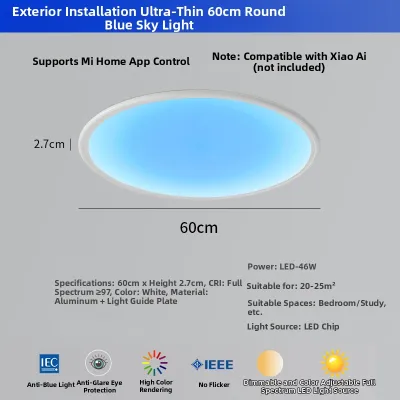
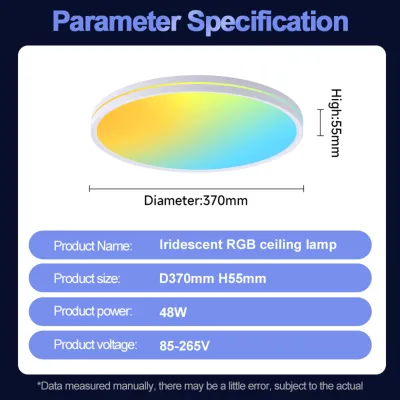
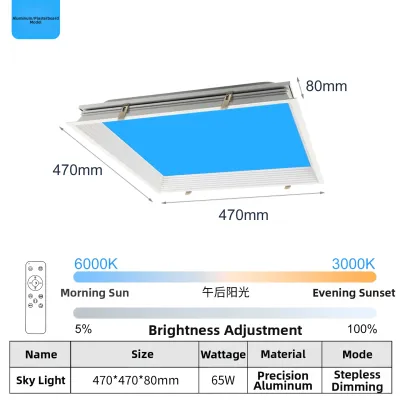
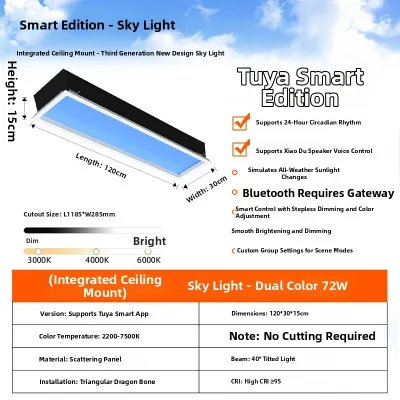
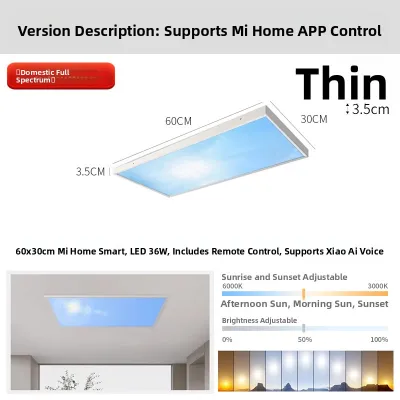
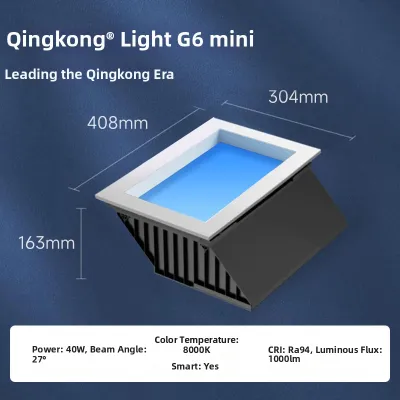
Prices are valid at publication and may change. Please refer to the product page for the latest price.
When considering a skylight ceiling design, the visual impact of a larger diameter is often softened by its ultra-thin profile. Because these fixtures sit so close to the ceiling, they do not cast large shadows or protrude into your line of sight, allowing you to opt for a slightly wider diameter than you would with a traditional dome light. However, it is still wise to avoid oversized fixtures that exceed 60cm in standard HDB rooms, as they can draw excessive horizontal attention and make the ceiling feel lower than it actually is.
Selecting the Ideal Profile Thickness for Skylight Ceiling Designs
Profile thickness is perhaps the most critical dimension when dealing with a 2.6m ceiling height. Traditional flush mounts and dome lights often protrude 10cm to 20cm from the ceiling, which significantly reduces the physical clearance and can make the room feel oppressive. Choosing an ultra-thin profile is an effective way to maximize perceived headroom and maintain an open, modern aesthetic.

Many modern skylight ceiling lights feature an ultra-thin profile of just 15mm to 35mm. These slim designs mimic the appearance of a natural recessed skylight, creating a clean, seamless look that draws the eye outward rather than downward. This visual trick is highly effective in HDB flats, where preserving every millimeter of vertical space contributes to a more comfortable living environment.
However, selecting an ultra-thin fixture requires understanding a few technical trade-offs. Extremely thin lights often utilize external LED drivers that must be housed within the ceiling junction box or a false ceiling cavity. If your HDB flat has a solid concrete ceiling without a false ceiling, you must verify whether the fixture’s driver can fit inside the standard junction box, or choose a model with an integrated internal driver, which might slightly increase the profile thickness to around 40mm or 50mm.
Additionally, heat dissipation is a key factor in the longevity of thin LED fixtures. Because slim lights have less internal volume, they rely heavily on efficient thermal management materials. When selecting a fixture, verify that it features a high-quality aluminum backing or advanced thermal plastics that allow heat to dissipate safely, preventing the LEDs from overheating and degrading prematurely.
Spatial Clearance and Placement Checks
Before purchasing or installing any flush mount light, conducting a thorough spatial clearance check is vital to ensure safety and functionality. With a 2.6m ceiling, a fixture that is 50mm thick leaves approximately 2.55m of clearance from the floor. This height is perfectly safe for daily activities, but you must still account for specific spatial relationships within the room.
A primary consideration in Singapore HDB flats is the placement of ceiling fans. If a flush mount light is installed too close to a ceiling fan, the rotating blades will repeatedly interrupt the light path, creating a highly distracting strobing effect. To prevent this, ensure there is a horizontal clearance of at least 1.5 meters between the edge of the light fixture and the tips of the fan blades.
You must also check for potential conflicts with other ceiling-mounted fixtures and architectural features. Measure the distance to air conditioning units, wall-mounted cabinets, curtain tracks, and structural beams. A wide flush mount light placed too close to a window wall can block the smooth operation of floor-to-ceiling curtains or interfere with the airflow and maintenance access of your air conditioner.
Finally, consider the edge spacing from walls to ensure even light distribution. Placing a large flush mount too close to a corner can result in harsh, uneven shadows and a poorly lit room. Centering the fixture within the main living or sleeping zone, while keeping it at least 1 meter away from major walls, helps achieve a balanced spread of light across the entire space.
Installation Requirements and Safety Boundaries
Installing a flush mount or skylight ceiling light in an HDB flat requires careful preparation and adherence to safety standards. Before mounting any fixture, verify that the existing ceiling junction box or mounting surface is structurally sound and capable of supporting the weight of the new light. While thin LED panels are generally lightweight, some models with glass diffusers or heavy metal frames require robust anchoring.
Electrical compatibility is equally important. Always verify that the fixture’s voltage rating matches Singapore’s standard 220V-240V electrical supply, and check that the wattage limit of the fixture does not exceed the capacity of your existing circuit. If you plan to use a dimmable light, you must verify that the dimming method of the LED driver is fully compatible with your wall dimmer switch to prevent flickering, buzzing, or premature component failure.
Safety should always be your top priority during installation. Before touching any wiring, isolate the power at the main consumer unit or circuit breaker, rather than relying solely on the wall switch. Always follow the manufacturer’s installation instructions precisely, ensuring all connections are secure and properly insulated.
There are clear boundaries where DIY efforts should stop and a professional should take over. If you encounter damaged, brittle, or unlabeled wiring, if there is no grounding wire available, or if you need to make structural modifications to your ceiling, halt the work immediately. A qualified, licensed electrician should always be engaged to handle fixed wiring, complex dimming setups, or installations in damp environments like bathrooms to ensure the work complies with local safety regulations.
Frequently Asked Questions (FAQ)
Is a semi-flush mount suitable for a 2.6m HDB ceiling?
A semi-flush mount, which typically hangs down by 10cm to 30cm on a short stem, is generally not recommended as the primary light source in a standard 2.6m HDB room. The drop length reduces the physical clearance significantly, which can make the space feel cramped and pose a hazard for taller individuals or when moving furniture.
However, a semi-flush mount can work well in specific, low-traffic zones where people do not walk directly underneath. For instance, hanging a semi-flush mount directly over a dining table or a kitchen island can create an intimate, focused atmosphere without obstructing movement. In these scenarios, ensure the bottom of the fixture is positioned at a height that does not block sightlines across the table.
How should I clean an ultra-thin flush mount light without damaging it?
Cleaning an ultra-thin flush mount or skylight ceiling light is straightforward, but it requires gentle handling to avoid damaging the delicate diffuser or internal electronics. Always turn off the power at the wall switch and allow the fixture to cool down completely before starting to clean.
Use a soft, dry microfiber cloth to gently wipe away dust and cobwebs from the surface of the light. If the diffuser has stubborn smudges, you can slightly dampen the microfiber cloth with water. Avoid using harsh chemical cleaners, alcohol, or abrasive scrubbing pads, as these can scratch the acrylic or polycarbonate cover, causing it to yellow, degrade, or lose its light-diffusing properties over time.

Community discussion
Share your experience or ask a question. Comments are reviewed before publication.