
A full-body mirror stand is one of the most effective design tools for transforming a compact Singapore home, such as a cozy HDB flat or a modern condominium. By strategically positioning a large reflective surface, you can instantly enhance the perceived depth of a narrow hallway, brighten a dim living room, and create an airy atmosphere that defies the physical square footage of your floor plan. Rather than serving as a simple vanity accessory, a well-chosen floor mirror acts as an architectural extension that tricks the eye into seeing open pathways and elevated ceilings.
Choosing the right mirror stand requires balancing visual impact with physical footprint. In tight urban layouts, every square centimeter of floor space is highly valuable, meaning a bulky or poorly angled stand can quickly clutter a room instead of expanding it. By understanding the optical principles of light reflection, evaluating frame profiles, and selecting the appropriate structural design, you can select a full-body mirror that maximizes both light and space while maintaining a safe, functional home environment.
Understanding How Full-Body Mirrors Expand Visual Space
The primary mechanism behind a mirror’s space-expanding effect lies in basic light reflection physics. When natural light from a window or artificial light from a ceiling fixture hits a large glass surface, it bounces back into the room rather than being absorbed by dark walls or heavy furniture. This redirection of light illuminates shadowed corners, balances high-contrast areas, and makes the entire room feel significantly brighter and more open.
Products mentioned in this guide


![[Delivered in 1 days] Standing mirror floor mirror full-body mirror aluminum frame Nordic minimalist style](https://img.lazcdn.com/g/p/436b5aa2d2380af220dcbd8c1fe7f255.jpg_400x400q80.jpg_.webp)

![[Delivered in 1 days]Standing mirror whole body floor mirror bedroom mirror wall hanging household solid wood makeup mirror](https://img.lazcdn.com/g/p/b67426b066f1420153482ae694c80d26.jpg_400x400q80.jpg_.webp)
Prices are valid at publication and may change. Please refer to the product page for the latest price.
Beyond increasing brightness, a full-body mirror creates a powerful illusion of visual depth. By reflecting open floor areas, adjacent corridors, or outdoor views, the mirror effectively projects a duplicate image of the room’s layout, making the boundaries of the walls appear to recede. This visual extension is particularly effective in narrow entryways or living rooms, where a mirror can make a tight boundary wall feel like a gateway to an adjoining space.
To achieve these effects, placement relative to the room’s focal points and architectural boundaries is critical. Positioning a mirror opposite a window captures the outdoor scenery and natural daylight, bringing the exterior environment inside to soften rigid indoor boundaries. Conversely, placing a mirror at the end of a short hallway extends the visual pathway, preventing the corridor from feeling like a dead end and establishing a smoother transition between different zones of the home.
Key Selection Criteria for Compact Layouts
Selecting a full-body mirror for a compact home requires careful attention to proportional sizing. While a larger mirror generally provides a more dramatic spatial illusion, an oversized frame can easily dominate a small room, making the surrounding furniture look cramped. Aim to match the mirror’s height to the scale of your walls; a mirror that reaches at least three-quarters of the ceiling height helps draw the eye upward, whereas a short, wide mirror might cut the wall in half and make the ceiling feel lower.

Frame profiles play an equally important role in managing visual weight. Thick, ornate wooden or metal frames carry heavy visual presence, which can make a small room feel cluttered and enclosed. For compact layouts, slim metal frames, frameless polished edges, or light-colored minimalist borders are highly recommended. These low-profile designs allow the reflective glass to extend as close to the physical edge as possible, minimizing visual distraction and allowing the mirror to blend seamlessly into the wall.
The physical footprint of the base and stand is the final critical dimension to evaluate. Traditional easel-style backing stands require a significant amount of floor space behind the mirror to remain stable, which can obstruct narrow walkways or restrict furniture placement. When floor space is limited, look for compact U-shaped bases, flat metal stands, or designs that allow the mirror to lean securely against the wall at a shallow angle. Measuring the exact depth of the stand’s footprint ensures the mirror can be integrated into your layout without creating a physical bottleneck.
Evaluating Mirror Stand Types for Small Rooms
Different mirror structures offer distinct functional benefits and spatial trade-offs depending on your specific room conditions. To help you navigate these options, the following sections analyze the primary categories of full-body mirror stands, providing a clear decision framework to match your layout constraints with the most effective design. While a minimalist frame or an arched silhouette can enhance the perceived spaciousness of a room, these spatial effects and decorative styles remain highly subjective preferences that depend on your unique room layout and lighting conditions.
Lean-On and Freestanding Floor Mirrors
Lean-on mirrors are designed to rest directly against a wall, supported by a sturdy frame and non-slip rubber feet, while freestanding models utilize an attached back leg or base to stand independently. One of the greatest spatial benefits of a leaning mirror is the natural upward tilt of the glass. This slight angle directs the reflection toward the upper half of the room, capturing more ceiling light and creating an illusion of greater vertical height, which is highly beneficial in standard apartment layouts with lower ceilings.
However, these styles require careful consideration regarding floor space and safety. A freestanding mirror with an extended easel stand can protrude up to 40 centimeters from the wall, consuming valuable floor area in tight bedrooms or corridors. If you choose a leaning design, it is absolutely essential to use secure anti-tip anchoring hardware to prevent accidental tipping, especially in high-traffic zones or homes with active pets and children.
These mirrors are ideal for spacious bedrooms or living areas where you have a clear, unbroken wall section. They offer excellent flexibility, allowing you to easily reposition the mirror to capture changing seasonal light or to refresh your interior decor without committing to permanent wall installations.
Arched and Curved-Edge Mirrors
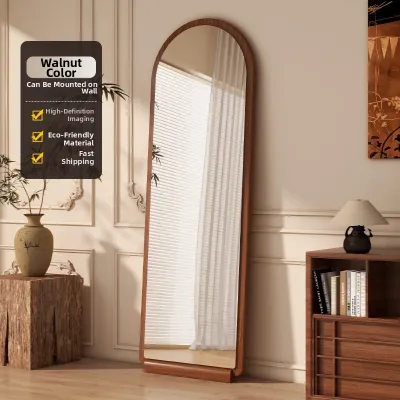
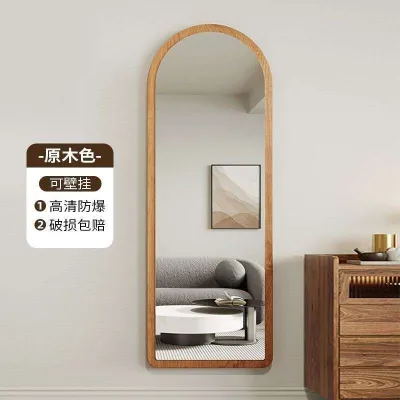
Arched and curved-edge mirrors feature rounded tops or soft, organic silhouettes that contrast with the sharp, rectangular lines typical of modern apartment architecture. By introducing curved lines into a boxy room, these mirrors soften the visual transitions between walls and furniture, making the overall environment feel more relaxed and spacious. The upward curve of an arched mirror naturally guides the viewer’s gaze toward the ceiling, emphasizing vertical space.
While highly aesthetic, curved designs do present minor trade-offs in terms of functional reflective area. The rounded corners slightly reduce the total surface area of the glass compared to a strict rectangular mirror of the same maximum dimensions. Additionally, some budget curved mirrors may exhibit minor edge distortion if the glass is not perfectly flat across the curved perimeter, so verifying glass quality before purchase is recommended.
These mirrors work exceptionally well in dining areas, entryways, or behind low-profile sofas. They serve as elegant focal points that break up the monotony of flat walls while providing the necessary light reflection to brighten up central living zones.
Multi-Functional and Storage-Integrated Mirrors
Multi-functional mirror stands combine a full-body reflective surface with integrated storage solutions, such as hidden rear shelving, jewelry cabinets, or hanging coat racks. This dual-purpose utility is incredibly valuable in compact entryways or small bedrooms, where adding both a mirror and an extra storage cabinet would overwhelm the available floor space. By consolidating these functions into a single footprint, you can maintain a clean, clutter-free environment.
The primary trade-off with storage-integrated mirrors is their physical depth and weight. Because these units must accommodate shelving or cabinets behind the glass, they are significantly thicker and heavier than standard floor mirrors. This added depth means the unit will protrude further into the room, which can restrict movement if placed in a narrow corridor or behind a door.
When selecting a multi-functional mirror, prioritize robust stand structures and high-quality hardware. Ensure the base is wide and weighted enough to support the shifting load as items are stored or retrieved, and always utilize wall-anchoring tethers if the design permits to guarantee long-term stability. If you select a mirror with integrated LED lighting, always verify the voltage compatibility, base interface, wattage limits, and local electrical safety certifications before installation.
Safety, Placement, and Pre-Purchase Verifications
Before finalizing your purchase and arranging delivery, conducting a thorough safety and environmental assessment is crucial. First and foremost, verify the inclusion of reliable anti-tip mechanisms. High-quality full-body mirrors should come equipped with wall anchors, safety straps, or heavy-duty brackets that secure the top of the frame to the wall, preventing the mirror from tipping forward if bumped.
Next, evaluate the total weight of the mirror against your flooring material. Heavy solid-wood or iron-framed mirrors can exert significant pressure on delicate flooring, such as vinyl, laminate, or soft timber. If you are placing a heavy mirror on these surfaces, consider using felt pads or protective rubber cups under the stand’s contact points to distribute the weight evenly and prevent deep scratches or indentations. For mirrors requiring fixed electrical wiring, installation in damp bathroom environments, or mounting at height, ensure you isolate the power supply, follow the manufacturer’s precise installation instructions, and engage a qualified professional to handle the setup safely.
Glare and light pollution are common issues when large mirrors are placed without considering the room’s lighting layout. Avoid positioning your mirror directly opposite intense artificial light sources or in a spot where it will reflect harsh, direct afternoon sunlight into seating areas or onto television screens. Instead, angle the mirror slightly away from direct light paths to diffuse the illumination gently throughout the room without causing visual discomfort.
Finally, do not overlook the logistics of delivery and access. Full-body mirrors are bulky, fragile, and often difficult to maneuver through tight spaces. Measure your apartment’s elevator door and interior dimensions, stairwell clearances, and front door frames to ensure the delivery team can safely transport the mirror into your home. Checking these physical constraints beforehand prevents the frustration of receiving a beautiful mirror that cannot physically fit through your entryway.
Frequently Asked Questions (FAQ)
How do I clean a large full-body mirror without leaving streaks?
To maintain the optical clarity of a large full-body mirror, use a clean, lint-free microfiber cloth or a high-quality window squeegee. Avoid using paper towels, which can leave behind fine lint particles and static electricity that attracts dust. For the cleaning solution, a simple mixture of distilled water and a small amount of isopropyl alcohol or a dedicated non-abrasive glass cleaner works best to dissolve oils and fingerprints without leaving a soapy residue.
When applying the cleaner, always spray it directly onto the microfiber cloth rather than spraying the glass surface. Spraying the mirror directly can cause liquid to run down the glass and pool inside the bottom frame or seep behind the silver backing. Over time, this trapped moisture can lead to black edge rot or damage the frame materials. If your mirror features specialized coatings, such as anti-fog treatments, tinted finishes, or integrated smart-mirror electronics, stop and consult the manufacturer’s specific care instructions to avoid stripping the protective layers.
Can I place a full-body mirror stand directly in front of a window?
Placing a full-body mirror stand directly in front of a window can be highly effective for maximizing natural light reflection, especially in dark, interior-facing rooms that receive minimal direct sunlight. By reflecting the outdoor sky, the mirror can make a dim room feel significantly brighter and more connected to the outdoors.
However, this placement carries notable risks if the window receives intense, unfiltered sunlight. Direct, prolonged exposure to high solar heat can cause the mirror’s backing materials to degrade, potentially leading to peeling, bubbling, or discoloration of the reflective silvering. Furthermore, intense sunlight hitting the mirror at certain angles can create blinding glare and concentrated heat spots inside the room. To avoid these issues, consider placing the mirror adjacent to the window at a 45-degree angle, which allows you to capture and diffuse the natural light beautifully without exposing the mirror to direct thermal stress.
Community discussion
Share your experience or ask a question. Comments are reviewed before publication.