
Quick Answer: Which Cooling Material Wins in High Humidity?
Selecting the right cooling sofa cushion in Singapore depends entirely on how you manage your indoor climate. There is no single material that outperforms the others in every scenario; instead, the ideal choice hinges on whether you prioritize an instant surface chill, continuous dry breathability, or advanced, temperature-regulated heat absorption. In Singapore’s tropical climate, where relative humidity levels frequently exceed 80%, managing moisture and preventing a sticky, clammy feel is just as critical as achieving an initial temperature drop.
For living rooms that rely primarily on natural ventilation, ceiling fans, or open windows, bamboo is the clear winner. Woven bamboo mats and cushions do not provide an ice-cold sensation, but their exceptional breathability and natural moisture-wicking properties prevent sweat from pooling, keeping you dry and comfortable during humid afternoons. Conversely, if your home is regularly air-conditioned, gel-infused cushions or solid gel grids offer an immediate, intensely cold touch that excels in pre-cooled air. For those seeking advanced, non-freezing temperature regulation in air-conditioned spaces, Phase-Change Materials (PCMs) provide highly effective, prolonged heat absorption, though they require a cool environment to reset their cooling properties.
Why Humidity Changes the Cooling Game
To understand why cooling cushions perform differently in Singapore, it is essential to examine how high ambient humidity alters human thermoregulation. The human body cools itself primarily through the evaporation of sweat. When you sit on a standard fabric or leather sofa, heat and moisture become trapped in the contact zone between your body and the upholstery. In a dry climate, this moisture evaporates relatively quickly into the surrounding air. In a humid environment, however, the air is already saturated with water vapor, which severely slows down evaporation. This trapped moisture creates a sticky, high-humidity microclimate right beneath you, making the sofa feel uncomfortably warm and clammy.
Products mentioned in this guide
Prices are valid at publication and may change. Please refer to the product page for the latest price.

When evaluating a cooling sofa cushion for a humid climate, you must look beyond simple surface temperature. Effective performance relies on three distinct physical metrics: thermal conductivity, breathability, and moisture-wicking capability. Thermal conductivity determines how quickly a material can draw heat away from your skin upon initial contact. Breathability dictates how easily air can circulate through the cushion to dissipate that absorbed heat rather than trapping it. Moisture-wicking capability refers to the material’s capacity to pull perspiration away from your skin and disperse it, allowing for faster evaporation.
Many conventional materials that claim to offer cooling benefits fail in tropical climates because they only address thermal conductivity while ignoring moisture management. A material that feels cold to the touch for the first five minutes can quickly become a non-breathable barrier that traps sweat, ultimately making you feel hotter than you would on a standard cushion. Achieving lasting comfort requires matching the physical properties of the cushion material to the specific airflow and temperature conditions of your living space.
Material Breakdown: Gel, Bamboo, and Phase-Change
Each cooling material utilizes a distinct physical mechanism to manage heat and moisture. Understanding these underlying processes allows you to predict how a cushion will behave when subjected to Singapore’s daily heat and humidity.
Gel Cushions: Instant Cool but Potential Stickiness
Gel-based cushions are highly popular due to their high thermal mass and excellent thermal conductivity. When you first sit on a gel cushion, it quickly absorbs heat from your body, creating an immediate and noticeable cooling sensation. These products generally come in two forms: solid gel layers laminated onto memory foam, or open-cell, hyper-elastic polymer grids. Solid gel sheets act as a heat sink, drawing warmth away until the gel matches your body temperature. Gel-infused memory foam operates similarly, using microscopic gel beads dispersed throughout the foam to help dissipate heat faster than standard polyurethane foam.
While the initial chill of a gel cushion is highly satisfying, its performance in high humidity carries distinct drawbacks. Solid gel layers are completely non-porous. Because air cannot pass through solid gel, any sweat your body produces has nowhere to go, resulting in a slick, sticky surface within half an hour of sitting. Furthermore, once a solid gel cushion reaches thermal equilibrium—meaning it has absorbed as much heat as it can hold—it loses its cooling effect and can begin to trap heat against your body, acting as an insulator.
To mitigate these issues in a humid climate, look for gel cushions designed with a physical grid structure. These open-cell polymer grids allow air to circulate freely through hollow columns, which helps evaporate moisture and carry away trapped heat. Additionally, always pair a gel cushion with a highly breathable, moisture-wicking cover made from materials like mesh, Tencel, or bamboo viscose. A high-quality cover acts as a necessary barrier, absorbing sweat and preventing your skin from making direct contact with the non-porous gel surface.
Bamboo Cushions: Breathable and Dry, but Less "Cold"
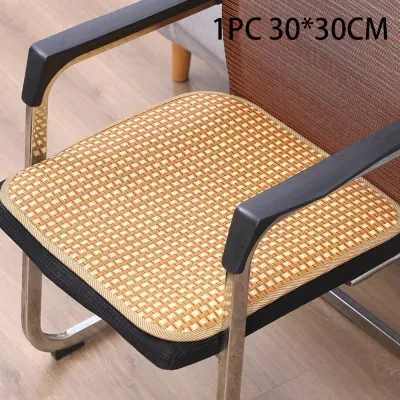
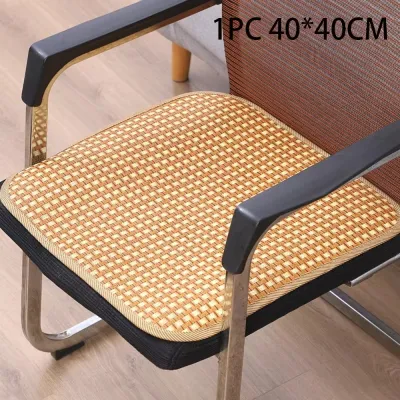
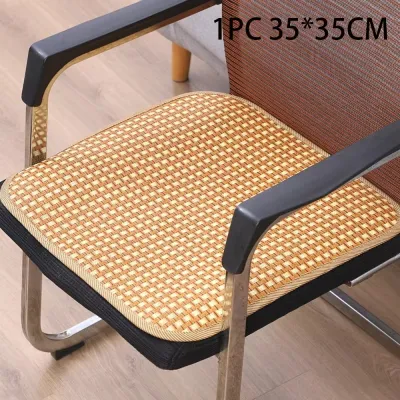
Bamboo cushions represent a traditional, time-tested approach to tropical comfort. These cushions generally fall into two categories: traditional woven bamboo mats (often featuring small, polished bamboo tiles strung together) and modern cushions upholstered in bamboo-derived viscose fabric. Woven bamboo mats operate on the principle of maximum ventilation. The natural structure of bamboo wood allows it to remain relatively cool, while the gaps between the woven tiles create a highly effective pathway for air to circulate directly beneath you as you sit.
The primary benefit of woven bamboo is its outstanding moisture management. Because the structure is entirely open and non-retentive, sweat evaporates rapidly, completely eliminating the sticky sensation common with synthetic foams and solid gels. Bamboo is also naturally resistant to bacteria and odors, which is a major advantage in Singapore’s mold-prone climate. However, woven bamboo does not deliver the intense, active “ice-cold” sensation that gel does. It relies on passive heat dissipation and ambient airflow, meaning its cooling performance is closely tied to the movement of air in the room.
Another trade-off to consider is physical comfort. Woven bamboo tile mats are firm, rigid, and offer no contouring support. If you prefer a plush, sinking sofa experience, a woven bamboo mat will significantly alter the feel of your furniture. On the other hand, bamboo viscose fabrics offer a soft, luxurious texture with excellent moisture-wicking properties, though they lack the high ventilation and structural cooling capacity of physical woven bamboo slats. Choosing between them requires balancing your need for structural softness against your desire for maximum airflow.
Phase-Change Material (PCM): Advanced Tech with Climate Limits
Phase-Change Materials represent the cutting edge of sleep and seating technology. These materials utilize microencapsulated organic waxes or salt hydrates that absorb and release thermal energy to maintain a stable temperature. As your body heat warms the cushion, the PCM absorbs this energy by transitioning from a solid state to a liquid state at a specific temperature threshold—typically calibrated around 28°C to 30°C. Because energy is consumed during this phase change, the cushion maintains a consistent, comfortable temperature without feeling excessively cold.
This active thermoregulation makes PCM cushions incredibly comfortable for long periods, as they do not suffer from the sudden thermal saturation common with standard gel. However, PCMs have strict environmental limitations that are highly relevant to Singapore’s climate. For a Phase-Change Material to work, it must be able to “recharge” by releasing its stored heat and transitioning back from a liquid to a solid. This solidification process can only occur if the ambient room temperature drops below the material’s specific transition threshold.
In a naturally ventilated Singaporean home, afternoon indoor temperatures can easily hover around 30°C to 32°C. In these conditions, a PCM cushion will remain in its melted, liquid state, rendering its cooling properties entirely inactive. Without the aid of air conditioning to lower the room temperature below 25°C, the cushion cannot reset, leaving you with a standard cushion that offers no active cooling benefits. Consequently, PCM technology is highly effective for air-conditioned living rooms but is practically useless in hot, fan-only spaces.
Feature-by-Feature Comparison
To help you weigh your options, the table below compares the performance of these three materials across key criteria under typical Singaporean indoor conditions.
| Material Type | Initial Cooling Feel | Breathability & Moisture Management | Longevity of Cooling Effect | Maintenance Requirements |
|---|---|---|---|---|
| Solid / Grid Gel | High to Very High (Immediate chill) | Low (Solid gel) to High (Grid gel structures) | Moderate (Saturates after 30–45 minutes) | Easy (Wipe down surface, hand-wash cover) |
| Woven Bamboo | Moderate (Passive, cool wood feel) | Outstanding (Excellent air gaps and ventilation) | Continuous (Does not saturate; relies on airflow) | Very Easy (Wipe clean, air out in shade) |
| Phase-Change Material (PCM) | Moderate (Balanced, regulated temperature) | Moderate to High (Depends on the carrier fabric) | High (Maintains temperature until phase change completes) | Moderate (Requires machine-washable protective cover) |
When interpreting these features, consider the dominant environment of your living room. If your sofa sits in a room with a ceiling fan and open windows, the “Outstanding” breathability of woven bamboo will serve you far better than the high initial cooling of a solid gel cushion, which will quickly warm up and trap sweat. Conversely, if you run a split-system air conditioner set to 24°C, a grid gel or PCM cushion will perform beautifully, as the air conditioner continuously removes moisture from the air and allows these materials to shed their absorbed heat.
How to Choose the Right Cooling Sofa Cushion for Your Space
To select the perfect cooling sofa cushion, evaluate your daily usage patterns, your home’s cooling infrastructure, and your personal comfort preferences. Use the following decision framework to guide your purchase.
Choose Gel if:
- Your living room is regularly air-conditioned, allowing the gel to remain pre-cooled and shed absorbed heat efficiently.
- You want an immediate, intense sensation of cold relief the moment you sit down.
- You prefer a soft, contouring seat that supports your body, and you select a model featuring an open-cell grid design or a high-quality, moisture-wicking cover.
Choose Bamboo if:
- You rely primarily on natural ventilation or ceiling fans and want a cushion that stays dry and comfortable without air conditioning.
- You prioritize moisture-wicking and breathability over an intense, active cold sensation.
- You prefer a firm, structured sitting surface (for woven mats) or want a highly durable, low-maintenance, and mold-resistant option.
Choose Phase-Change if:
- You sit on your sofa for extended periods, such as while working from home or watching movies, and require long-term, stable temperature regulation.
- You keep your living space air-conditioned, ensuring the ambient temperature drops low enough (usually below 25°C) to let the microcapsules solidify and recharge.
- You dislike the shocking, artificial cold of gel and prefer a subtle, natural-feeling thermal balance.
Crucial Verification Steps Before Buying
Before finalizing your purchase, verify several practical specifications to ensure compatibility and safety. First, measure your sofa seat dimensions carefully; cooling cushions, especially rigid woven bamboo mats, must fit flat without folding or overhang to prevent structural damage. Second, check the weight limit and density of any foam-based gel cushions to ensure they will not bottom out under your weight. Third, confirm that any gel materials are certified non-toxic and leak-proof, particularly if you have pets or young children. Finally, if you are purchasing cushions for outdoor or semi-outdoor spaces like a balcony or patio, note that direct tropical sunlight and extreme ambient heat will quickly overwhelm all three materials; passive cooling cushions are designed for shaded, indoor use only.
Care and Maintenance Tips for Humid Climates
Singapore’s high relative humidity creates an environment where mold, mildew, and dust mites thrive. To preserve your cooling cushion’s performance and hygiene, you must establish a regular care routine tailored to its specific materials.
For bamboo cushions and woven mats, moisture is the primary enemy. While bamboo is naturally resistant to microbes, prolonged exposure to sweat or high humidity can cause mold to develop in the crevices between woven tiles or within the fibers of bamboo viscose. Clean woven bamboo mats regularly by wiping them down with a soft microfiber cloth slightly dampened with warm water and mild, pH-neutral soap. Avoid soaking the wood, as excess water can cause the bamboo to swell or crack. After cleaning, always air the mat out in a shaded, well-ventilated area. Never place bamboo in direct, harsh tropical sunlight, as extreme UV exposure will dry out the wood, causing it to splinter and degrade.
For gel and Phase-Change Material cushions, care requirements depend heavily on the construction. Most gel and PCM cores cannot be submerged in water or machine-washed, as doing so can ruin the adhesive bonds, break down the foam, or damage the phase-change microcapsules. Instead, rely on a multi-layered protection strategy. Always use a removable, machine-washable outer cover to absorb sweat and body oils. Wash this cover weekly on a warm cycle to eliminate bacteria and dust mites. If the inner cooling core requires cleaning, spot-clean it gently with a damp cloth and mild soap, then allow it to dry completely in a well-ventilated indoor space before reassembling. Always consult the manufacturer’s care label for specific washing instructions, and if instructions conflict, defer to the manufacturer’s guidelines to protect your warranty.
Community discussion
Share your experience or ask a question. Comments are reviewed before publication.