
Quick Answer: Which Gel Cushion Seat or Foam Material is Best?
Sitting for extended periods on an unsupportive chair can lead to poor posture, pelvic misalignment, and chronic lower back pain. Finding the right gel cushion seat or foam alternative is essential to transform your daily seating experience, whether you are working from a home office or commuting. The “best” material is not universal; instead, it depends entirely on your personal priorities regarding thermal comfort, pressure relief, and long-term durability.
To make an immediate decision, you can map your primary seating pain point to the most effective material:
- Gel Grids: Best for maximum cooling, airflow, and a firm, springy support profile that prevents bottoming out.
- Memory Foam: Best for deep, body-conforming pressure relief, localized pain management, and a cradled sensation.
- Latex Foam: Best for a highly responsive, bouncy lift, natural breathability, and exceptional multi-year durability.
Understanding how these materials function under real-world conditions will help you select a cushion that maintains its supportive properties without trapping heat or flattening prematurely.
Products mentioned in this guide
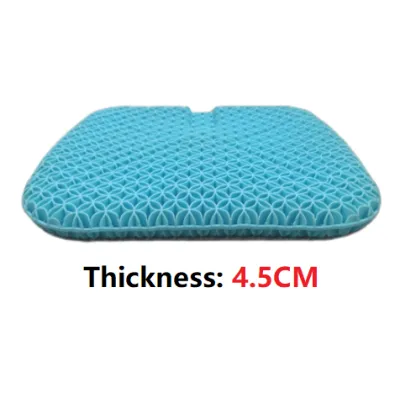
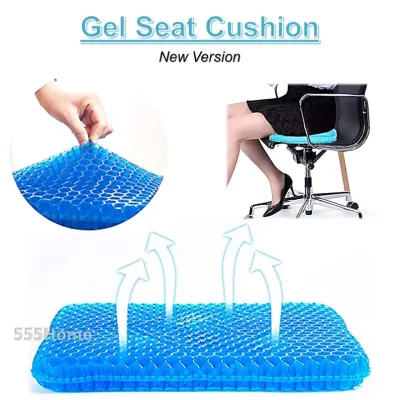
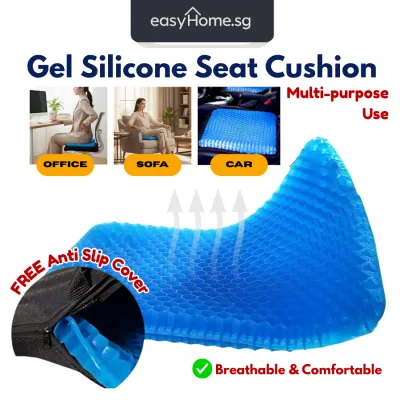
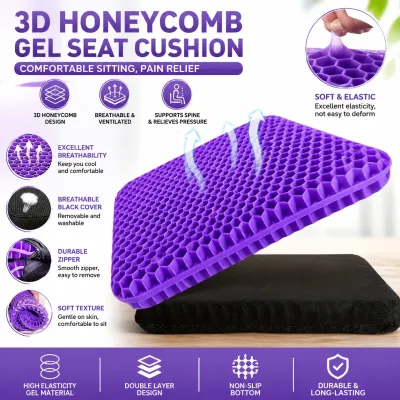
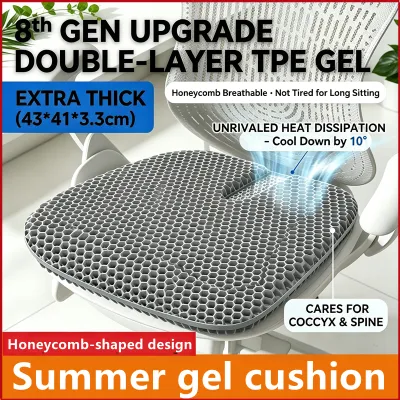
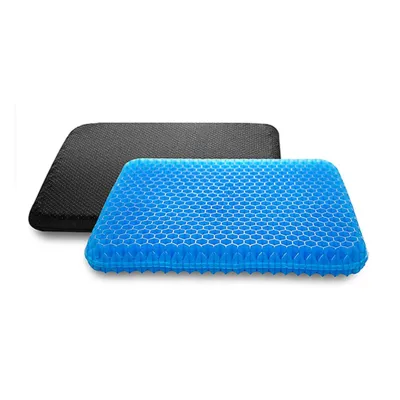
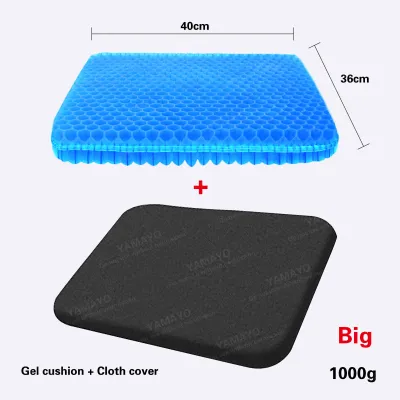
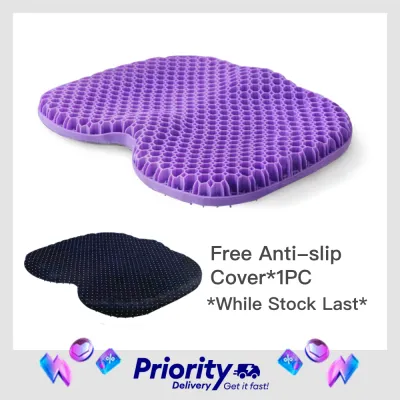
Prices are valid at publication and may change. Please refer to the product page for the latest price.
Comfort and Pressure Relief: How Each Material Feels
The tactile experience of a seat cushion determines how long you can remain seated without experiencing numbness or discomfort. Each of the three primary materials distributes body weight using distinct physical mechanisms, resulting in vastly different seating sensations.

Memory Foam: Deep Contouring and Viscoelastic Support
Memory foam, or viscoelastic polyurethane foam, is famous for its slow-rebound characteristics. When you sit on a memory foam cushion, the material responds to both your body weight and your body heat. As the foam warms up, it softens and molds precisely to the contours of your pelvic structure and thighs. This custom-molded fit maximizes the surface contact area, effectively distributing your body weight and reducing high-pressure concentrations on your ischial tuberosities (commonly known as the sit bones).
The sensation of sitting on memory foam is often described as “sinking into” the cushion. While this provides excellent pressure relief and a cozy, cradled feeling, it can make shifting positions or standing up require slightly more effort. If you prefer a highly stable, locked-in seating posture that cushions sensitive pressure points, high-quality memory foam is an exceptional choice.
Latex Foam: Responsive Bounce and Buoyant Support
In stark contrast to memory foam, latex foam is highly elastic and responsive. Whether harvested from natural rubber tree sap or synthesized from polymers, latex instantly pushes back against applied weight. Instead of molding to your shape and allowing you to sink, a latex cushion offers a buoyant, floating sensation. It supports your body on top of the material rather than cradling it within.
This active rebound makes it incredibly easy to shift positions, adjust your posture, or stand up from your desk. Latex distributes pressure evenly across its surface without restricting your movement. If you dislike the feeling of being “stuck” in a cushion or prefer a springy, active support profile, latex provides a comfortable, uplifting alternative.
Gel Cushions: Structural Weight Distribution and Grid Technology
A modern gel cushion seat typically features a solid, hyper-elastic polymer molded into a structural grid, such as a honeycomb or open-column pattern. Unlike foam materials that compress under weight, a gel grid functions through column buckling. When you sit down, the vertical walls of the gel columns support your weight up to a specific threshold, after which they buckle to distribute the load to surrounding columns.
This mechanical response allows the cushion to deliver targeted pressure relief directly under your sit bones while maintaining firm, even support across your thighs and pelvis. The feeling is highly unique—a firm yet yielding sensation that prevents you from ever “bottoming out” against the hard surface of your chair. It keeps your pelvis on a flat, stable plane, promoting an upright sitting posture.
Ergonomic Shapes and Density Specifications to Verify
Beyond the core material, the physical shape and density of the cushion play a critical role in overall comfort. When shopping, check the product specifications for foam density and ergonomic design features:
- Foam Density: For memory foam, look for a density rating of at least 50 kg/m³ to 80 kg/m³. Lower-density foams will feel soft initially but will quickly flatten under your weight, rendering the cushion useless.
- Ergonomic Cutouts: Look for U-shaped or coccyx cutouts that suspend your tailbone in the air, preventing direct contact with the seat pan and reducing spinal compression.
- Contoured Wedges: A wedge-shaped cushion tilts your pelvis slightly forward, which helps restore the natural lumbar curve of your spine and reduces slouching.
Heat Dissipation: Staying Cool in a Tropical Climate
In Singapore’s hot and humid tropical climate, thermal comfort is just as important as physical support. Sitting on a dense, heat-trapping cushion for hours can lead to uncomfortable sweating, moisture buildup, and skin irritation.
The Thermal Challenges of Singapore's Humidity
When you sit, your body continuously radiates heat and releases moisture. If your seat cushion cannot dissipate this thermal energy, a microclimate of hot, humid air becomes trapped between your body and the chair. This not only causes physical discomfort but can also accelerate the degradation of certain cushion materials.
Gel Grid Performance: Maximum Airflow and Passive Cooling
If cooling is your absolute highest priority, a solid hyper-elastic polymer gel cushion seat with an open-grid design is the undisputed champion. Because the grid structure is composed of vertical columns with hollow channels, the cushion is mostly open space. This allows air to flow freely beneath your body.
Every time you shift or move, the compression and expansion of the gel columns act as a bellows, actively pumping warm air out and drawing cooler air in. Furthermore, the polymer material itself has a naturally cool tactile feel and does not retain heat in the way that dense polyurethane foams do.
Latex Breathability: Natural Open-Cell Structures
Natural latex is inherently breathable due to its open-cell molecular structure, which allows air to pass through the material. To enhance this natural ventilation, manufacturers mold pinholes into the latex cores during the vulcanization process.
These vertical pinholes run throughout the cushion, creating a pathway for heat and moisture to escape. While it does not offer the completely open airflow of a hollow gel grid, a latex cushion remains significantly cooler than traditional solid foams, making it highly suitable for warm environments.
Memory Foam Solutions: Gel Infusions and Specialized Covers
Traditional memory foam is notoriously warm. Because it relies on a dense, closed-cell structure to trap heat and soften, it naturally acts as an insulator, absorbing and retaining your body heat. If you love the contouring feel of memory foam but live in a warm environment, you must look for advanced formulations designed to mitigate heat retention.
Look for memory foam infused with cooling gel beads or phase-change materials that absorb and dissipate initial heat. Additionally, verify that the cushion features an open-cell foam formulation or is wrapped in a highly breathable cover, such as a 3D spacer mesh or a moisture-wicking fabric. These features help draw heat away from your skin, though they may still feel warmer than open gel grids or ventilated latex.
Durability and Longevity: Which Lasts the Longest?
A seat cushion is an investment in your daily comfort and spinal health. Understanding how each material holds up under consistent, daily use will help you determine the true value of your purchase over time.
Latex Resiliency: The Long-Term Investment
Natural latex is widely recognized as the most durable cushioning material available. Its high elasticity allows it to recover its original shape instantly, even after supporting heavy loads for consecutive hours. It naturally resists taking a permanent compression set.
A high-quality natural latex seat cushion can easily maintain its structural integrity, bounce, and supportive properties for 5 to 10 years of daily use. While synthetic or blended latex options may degrade slightly faster, they still generally outlast standard polyurethane foams.
Memory Foam Lifespan: Why Density Matters
The lifespan of a memory foam cushion is directly tied to its density. Low-density memory foams, typically found in budget-friendly cushions, contain more air pockets and less polymer material. Under daily use, these air pockets collapse permanently, causing the cushion to sag, soften, and lose its supportive qualities within 6 to 12 months.
In contrast, high-density memory foam (above 60 kg/m³) contains a dense polymer matrix that resists permanent deformation. A high-density memory foam cushion can provide reliable, comfortable support for 3 to 5 years, though it will naturally soften slightly over time as it is exposed to body heat and moisture.
Gel Durability: Solid Elastomer vs. Gel-Infused Foams
When evaluating gel, it is crucial to distinguish between a solid hyper-elastic polymer gel grid and gel-infused foam.
- Solid Gel Grids: These are incredibly durable. The elastomeric material is highly tear-resistant, does not dry out or crack, and instantly returns to its original shape. A solid gel grid cushion can easily last 5 to 8 years without any loss of support.
- Gel-Infused Foams: These are essentially standard memory foams with gel particles mixed in. Their lifespan is governed by the quality and density of the base foam, not the gel. If the underlying foam is low-density, the cushion will sag just as quickly as standard foam.
To gauge expected lifespan, always check the manufacturer’s density specifications and warranty terms before purchasing.
Maintenance and Cleaning Requirements
Maintaining hygiene is essential, especially in Singapore’s humid climate where sweat, dust mites, and mold can accumulate quickly. The cleaning process varies dramatically depending on the cushion material you choose.
Cleaning Memory Foam and Latex Cores
The inner cores of both memory foam and latex cushions are highly delicate and must never be submerged in water or placed in a washing machine.
- Memory Foam: Water will saturate the closed-cell structure, making it incredibly difficult to dry. If moisture remains trapped inside, it will destroy the viscoelastic properties and promote mold growth. Machine washing can also physically tear the foam.
- Latex: Excess water can degrade the cellular structure of natural rubber. Furthermore, latex must be kept away from direct sunlight, as ultraviolet (UV) rays cause natural rubber to oxidize, turn yellow, and crumble.
- Proper Care: To clean these cores, spot clean gently with a damp cloth and a mild, diluted detergent. Allow the core to air dry completely in a well-ventilated, shaded indoor area away from direct heat sources.
Washing Solid Gel Grids
Solid hyper-elastic polymer gel grids are completely waterproof, non-porous, and highly hygienic. They do not absorb sweat, oils, or spills, and they do not harbor dust mites or allergens.
To clean a solid gel grid, simply remove the cover and rinse the gel core under running water or a showerhead. You can use mild dish soap to wash away any surface dust or debris. Shake off the excess water and wipe it dry with a clean towel, or let it air dry indoors for a few minutes. This makes gel the easiest and most hygienic material to maintain over time.
Selecting and Washing the Outer Cover
Because the inner cores of foam cushions are difficult to clean, the outer cover serves as your primary line of defense. When choosing a cushion, verify that the cover is:
- Removable and Machine-Washable: Ensure it features a durable, high-quality zipper for easy removal.
- Breathable: Look for mesh or knit fabrics that facilitate airflow, especially if you are using a memory foam or latex core.
- Non-Slip: A rubberized, textured bottom prevents the cushion from sliding around on smooth wooden, plastic, or leather chairs, ensuring stable posture throughout the day.
Price and Value: What to Expect When Shopping
When shopping for a seat cushion in Singapore, understanding the relative pricing tiers and how they translate to long-term value will help you budget effectively.
Relative Pricing Framework in Singapore
Prices can vary based on brand reputation, material purity, and ergonomic design complexity. Generally, you can expect the following price bands:
- Memory Foam (S$20 to S$60): Memory foam cushions are highly accessible and widely available. Entry-level models are very budget-friendly, while premium, high-density ergonomic models with specialized cooling covers sit at the upper end of this range.
- Latex Foam (S$60 to S$130): Due to the cost of harvesting natural rubber sap and the complex manufacturing processes involved, genuine natural latex cushions carry a premium price.
- Gel Cushions (S$30 to S$180+): Basic gel-infused foam pads are relatively inexpensive (S$30 to S$60). However, advanced, thick, double-layered hyper-elastic polymer gel grid cushions from reputable ergonomic brands represent a significant investment, often ranging from S$80 to over S$180.
Assessing Cost-per-Year and Return Policies
While a budget memory foam cushion may seem attractive upfront, evaluating the cost-per-year of expected lifespan often reveals a different story. For example:
- A budget S$30 memory foam cushion that flattens in 6 months costs S$60 per year to maintain.
- A premium S$120 natural latex cushion that lasts 6 years costs only S$20 per year.
When shopping online, look for retailers that offer return policies or comfort trial periods. Because comfort is highly subjective, having the ability to test the cushion on your specific office chair for a few days can prevent a costly purchasing mistake.
Final Verdict: How to Choose Based on Your Needs
Selecting the ideal seat cushion requires balancing your physical comfort needs, your environment, and your budget. Use this conditional framework to guide your final decision.
The Conditional Choice Guide
- Choose a Gel Cushion Seat if: Your primary concern is staying cool in a hot, humid environment, you want an exceptionally hygienic cushion that is fully washable, and you prefer a firm, springy, "floating" support profile that keeps your pelvis level.
- Choose Memory Foam if: You suffer from localized pressure pain (such as tailbone or hip discomfort), prefer a deep, body-hugging contour that cradles your pelvic structure, and want a budget-friendly option with targeted ergonomic shapes.
- Choose Latex if: You want a highly responsive, bouncy support that makes it easy to move, prefer eco-friendly and natural materials, and are willing to invest a higher upfront cost for a cushion that will last for many years.
Pre-Purchase Verification Checklist
Before finalizing your purchase, perform these essential compatibility and safety checks to ensure the cushion fits your specific seating setup:
- Verify Chair Dimensions: Measure the width and depth of your office or dining chair's seat pan. Ensure the cushion will fit flat within the seat boundaries without hanging over the edges, which can cause instability.
- Check Desk Clearance: Adding a cushion will raise your sitting height by 5 to 10 centimeters. Sit at your desk and measure the remaining clearance between your thighs and the underside of the desk. Ensure your knees will not hit the desk and that your armrests can still adjust to a comfortable, ergonomic height.
- Confirm Weight Capacity: Review the manufacturer's specifications for weight limits. Heavier users should opt for thicker, high-density memory foam or double-layered gel grids to prevent "bottoming out" against the hard chair surface.
- Review Care Instructions: Always read the manufacturer's care label on both the cover and the inner core. If instructions are unclear or conflict with general guidelines, contact the manufacturer directly to preserve your warranty and prevent accidental damage to the materials.
Community discussion
Share your experience or ask a question. Comments are reviewed before publication.