
Quick Answer: Balancing Efficiency and Value in GU10 Bulbs
When selecting a gu10 bulb for your home or office in Singapore, the ideal brand depends on whether your priority is long-term operational lifespan and color precision or minimizing your upfront capital expenditure. Premium international legacy brands offer superior value for main living areas, high ceilings, and art lighting due to their exceptional color consistency, robust thermal management, and smooth dimming capabilities. Conversely, regional and value-focused brands provide a highly cost-effective solution for high-volume installations in utility zones or rental properties where minor variations in light quality are less critical.
True value in the Singapore market is not determined solely by the initial retail price in SGD. Instead, it is measured by luminous efficacy (lumens per watt), driver resilience against tropical humidity, and verified operational lifespans. For most residential track lighting and recessed downlights, investing in mid-tier to premium brands yields a lower total cost of ownership by significantly reducing energy consumption and the frequency of bulb replacements over time.
How to Measure Energy Efficiency and Value in a GU10 Bulb
Lumens per Watt (lm/W)
Luminous efficacy is the primary metric used to evaluate the energy efficiency of an LED bulb. Calculated by dividing the total light output (measured in lumens) by the power consumed (measured in watts), this ratio reveals how effectively a bulb converts electricity into visible light. For example, a high-efficiency 4.5W GU10 LED that produces 400 lumens delivers an efficacy of approximately 88.9 lm/W. In contrast, older 50W halogen spotlights operate at a dismal 10 to 15 lm/W. By comparing the lm/W ratio across different brands, you can objectively identify which bulbs will deliver the greatest reduction in your monthly SP Group utility bills.
Products mentioned in this guide
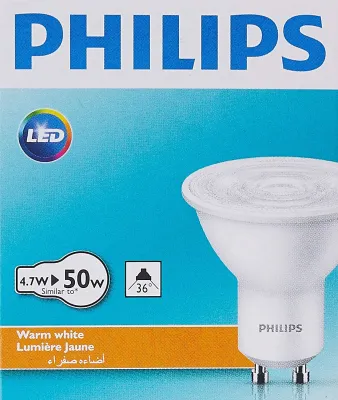
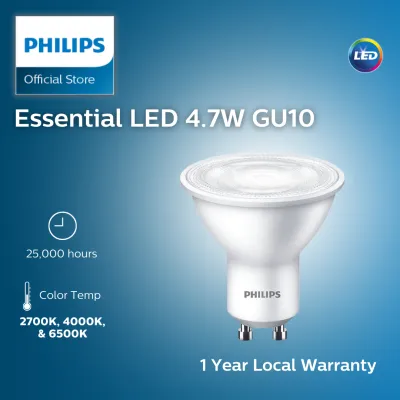
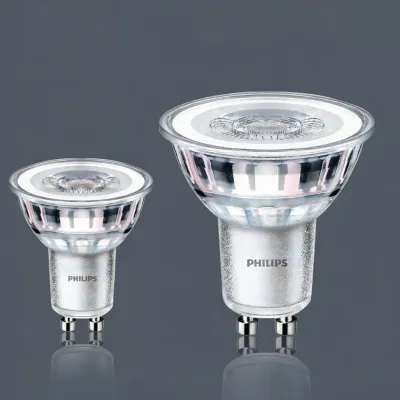
![[3 Year Warranty] [Authorized Dealer] Philips GU10 LED Spotlight Bulb Philips Essential LEDspot MV 4.7W GU10](https://img.lazcdn.com/g/p/f05426a137fb394924178754ffb22158.png_400x400q80.png_.webp)
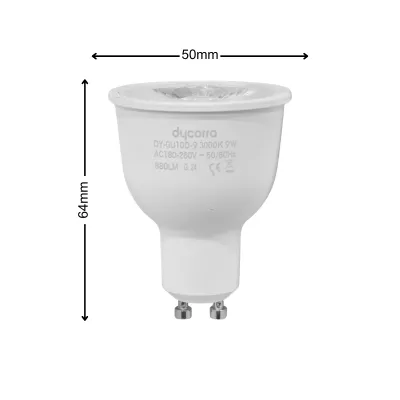
![[HomeBox] 🇸🇬 MUYISO 6W | 8W LED bulb GU10 Spot Light / Track Light Bulb Cool White Nature White Warm White (6500K 4000K 3000K)](https://img.lazcdn.com/g/p/1675473c10c402e452f87ff60dd0a30a.png_400x400q80.png_.webp)
Prices are valid at publication and may change. Please refer to the product page for the latest price.

Beam Angle and Useful Lumens
Because GU10 bulbs are directional spotlights, understanding beam angles is essential for choosing the right level of brightness. Manufacturers often distinguish between total lumens and “useful lumens,” which are measured within a narrow 90-degree cone. A bulb with a narrow beam angle of 24 to 36 degrees concentrates its light output into a tight, intense beam, making it perfect for accent lighting, highlighting artwork, or illuminating kitchen worktops. For general ambient lighting, a wider beam angle of 60 degrees or more is preferred. Selecting the correct beam angle ensures you do not over-purchase high-wattage bulbs when a lower-wattage, more focused beam would achieve the desired visual effect.
Cost per Lumen and Lifespan
To calculate the true long-term value of a bulb, you must look beyond the shelf price and factor in the rated operational hours. Most reputable manufacturers publish lifespan metrics using the L70/B50 standard, which indicates the point at which 50% of the bulbs in a test batch have degraded to 70% of their original light output. In Singapore’s residential environments, where lights typically run for four to six hours daily, a bulb rated for 15,000 hours will last over seven years. Calculating the cost per thousand hours of light output, while factoring in local electricity tariffs, provides a realistic picture of your long-term return on investment.
Color Rendering Index (CRI)
The Color Rendering Index (CRI) measures how accurately a light source reveals the true colors of objects, furniture, and paint finishes compared to natural daylight. A CRI rating of 80 is the standard baseline for general residential use, but premium bulbs often feature a CRI of 90 or higher. While achieving a higher CRI historically required a slight trade-off in luminous efficacy due to thicker phosphor coatings on the LED chip, modern manufacturing has largely closed this gap. Opting for high-CRI bulbs ensures that your interior decor, timber flooring, and fabrics look vibrant and natural, justifying a modest premium in price.
Comparing GU10 LED Brand Tiers in Singapore
Premium International Lighting Brands
Premium global manufacturers dominate the high-end residential and commercial sectors in Singapore. These brands focus heavily on advanced driver engineering and precise color binning. Color binning is a manufacturing quality control process that ensures every bulb within a specific product line shares an identical color temperature. This prevents the unsightly “checkerboard” effect often seen on long track lighting systems, where one bulb appears slightly yellow and another looks cool blue despite both being labeled as 3000K warm white.
Additionally, premium brands utilize high-grade electronic components in their internal drivers, which convert alternating current (AC) to direct current (DC). High-quality capacitors and advanced thermal potting allow these drivers to withstand the high ambient temperatures common in Singapore’s tropical climate, especially when installed in unconditioned ceiling voids. These brands also invest in extensive compatibility testing with leading smart home ecosystems and traditional wall dimmers, ensuring smooth, flicker-free dimming down to low percentages. While the initial SGD investment per bulb is higher, the extended performance consistency and lower failure rates make them highly economical for long-term homeowners.
Value-Focused and Regional Brands
Value-focused and regional brands, commonly sourced through local hardware merchants or online marketplaces, cater to budget-conscious projects and high-volume commercial fit-outs. These products offer highly competitive upfront pricing, often costing a fraction of their premium counterparts. For basic illumination in high-utility areas like storage rooms, service yards, or temporary retail displays, these bulbs perform adequately and deliver immediate energy savings compared to legacy halogen lighting.
However, buyers must exercise due diligence when evaluating these options. Lower-cost bulbs may exhibit wider tolerances in color temperature consistency across different manufacturing batches, meaning a replacement bulb purchased a year later might not perfectly match the existing ones. Thermal management in budget bulbs is often simplified, relying on plastic-clad aluminum heat sinks rather than full ceramic or pure aluminum structures, which can shorten the operational lifespan in hot, enclosed spaces. It is critical to verify that any budget-focused bulb carries valid local electrical safety certifications before installation, as uncertified drivers present higher risks of premature failure or electrical faults.
Essential Specifications to Verify for Singapore Homes
- Voltage and Frequency: Singapore's electrical grid operates at a nominal voltage of 230V AC with a frequency of 50Hz. When sourcing bulbs, especially from international online platforms, homeowners must explicitly verify that the product is rated for 220V–240V, 50/60Hz. Installing a bulb designed solely for 110V markets will result in immediate, permanent damage to the driver and poses a significant safety hazard.
- Thermal Management in Tropical Climates: Heat is the primary enemy of LED chips and driver electronics. In Singapore, indoor ambient temperatures regularly exceed 30°C, and the air inside ceiling plenums or concrete recessed housings can rise much higher. A well-engineered GU10 bulb utilizes an efficient heat sink—often made of ceramic, aluminum, or thermally conductive thermoplastics—to draw heat away from the sensitive internal components. Poor thermal dissipation leads to rapid lumen depreciation, color shifting, and premature driver failure.
- Dimmability and Transformer Compatibility: Not all GU10 LED bulbs are dimmable. Attempting to dim a non-dimmable bulb can cause severe flickering, buzzing, or immediate driver burnout. If you plan to use a dimmer switch, you must select a bulb explicitly labeled as dimmable. Furthermore, traditional phase-cut dimmers are divided into leading-edge (triac) and trailing-edge (electronic) types. Modern LED bulbs generally perform best with trailing-edge dimmers, which handle low-wattage electronic loads more smoothly. Always verify the minimum load requirement of your dimmer switch; if the combined wattage of your GU10 bulbs is too low, the dimmer may fail to operate correctly.
- Safety Certifications: In Singapore, household electrical appliances and accessories, including certain lighting components, are regulated under the Consumer Protection (Safety Requirements) Registration Scheme administered by Enterprise Singapore. Look for the Safety Mark on the packaging or product body. This mark indicates that the product has been tested to meet recognized safety standards, reducing the risk of electrical fires, short circuits, or insulation breakdown.
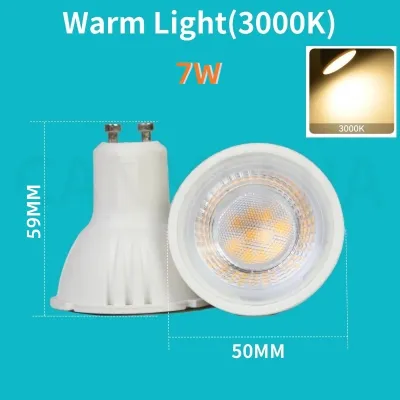
- Physical Dimensions: While the GU10 twist-and-lock base (featuring two pins spaced 10mm apart) is standard, the physical dimensions of the bulb body can vary. Traditional halogen GU10 bulbs typically measure 50mm in diameter and roughly 53mm to 55mm in height. Some LED alternatives feature deeper heat sinks or integrated smart chips, extending their height to 60mm or more. Before purchasing bulbs in bulk, measure the internal depth and clearance of your existing downlight canisters or track heads to ensure the new bulbs will sit flush and secure.
Decision Framework: Which Brand Tier Should You Choose?
To finalize your selection, evaluate your specific installation environment, budget constraints, and aesthetic requirements.
Choose Premium International Brands if:
- You are installing bulbs in hard-to-reach double-volume ceilings or high stairwells where replacing a failed bulb requires specialized ladders or scaffolding.
- The lighting is intended for key living areas, art displays, or dining spaces where high color rendering (CRI >90) and absolute color consistency across multiple fixtures are essential.
- You are integrating the lighting into a sophisticated dimming system or smart home ecosystem that requires precise, flicker-free control at low brightness levels.
Choose Value-Focused Brands if:
- You are outfitting a rental property, a temporary commercial pop-up, or utility areas such as store rooms, balconies, and service yards where minor color variations are acceptable.
- You require a large volume of bulbs for a tight budget and the fixtures are easily accessible for routine maintenance and quick replacements.
- The fixtures are operated via simple on/off switches without any dimming requirements, reducing the risk of driver-dimmer incompatibility.
Verify First if:
- You are retrofitting existing halogen fixtures. Always isolate the electrical power at the main distribution board (MCB) before removing old bulbs. Check the maximum wattage rating of the fixture and ensure the new LED bulb is compatible with the physical enclosure. If you are converting older low-voltage MR16 fixtures (which use 12V transformers) to mains-voltage 230V GU10 fixtures, this requires removing the old transformer and rewiring the sockets. This type of fixed electrical work must be carried out by an EMA-licensed electrical worker to guarantee compliance with local safety regulations.
Frequently Asked Questions (FAQ)
Can I use a GU10 LED bulb in an enclosed recessed downlight?
Yes, but with strict conditions. While LED bulbs are highly efficient and emit significantly less radiant heat than traditional halogen spotlights, their internal drivers still generate conductive heat at the base of the bulb. If a GU10 bulb is placed inside a tightly sealed, enclosed recessed fixture with no ventilation, this trapped heat will accumulate rapidly. This thermal stress can degrade the LED chips, cause the light output to dim prematurely, or lead to total driver failure. When planning to use bulbs in enclosed fixtures, always check the manufacturer’s packaging or specification sheet to confirm the bulb is rated for enclosed use, and ensure the fixture housing itself allows for adequate heat dissipation.
Why do my new GU10 LED bulbs flicker on a dimmer switch?
Flickering is almost always caused by a compatibility mismatch between the LED bulb’s internal driver and the wall dimmer switch. Traditional dimmer switches were designed for high-wattage resistive loads, such as 50W halogen bulbs, and often feature a high minimum load requirement (typically 40W to 60W). Because a modern GU10 LED bulb consumes only 4W to 6W, a single bulb or even a small group of bulbs may not draw enough power to keep the dimmer’s internal switch operating stably, resulting in flickering or strobing. To resolve this issue, ensure you are using dimmable GU10 bulbs and upgrade your wall switch to a dedicated LED-compatible trailing-edge dimmer that is rated for low-wattage electronic loads.
Is a 5W GU10 LED bright enough to replace a 50W halogen bulb?
In most residential settings, yes. Wattage measures electrical power consumption, not light output. To compare brightness accurately, you must look at the lumen output. A traditional 50W halogen GU10 spotlight typically produces between 350 and 450 lumens of light. A high-efficiency 5W GU10 LED bulb generally delivers around 380 to 450 lumens, making it a direct equivalent in terms of perceived brightness while consuming up to 90% less electricity. When replacing halogens, focus on matching the lumen rating and the beam angle to maintain the same lighting effect in your space.
Community discussion
Share your experience or ask a question. Comments are reviewed before publication.