
When planning the lighting design for a home or commercial property in Singapore, selecting the right GU10 LED bulb is a critical decision that directly impacts both your monthly electricity bill and the visual comfort of your spaces. The GU10 bulb, characterized by its twist-and-lock bi-pin base, is the standard choice for recessed downlights, track lighting, and spotlight fixtures across modern HDB flats, condominiums, and retail outlets. However, navigating local lighting showrooms along Balestier Road or browsing online marketplaces reveals a dizzying array of options, with various brands promising superior brightness and efficiency.
To find the best GU10 LED bulb for your setup, you must look beyond flashy marketing claims and focus on the relationship between light output (lumens) and power consumption (watts). There is no single “best” brand for every situation; instead, the ideal choice depends on your specific spatial layout, dimming requirements, and budget. By understanding how to evaluate luminous efficacy, beam angles, and thermal management, you can make an informed decision that balances high-quality illumination with long-term energy savings.
How to Choose the Right GU10 LED Bulb: A Quick Guide
Selecting the perfect GU10 LED bulb requires a clear understanding of your lighting priorities. Because different spaces demand different lighting characteristics, a bulb that works perfectly as an accent light in a gallery-style living room might be entirely unsuitable for general illumination in a kitchen.
Products mentioned in this guide
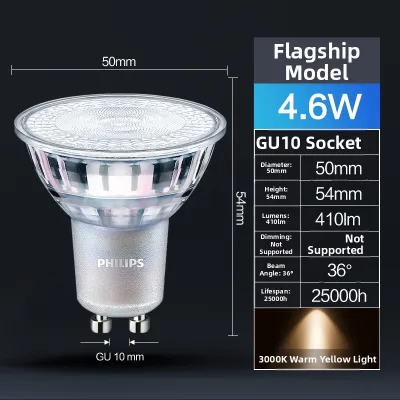
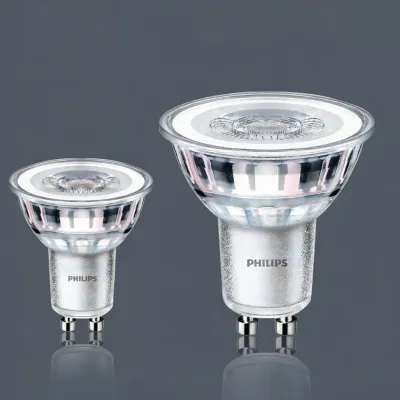
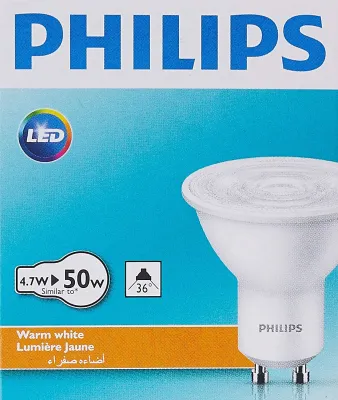
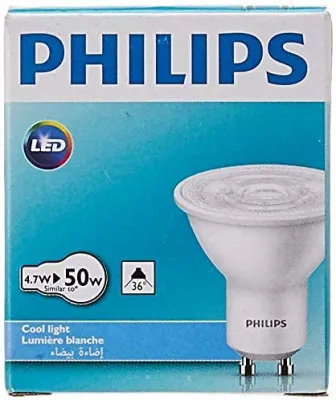
![[HomeBox] 🇸🇬 MUYISO 6W | 8W LED bulb GU10 Spot Light / Track Light Bulb Cool White Nature White Warm White (6500K 4000K 3000K)](https://img.lazcdn.com/g/p/1675473c10c402e452f87ff60dd0a30a.png_400x400q80.png_.webp)
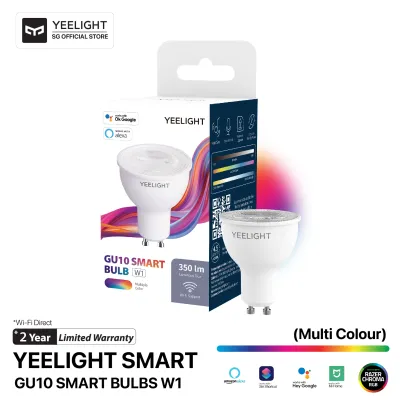
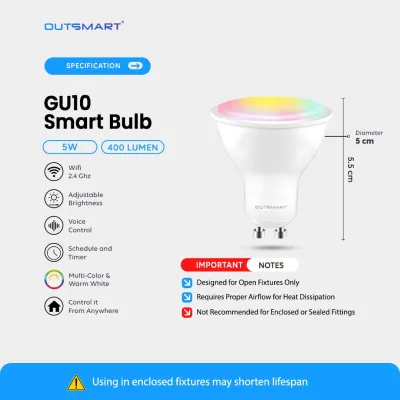
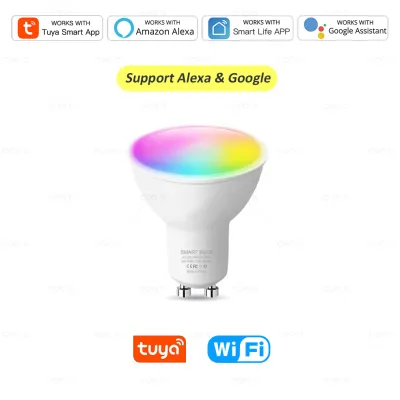
Prices are valid at publication and may change. Please refer to the product page for the latest price.
To simplify your decision-making process, consider this conditional framework:
- Prioritize Established Global Brands if your project requires maximum energy efficiency (luminous efficacy), precise dimming control, excellent color accuracy, and long-term reliability. These brands are highly recommended for high-use areas like living rooms, kitchens, and commercial storefronts where lights remain on for extended periods.
- Opt for Specialized or Regional Brands if you are outfitting standard ambient fixtures where dimming is not required, and upfront cost-effectiveness is your primary concern. These bulbs are well-suited for corridors, utility rooms, or transitional spaces where the lights are used less frequently.
Rather than relying solely on brand reputation, always evaluate the technical specifications printed on the physical packaging. Pay close attention to the rated lumens, wattage, beam angle, and local regulatory marks. In Singapore, ensuring the bulb carries the appropriate safety certifications is paramount, as GU10 bulbs operate directly on 230V mains voltage.
Core Metrics: Evaluating Brightness and Energy Efficiency
To make an objective comparison between different GU10 LED bulb brands, you must first master the core metrics that define light quality and energy performance. Relying on outdated assumptions about lighting can lead to purchasing bulbs that are either too dim, overly power-hungry, or visually uncomfortable.

Lumens vs. Wattage (Luminous Efficacy)
For decades, consumers used wattage as a shorthand for brightness. With incandescent and halogen bulbs, a higher wattage naturally meant a brighter light. However, with modern LED technology, wattage only measures the amount of electrical power a bulb consumes, not the amount of light it emits.
To measure true brightness, you must look at the lumen (lm) rating. Lumens represent the total amount of visible light emitted by a source. To determine how energy-efficient a GU10 LED bulb actually is, you must calculate its luminous efficacy by dividing the lumen output by the wattage consumed (lm/W).
For example, if a GU10 LED bulb consumes 5.5 watts of electricity and produces 450 lumens of light, its luminous efficacy is approximately 81.8 lumens per watt. In contrast, an older 50-watt halogen GU10 bulb might produce the same 450 lumens, resulting in a dismal efficacy of just 9 lumens per watt. By upgrading to the LED equivalent, you achieve the exact same brightness while reducing your energy consumption by nearly 90 percent.
When comparing brands in Singapore, aim for bulbs that offer a luminous efficacy of at least 80 lm/W. Premium high-efficiency models can achieve 90 to 100 lm/W or more, providing maximum brightness for every cent spent on your electricity bill.
Beam Angle and Perceived Brightness
The physical beam angle of a GU10 bulb plays a massive role in how bright the light feels to the human eye. GU10 bulbs are directional light sources, meaning they project light in a specific cone rather than dispersing it in all directions like a traditional GLS bulb.
- Narrow Beam Angles (15 to 24 degrees) concentrate the light into a tight, intense spot. This concentrated beam makes the illuminated area appear incredibly bright, even if the bulb's total lumen output is relatively low. These are ideal for highlighting artwork, decorative features, or creating dramatic contrast.
- Medium Beam Angles (36 to 40 degrees) are the most common choice for residential spaces. They provide a balanced spread of light that works well for task lighting over kitchen islands or general downlighting in bedrooms.
- Wide Beam Angles (60 degrees and above) spread the light over a much larger surface area. While this wide distribution is excellent for creating soft, uniform ambient lighting without harsh shadows, the perceived brightness at any single point will be lower than that of a narrow-beam bulb with the same lumen rating.
Color Temperature and Visual Brightness
Color temperature, measured in Kelvin (K), describes the color appearance of the light emitted by the bulb. It is a common psychological phenomenon that cooler color temperatures are perceived as visually brighter and crisper than warmer temperatures, even when their measured lumen outputs are identical.
- Cool Daylight (6000K to 6500K) emits a bluish-white light that mimics natural daylight. It promotes alertness and makes spaces feel clean and bright, making it a popular choice for utility rooms, home offices, and workspaces.
- Cool White (4000K) offers a neutral, clean white light without the blue undertones. It is highly favored in modern Singaporean kitchens and bathrooms for its clean, high-visibility aesthetic.
- Warm White (2700K to 3000K) delivers a soft, yellowish glow that creates a cozy, relaxing ambiance. While it is perfect for bedrooms and living rooms, it may feel visually "dimmer" to some users, who may need to select a slightly higher lumen bulb to achieve their desired sense of brightness.
Comparing GU10 LED Brand Categories in Singapore
The Singaporean lighting market features a diverse mix of brands, which can be broadly divided into two major categories: established global manufacturers and value-oriented regional or house brands. Understanding the characteristics of these categories will help you navigate your options and set realistic performance expectations.
- Established Global Manufacturers: Brands such as Philips (Signify), Ledvance (formerly Osram), and Megaman dominate the premium segment of the market. These companies invest heavily in research and development, resulting in superior driver electronics and advanced thermal management systems. The primary advantage of choosing a global brand is consistency. Their bulbs typically maintain their rated brightness and color temperature over thousands of hours without noticeable degradation. Furthermore, they offer excellent Color Rendering Index (CRI) values—often 90 or higher—ensuring that colors in your home look natural and vibrant. If you plan to install dimmer switches, premium global brands provide much smoother dimming curves and wider compatibility with local dimmer systems, minimizing the risk of annoying flickering or low-frequency buzzing.
- Value-Oriented Regional and House Brands: These brands are widely available in local lighting showrooms across Singapore and on major online marketplaces. They represent a highly cost-effective option, often priced significantly lower than their global counterparts. For standard, non-dimmable applications where the lights are only used occasionally—such as in guest rooms, balconies, or storerooms—these budget-friendly brands offer excellent value. However, they may use simpler driver designs and less robust heat-sinking materials, which can sometimes lead to a shorter overall lifespan or slight color shifting over time.
To verify any manufacturer’s claims, always inspect the physical packaging of the bulb. Look for the local Enterprise Singapore Safety Mark, which is a mandatory certification for controlled electrical items sold in Singapore, ensuring the bulb has passed rigorous electrical safety tests. Additionally, compare the stated lifetime (typically ranging from 15,000 to 25,000 hours) and the manufacturer’s warranty terms to protect your investment.
Matching Specifications to Your Space
Achieving the perfect lighting scheme requires matching the technical specifications of your GU10 LED bulbs to the specific functional demands of each room.
Accent and Task Lighting (Track Lights & Spotlights)
Accent and task lighting are all about precision, contrast, and visual clarity. Whether you are illuminating a piece of artwork on a feature wall, highlighting architectural details, or lighting up a kitchen countertop where sharp knives are used, the quality of light is paramount.
For these applications, select GU10 LED bulbs with a narrow to medium beam angle (15 to 36 degrees) to focus the light exactly where it is needed. This creates a clear distinction between light and shadow, adding depth and drama to your space.
Additionally, prioritize a high Color Rendering Index (CRI) of 90 or above. A high CRI ensures that the colors of your food, paintings, and decor are represented accurately and beautifully. In these focused zones, the visual comfort and precise direction of the light are far more important than squeezing out the absolute maximum lumens per watt.
General Ambient Lighting (Recessed Downlights)
General ambient lighting is designed to provide uniform, comfortable illumination throughout an entire room, allowing you to navigate the space safely and perform everyday activities.
For ambient lighting via recessed ceiling downlights, opt for GU10 LED bulbs with a wide beam angle (60 degrees or more). This wide distribution helps overlap the light cones from adjacent fixtures, eliminating dark spots and creating a smooth, even wash of light across the floor.
Because ambient lighting typically requires multiple fixtures running simultaneously for several hours every day, this is the scenario where maximizing energy efficiency has the greatest financial impact. Selecting high-efficacy bulbs (above 80 lm/W) will significantly lower your household’s energy footprint over time, compounding into substantial savings on your Singapore Power (SP) bills.
Compatibility and Safety Checks Before You Buy
Before purchasing a large batch of GU10 LED bulbs, you must perform several compatibility and safety checks to ensure they will function flawlessly in your existing or new fixtures.
- Physical Dimensions and Fit: While the GU10 twist-and-lock base is standardized, the physical body of LED bulbs can vary. Traditional halogen GU10 bulbs have a very compact profile. Because LED bulbs require internal electronic drivers and heat sinks, some high-output or smart LED models are slightly longer or wider than their halogen predecessors. Measure the internal depth and diameter of your light fixtures to ensure the new LED bulbs will fit comfortably inside without protruding awkwardly.
- Dimmer Compatibility: If your home features dimmer switches, you must exercise caution. Standard LED bulbs are not dimmable; attempting to dim them can cause immediate flickering, strobing, or permanent damage to both the bulb and the switch. You must purchase GU10 bulbs explicitly labeled as "dimmable." Additionally, ensure your dimmer switch is compatible with LED technology. Older dimmers designed for high-wattage halogens often fail to operate correctly with low-wattage LEDs, requiring an upgrade to a modern trailing-edge LED dimmer.
- Thermal Management and Ventilation: Although LED bulbs run significantly cooler than hot halogen bulbs, they still generate heat. This heat is concentrated at the base of the bulb where the sensitive driver electronics are located. If an LED bulb is installed in a tightly sealed, unventilated fixture, the trapped heat will quickly degrade the driver and the LED chips. This leads to a rapid drop in brightness, color shifting, and premature failure. Always ensure your light fixtures allow for adequate passive ventilation to let heat escape.
- Electrical Safety Boundaries: In Singapore, GU10 bulbs operate directly on the 230V mains electrical supply. Because of this high voltage, safety must be your top priority. Always isolate the power at the main distribution board (DB box) or turn off the wall switch before attempting to replace a bulb. If your installation involves complex track rail setups, mounting fixtures at height, or modifying fixed electrical wiring, do not attempt to do it yourself. Always engage a licensed electrical worker (LEW) to handle the installation, ensuring compliance with local electrical safety codes and protecting your home from fire hazards.
Frequently Asked Questions (FAQ)
Can I replace halogen GU10 bulbs directly with LED GU10 bulbs?
Yes, GU10 LED bulbs are designed as direct retrofits for standard 230V mains-voltage halogen fixtures. However, you must check the physical dimensions of the LED bulb, as some high-output models are slightly longer than standard halogens. If your existing setup uses a dimmer, you must verify that the new LED bulb is dimmable and compatible with your dimmer switch.
Do GU10 LED bulbs get hot?
Yes, though not in the same way as halogens. While the light beam itself is cool to the touch, the electronic driver and heat sink at the base of the bulb do generate heat during operation. Adequate ventilation within the light fixture is essential to dissipate this heat; otherwise, the internal components will overheat, leading to a drop in energy efficiency and a significantly shortened lifespan.
How do I know if a GU10 bulb is truly energy efficient?
To verify a bulb’s true efficiency, divide the rated lumen output by the wattage (lm/W) listed on the packaging. Look for a ratio of 80 lm/W or higher. Additionally, check for recognized local and international safety and environmental certifications, such as the Singapore Safety Mark for electrical safety, or compliance marks from reputable testing bodies printed on the box.
Community discussion
Share your experience or ask a question. Comments are reviewed before publication.