
Transitioning your home’s outdoor lighting to solar energy is one of the most direct ways to lower utility bills while maintaining a secure, well-lit perimeter. A solar floodlight led system operates independently of the electrical grid, converting sunlight into electrical energy during the day and storing it in an integrated battery to power high-efficacy light-emitting diodes (LEDs) at night. By eliminating the ongoing operating costs of traditional grid-tied fixtures, Singapore homeowners can enjoy reliable outdoor illumination without adding to their monthly SP Group utility bills.
The fundamental mechanism of these fixtures relies on two core technologies: photovoltaic (PV) conversion and high-efficacy LED illumination. During daylight hours, the solar panel absorbs solar radiation, which excites electrons within the silicon cells to generate a direct current (DC). This current passes through a charge controller to safely charge the internal battery. Once twilight falls, the system automatically redirects this stored energy to the LED chips, which produce intense, directional light with minimal thermal waste.
In Singapore, where the equatorial sun provides consistent daylight throughout the year, the potential for solar energy harvesting is exceptionally high. However, local weather is characterized by sudden afternoon downpours and extended monsoon periods. This means solar lights must be highly efficient at capturing diffuse sunlight on overcast days.
Products mentioned in this guide
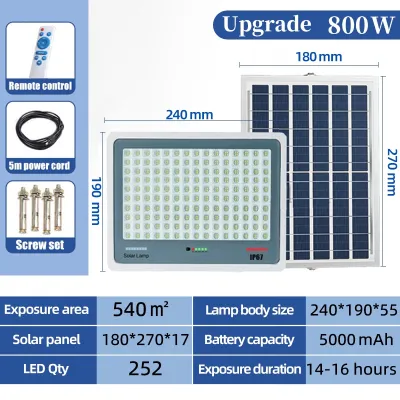
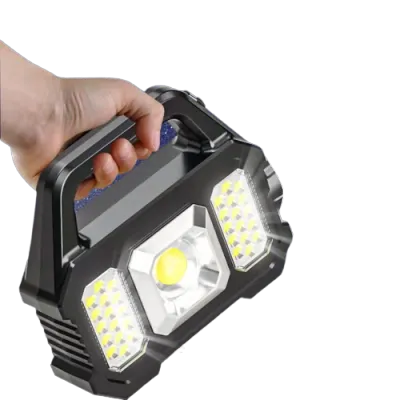
![[SG SELLER] 10W/20W/30W/50W/100W/150W Bright Light Led Rechargeable Flood Spotlight Emergency Waterproof Security Lights](https://img.lazcdn.com/g/p/53cd67203a45f9937f483759df2d4754.jpg_400x400q80.jpg_.webp)
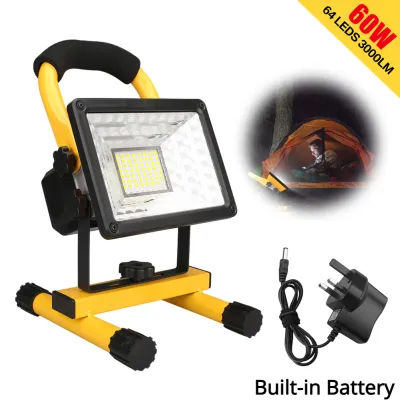
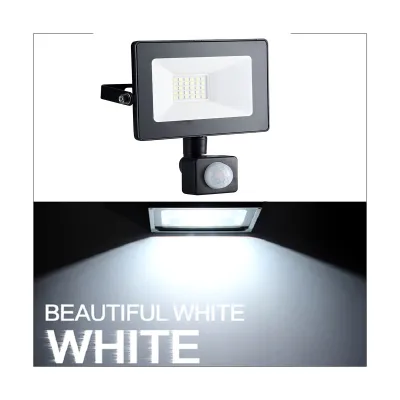
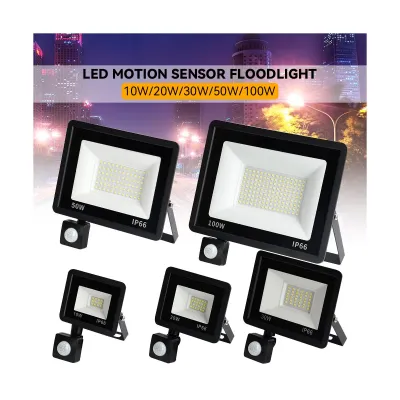
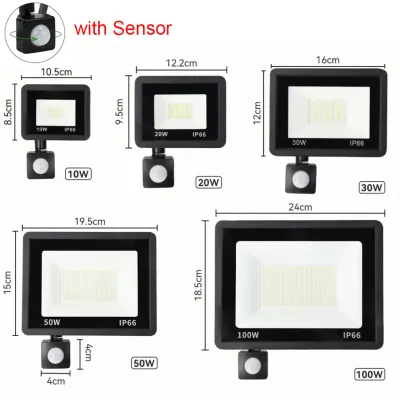
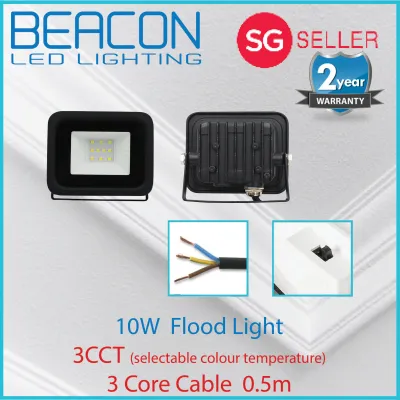
Prices are valid at publication and may change. Please refer to the product page for the latest price.
It is critical to set realistic performance expectations. While a solar-powered floodlight led unit is ideal for residential security, pathways, and gardens, it operates on a finite energy budget dictated by its battery capacity and daily sun exposure. Unlike hardwired commercial floodlights that draw continuous AC power from the grid, a solar fixture cannot run at maximum brightness indefinitely. Understanding this trade-off is key to selecting a brand that balances light output with overnight runtime.
Key Metrics to Evaluate Brand Efficiency for a Floodlight LED
When comparing different solar lighting brands in the Singapore market, relying on vague marketing terms like “ultra-bright” or “super-saving” can lead to disappointing results. To make an informed decision, you must evaluate the underlying hardware specifications. Understanding how a brand designs its solar panels, battery systems, and LED arrays will help you identify which products offer genuine energy savings and long-term reliability.
Solar Panel and Battery Technology
The solar panel is the engine of the entire system, and its material composition directly determines how quickly it can recharge the battery. Monocrystalline solar panels are the preferred choice for residential solar fixtures. They are constructed from a single, pure silicon crystal, allowing them to achieve energy conversion efficiencies of 15% to 22%. This high efficiency is particularly valuable for Singapore homes with limited wall or roof space, as monocrystalline panels generate more power per square centimeter than polycrystalline alternatives. Polycrystalline panels, recognizable by their speckled blue appearance, are cheaper to produce but typically offer lower conversion efficiencies of 13% to 16%, requiring a physically larger panel to achieve the same power output.
Once energy is captured, the internal battery chemistry determines how safely and efficiently that power is stored. Modern high-quality solar floodlights utilize Lithium Iron Phosphate (LiFePO4) batteries. Compared to older Lithium-ion (Li-ion) or Nickel-Metal Hydride (NiMH) chemistries, LiFePO4 batteries offer superior thermal stability, which is crucial in Singapore’s year-round tropical temperatures. They can withstand operating temperatures up to 60°C without risking thermal runaway or rapid degradation. Furthermore, LiFePO4 batteries boast a significantly longer cycle life, often lasting for 2,000 to 3,000 charge-discharge cycles (approximately 5 to 8 years of daily use) before their capacity drops to 80%, whereas standard Li-ion batteries may degrade after just 500 cycles.
To ensure your floodlight led operates throughout the night, you must verify the relationship between battery capacity and LED power consumption. Battery capacity is measured in milliampere-hours (mAh) or watt-hours (Wh). To convert mAh to Wh, multiply the mAh rating by the battery’s nominal voltage (typically 3.2V for LiFePO4) and divide by 1,000. For example, a 3.2V battery with a 10,000 mAh capacity holds 32 Wh of energy. If the floodlight draws 4 watts of power, it can theoretically run for 8 hours on a full charge. A reputable brand will explicitly state these values, allowing you to confirm that the battery capacity is properly matched to the light’s power draw for Singapore’s average of 12 hours of darkness.
LED Efficacy and Smart Sensors
The efficiency of the light source itself is measured by its luminous efficacy, expressed in lumens per watt (lm/W). This metric indicates how much visible light (lumens) the LED produces for every watt of electrical power consumed. High-quality LED chips used by premium brands can achieve efficacies exceeding 130 to 150 lm/W, whereas lower-grade chips may produce only 80 lm/W. Choosing a brand with high luminous efficacy means you get a brighter light without needing a massive, expensive battery and solar panel system to power it.
Smart control mechanisms are equally vital for conserving stored energy. Integrated Passive Infrared (PIR) motion sensors and dusk-to-dawn photocells prevent energy waste by managing when and how the light operates. A dusk-to-dawn sensor automatically switches the light off during the day and on at night, eliminating manual operation. PIR motion sensors allow the fixture to remain in a low-power “dim” mode (e.g., 10% brightness) or completely off until movement is detected within a specific range, at which point it ramps up to 100% brightness for a set duration (usually 30 to 60 seconds). This dynamic operation drastically reduces overall battery consumption, ensuring the light remains functional even after consecutive rainy days.
Be highly cautious of brands that only advertise “equivalent wattage” (such as “300W equivalent”) without providing the actual lumen output or true power consumption in watts. Equivalent wattage is an outdated marketing comparison to incandescent bulbs and does not reflect the actual electrical performance or efficiency of an LED fixture. Always look for the rated lumens and the actual wattage draw of the LED array to calculate true efficiency.
Climate-Specific Requirements for Singapore Homes
Singapore’s tropical climate presents a harsh operating environment for outdoor electronics. High relative humidity, intense UV radiation, and heavy downpours during the monsoon seasons can quickly degrade poorly constructed solar fixtures. To protect your investment and ensure continuous energy savings, look for brands that design their products specifically to withstand these local stressors.

The first line of defense against the elements is the Ingress Protection (IP) rating. This two-digit code rates the degree of protection provided against the intrusion of solid objects and liquids. For outdoor solar floodlights in Singapore, a minimum rating of IP65 is required, which indicates the housing is dust-tight and protected against water jets from any angle. For areas completely exposed to heavy monsoon rains without any shelter, opting for an IP66 or IP67 rating is highly recommended. These higher ratings ensure the internal circuitry and battery compartment remain completely dry, preventing short circuits and corrosion.
The materials used in the floodlight’s housing also dictate its lifespan. Cheap plastic housings will quickly become brittle, yellow, and crack under Singapore’s intense ultraviolet (UV) exposure. Look for brands that utilize UV-stabilized, high-grade Acrylonitrile Butadiene Styrene (ABS) or, ideally, die-cast aluminum with an anti-corrosion powder coating. Aluminum housings not only resist physical weathering but also play a critical role in thermal management.
LED chips and lithium batteries are highly sensitive to heat. As temperature rises, their efficiency drops, and their rate of degradation accelerates. High-quality solar floodlights feature robust physical heat sinks—often designed as deep ridges on the back of the aluminum housing—to dissipate heat away from the sensitive electronics. Proper thermal management ensures that the LED chips do not overheat and suffer from rapid lumen depreciation (dimming over time) and that the battery operates within its safe temperature limits.
Finally, always verify the manufacturer’s warranty terms. A brand that offers a comprehensive 2- to 5-year warranty specifically covering outdoor use in tropical climates demonstrates confidence in their product’s build quality. Be sure to read the fine print to confirm that water ingress and battery degradation are covered under normal operating conditions.
Verifying Brand Claims and Safety Standards
With a vast array of solar lighting options available on online marketplaces and in local hardware stores, distinguishing reliable brands from low-quality products can be challenging. Verifying manufacturer claims and safety certifications is essential to ensure you are buying a safe, efficient product.
Start by clarifying the distinction between actual power consumption and equivalent brightness. Many budget brands advertise extremely high wattages (e.g., “500W”) on their packaging, which is often a misleading representation of equivalent incandescent brightness rather than the actual power drawn by the LED chips. A genuine, high-efficiency solar floodlight led might only draw 10 to 20 actual watts of power while delivering 1,500 to 3,000 lumens of light—which is more than sufficient for residential security. Always cross-reference the advertised wattage with the lumen output and battery capacity to ensure the claims are physically realistic.
Look for recognized international testing and safety certifications on the product packaging or manufacturer’s specification sheets. Certifications such as CE (Conformité Européenne), RoHS (Restriction of Hazardous Substances), and TÜV SÜD indicate that the product has undergone rigorous testing for electrical safety, environmental impact, and manufacturing quality.
In Singapore, you should understand how the local Safety Mark applies to solar lighting. Standalone solar floodlights operate on low-voltage direct current (typically 3.2V to 12V DC) supplied directly by their integrated batteries. Because they do not connect directly to the 230V AC mains power grid, the standalone light units themselves are generally exempt from the mandatory Safety Mark scheme. However, if the brand includes a plug-in AC charging adapter (for hybrid solar-grid models) or a grid-tied backup power supply, those specific mains-connected components must carry the Enterprise Singapore Safety Mark. Using uncertified mains adapters poses a severe risk of electrical fire or shock.
To gain real-world insights, analyze verified buyer reviews on local e-commerce platforms. Look past simple five-star ratings and search specifically for long-term feedback (3 to 6 months of use). Pay close attention to recurring complaints regarding battery swelling, premature water ingress after heavy rain, or a sudden drop in brightness after a few weeks of operation. These user reports are invaluable for identifying brands that use substandard components despite high-spec marketing claims.
Installation Best Practices for Maximum Solar Yield
Even the most efficient solar floodlight led brand will underperform if the solar panel is poorly positioned or maintained. To maximize your energy savings and ensure the battery fully charges each day, you must follow precise installation practices tailored to Singapore’s geographical location.
Because Singapore is located almost directly on the equator (approximately 1.35 degrees north of the equator), solar panel placement requires a slightly different approach than in high-latitude countries. To maximize unshaded solar exposure throughout the year, the solar panel should ideally be installed in a location that receives unobstructed sunlight from both the east and the west. Avoid placing the panel directly under roof eaves, overhanging tree branches, or in the shadow of adjacent high-rise buildings. Even partial shading on a small section of a solar panel can drastically reduce its total power output due to the way solar cells are wired in series.
The tilt angle of the solar panel is another critical factor. While a completely flat (horizontal) panel might seem logical at the equator, tilting the panel at an angle of 10 to 15 degrees is highly recommended. This slight tilt serves a dual purpose: it optimizes the angle of incidence for sunlight throughout the changing seasons and, crucially, allows Singapore’s frequent heavy rains to naturally wash away accumulated dust, bird droppings, and leaf debris.
Establish a simple, periodic maintenance routine to keep the system operating at peak efficiency. Every 2 to 3 months, wipe the surface of the solar panel with a soft, damp microfiber cloth to remove stubborn dirt or grime that rain has not cleared. Avoid using harsh chemical detergents or abrasive scrubbing pads, as these can scratch the tempered glass or protective plastic coating, permanently reducing light transmission. At the same time, inspect the mounting brackets for any signs of loosening or corrosion.
Safety must remain your top priority during installation. If your chosen floodlight led requires mounting at high elevations, such as on a second-story wall, or involves drilling into complex exterior facades like concrete, brick, or composite cladding, do not attempt to do it yourself. Working at heights poses significant fall risks, and improper drilling can damage your home’s waterproofing layers, leading to structural leaks. Always hire a qualified professional contractor with the appropriate safety equipment and tools to handle high-elevation installations. Furthermore, if you are installing a hybrid system that connects to your home’s fixed electrical wiring, you must isolate the power source at the main distribution board before starting and consult a licensed electrical worker (LEW) to ensure compliance with local wiring regulations.
Frequently Asked Questions (FAQ)
Do solar floodlights work during Singapore's monsoon season?
Yes, high-quality solar floodlights will continue to function during the monsoon season, though their performance may be temporarily reduced. While heavy cloud cover and prolonged rain limit direct sunlight, modern monocrystalline solar panels are highly sensitive and can still harvest energy from diffuse, scattered sunlight. To ensure reliable operation during consecutive overcast days, it is essential to use the fixture’s smart energy-saving modes. Setting the light to PIR motion-sensor mode rather than continuous constant-on mode ensures that the stored battery power is conserved and only used when actual movement is detected.
Can I replace the battery in a solar LED floodlight myself?
Whether you can replace the battery depends entirely on the design of the specific brand and model. Some manufacturers design their solar floodlights with user-accessible, plug-and-play battery compartments that allow for easy replacement once the original battery reaches the end of its lifespan. However, many budget or highly compact models feature completely sealed, waterproof housings with soldered internal batteries. Before attempting to open any solar light housing, always consult the product manual and warranty terms. Attempting to open a sealed unit will void the manufacturer’s warranty and, more importantly, is highly likely to compromise the IP water-resistance rating, leading to immediate water ingress and safety hazards during the next rainstorm.
Community discussion
Share your experience or ask a question. Comments are reviewed before publication.