
Direct Answer: Which Fill Provides the Firmest Support?
High-density polyurethane foam is the undisputed champion for a true “hard” or extra-firm sofa cushion. It offers a rigid, non-yielding structure that supports weight without letting the user sink. Dunlop latex serves as a premium, highly resilient runner-up, providing a firm feel combined with an active “push-back” bounce. Conversely, memory foam is entirely unsuitable for anyone seeking a hard seating surface because its viscoelastic structure is designed specifically to soften and contour under body heat.
From an ergonomic perspective, a firm seating surface is essential for maintaining the natural curvature of the spine. When a cushion is too soft, the pelvis tilts backward, forcing the lower back into a rounded posture that can lead to lumbar strain over time. A firm cushion, by contrast, provides the necessary resistance to keep the pelvis neutral and the spine aligned.
A truly firm sofa cushion must resist deep compression under load. It prevents the user from “bottoming out”—the uncomfortable sensation of feeling the hard wooden or metal frame of the sofa beneath the padding. Firm support also facilitates easier mobility, allowing individuals to stand up effortlessly without feeling trapped in a deep well of soft padding.
Products mentioned in this guide
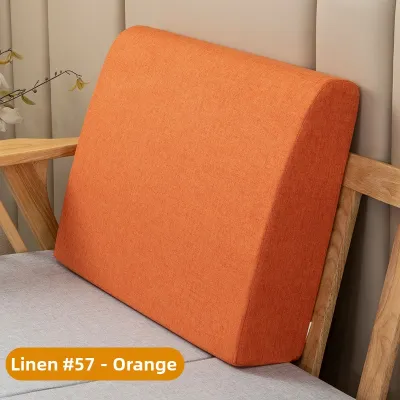
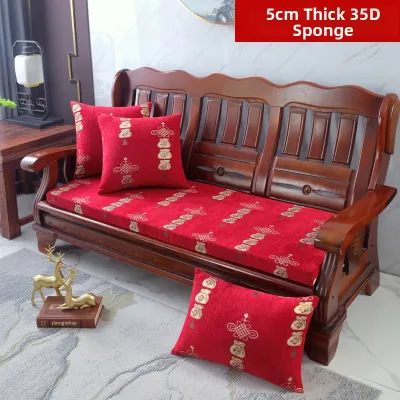
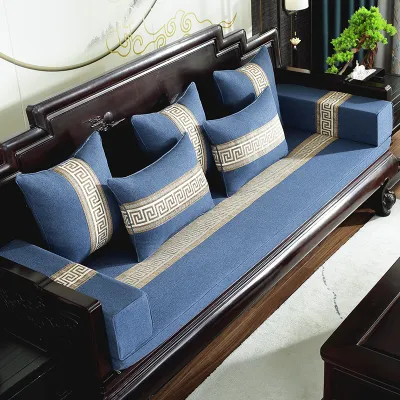
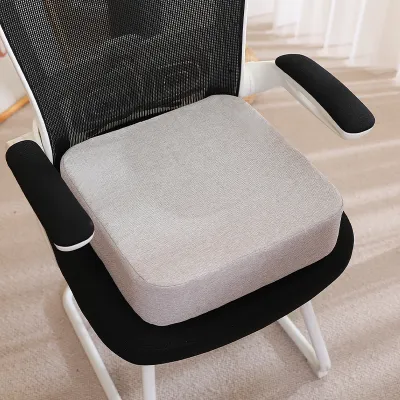
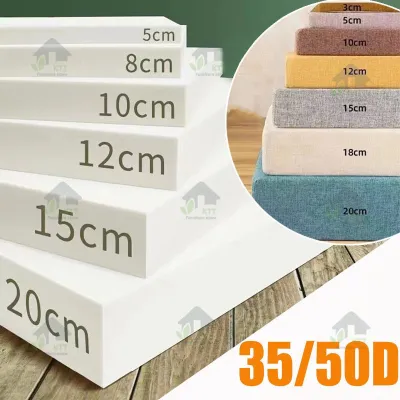
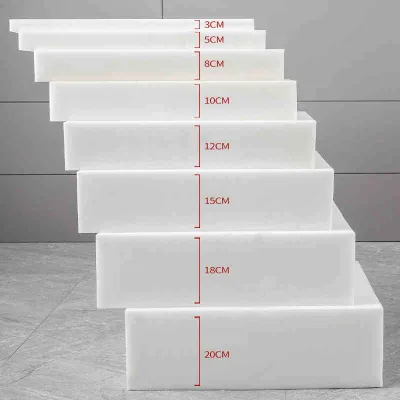
Prices are valid at publication and may change. Please refer to the product page for the latest price.
| Material | Firmness Level | Support Type | Durability | Best Use Case |
|---|---|---|---|---|
| High-Density Foam | Very High | Rigid and consistent | High | Budget-friendly, maximum rigidity, traditional solid feel |
| Dunlop Latex | High to Very High | Resilient and bouncy | Very High | Eco-conscious buyers, humid climates, long-lasting responsive support |
| Memory Foam | Low | Contouring and sinking | Medium | Pressure relief only as a thin top layer; avoid as a solid core |
Understanding Firmness and Support in Sofa Cushions
Many consumers mistakenly equate foam density with firmness, assuming a “high-density” foam is automatically hard to the touch. In the manufacturing world, density refers purely to the weight of the material per cubic foot (or cubic meter), which serves as a primary indicator of durability and quality. Firmness, on the other hand, is independent of density; it is possible to manufacture a high-density foam that is incredibly soft, or a low-density foam that feels stiff initially but degrades rapidly.

In Singapore and other metric-using regions, density is typically measured in kilograms per cubic meter (kg/m³), while imperial markets use pounds per cubic foot (lb/ft³). A high-quality polyurethane foam suitable for firm, durable seating should ideally have a density of at least 35 kg/m³ (equivalent to roughly 2.2 lb/ft³). This density ensures that the microscopic cell walls within the foam are thick and robust enough to withstand repeated compression without collapsing.
To verify the actual hardness of a cushion before purchase, check for the Indentation Load Deflection (ILD) or Indentation Force Deflection (IFD) rating. This metric represents the number of pounds of pressure required to compress a four-inch thick sample of foam by 25 percent. A higher ILD rating (typically 35 to 45 or above for sofa seating) indicates a firmer feel. When shopping online or in local showrooms, look for explicit manufacturer classifications such as “firm,” “extra firm,” or “high-density firm (HDF)” rather than assuming density alone guarantees a hard surface.
The ultimate feel of your seating is not determined by the cushion alone. The underlying suspension system plays a critical role. A firm cushion placed over a rigid wooden platform or tightly stretched, non-elastic webbing will feel significantly harder than the same cushion placed over flexible sinuous steel springs or soft pocket coils. Additionally, a tightly upholstered cover restricts the cushion’s ability to expand laterally under weight, which naturally increases the perceived firmness of the seat.
High-Density Foam: The Benchmark for Firm Support
High-density polyurethane foam features a tightly packed, uniform cellular structure. When weight is applied, these closed or semi-open cells compress evenly, distributing the load across a broad surface area. This structural behavior prevents localized deep sinking, maintaining a flat, stable plane that supports the body’s natural posture. For individuals seeking a traditional, unyielding “hard” sofa cushion, this material provides the most predictable resistance.
When exploring high-density options, you will likely encounter standard polyurethane foam and High-Resiliency (HR) foam. Standard high-density foam is highly cost-effective and offers a very flat, rigid support profile. However, HR foam represents an upgraded tier. It uses a different chemical formulation that results in a more random, open-cell structure. This random cell pattern allows HR foam to recover its shape instantly, offering a more dynamic, comfortable firm support that mimics the elasticity of latex while retaining the structural stability of polyurethane.
Unlike temperature-sensitive materials, high-density polyurethane foam maintains a consistent level of firmness regardless of the ambient climate. Whether your living room is cooled by air conditioning to 22 degrees Celsius or sits at Singapore’s natural ambient tropical temperature, the foam behaves identically. It does not require a warming-up period to become comfortable, nor does it stiffen excessively in cooler drafts, ensuring a reliable seating experience at all times.
Investing in high-density foam (typically rated at 1.8 to 2.5 pounds per cubic foot or higher) ensures that the cushion retains its structural integrity over years of heavy daily use. Lower-quality, low-density foams quickly lose their internal cell walls under repetitive compression, leading to localized sagging and a rapid loss of firmness. High-density foam resists this degradation, maintaining its original height and firm support characteristics for a prolonged lifespan.
While highly supportive, standard high-density foam can feel unforgivingly stiff to those accustomed to plush seating. It lacks the natural elasticity and springiness found in latex, which some users describe as a “dead” or flat feel. Additionally, conventional polyurethane foam has limited natural breathability; without specialized open-cell engineering or cooling gel infusions, it can trap body heat over extended periods, making it less comfortable during humid afternoons.
Latex: Resilient, Natural, and Conditionally Firm
Latex offers a distinct alternative to synthetic foams by providing a highly resilient, springy support system. Rather than simply resisting weight like polyurethane, latex actively pushes back against pressure. This creates a buoyant sensation where the user sits “on” the cushion rather than “in” it, offering firm support without the rigid, unyielding sensation of hard foam. It is ideal for those who want structural firmness combined with active responsiveness.
When sourcing latex for a firm sofa cushion, understanding the manufacturing process is critical. Dunlop latex is produced by pouring liquid latex sap into a mold, baking it, and washing it. During this process, natural sediments settle toward the bottom, resulting in a denser, heavier, and significantly firmer product that is perfect for supportive seating. Talalay latex, conversely, involves a vacuum and flash-freezing step that creates a highly uniform, airy, and much softer structure, which is entirely unsuitable for a hard cushion requirement.
Natural Dunlop latex is highly prized for its environmental credentials and longevity. Derived from the sap of rubber trees, it is naturally hypoallergenic, antimicrobial, and resistant to dust mites and mold—a crucial benefit in Singapore’s humid tropical climate. Its open-cell structure allows for excellent air circulation, dissipating heat and moisture much more effectively than standard synthetic foams, keeping the seating surface cool.
Despite its benefits, latex has notable practical trade-offs. It is substantially heavier than polyurethane foam, making cushion covers harder to remove and wash. It is also a premium material, often costing significantly more than synthetic alternatives. Furthermore, because latex has an inherent elasticity, even a “firm” Dunlop latex cushion will feel springier and less rigid than an equivalent extra-firm polyurethane foam cushion, which buyers must factor into their personal comfort preferences.
Memory Foam: Why It Falls Short for a "Hard" Feel
Memory foam, or viscoelastic polyurethane foam, is engineered to do the exact opposite of a firm cushion: it is designed to yield. Under the combination of body weight and body heat, memory foam softens and contours precisely to the shape of the user. This pressure-relieving property is excellent for medical mattresses but counterproductive for anyone seeking a firm, stable, and hard sofa surface.
The term “viscoelastic” combines two distinct physical properties: viscosity (the resistance to flow or gradual deformation) and elasticity (the ability to return to original shape). Memory foam is engineered by adding specific chemical agents to polyurethane, which slows down its recovery time and makes it highly sensitive to temperature. When you sit on memory foam, your body heat lowers the material’s “glass transition temperature,” causing the polymer chains to slide past one another and conform to your body shape. While this is highly beneficial for pressure relief in medical settings, it is the exact opposite of what is required for a firm, supportive sofa.
Because memory foam allows for deep sinking, it creates a cradling effect that distributes weight but restricts movement. On a sofa, this deep sink makes shifting positions, sliding across the seat, or standing up physically demanding. Instead of supporting the body on a flat plane, memory foam envelops the user, which can feel restrictive and lacks the structural boundary required for upright, active seating.
The physical properties of memory foam are highly dependent on temperature. In a warm, humid environment, memory foam softens rapidly, losing what little initial firmness it possessed. If your home transitions between air-conditioned cooling and natural ventilation, the sofa’s feel will shift dramatically, becoming uncomfortably soft and unsupportive on warm days.
While memory foam should never be used as the solid core of a firm sofa cushion, it can serve a purpose when applied correctly. Manufacturers sometimes use a very thin layer (typically one inch or less) of memory foam laminated over a thick, high-density polyurethane foam core. This hybrid construction provides a touch of surface contouring to relieve immediate pressure points while relying on the underlying high-density foam to deliver the necessary structural firmness and prevent bottoming out.
How to Choose the Right Firm Cushion for Your Sofa
To simplify your purchase, evaluate your primary goals against these specific material profiles:
- Choose High-Density Foam if: You require the absolute firmest, most rigid, and flat seating surface possible, prefer a traditional solid feel without bounce, and want a highly cost-effective solution.
- Choose Dunlop Latex if: You want a firm but highly responsive, bouncy feel, prioritize natural and eco-friendly materials, require superior heat dissipation for a humid climate, and have a flexible budget.
- Avoid Memory Foam if: Your main objective is to prevent sinking, maintain an upright sitting posture, and ensure easy mobility when getting up from the sofa.
When purchasing firm cushions, always request a physical sample or visit a local showroom to test the materials in person. If buying online from regional suppliers or local retailers, carefully verify the return and exchange policies. Look for specific ILD ratings or ask the seller directly for the foam’s density and firmness specifications, as terms like “heavy-duty” or “orthopedic” are often used loosely in marketing materials.
Budget is another important factor when deciding between these materials. In Singapore, high-density polyurethane foam is the most economical option, typically costing between S$50 and S$120 per cushion insert depending on the thickness and dimensions. Dunlop latex is a premium investment, with high-quality natural inserts ranging from S$180 to S$350 or more per cushion. While the initial cost of latex is higher, its exceptional durability—often lasting up to 15 years compared to the 5 to 8 years of standard high-density foam—makes it highly cost-effective over the long term.
Before finalizing your order, always consult your sofa manufacturer’s care and assembly instructions to ensure compatibility with replacement cushions. Factor in the thickness of the cushion and the style of your sofa base. A thin, firm cushion (e.g., 5 to 8 centimeters) placed on a solid wood or metal frame will feel exceptionally hard, whereas a thicker cushion (e.g., 12 to 15 centimeters) over a flexible spring suspension will offer a more balanced, supportive feel. Always verify that any new cushion insert matches the exact internal dimensions of your existing cushion covers to prevent bunching or loose fabric, which can compromise both comfort and appearance.
Community discussion
Share your experience or ask a question. Comments are reviewed before publication.