
Quick Answer: Hollow vs Traditional Frames
Choosing between a hollow frame and a traditional frame depends primarily on the medium of your artwork and the visual effect you want to achieve. A hollow frame, commonly referred to as a floater frame, is designed without glass or acrylic glazing, leaving a distinct recessed gap between the inner edge of the frame and the artwork. This style is highly recommended for gallery-wrapped canvases, heavily textured paintings, and modern interior aesthetics where you want to emphasize the physical depth and painted edges of the canvas.
Conversely, a traditional frame utilizes a standard protective barrier of glass or acrylic glazing, backed by a solid mounting board and often bordered by an elegant mat board. This configuration is strictly necessary for paper prints, photographs, watercolours, and delicate works on paper that require physical protection from dust, moisture, and ultraviolet light. Selecting the wrong frame type can lead to accelerated degradation of paper art or unnecessary weight and visual clutter on a canvas.
Understanding the Basics: What Is a Hollow Frame?
To make an informed decision, it is essential to understand the structural anatomy of these two framing styles. A hollow frame is engineered specifically for stretched canvas or wood-panel artworks. Unlike standard frames, a hollow frame features an L-shaped or T-shaped profile. The artwork is inserted from the front and secured from the back using offset clips, brackets, or screws. This mounting technique creates a visible, uniform gap—typically ranging from 5mm to 10mm—between the outer perimeter of the canvas and the inner wall of the frame. This gap generates a shadow line, giving the illusion that the artwork is suspended or floating within the frame without touching it.
Products mentioned in this guide
![[SG Supper Offer ] Hollow 3CM Wooden Photo Frame for Dry Flower Frame Specimen Shadow Box Valentines Day Gift Wooden Photo Frames Christmas Teachers day Gift](https://img.lazcdn.com/g/p/a717cd09dfce44d072105b1b06c8b844.jpg_400x400q80.jpg_.webp)
![[SG Supper Offer ] Hollow 3CM Wooden Photo Frame for Dry Flower Frame Specimen Shadow Box Valentines Day Gift Wooden Photo Frames Christmas Teachers day Gift](https://img.lazcdn.com/g/p/6a5fbfed8d51d7cbbcac798590e7d7de.jpg_400x400q80.jpg_.webp)
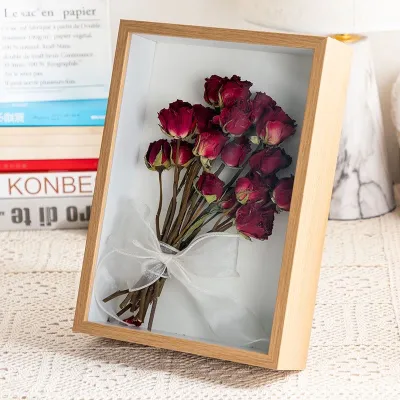
![[SG Stock]3D hollow 5cm Wooden Glass photo Frame Shadow Box Display Case dried flowers Birthday Valentines Day Gift Christmas gift](https://img.lazcdn.com/g/p/da58155c984483b0363dd44b0d1874a5.jpg_400x400q80.jpg_.webp)
![[SG Stock]3D Simple hollow 3cm Frame Wooden Glass Shadow Box Display Birthday Valentines Day present Gift](https://img.lazcdn.com/g/p/adfbe60efe3a5dfc179d8705841532ca.jpg_400x400q80.jpg_.webp)
![SG Stock [Time Sale] Wooden Photo Frame Hollow 1cm Picture Frame Graduation Photos Art Display Frame Teachers Day Gift](https://img.lazcdn.com/g/p/76ee2150f427e0bc7e997c088dc5f6d2.jpg_400x400q80.jpg_.webp)
Prices are valid at publication and may change. Please refer to the product page for the latest price.

A traditional frame relies on a U-shaped channel called a rabbet. The components are layered from front to back: first the glazing (glass or acrylic), followed by the mat board, the artwork itself, a backing board, and finally a securing mechanism like point drivers or flexible tabs. The inner lip of the traditional frame’s moulding overlaps the front edge of the artwork by a few millimeters to hold the entire assembly in place. This classic configuration ensures that the artwork is completely sealed and protected from the surrounding room environment, but it also means the outer edges of the art are obscured by the frame’s lip.
Visual Impact: Matching Your Frame to Your Room Aesthetic
The frame you select acts as a visual bridge between the artwork and your interior decor, significantly altering how a room feels. Hollow frames deliver a highly contemporary, minimalist, and gallery-like aesthetic. By leaving the canvas face and its painted or raw edges completely exposed, the hollow frame emphasizes the physical presence of the medium. The negative space created by the shadow gap adds a layer of sophisticated depth, drawing the viewer’s eye inward while maintaining a clean, unencumbered border. This style is particularly well-suited for modern Singapore homes, such as newly renovated HDB flats and contemporary condominiums, where space-saving layouts benefit from clean lines, Scandinavian simplicity, or industrial design themes.
Traditional frames offer a more structured, finished, and historically classic presentation. The addition of a mat board provides crucial visual “breathing room,” separating the artwork from the frame moulding and allowing complex or detailed images to stand out. The choice of moulding—ranging from sleek, modern metal to ornate, gilded wood—allows traditional frames to complement classic, transitional, or eclectic interior styles. In spacious landed properties or larger apartment layouts in Singapore, traditional frames can add a sense of grandeur, scale, and traditional elegance, transforming a simple print into a substantial focal point.
Artwork Compatibility: Canvas vs Paper and Prints
The medium of your artwork dictates the technical framing requirements to prevent long-term damage. Canvas art, whether it is an original oil painting, an acrylic piece, or a high-quality giclée print, is structurally rigid because it is stretched over a wooden support frame. This rigidity makes it perfect for hollow frames. Stretched canvas needs to breathe; sealing it behind glass in a traditional frame can trap ambient moisture against the paint layer, potentially leading to mold growth or canvas rotting over time. Furthermore, a hollow frame preserves the three-dimensional texture of thick paint strokes, such as impasto, which would otherwise be flattened or obscured by glass.
Paper prints, photographs, posters, and delicate works like charcoal drawings or watercolours lack inherent structural rigidity. If left unframed or placed in an open frame, paper will warp, cockle, and sag due to fluctuations in ambient humidity. Traditional frames are mandatory for these mediums. The glazing protects the delicate paper fibers from airborne pollutants and physical touching, while the mat board prevents the paper from directly contacting the glass. If paper touches the glazing, condensation can cause the ink or emulsion to stick permanently to the glass, ruining the artwork.
For mixed media, heavy 3D collages, or memorabilia like sports jerseys, neither a standard hollow frame nor a shallow traditional frame is sufficient. In these scenarios, a deep shadow box—which is a specialized variation of a traditional frame featuring deep side walls and a glass cover—is required to accommodate the physical depth of the object while keeping it sealed and protected.
Protection and Maintenance: Dealing with Dust and Humidity
Singapore’s tropical climate presents unique challenges for art preservation, characterized by consistently high relative humidity levels and intense equatorial sunlight. Traditional frames offer superior protection against these environmental stressors. When properly assembled with a sealed backing board and UV-filtering acrylic or museum-grade glass, a traditional frame creates a shielded microclimate. This barrier significantly slows down the penetration of moisture and blocks up to 99% of destructive UV rays, preventing paper yellowing and ink fading.
Hollow frames, being completely open to the air, offer very little environmental protection. The canvas surface and the recessed gap are fully exposed to dust, humidity, and light. Over time, dust and airborne grease can settle into the textured valleys of a canvas painting and accumulate within the hollow gap around the edges.
To maintain artwork in a hollow frame, regular, gentle cleaning is necessary. You should use a very soft, dry brush—such as a professional goat-hair art brush—to sweep dust out of the recessed gap and off the canvas surface. Avoid using liquid cleaners, damp cloths, or household feather dusters, which can snag on paint texture or leave residue. For traditional frames, maintenance is focused on the glazing. Clean the glass or acrylic using a microfibre cloth lightly misted with a specialized, non-ammonia glass cleaner. Always spray the cleaner onto the cloth first, rather than directly onto the frame, to prevent liquid from seeping under the frame lip and damaging the mat board or artwork.
Cost, Sizing, and Installation Considerations
Budgeting, measuring, and physical installation are practical realities that influence your framing decision. Traditional frames generally occupy a wider pricing spectrum, ranging from budget-friendly, mass-produced frames (starting around S$30 to S$60) to high-end, custom-crafted options that can exceed S$400. The cost of traditional framing is heavily driven by the choice of glazing; standard float glass is affordable, but museum-grade, anti-reflective, UV-blocking acrylic is a premium material that increases the overall price significantly. Hollow frames are structurally simpler, but because canvases come in non-standard depths, they often require custom sizing. Expect to pay between S$80 and S$250 for a quality wood or aluminum floater frame from a local Singapore framing shop.
When measuring for a hollow frame, you must measure the exact width, height, and depth of your stretched canvas. The frame’s interior depth should match or be slightly deeper than the canvas thickness so the artwork does not protrude past the front face of the frame. You must also decide on the gap size, typically adding 10mm to 20mm to both the total width and height measurements to accommodate a 5mm to 10mm float space on all sides. For traditional frames, measuring must account for the mat board width (usually 50mm to 80mm per side) and the frame’s rabbet overlap, which typically covers about 5mm of the artwork’s outer edge.
Installation requirements also differ due to weight. Traditional frames with glass glazing are heavy and require secure wall anchoring. In Singapore, residential walls are often constructed of solid concrete or structural brick. Hanging a heavy traditional frame on these walls requires a rotary hammer drill, masonry drill bits, plastic wall plugs (such as size 6 or 8), and heavy-duty screw hooks. Hollow frames are significantly lighter because they lack glass, making them easier to mount. They can often be hung securely on concrete walls using specialized hard-wall plastic hooks with small steel pins, minimizing wall damage, though heavy canvases should still rely on anchored screws for safety.
Decision Framework: Which Should You Choose?
To simplify your final selection, evaluate your artwork and room environment against this structured checklist before purchasing your framing materials.
Choose a Hollow Frame if:
- Your artwork is a stretched canvas, canvas print, or rigid wood panel.
- The artwork features painted edges or a continuous design that you want to keep fully visible.
- You prefer a modern, minimalist, or gallery-style visual presentation with distinct shadow lines.
- The room has stable environmental conditions, and the artwork is not highly sensitive to ambient dust or indirect light exposure.
- You want a lightweight framing solution that is easier to hang on standard walls.
Choose a Traditional Frame if:
- Your artwork is on paper, such as a photograph, fine art print, poster, watercolour, or sketch.
- The artwork requires physical protection from dust, insects, skin oils, and high humidity.
- You want to use a mat board to give the artwork visual breathing room and enhance its scale.
- The artwork will be displayed in an area with high light exposure, requiring UV-blocking glazing to prevent fading.
- You prefer a classic, finished, or decorative border that complements traditional or transitional home decor.
Verify First if:
- The artwork is of high financial or sentimental value; in this case, consult a professional conservation framer to ensure acid-free, reversible mounting techniques are used.
- The piece has highly irregular dimensions, fragile three-dimensional attachments, or extreme thickness, which may require a custom-built shadow box rather than a standard hollow or traditional frame.
- The wall where you plan to hang the art can support the weight of heavy glass glazing, particularly when dealing with large-format traditional frames.
Frequently Asked Questions (FAQ)
Can I put a paper print in a hollow frame?
It is highly discouraged to place an unprotected paper print directly into an open hollow frame. Paper lacks the structural rigidity of canvas and will quickly warp, sag, or buckle when exposed to Singapore’s humid air. Furthermore, without protective glass or acrylic glazing, paper is highly vulnerable to dust, moisture, insect damage, and rapid UV fading. If you love the floating look for a paper print, a better alternative is to float-mount the paper print inside a deep traditional frame or shadow box behind protective glazing, using acid-free spacers to keep the paper away from the glass.
Do hollow frames protect against high humidity?
No, hollow frames do not provide any protection against high humidity because they lack a sealed backing and front glazing. The artwork remains entirely exposed to the ambient indoor climate. While canvas and acrylic paints are generally more resilient to moisture than delicate paper, prolonged exposure to high humidity in Singapore can still lead to mold growth on the canvas backing or warping of the wooden stretcher bars. To mitigate this risk, avoid hanging hollow-framed art in high-humidity areas like bathrooms or kitchens, and ensure the room has adequate ventilation or regular air conditioning.
What is the difference between a hollow frame and a shadow box?
While both frames handle depth, they serve different structural purposes. A hollow frame (or floater frame) is an open-faced frame designed for canvases, featuring a visible gap around the sides of the artwork and no front glass. A shadow box is a fully enclosed traditional frame with a deep profile, a solid backing, and a glass or acrylic front. Shadow boxes are designed to protect and display three-dimensional objects, memorabilia, or delicate textured art by keeping them sealed away from dust and physical contact.
Community discussion
Share your experience or ask a question. Comments are reviewed before publication.