
Evaluating whether a Hooga reed diffuser is the right choice for your home depends heavily on your specific aesthetic preferences, room conditions, and scent expectations. There is no single brand that reigns as a universal performance winner; instead, determining the best option requires examining specific product lines, ingredient lists, and batch formulations. Hooga diffusers are highly suitable for those who prioritize seamless aesthetic integration with modern home decor and value the convenience of accessible physical retail stores across Singapore. However, if your priority lies in sourcing niche artisanal scents, verifying specific eco-certifications, or utilizing high concentrations of pure essential oils, alternative specialty brands may serve your needs better.
Core Dimensions for Comparing Reed Diffusers
To make an informed comparison between Hooga and other reed diffuser brands, you must look beyond packaging and marketing claims. The performance of any reed diffuser is governed by three core dimensions: scent throw mechanisms, longevity factors, and design functionality.
Scent throw—the distance and intensity with which a fragrance travels—is primarily determined by the carrier liquid and the porosity of the reeds. Solvent-based liquids, which often use alcohol or glycol ethers, behave differently than pure essential oil blends. While solvents help disperse fragrance rapidly into the air, pure essential oils require specific carrier bases to climb the reeds effectively. The reeds themselves act as the delivery system; their material and internal structure dictate how much liquid is drawn up and evaporated.
Products mentioned in this guide
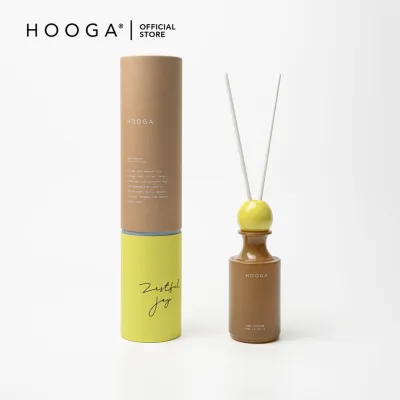
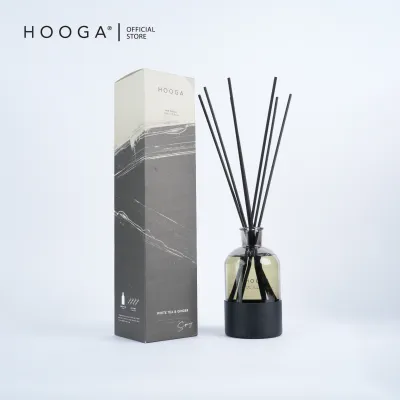
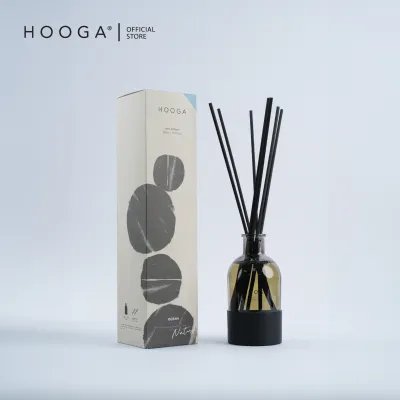
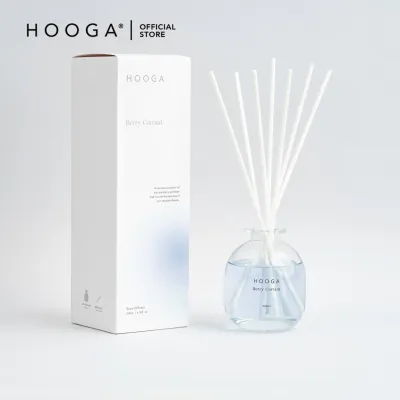
![[ONLINE EXCLUSIVE] Hooga SCENTFUL LIVING Reed Diffuser 180ml | Home Fragrance](https://img.lazcdn.com/g/p/8317d46b06101cb0c714d6b274a8b012.jpg_400x400q80.jpg_.webp)
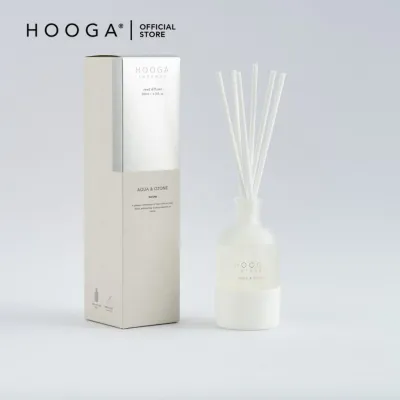
![[6 NEW SCENTS] Hooga Black Series Reed Diffuser 200ml](https://img.lazcdn.com/g/p/1ffd8c3f6be39df0f302c26adff3be23.jpg_400x400q80.jpg_.webp)
![[KIRONA SCENT] (BUY 1 FREE 1) Spa Black Reed Diffuser 110ml | Aromatherapy Home Fragrance & Decor](https://img.lazcdn.com/g/p/c7b4fe702d4683ff6ad4a3edc200260a.png_400x400q80.png_.webp)
Prices are valid at publication and may change. Please refer to the product page for the latest price.
Longevity is another critical dimension. The total lifespan of a diffuser is a product of its total liquid volume, the baseline evaporation rate of the carrier mixture, and the ambient room conditions. In Singapore’s warm, humid climate, evaporation rates can accelerate significantly, especially when diffusers are placed near open windows, air conditioning units, or high-traffic pathways.
Finally, aesthetic and functional design elements play a major role in long-term satisfaction. A well-designed diffuser features a stable vessel with a low center of gravity to prevent accidental spills. The quality of the reeds determines whether they will warp or clog over time, while the sustainability of the packaging and the availability of refills reflect the brand’s environmental footprint and long-term usability.
How to Evaluate Scent Throw and Longevity
Verifying how well a reed diffuser will perform in your living space requires a close inspection of product labels and physical characteristics. You do not have to rely on trial and error; instead, look for specific indicators on the packaging and the product itself.

First, check the ingredient list for the type of carrier solvent used. Alcohol-based solvents are highly volatile, meaning they evaporate quickly. This results in a strong, immediate scent throw that can easily fill a medium-sized room, but it also means the liquid will deplete rapidly. Conversely, oil-based carriers, such as dipropylene glycol (DPG) or isopropyl myristate (IPM), offer a slower, more sustained release. These formulations provide a subtle, consistent background aroma and last much longer, making them ideal for spaces where you want a continuous, non-overwhelming scent.
Second, inspect the reed material provided in the set. Natural rattan reeds contain tiny, open channels that draw liquid up naturally, but they can occasionally clog if the fragrance oil is highly viscous. Synthetic fiber reeds are engineered to have uniform porosity, which often leads to a faster and more consistent scent throw, though they may draw down the liquid faster. Always verify the manufacturer’s recommended number of reeds for the vessel size; using too many reeds in a small bottle accelerates evaporation without significantly improving the scent experience.
Third, observe the viscosity of the liquid inside the bottle. Thinner, highly fluid liquids often indicate a higher concentration of volatile solvents, whereas thicker, more viscous liquids suggest a higher concentration of oils. Cross-reference the manufacturer’s stated lifespan estimates with your specific room size and ventilation. A diffuser rated for three months in a closed, cool room may only last six weeks in a well-ventilated, sunlit living room in Singapore.
Assessing Value and Cost Efficiency
Determining the true cost of ownership of a reed diffuser involves looking past the initial retail price tag. To evaluate value accurately, you should calculate the cost per milliliter (S$ / ml) of the product.
Start by comparing the price of the initial starter kit—which includes the decorative glass vessel, reeds, and fragrance liquid—against the cost of subsequent refill pouches or bottles. Brands that offer high-volume refill options allow you to reuse your original glass vessel indefinitely, significantly lowering your long-term cost per milliliter. If a brand does not offer refills, you are forced to pay for a new glass bottle every time, which is neither cost-effective nor environmentally friendly.
Next, factor in the cost and local availability of replacement reeds. Reeds naturally degrade, collect dust, and become clogged with oil residue over time, usually requiring replacement every few months to maintain optimal scent throw. If replacement reeds are expensive or difficult to source locally in Singapore, the overall maintenance cost of your diffuser setup will rise.
Finally, weigh the upfront retail price against the expected frequency of liquid top-ups. In Singapore’s tropical climate, high ambient temperatures and the frequent use of air conditioning can dry out reeds and speed up evaporation. A cheaper diffuser that evaporates within a few weeks may ultimately cost more annually than a premium, slow-evaporating formulation that requires fewer replacements throughout the year.
Decision Framework: Choosing the Right Diffuser
To choose the ideal reed diffuser for your home, align your selection with your specific spatial needs, lifestyle preferences, and health considerations.
You should choose Hooga if you prioritize accessible home decor aesthetics and want a diffuser that doubles as a stylish visual accent. Hooga’s design philosophy blends seamlessly with contemporary, minimalist, or Scandinavian-themed interiors. Additionally, if you prefer the convenience of browsing scents in person before purchasing, Hooga’s widespread retail presence in major Singapore shopping malls makes it easy to evaluate fragrances firsthand. Their formulations are generally well-suited for providing a balanced, ambient background scent in standard living areas, bedrooms, or entryways.
On the other hand, you should look toward alternative brands if your primary goal is clinical-grade aromatherapy or if you seek highly concentrated, niche, or complex artisanal fragrances. If you require specific product certifications—such as organic, vegan, cruelty-free, or fully traceable ingredient sourcing—specialty home fragrance brands will better meet those standards.
Before making any purchase, verify whether you or your family members have respiratory sensitivities to synthetic fragrance oils, as some commercial diffusers rely heavily on synthetic compounds. If you have pets, it is crucial to check the ingredient list for essential oils that are toxic to dogs or cats, such as tea tree, eucalyptus, or citrus oils. Lastly, if you plan to place the diffuser in a highly humid environment like a bathroom, ensure the formulation and reed type are designed to perform well without molding or losing their capillary action in damp air.
Frequently Asked Questions (FAQ)
How often should I flip the reeds in my diffuser?
To maintain a consistent scent throw, a general guideline is to flip the reeds once every one to two weeks. If you notice the fragrance fading or if you are preparing the room for guests, flipping the reeds provides an immediate boost of scent intensity. However, avoid flipping them too frequently, such as daily, as this accelerates the evaporation of the liquid and shortens the overall lifespan of your diffuser. Over time, reeds will collect airborne dust and become fully saturated with oil, preventing them from drawing up fresh liquid. If the reeds feel greasy to the touch, look dusty, or fail to release scent even after being flipped, they are clogged and require complete replacement rather than another flip.
Can I mix different reed diffuser refills or use my own essential oils?
It is highly discouraged to mix different commercial reed diffuser liquids or combine them with your own essential oils. Commercial diffuser liquids are carefully formulated with specific ratios of fragrance oils and carrier solvents to ensure stability and consistent evaporation. Mixing different brands or formulas can disrupt this balance, leading to chemical separation, cloudiness, or an unpleasant alteration of the scent profile. Furthermore, pure essential oils cannot be used on their own in a reed diffuser; they are too dense and viscous to travel up the reeds without a carrier solvent. Attempting to dilute pure essential oils with water or unsuitable household oils will only result in clogged reeds and a complete lack of scent throw.
Community discussion
Share your experience or ask a question. Comments are reviewed before publication.