
Choosing the correct candle holder glass vessel is a critical decision that directly dictates how a candle burns and disperses its aroma. The shape, opening width, and height of the glass control the convective drafts that carry scent molecules, while the thickness of the walls regulates heat retention to determine the size of the wax melt pool. By understanding these thermal and physical dynamics, you can select a holder that transforms a weak, localized whisper of fragrance into a rich, room-filling aromatic experience.
How Heat and Airflow Create Scent Throw
To understand how a glass holder influences fragrance, you must first understand the fundamental physics of a burning candle. A candle’s scent throw—the strength and reach of its aroma—relies almost entirely on the liquid melt pool. Heat from the flame liquefies the wax, which houses the suspended fragrance oils. As the liquid wax reaches elevated temperatures, these volatile aromatic compounds evaporate into the surrounding air.
This evaporation process is driven and distributed by convection currents. The open flame heats the air immediately above it, causing that air to expand, become less dense, and rise rapidly. This upward movement creates a localized low-pressure zone that draws cooler, oxygen-rich ambient air in from the sides. This continuous loop of rising hot air and incoming cool air forms a convective draft that lifts the evaporated fragrance molecules and carries them throughout your living space.
Products mentioned in this guide
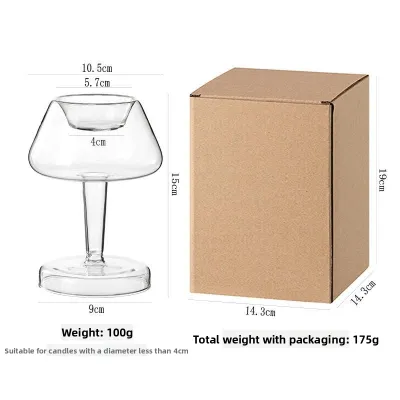
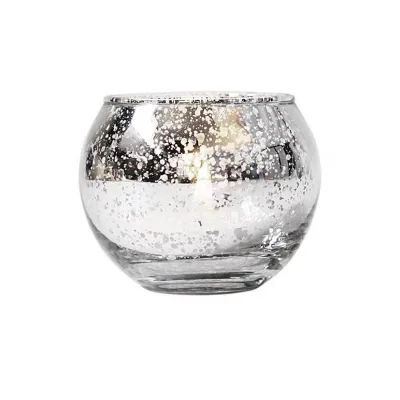
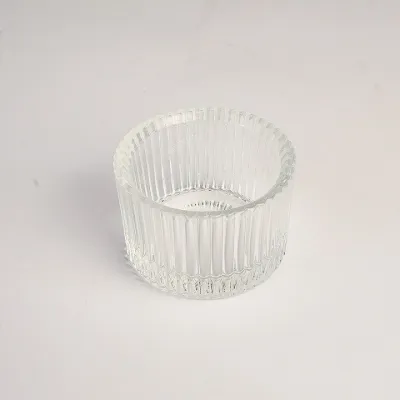
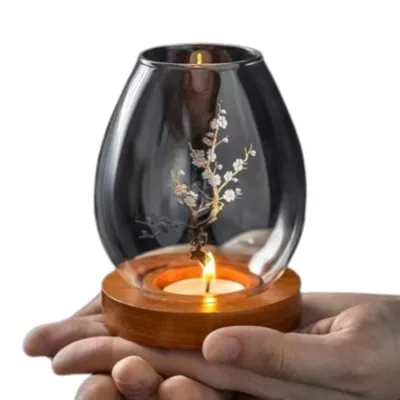
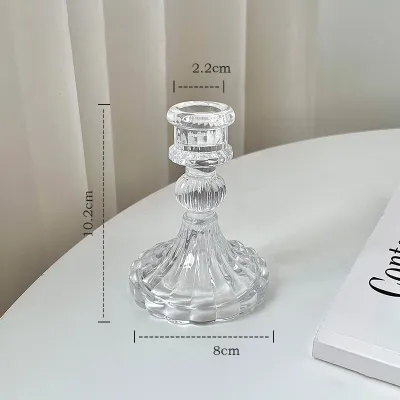
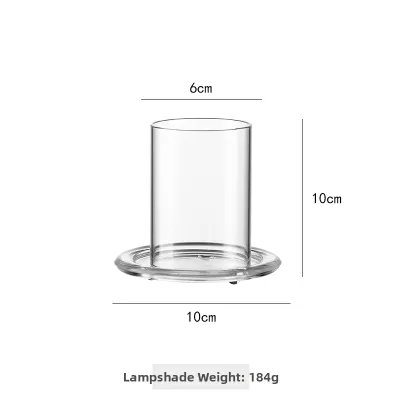
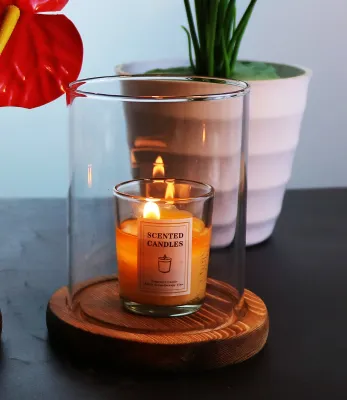
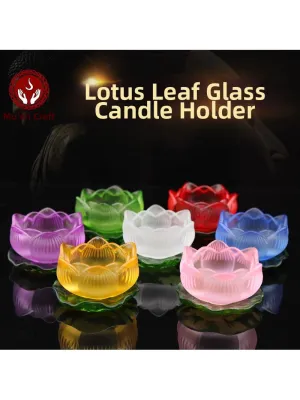
Prices are valid at publication and may change. Please refer to the product page for the latest price.
In this system, the glass holder acts as a specialized microenvironment. It does not merely sit around the candle; it actively alters the temperature of the wax pool and guides the physical path of the air currents. Depending on its design, the glass can either optimize this thermal cycle or disrupt it entirely, directly affecting how efficiently the fragrance is dispersed.
How Candle Holder Glass Shapes and Openings Direct Fragrance
The geometric design of a glass holder serves as the physical conduit for both heat and airflow. The shape of the vessel determines how air enters to feed the flame and how the resulting scent-laden draft is directed outward into your room.

Wide vs. Narrow Openings
Wide-opening glass holders allow for unrestricted ambient air intake and a broader, dome-shaped convective draft. This unrestricted flow lets the rising warm air spread outward in a wide pattern, dispersing the fragrance quickly across a large room. This setup is highly effective for rapidly scenting open-plan living areas. However, if the opening is excessively wide relative to the candle’s size, heat may dissipate too quickly from the surface, preventing the wax from melting fully to the edges.
Conversely, narrow openings restrict the volume of incoming air and concentrate the rising heat. While this concentration can melt the wax quickly, it acts like a nozzle, forcing the scent upward in a tight, rapid column rather than letting it spread horizontally. If the opening is too narrow or tapers sharply at the top, it can starve the flame of oxygen. This air starvation causes the flame to shrink, flicker, or produce soot, ultimately weakening the scent throw and leaving the candle prone to self-extinguishing.
Height and Depth Profiles
Tall, deep glass holders, such as classic hurricane glasses, act as protective chimneys. In Singapore’s typical indoor environments—where ceiling fans, standing fans, and air conditioning units create constant drafts—a tall holder shields the flame from lateral air currents. This protection ensures a stable, clean burn and prevents uneven wax consumption. However, if the holder is exceptionally deep and has a restricted opening, heavy fragrance oils can cool and condense on the inner glass walls before they can escape, trapping the scent inside the vessel.
Shallow, low-profile glass holders offer virtually no resistance to the rising scent draft. The evaporated fragrance oils spill over the shallow rim almost immediately, making these holders ideal for quick, localized fragrance delivery. They are perfect for small, static environments like a study desk or a compact bathroom. The primary trade-off is their lack of draft protection; even a mild breeze from an open window or an air conditioner vent can cause the flame to dance, leading to soot production and uneven tunneling.
How Glass Thickness Controls Heat and Melt Pools
While shape directs the airflow, the physical thickness of the glass walls dictates the thermal environment within the holder. Glass is a poor conductor of heat, meaning its thickness plays a major role in trapping or releasing the thermal energy generated by the flame.
Thin-Walled Glass for Controlled Scent
Thin-walled glass holders have very low thermal mass, allowing heat to pass through the glass and dissipate rapidly into the surrounding room. In air-conditioned spaces where the ambient temperature is kept cool, this rapid heat loss cools the outer perimeter of the candle vessel. As a result, the wax near the glass walls struggles to reach its melting point, which can lead to tunneling—a state where the candle burns straight down the center, leaving a thick ring of wasted wax.
This rapid heat dissipation results in a smaller, shallower liquid melt pool. Because the surface area of the liquid wax is restricted, the rate of fragrance evaporation is naturally lower, yielding a milder, more controlled hot throw. This makes thin-walled glass an excellent choice for smaller, enclosed rooms or for individuals who prefer a subtle, non-overwhelming aromatic background.
Thick-Walled Glass for Maximum Diffusion
Thick-walled glass acts as a high-performance thermal insulator. It absorbs the radiant heat from the flame and stores it, slowly radiating that warmth back inward toward the candle. This continuous thermal feedback loop keeps the internal temperature high and uniform, encouraging a deep, wide melt pool that extends completely to the edges of the vessel.
A larger, deeper melt pool maximizes the surface area of the liquid wax, allowing the fragrance oils to evaporate at an optimal rate. This results in a robust, powerful hot throw capable of filling large, open-concept spaces.
However, this high thermal retention introduces specific safety considerations. Thick glass holds heat for a long time after the flame has been extinguished. You must always place these heavy holders on stable, heat-resistant surfaces—such as ceramic coasters, stone trivets, or thick wooden blocks—to protect your furniture. Always allow the glass to cool completely to room temperature before attempting to touch, clean, or move it.
How to Match Glass Holders to Your Candle and Room
Selecting the ideal glass holder requires balancing the physical properties of your candle with the specific layout and airflow of your room.
Candle Size and Wick Count
Always match the inner diameter of the glass holder to the size of your candle. Multi-wick candles generate intense thermal energy and require wide, thick-walled, and certified heat-resistant glass to handle the heat safely. Ensure there is adequate clearance between the candle wicks and the glass walls. Forcing a large candle into a tight glass holder traps excessive heat, which can cause the glass to crack or shatter. Always check the candle manufacturer’s label for specific clearance recommendations.
Room Size and Airflow
For large, open-plan spaces, such as combined living and dining areas, choose a wide, thick-walled glass holder. This combination maximizes heat retention to create a large melt pool, while the wide opening allows the convection currents to distribute the fragrance widely. For smaller spaces like bedrooms, study nooks, or bathrooms, opt for a shallower or thinner-walled holder. This setup delivers a gentle, localized scent throw that prevents fragrance fatigue in enclosed areas.
Manufacturer Specifications
Before placing any candle into a glass holder, consult the manufacturer’s safety label. Pay close attention to the recommended maximum burn times (usually capped at four hours per session) and the required clearance space. If the candle manufacturer’s instructions conflict with a decorative holder’s design, prioritize the candle’s safety guidelines to prevent overheating.
Safe Usage and Maintenance for Optimal Scent
To maintain both the safety of your home and the performance of your candle’s fragrance, you must follow consistent usage and maintenance practices.
Draft Avoidance
Position your glass candle holders away from direct sources of moving air, including air conditioning vents, ceiling fans, and open windows. Uncontrolled drafts disturb the flame, causing it to flicker wildly. This erratic burning disrupts the convection current, leads to uneven heat distribution, promotes tunneling, and produces excessive black soot that can coat the inside of your glass.
Soot Management
Tall or narrow glass holders are particularly prone to carbon and soot accumulation along their inner walls due to restricted airflow. This dark residue not only looks unappealing but also absorbs radiant heat, altering the thermal dynamics of the holder. To maintain optimal heat radiation, wipe the interior of the glass with a soft, damp cloth. You must only perform this cleaning when the glass is completely cool to the touch to avoid injury or damage.
Thermal Shock and Stop Conditions
Glass is highly sensitive to rapid temperature changes, a phenomenon known as thermal shock. Never expose a hot glass holder to cold water, cold cleaning cloths, or drafty, chilled surfaces. Additionally, you must stop burning your candle when the wax level reaches the manufacturer’s specified minimum threshold—typically around 1 to 1.5 centimeters of remaining wax. Burning a candle past this point allows the flame’s heat to transfer directly to the glass base, posing a severe risk of cracking, shattering, or damaging the underlying surface.
Frequently Asked Questions (FAQ)
Can I use any glass jar or drinking cup as a candle holder?
No, you should never use standard drinking glasses, mason jars, or decorative glass vases as candle holders unless they are explicitly rated for candle use. Standard consumer glassware is not tempered or engineered to withstand the sustained, concentrated heat of an open flame. Using non-rated glass poses a high risk of thermal shock, which can cause the vessel to crack, shatter, or spill hot wax, creating a serious fire hazard. Always use glass vessels specifically manufactured and certified for candle burning.
Why does my candle smell weaker in a tall glass holder?
Tall, narrow glass holders can trap heavier fragrance oils and restrict the convective airflow needed to carry the scent out of the vessel. If the opening is too narrow, the flame may also become oxygen-starved, resulting in a weak, flickering burn that cannot generate a proper melt pool. If you experience a weak scent throw, try switching to a wider, shallower glass holder to restore proper air circulation and enhance the hot throw.
Community discussion
Share your experience or ask a question. Comments are reviewed before publication.