
Finding the right LED study lamp in Singapore involves balancing optical performance, physical adjustability, and smart features. Premium ergonomic brands focus on advanced eye-care technologies and highly adjustable arms, making them ideal for long study sessions but requiring a higher financial investment. Mid-range smart brands offer automated scheduling and app integration, providing a modern, connected experience at a moderate price point. Budget-friendly traditional brands deliver straightforward, reliable illumination with simple physical controls, serving as practical options for occasional use.
The optimal choice ultimately depends on your specific desk setup, daily study duration, and budget constraints. Because product lineups frequently update, you should verify exact model availability and current pricing in Singapore through official brand websites or authorized online retailers.
Key Specifications to Compare Across LED Study Lamp Brands
To make an objective comparison between different study lamps, you must look past marketing claims and evaluate specific technical metrics. These specifications are typically found on the product packaging, user manuals, or official manufacturer specification sheets.
Products mentioned in this guide
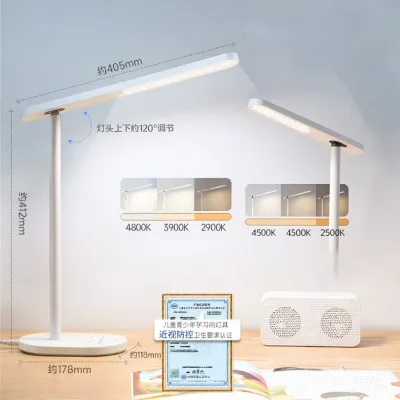
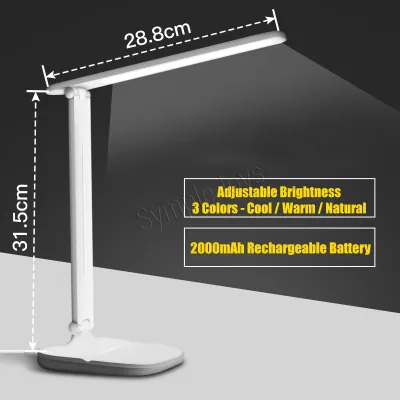
![[SG Local Stock] 2000mAh LED Table Lamp Study Foldable Desk Light Bedroom Bedside Touch Control Dimmable USB Rechargeable 台灯 CNY Gift Present](https://img.lazcdn.com/g/p/254b9aa79170e7ac80d5ab37505c1212.jpg_400x400q80.jpg_.webp)
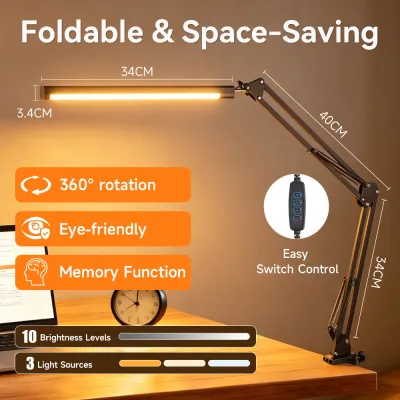
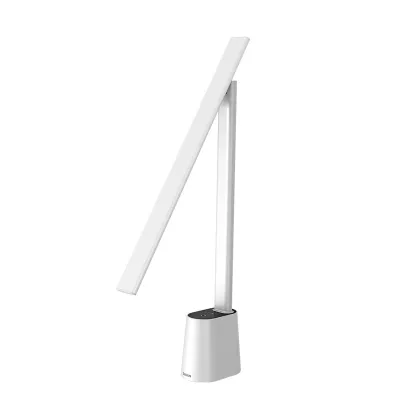
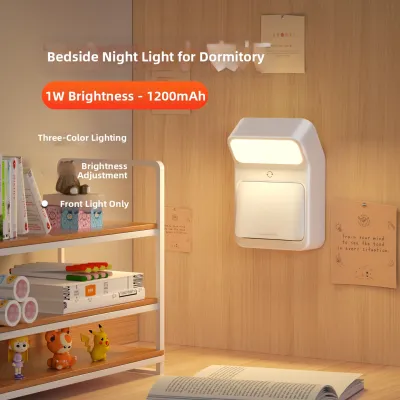
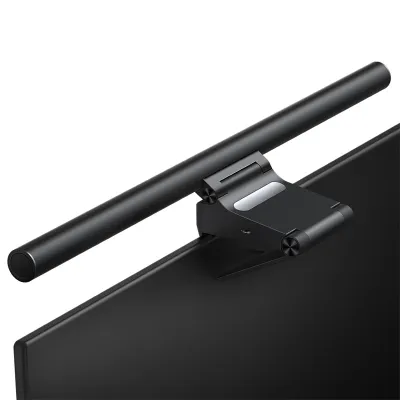
Prices are valid at publication and may change. Please refer to the product page for the latest price.
Illuminance and Uniformity Illuminance measures the intensity of light falling on your desk surface, quantified in lux. For comfortable reading and writing, a study desk generally requires an illuminance level between 500 and 1000 lux. However, high brightness alone is insufficient; uniformity is equally critical. Uniformity refers to how evenly the light spreads across your workspace. A lamp with poor uniformity creates harsh high-contrast zones of bright light and deep shadow, forcing your pupils to constantly adjust as your eyes move across the page, which rapidly leads to visual fatigue.
Color Rendering Index (CRI) and Color Temperature The Color Rendering Index, or CRI (measured as Ra), indicates how accurately a light source reveals the true colors of objects compared to natural sunlight. For student use, look for a CRI rating of Ra 90 or higher. This is especially important for students engaging in art, design, or detailed diagram work where color accuracy is essential. Color temperature, measured in Kelvin (K), dictates the warmth or coolness of the light. A versatile study lamp should offer adjustable color temperatures, allowing you to switch from a cool white light (around 5000K to 6500K) for high-focus tasks to a warmer, relaxing tone (around 2700K to 3000K) for evening reading.
Flicker and Glare Control Invisible high-frequency flickering in low-quality LEDs can cause headaches, eye strain, and general fatigue during extended study sessions. While you might not see the flicker directly, you can perform a basic check by viewing the illuminated desk through your smartphone camera; visible moving bands across the screen often indicate rapid flickering. High-quality brands design their drivers to deliver constant, flicker-free current. Additionally, effective glare control—achieved through physical diffusers, polarized filters, or asymmetric optical designs that direct light away from your eyes and computer screens—is vital for maintaining visual comfort.
Adjustability and Ergonomics A lamp must physically adapt to your study environment. Compare the physical reach of the lamp arm, the flexibility of the joints, and the rotation angle of the lamp head. If you use a large desk or study with physical textbooks alongside a computer monitor, you need a highly adjustable arm that can position the light source high enough to cover the entire workspace without casting shadows or reflecting directly off your screen.
How Premium, Mid-Range, and Budget Brand Tiers Differ
Understanding how the market is segmented helps you align your expectations with your budget. Each brand tier prioritizes different aspects of design, technology, and user experience.

Premium Ergonomic Brands Premium brands position themselves as long-term investments in eye health and ergonomic comfort. These manufacturers invest heavily in advanced optical engineering, creating lamps that deliver exceptionally uniform light distribution and highly sophisticated glare reduction. Many premium models feature built-in ambient light sensors that automatically adjust the lamp’s brightness throughout the day to maintain a consistent level of illumination on your desk. They also feature robust, multi-axis mechanical arms made of high-grade metals that allow precise positioning. The primary trade-off is the cost, as these lamps require a significant upfront investment.
Mid-Range Smart Brands Mid-range brands often focus on integrating smart home technology with reliable lighting performance. These lamps typically connect to home Wi-Fi networks, allowing students to control brightness, color temperature, and schedules via smartphone apps or voice assistants. Many of these brands offer automated study timers, such as Pomodoro technique presets, which gently dim or flash the light to signal break times. While they provide excellent value and good baseline optics, their advanced features rely on software ecosystems, meaning you must ensure your home network is stable and be prepared for occasional app updates.
Budget-Friendly Traditional Brands Budget-friendly brands focus on delivering essential illumination without the added cost of smart chips or complex mechanical joints. These lamps usually feature simple plastic or basic metal construction with physical on/off switches or basic touch sliders. While they are highly affordable and perfectly adequate for short study sessions, they often compromise on advanced optical features. You may find fewer brightness levels, limited color temperature adjustments, and simpler diffusers that might not eliminate glare as effectively as higher-tier models.
Assessing Build Quality and Long-Term Value for Students
A study lamp is an everyday tool that should ideally last throughout a student’s academic journey. Evaluating physical construction and manufacturer support before purchasing ensures your investment pays off over time.
Materials and Joint Tension Examine the physical materials used in the lamp’s construction. High-quality models utilize aluminum, steel, or heavy-duty composite polymers rather than thin, lightweight plastics. Pay close attention to the joints and hinges. A quality lamp features adjustable tension screws or robust internal counterbalances that keep the lamp head firmly in place. Lower-quality joints tend to loosen over time, causing the lamp head to droop slowly during use, which disrupts your focus and limits the lamp’s usable lifespan. Additionally, ensure the base is sufficiently weighted to prevent the lamp from tipping over when the arm is fully extended.
LED Lifespan and Replaceability Most modern LED study lamps utilize integrated LED arrays rather than screw-in bulbs. Manufacturers typically rate these integrated LEDs to last between 25,000 and 50,000 hours, which translates to many years of daily use. However, because the LEDs are permanently built into the fixture, you cannot simply replace a blown bulb. If the LED array or the internal driver fails, the entire lamp must usually be replaced. This makes choosing a brand with reliable thermal management—such as aluminum heat sinks that dissipate heat away from the LEDs—crucial for ensuring the lamp actually reaches its rated lifespan.
Warranty Terms Local warranty support is a key differentiator when purchasing in Singapore. Verify the duration of the warranty and what specific components it covers. Some brands offer comprehensive multi-year warranties that cover both the LED array and the electronic driver, while others provide only a limited one-year warranty. Ensure that the brand has an authorized local service center or distributor in Singapore to handle claims efficiently, as shipping a defective lamp back to an overseas seller can be costly and time-consuming.
Verifying Electrical Safety and Desk Compatibility
Before finalizing your choice, you must ensure the lamp is safe to operate in your home and physically compatible with your study space.
Voltage and Plug Types Singapore’s domestic electrical supply operates at 230V and 50Hz, utilizing Type G three-pin plugs. When purchasing a study lamp, especially from online marketplaces, verify that the power adapter is designed for 230V input and comes with a native Type G plug. Using uncertified travel adapters or plugging in lamps designed solely for lower voltage standards poses serious electrical and fire hazards.
Safety Marks For peace of mind, look for recognized safety certifications. In Singapore, controlled electrical appliances must carry the Enterprise Singapore Safety Mark on the power adapter or the main unit. This mark indicates that the product has been tested and certified to meet local safety standards, ensuring protection against short circuits, overheating, and electrical shocks.
Desk Footprint and Clamp Options Consider the physical layout of your study desk. Freestanding lamps with heavy bases provide excellent stability and can be easily moved around, but they occupy valuable desk space. If you have a compact desk or share a study room, look for brands that offer clamp-on bases or grommet mounts. These options secure the lamp directly to the edge of the desk, freeing up the entire surface for books, laptops, and writing materials.
Safety Boundary While most desktop study lamps are low-voltage, plug-and-play devices, safety rules still apply. If you are installing a lamp that requires fixed wiring, mounting a heavy fixture at height, or setting up lighting in a damp environment, always isolate the power supply first, strictly follow the manufacturer’s installation instructions, and consult a qualified professional to complete the work safely.
Decision Framework: Choosing the Right Brand Tier for Your Setup
To select the ideal LED study lamp brand tier, evaluate your daily habits, desk space, and budget against this practical decision framework.
Choose a Premium Brand if:
- You study or work at your desk for consecutive hours every day.
- You frequently switch between physical reading, writing, and computer screen tasks.
- You require precise control over the light's angle, height, and coverage area.
- You want advanced features like automatic ambient light dimming and maximum glare reduction.
Choose a Mid-Range Smart Brand if:
- You enjoy integrating your study tools with smart home ecosystems and voice assistants.
- You want to set automated schedules, study timers, or remote controls via a smartphone app.
- You seek a balanced combination of reliable optical performance and modern features at a moderate price.
Choose a Budget Brand if:
- Your study sessions are occasional or relatively short.
- Your desk space is limited, and you only require straightforward, localized illumination.
- You prefer simple, tactile physical controls without the complexity of apps or smart setups.
- You want to minimize your upfront expenditure while securing basic, functional desk lighting.
Verify First if:
- Your desk has non-standard edge profiles that might prevent a clamp-on lamp from mounting securely.
- You have specific visual sensitivities, such as a high susceptibility to glare or flicker, which necessitates checking detailed manufacturer specifications.
- You are purchasing from an online marketplace; always confirm the seller is authorized to ensure you receive a valid local warranty and a certified power adapter.
Frequently Asked Questions (FAQ)
Do LED study lamps consume significantly less electricity than traditional desk lamps?
Yes, LED study lamps are highly energy-efficient compared to traditional incandescent or halogen desk lamps. A typical LED study lamp consumes between 5 and 15 watts of electricity while delivering equivalent or superior brightness to a 60-watt incandescent bulb. This lower power consumption translates to reduced electricity costs over years of daily study. To determine the exact energy usage of a specific model, always check the rated wattage printed on the product label or the manufacturer’s specification sheet.
Can I use a smart LED study lamp without connecting it to Wi-Fi?
Yes, almost all smart LED study lamps can be operated manually without a Wi-Fi connection. These lamps feature physical buttons or touch-sensitive panels on the base or stem that allow you to turn the light on and off, adjust brightness levels, and cycle through preset color temperatures. However, you will not be able to access advanced smart features—such as remote app control, custom scheduling, voice commands, or automatic firmware updates—until you connect the lamp to a compatible wireless network.
Is it necessary to buy a lamp with a dedicated study mode?
A dedicated study mode is a convenient feature, but it is not strictly necessary. Study modes typically activate a pre-configured setting optimized for focus, usually combining a cool white color temperature (around 5000K) with high brightness. If a lamp does not have a dedicated preset button, you can easily replicate these conditions manually. Simply adjust the lamp’s manual controls to a bright, cool white setting when you need to focus, and dial it down to a warmer, dimmer setting for casual reading.
Community discussion
Share your experience or ask a question. Comments are reviewed before publication.