
Understanding the Expected Lifespan of Ecoya Reed Diffusers
Passive reed diffusers are a popular choice for home fragrancing because they require no electricity, flame, or active monitoring. Unlike electric oil burners or plug-in diffusers, there are no concerns regarding voltage compatibility, plug interfaces, or wattage limits. However, because they rely entirely on natural capillary action and ambient evaporation, their lifespan is not fixed. To understand how long an Ecoya reed diffuser will last, the primary step is to check the specific product packaging or official Ecoya guidelines for the manufacturer’s stated volume and estimated duration.
Ecoya offers diffusers in several sizes, most notably their standard 200ml diffuser and their smaller 50ml mini diffuser. The manufacturer’s stated lifespan is typically based on ideal, controlled laboratory conditions—usually a stable temperature, moderate humidity, and minimal airflow. For instance, a standard 200ml bottle is often estimated to last up to several months, while a mini 50ml version is designed for a shorter timeframe of a few weeks.
It is vital to recognize that these official estimates serve as a baseline rather than a guaranteed expiration date. In a real-world home environment, the actual rate of evaporation will fluctuate based on a variety of physical and environmental factors. Rather than expecting an exact number of weeks, you should use the packaging volume as a guide to calculate your baseline expectations and plan your refills accordingly.
Products mentioned in this guide
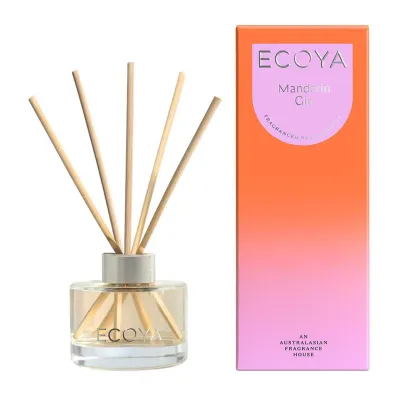
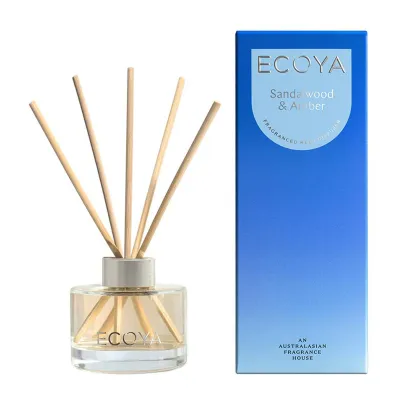
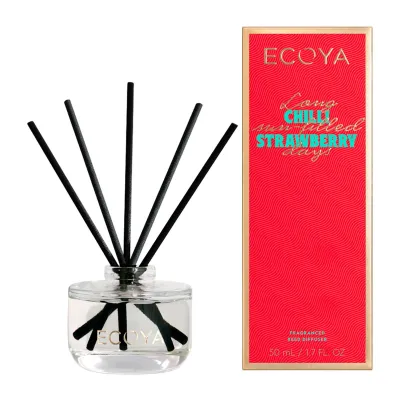
Prices are valid at publication and may change. Please refer to the product page for the latest price.
Environmental and Setup Factors Affecting Longevity in Singapore
Living in Singapore introduces specific environmental variables that directly alter how quickly fragrance oils evaporate. The tropical climate, characterized by high ambient temperatures and high relative humidity, plays a significant role in the performance of passive diffusers. In non-air-conditioned spaces, the warm indoor air naturally accelerates the kinetic energy of the fragrance molecules. This causes the oil to rise through the reeds and evaporate into the air at a much faster rate than it would in a cooler, temperate climate.

In contrast, air-conditioned indoor environments present a different set of conditions. While the cooler temperature in an air-conditioned room helps slow down the evaporation process, the air-conditioning unit also acts as a dehumidifier. Dry air has a higher capacity to absorb moisture and volatile oils, which can pull the liquid out of the reeds more rapidly. Therefore, even in a climate-controlled room, you may observe a steady and continuous depletion of the fragrance oil.
Beyond the climate, your physical setup choices directly dictate the diffusion rate. The number of reeds you choose to insert into the bottle acts as the primary control valve for oil consumption. Each reed contains microscopic channels that draw the fragrance oil upward via capillary action. When you insert the maximum number of reeds provided in the box, you increase the total surface area available for evaporation. This results in a highly intense scent throw, but it also means the oil reservoir will be depleted much faster. Reducing the number of reeds limits this capillary action, conserving the oil but reducing the overall strength of the fragrance.
Room placement is another critical variable. Positioning your diffuser near active airflow sources—such as directly in the path of a ceiling fan, near an air-conditioning vent, or next to an open window—creates a constant draft. This draft rapidly carries away the evaporated fragrance molecules, forcing the reeds to draw up more liquid to maintain equilibrium. While this setup maximizes the scent throw across a larger living space, it significantly reduces the overall lifespan of the diffuser. Tucking the bottle into a quiet, low-traffic corner with minimal drafts will preserve the oil, though it will limit the scent to a smaller, localized zone.
Actionable Tips to Maximize Your Diffuser's Lifespan
To get the most value out of your investment, you can implement several safe, low-risk maintenance steps that optimize oil consumption without compromising the sensory experience. The most common maintenance practice is flipping the reeds. This action refreshes the capillary flow by bringing the fully saturated ends of the reeds to the top, releasing an immediate burst of fragrance. However, flipping them too frequently—such as every day—will cause the oil to evaporate at an unsustainable rate. A practical guideline is to flip the reeds once a week, or only when you notice the scent throw has started to fade.
Always check the applied product’s label and the manufacturer’s care instructions before making adjustments. To protect the delicate chemical balance of the fragrance oils, keep the diffuser bottle away from direct sunlight, radiators, or any other direct heat sources. Prolonged exposure to UV light and high temperatures can degrade the premium essential oils and carrier liquids, causing them to break down, change color, and evaporate prematurely.
You can also conserve oil by matching the number of reeds to the specific room size. In smaller, enclosed areas like bathrooms, powder rooms, or study nooks, the air quickly becomes saturated with fragrance. In these spaces, using just three or four reeds is usually sufficient to maintain a pleasant aroma while effectively doubling the lifespan of the oil. For larger open-plan living areas, you can use the full set of reeds to ensure adequate coverage, accepting the faster evaporation rate as a necessary trade-off.
Over time, household dust and airborne particles will inevitably settle on the exposed portions of the reeds and the neck of the bottle. This accumulation can clog the microscopic capillary pathways, preventing the oil from rising and causing the scent to diminish even when the bottle is full. To prevent this, gently wipe the bottle neck and the top of the reeds with a dry paper towel whenever you flip them. This simple cleaning step keeps the pathways clear and ensures efficient, consistent diffusion. Always wash your hands thoroughly after handling the reeds or oil to prevent skin irritation. Additionally, place the diffuser on a protective coaster, as spilled fragrance oil can damage polished, painted, or synthetic surfaces; if a spill occurs, wipe the area immediately.
Observable Signs It Is Time to Replace or Refill
Understanding when your diffuser has reached the end of its functional life cycle prevents you from leaving an ineffective bottle on display. The most apparent signal is a permanent drop in scent throw. If you have flipped the reeds, cleared any dust, and ensured the room’s airflow is optimal, yet you still cannot smell the fragrance, the active aromatic compounds have likely fully dissipated.
Another clear indicator is a physical change in the oil itself. Over months of exposure to the air, the liquid inside the bottle may change color, turning significantly darker, or it may become cloudy and viscous. This occurs due to natural oxidation and the gradual accumulation of dust particles that travel down the reeds into the reservoir. Once the oil becomes thick or cloudy, its viscosity prevents it from traveling up the reeds efficiently, rendering the diffusion process ineffective.
It is important to distinguish between a dry bottle and clogged reeds. Occasionally, you may notice that a small amount of liquid remains at the bottom of the vessel, but the scent has completely stopped dispersing. This happens when the reeds become permanently saturated with heavier oil molecules and blocked by environmental dust. In this case, the capillary action has ceased entirely, and the remaining liquid can no longer be drawn up.
When deciding whether to purchase a refill or a completely new set, keep in mind that reeds are designed for a single life cycle. When you replenish the fragrance oil—whether using an official Ecoya refill bottle or starting a new scent—you must replace the reeds with a fresh set. Reusing old, clogged reeds with fresh oil will result in poor scent throw and can contaminate the new fragrance mixture.
Evaluating Value for Money: Is Ecoya Worth the Investment?
Evaluating whether a premium brand like Ecoya is worth the investment involves looking beyond the initial retail price. A practical way to assess this is by calculating the daily running cost. Take the retail price of the diffuser in Singapore Dollars (SGD)—which typically ranges from S$40 to S$80 depending on the size and specific collection—and divide it by the number of days the product remains active in your home. For example, a standard diffuser purchased for S$60 that lasts for approximately 90 days costs roughly S$0.67 per day to scent your home.
When compared to cheaper, mass-market alternatives, premium diffusers offer distinct advantages in performance and consistency. Mass-market options often rely on highly volatile synthetic solvents that evaporate rapidly, providing an intense but short-lived scent that fades within a couple of weeks. Ecoya utilizes carefully formulated carrier liquids combined with complex, perfume-grade fragrance oils. This formulation ensures a stable, gradual release of scent that maintains its character from the first day to the last.
Furthermore, the aesthetic value of the product should be considered. While decorative style and spatial fragrance effects are ultimately subjective, conditional preferences, the high-quality glass vessels are designed to complement modern interior decor, acting as a stylish home accessory. When you combine the sophisticated scent profiles, the consistent performance, and the decorative appeal, the daily running cost often represents excellent value for homeowners seeking a premium sensory experience.
Frequently Asked Questions (FAQ)
Can I reuse Ecoya reeds with a new fragrance oil refill?
Reusing old reeds with a new fragrance oil refill is not recommended. Over time, the microscopic capillary channels within the reeds become fully saturated with the previous oil formulation and clogged with airborne dust. If you attempt to reuse these reeds with fresh oil, the clogged pathways will severely restrict the capillary action, resulting in a very weak scent throw. Additionally, the old oil trapped inside the reeds will mix with the new fragrance, potentially altering the scent profile and causing cross-contamination. To ensure optimal performance and a clean fragrance experience, always use a fresh set of reeds whenever you refill or replace your fragrance oil.
Does adding water or carrier oil make the fragrance last longer?
You should never add water, alcohol, or unauthorized carrier oils to your diffuser bottle in an attempt to extend its lifespan. The fragrance mixture inside an Ecoya diffuser is a precisely balanced chemical formulation designed to evaporate at a specific rate and rise through the reeds efficiently. Adding water will cause the oil and water to separate, clogging the reeds and stopping the diffusion process entirely. Introducing rubbing alcohol or random carrier oils can ruin the scent profile, cause the mixture to spoil, or damage the physical structure of the reeds. If you want to extend the lifespan of your diffuser, rely on physical adjustments like reducing the number of reeds or moving the bottle to a low-draft area rather than altering the chemical formula.
Community discussion
Share your experience or ask a question. Comments are reviewed before publication.