
A reed diffuser is an elegant, low-maintenance way to keep your living space smelling fresh, but smart shoppers naturally want to know how long their investment will last. When considering a premium home fragrance option like the smell lab, the overall value depends heavily on how many weeks or months of active scent throw you can extract from a single bottle before it requires a refill. On average, a standard-sized reed diffuser can be expected to last anywhere from one to several months, but this timeline is not set in stone.
In Singapore’s unique climate, several distinct factors influence how quickly the liquid inside your diffuser evaporates. Understanding the relationship between ambient humidity, airflow, and reed maintenance allows you to make informed decisions about your home fragrance setup. By analyzing these variables, you can accurately assess whether these diffusers offer the long-term value you expect for your household budget.
Understanding the Expected Lifespan of The Smell Lab Diffusers
To establish a baseline for your home fragrance budget, you should first consult the official product packaging, inserts, or manufacturer website provided by the smell lab. Manufacturers design their fragrance blends with specific ratios of essential oils, synthetic aroma compounds, and carrier solvents, which directly influence the baseline evaporation rate. These official estimates provide a helpful starting point for understanding how many weeks of continuous scent a specific bottle volume should theoretically deliver.
Products mentioned in this guide
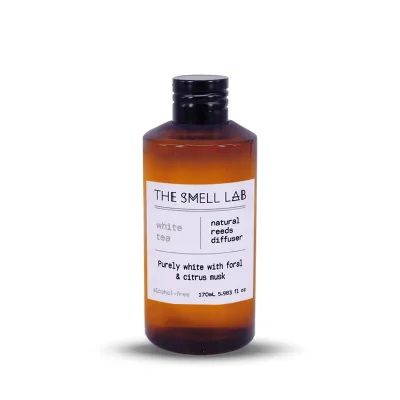
Prices are valid at publication and may change. Please refer to the product page for the latest price.
However, it is important to recognize that manufacturer-provided lifespans are typically calculated under highly controlled laboratory conditions. In these testing environments, temperature, humidity, and airflow are kept perfectly constant to ensure scientific consistency. These ideal conditions rarely match the dynamic, real-world environments of a typical household, meaning your actual results will naturally vary.
Rather than viewing the manufacturer’s estimate as a rigid expiration date, it is more practical to treat it as a flexible range. Your home’s specific layout, the room’s temperature fluctuations, and your personal usage habits will ultimately dictate how quickly the oil level drops. By treating scent longevity as a variable range, you can better manage your expectations and plan your refill purchases accordingly.
Environmental and Usage Factors That Impact Scent Longevity
Singapore's Climate and Indoor Airflow
Singapore’s tropical climate presents a unique set of challenges for passive home fragrance products. The naturally high ambient temperatures and high humidity levels characteristic of the region can significantly accelerate the evaporation rate of diffuser oils. When the air is warm, the molecules within the fragrance oil move more rapidly, causing them to escape into the air at a faster rate than they would in a cooler, temperate climate.

The widespread use of air conditioning in Singapore introduces another layer of complexity to diffuser performance. While placing a diffuser in a cool, air-conditioned room might seem like a way to slow down evaporation, the mechanical airflow and dehumidifying effects of AC units often have the opposite effect. Direct, continuous airflow from air conditioning vents strips the moisture and volatile fragrance oils from the exposed reeds very quickly, drying them out and forcing the reeds to draw up fresh oil from the bottle at an accelerated pace.
To prevent premature depletion, careful consideration must be given to where you place the glass vessel. Avoid positioning your diffuser near open windows where direct sunlight can heat the glass bottle and warm the oil inside. Similarly, placing the unit directly beneath ceiling fans, next to standing fans, or in high-traffic corridors with constant foot traffic will disrupt the gentle scent pool that naturally forms around the reeds, dispersing the fragrance too aggressively and draining the liquid much faster.
Reed Quantity and Flipping Habits
The physical mechanics of a reed diffuser rely entirely on capillary action, where the porous channels within the reeds act as microscopic straws to draw the oil upward. Because of this design, there is a direct, mathematical relationship between the number of reeds you insert into the bottle and the rate at which the fragrance oil is consumed. Using a larger number of reeds increases the total surface area available for evaporation, which produces a much stronger, more noticeable scent throw but also depletes the liquid inside the bottle far more rapidly.
Your habits regarding flipping the reeds also play a major role in determining the lifespan of the oil. Flipping the reeds upside down saturates the dry, exposed ends with fresh oil, providing an immediate and potent boost of fragrance to the room. However, this practice accelerates the overall consumption of the product, as the newly exposed, saturated ends evaporate quickly, forcing the reeds to draw up more liquid from the reservoir to replace what was lost.
To balance scent intensity with long-term value, you can adjust your reed count based on the specific dimensions of each room:
- Small spaces (such as powder rooms, bathrooms, or compact study areas): Start with just 2 to 3 reeds. This setup provides a delicate, pleasant aroma without overwhelming the small space, while significantly extending the lifespan of the oil.
- Medium spaces (such as standard bedrooms or home offices): Use 4 to 5 reeds. This configuration strikes an optimal balance, delivering a clear, consistent fragrance throw while maintaining a moderate rate of oil consumption.
- Large open-plan spaces (such as living rooms or dining areas): You may need to insert 6 or more reeds to ensure the scent fills the larger volume of air. While this will cause the oil to deplete more quickly, it is necessary to achieve the desired fragrance coverage in open areas.
Clear Signals That Your Diffuser Needs a Refill or Replacement
Recognizing when your diffuser has reached the end of its functional lifecycle helps you avoid periods without home fragrance and plan your next purchase. The most direct visual cue is the liquid level inside the glass bottle. When the oil drops below the wicking point—the level where the bottom tips of the reeds can no longer make physical contact with the liquid—the capillary action stops, leaving the reeds dry and unable to disperse any remaining scent.
Olfactory changes provide an equally reliable indicator of depletion. Over time, you may notice that the scent throw in the room has weakened significantly, even after you have flipped the reeds. When the volatile fragrance compounds have fully evaporated, the remaining liquid in the bottle may consist mostly of heavy carrier oils that carry very little aroma, signaling that a fresh refill is required.
Finally, pay close attention to the physical condition of the reeds themselves. Over several months of continuous exposure to the air, reeds can become completely dark, brittle, or heavily clogged with household dust, pet dander, and microscopic airborne pollutants. Once the porous channels of the reeds are obstructed by debris, they can no longer wick the oil effectively to the surface, rendering the diffuser inactive even if there is still liquid visible in the bottle.
Practical Maintenance to Maximize Your Diffuser's Lifespan
Implementing a few simple, low-risk maintenance habits can dramatically extend the life of your home fragrance products and ensure you get the best possible value. When flipping your reeds to refresh the scent, always perform this task over a sink, a utility basin, or a thick layer of protective paper towels. Diffuser oils contain highly concentrated fragrance compounds and chemical solvents that can permanently stain, strip, or warp wooden furniture, delicate fabrics, and varnished surfaces if spilled or dripped.
Protecting your diffuser from thermal stress is another critical maintenance step. Keep the glass bottle consistently away from heat sources, including kitchen appliances, warm electronics, radiators, and areas that receive direct sunlight. Excess heat degrades the delicate chemical bonds of the fragrance oils, which can alter the intended scent profile and cause the carrier liquid to evaporate at an unnaturally rapid rate.
Dust management is essential for maintaining a consistent scent throw without wasting oil. If you notice a visible layer of household dust accumulating on the exposed portions of your reeds, gently wipe them down with a dry, lint-free microfiber cloth, or replace them with fresh reeds if they are heavily saturated with debris. Clogged reeds block the fragrance from escaping, which often tempts users to add more reeds or flip them more frequently, unnecessarily wasting the remaining oil.
Lastly, always ensure the glass vessel is positioned on a flat, stable, non-slip surface that is completely out of reach of children and household pets. Keeping the bottle perfectly upright and secure prevents accidental tipping. A single spill not only creates a difficult, oily mess to clean up but also results in the immediate, irreversible loss of your fragrance investment.
Evaluating Value: How to Calculate Your Monthly Scent Cost
To determine whether a home fragrance product from the smell lab represents a smart investment for your household, it is helpful to calculate its true monthly cost. This analytical approach moves past marketing claims and focuses on real-world performance within your specific living space. You can easily calculate this figure using a straightforward mathematical formula:
Cost per Month = Total Initial Purchase Price (SGD) divided by Actual Months of Active Scent Use
For example, if you purchase a complete diffuser set for S$48 and it provides a consistent, pleasing fragrance for exactly three months in your bedroom, your monthly scent cost is S$16.
When planning your long-term home fragrance budget, compare the cost of purchasing a completely new retail set against the price of buying a dedicated refill bottle combined with a fresh pack of reeds. Opting for refill bottles is almost always the more economical path, as it eliminates the cost of paying for a new glass vessel each time, significantly lowering your ongoing monthly scent cost while also reducing household waste.
It is also highly valuable to compare this calculated monthly cost against alternative home fragrance methods to assess overall household value. Scented candles, for instance, require active monitoring, present a minor fire hazard, and have a finite burn time, while automatic aerosol sprays require ongoing battery replacements and can emit harsh chemical mists. A passive reed diffuser, by contrast, offers continuous, flame-free, and electricity-free scenting, which often proves to be the most cost-effective and hassle-free option for busy modern homes.
When conducting these value comparisons, ensure all calculations are based on current retail prices in Singapore Dollars (SGD) at your time of purchase. Be sure to factor in any bulk purchase discounts, seasonal promotions, or shipping fees to ensure your calculations accurately reflect your actual household expenditures.
Frequently Asked Questions (FAQ)
Do I need to replace the reeds when refilling the oil?
Yes, you should always replace the reeds with a fresh set whenever you refill your diffuser bottle. Reeds are crafted from highly porous materials, such as natural rattan or specialized synthetic fibers, which are designed to draw liquid upward through microscopic channels. Over several months of continuous use, these tiny pores inevitably become clogged with household dust, airborne particles, and heavy, oxidized oil residues that do not evaporate. Once clogged, the old reeds lose their wicking ability, meaning that reusing them with fresh oil will result in an extremely weak, unsatisfactory scent throw. Using fresh reeds ensures optimal fragrance dispersion and prevents any stale, leftover oil from contaminating your new scent.
Can I mix different The Smell Lab scents in the same bottle?
It is strongly advised not to mix different fragrance oils together in the same diffuser bottle. Each fragrance blend from the smell lab is carefully formulated by perfumers who balance specific top, middle, and base notes to create a harmonious aroma. Mixing different scents can disrupt this precise chemical balance, resulting in a muddy, unpleasant, or highly unpredictable scent profile that may not evaporate correctly. If you wish to switch to a new fragrance using your existing glass vessel, pour out any remaining oil, wash the bottle thoroughly with warm water and a mild, grease-cutting dish soap, and allow it to dry completely. Once dry, you can safely fill the clean bottle with the new fragrance oil and insert a fresh set of reeds.

Community discussion
Share your experience or ask a question. Comments are reviewed before publication.