
A standard 100ml reed diffuser refill typically lasts between four to twelve weeks, depending on environmental factors, reed materials, and bottle design. Understanding how these variables interact allows you to plan your home fragrance repurchases effectively and keep your living spaces consistently scented. Rather than relying on generic estimates, you can evaluate the physical conditions of your home to determine exactly how long a specific refill will perform.
Key Factors That Determine Diffuser Refill Lifespan
Liquid volume and bottle geometry play a fundamental role in evaporation rates. The total volume of the refill dictates its baseline longevity, but the bottle’s neck width is equally critical. A wide opening allows more air contact, accelerating evaporation, whereas a narrow neck restricts airflow and preserves the liquid. When choosing a vessel for your refill, prioritizing a narrow-necked bottle will significantly slow down the natural loss of volatile oils to the air.
Reed material and characteristics also dictate how quickly liquid is consumed. Rattan reeds contain natural vascular micro-channels that draw oil up slowly and steadily. Fiber reeds are manufactured to be highly porous, which pulls liquid up much faster. While fiber reeds offer a stronger, more immediate scent throw, they deplete the diffuser refill much quicker. The thickness of the reeds also plays a role, as thicker reeds absorb and release more liquid over a shorter period.
Products mentioned in this guide


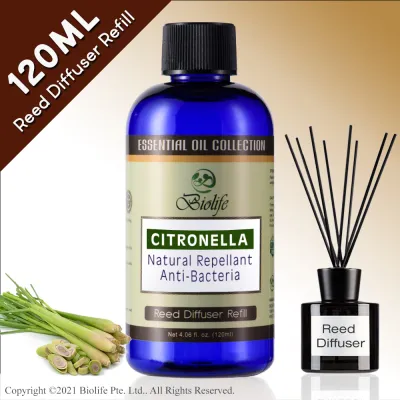
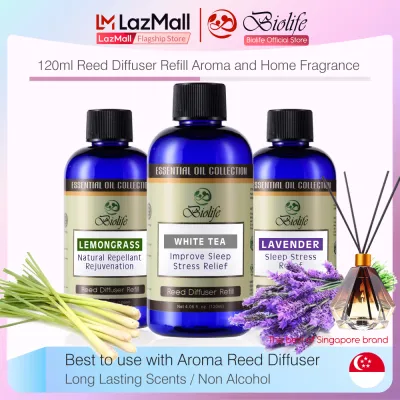
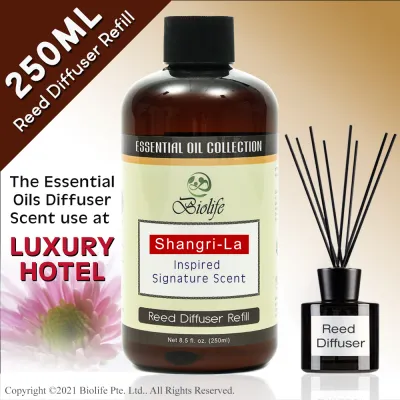
![(80+ Selections) Shangri-La Hotel/ Hilton Hotel/ Westin Hotel/ Lavender/ Jasmine/ Gardenia/ Ocean/ Bluebell/ Rose/ Osmanthus/ English Pear Freesia scent Premium Home Fragrance Reed Diffuser (50ml/ 180ml) / Reed Refill (60ml) Essential Oil [Re.D]](https://img.lazcdn.com/g/p/3531ee3b6bef554bf3880b269eb596d5.jpg_400x400q80.jpg_.webp)
![[SG Stock] Essential Oil Scented Chase Diffuser Refill Aroma Essential Oil Reed (500ml) [Free empty bottle & stick for each order]](https://img.lazcdn.com/g/p/9b618e2c8dac2958fd0111cc791e60c5.jpg_400x400q80.jpg_.webp)
Prices are valid at publication and may change. Please refer to the product page for the latest price.
Environmental conditions heavily influence evaporation. In tropical climates like Singapore, the balance between natural ventilation and air-conditioning plays a massive role. High ambient temperatures speed up molecular movement and evaporation. While high relative humidity can sometimes slow down evaporation, dry, air-conditioned air acts like a sponge, pulling the carrier oil and fragrance out of the bottle at an accelerated rate.
Air movement is another critical environmental factor. Placing a diffuser directly under a ceiling fan, near an open window, or in the direct path of an air-conditioning vent increases the rate of evaporation. The constant moving air strips the fragrance molecules from the top of the reeds, forcing them to draw up more liquid to replace what was lost. Placing the diffuser in a corner with gentle, indirect air circulation is key to balancing scent throw and longevity.
Base carrier oil viscosity determines the natural evaporation speed. Refills formulated with alcohol bases evaporate very quickly, offering an intense but short-lived scent. In contrast, refills utilizing glycol ethers or natural carrier oils have a higher viscosity and a lower vapor pressure, meaning they evaporate at a much slower, more sustainable pace. Checking the ingredient list for the carrier type can give you an immediate clue about its expected lifespan.
How to Evaluate Refill Value and Plan Repurchases
To determine the true value of a diffuser refill, look beyond the initial price tag. Calculate the cost per milliliter by dividing the retail price in S$ by the total volume of the bottle. A cheaper refill that evaporates in three weeks may end up costing far more annually than a premium, slow-evaporating option. Additionally, factor in the cost of replacement reeds, which should ideally be changed with every fresh refill.

The two-week tracking method is an excellent way to plan your budget. When you first pour a new refill into your vessel, use a small piece of tape or a pencil to mark the initial liquid level. Check the level again exactly fourteen days later. Measuring this initial drop allows you to calculate the average weekly consumption rate, giving you a highly accurate projection of when the bottle will run dry. This simple tracking method removes the guesswork from your home fragrance budget.
Keep in mind that the same refill will behave differently in different parts of your home. A diffuser placed in a closed, air-conditioned bedroom will have a different lifespan than one placed in a naturally ventilated living room with open windows and active drafts. Plan your repurchase schedule by grouping your diffusers by room type rather than assuming they will all empty at the same time.
Purchasing larger bulk refills generally offers a lower cost per milliliter. However, consider your personal tolerance for fragrance repetition. If you enjoy changing scents with the seasons, buying a massive refill might lead to scent fatigue long before the liquid is finished, resulting in wasted product. For most households, a moderate 200ml to 250ml refill size strikes the perfect balance between bulk savings and scent variety.
Practical Steps to Extend the Life of Your Diffuser Refill
Flipping your reeds exposes the saturated bottom ends to the air, providing an immediate burst of fragrance. However, flipping them too frequently—such as every day—forces the reeds to draw up liquid at an accelerated rate, shortening the lifespan of your refill. Instead, limit flipping to once every one to two weeks, or only when you notice the scent starting to fade.
Position your diffuser in a spot with moderate, indirect airflow. Avoid placing the vessel in direct sunlight, on top of warm electronic appliances, or near heat sources, as elevated temperatures cause the liquid to evaporate rapidly without distributing the scent effectively. A shaded shelf or a side table away from direct drafts is ideal.
You do not always need to use the maximum number of reeds provided with your refill. For smaller spaces like bathrooms or study rooms, three to five reeds are usually sufficient to distribute the fragrance. Reducing the number of reeds limits the surface area available for evaporation, making your refill last significantly longer.
Dust and airborne particles can settle on the exposed liquid surface and around the neck of the bottle. This accumulation can create a sticky residue that interferes with the capillary action of the reeds. Periodically wiping the neck of the bottle with a clean, dry cloth helps maintain a clean evaporation path and prevents premature degradation of the oil.
If you plan to be away from home for an extended period, such as a holiday, remove the reeds and place them on a clean surface. Seal the diffuser bottle with its original travel cap or a small piece of plastic wrap secured with a rubber band. This simple step halts evaporation entirely while you are away, ensuring you do not return to an empty bottle.
Clear Signs It Is Time to Replace or Refresh Your Setup
When you can no longer smell the fragrance even after flipping the reeds, it is a clear sign that the setup needs attention. This lack of scent often indicates that the volatile fragrance compounds have completely evaporated, leaving behind only the heavier, unscented carrier oil at the bottom of the vessel.
Inspect the remaining liquid regularly. If the refill has turned cloudy, significantly darker, or has developed a thick, syrupy consistency, it has likely oxidized or become contaminated with dust. At this stage, the liquid will no longer diffuse properly and should be replaced.
Over months of continuous use, reeds naturally become clogged with dust, pet dander, and microscopic airborne particles. If you notice that the liquid level in your diffuser has stopped dropping entirely, but there is no scent in the air, the reeds are fully saturated and blocked. In this scenario, you do not need a new refill; simply replacing the old reeds with fresh ones will restore the scent throw.
Exposure to light, heat, and oxygen will eventually cause the chemical structures of essential oils and synthetic fragrances to break down. If your diffuser begins to emit a sour, metallic, or rancid odor instead of its original fragrance, the liquid has degraded. You should discard the remaining oil, wash the vessel thoroughly with warm soapy water, let it dry completely, and start fresh with a new refill and new reeds.
Before pouring a new refill into an existing vessel, it is crucial to clean it thoroughly. Residual oils from the previous scent can mix with the new refill, altering its fragrance profile and potentially causing the liquid to curdle or degrade faster. Rinsing the vessel with isopropyl alcohol or warm, soapy water and allowing it to dry completely ensures a clean slate for your new fragrance.
Frequently Asked Questions (FAQ)
Can I mix a new refill with the remaining old liquid?
It is generally not recommended to mix a fresh refill with old, leftover liquid. The remaining liquid in your vessel is likely highly concentrated with heavy carrier oils and depleted of its original fragrance notes. Mixing in a new refill can dilute the fresh scent, alter the evaporation rate, and introduce dust or bacteria that accelerates the degradation of the new oil. For the best results, wait until the old liquid is completely gone, wash and dry the vessel, and then pour in the new refill.
Does using more reeds make the scent stronger and last shorter?
Yes, there is a direct physical trade-off between scent intensity and refill longevity. Each reed acts as an individual straw that draws liquid out of the bottle and exposes it to the air. Adding more reeds increases the total surface area available for evaporation, which releases more fragrance molecules into the room but also empties the bottle much faster. If you want to extend the life of your refill, start with fewer reeds and only add more if you find the scent throw insufficient for the size of the room.

Community discussion
Share your experience or ask a question. Comments are reviewed before publication.