
A Diptyque reed diffuser typically lasts between three to four months before requiring a refill, though its actual lifespan depends heavily on your home environment, placement, and usage habits. Because these home fragrance pieces represent a premium investment, understanding how environmental factors like air conditioning and room airflow affect evaporation is key to evaluating their overall value. By monitoring the liquid level, adjusting the number of reeds, and managing their exposure to drafts, you can optimize the diffusion rate to ensure you get the most out of the signature scent.
While the manufacturer provides a general estimate for standard conditions, real-world performance varies. In tropical climates where indoor environments alternate between high humidity and dry, air-conditioned air, the evaporation process behaves differently than in temperate regions. Understanding these dynamics allows you to control the lifespan of your home fragrance investment.
Factors That Determine How Long Your Diptyque Diffuser Lasts
Environmental conditions play a primary role in how quickly the fragrance liquid evaporates. In a warm, humid climate like Singapore’s, the ambient air holds a significant amount of moisture, which can theoretically slow down the evaporation of water-based elements. However, most homes rely heavily on air conditioning to maintain comfort. Air conditioning units dehumidify the air and create constant, active air currents. This dry, moving air acts like a sponge, drawing the fragrance oil up through the reeds and evaporating it into the room at an accelerated rate.
Products mentioned in this guide
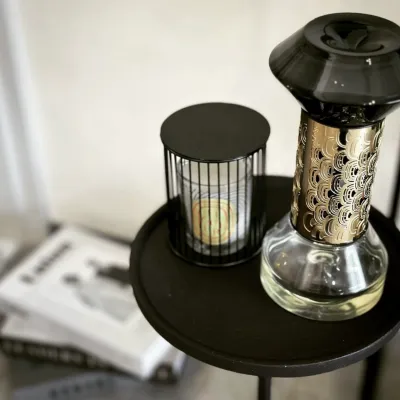
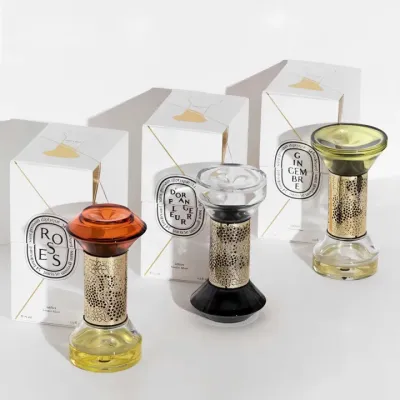
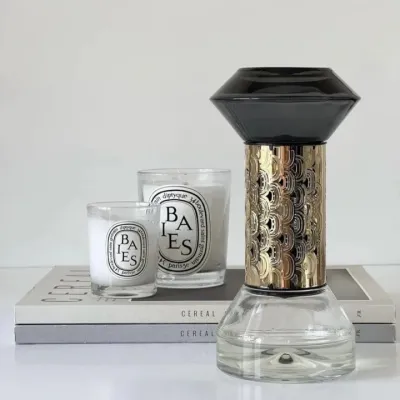
Prices are valid at publication and may change. Please refer to the product page for the latest price.
Placement within the home also dictates how long the liquid remains in the vessel. Positioning your diffuser near high-traffic pathways, open windows, or directly under ceiling fans and air conditioning vents increases air circulation. While this maximizes the scent throw across the room, it also forces the reeds to dry out faster, pulling more liquid from the bottle to compensate. Similarly, placing the glass vessel in direct sunlight or near heat-emitting household appliances warms the oil, increasing its volatility and causing it to disperse much quicker than it would in a cool, shaded corner.
Liquid composition and volume are the final pieces of the longevity puzzle. A standard Diptyque reed diffuser set typically contains 200ml of fragrance concentrate. However, not all scents are formulated with the same raw materials. Fragrances dominated by lighter, citrusy top notes tend to have smaller, highly volatile molecules that escape into the air rapidly. In contrast, woody, spicy, or resinous scents rely on heavier base notes that naturally evaporate at a slower, more gradual pace. Consequently, you may find that certain scent profiles naturally outlast others even when kept in identical room conditions.
How to Maximize the Lifespan of Your Reed Diffuser
Managing your reeds is the most effective way to control how quickly the fragrance oil is consumed. When you first set up the diffuser, the dry reeds will absorb a large volume of liquid as they become fully saturated. Once saturated, you do not need to flip them daily. Flipping the reeds too frequently exposes wet, oil-soaked ends to the air, which accelerates evaporation. Instead, only flip the reeds once every one to two weeks, or only when you notice the scent throw beginning to diminish. If you prefer a subtle background scent rather than an intense fragrance, consider using fewer reeds; reducing the count from six to four directly decreases the surface area available for evaporation, extending the bottle’s lifespan.

Strategic placement is equally vital for preserving the liquid. To achieve a balance between consistent scent distribution and longevity, place the diffuser on a stable, flat surface in a zone with gentle, natural air movement. Avoid placing it directly in the path of strong drafts, such as right next to an oscillating fan or directly beneath an air conditioning unit. Keeping the vessel away from sunny windowsills and heat-generating electronics, like television consoles or kitchen appliances, prevents the oil from warming up and evaporating prematurely.
Dust and debris control is a frequently overlooked aspect of diffuser maintenance. Over time, airborne dust, pet dander, and cooking grease settle on the exposed portions of the reeds. This accumulation clogs the microscopic capillaries of the wood, preventing the fragrance oil from traveling upward efficiently. When the pores are blocked, the scent throw drops, tempting you to flip the reeds more often or add more liquid. Gently wiping the neck of the bottle and replacing the reeds entirely if they become visibly dusty or dusty to the touch will maintain a clean, steady diffusion process without wasting oil.
Signs It Is Time to Replace or Refill Your Diffuser
The most obvious sign that your diffuser has run its course is a significant degradation in scent throw. If you find that you can no longer smell the fragrance in the room, even after flipping the reeds or moving the vessel to a smaller space, the active aromatic compounds have likely fully dispersed. At this stage, even if there is still a small amount of liquid left at the bottom of the glass, it may consist primarily of the heavier, non-volatile carrier oils that do not carry the signature scent profile.
Visual and physical cues on the reeds and liquid also indicate the end of the diffuser’s life cycle. Over months of exposure to light and oxygen, the remaining liquid may undergo discoloration, turning darker or slightly cloudy. The reeds themselves may look oversaturated, take on a greasy texture, or accumulate a heavy layer of dust that cannot be easily wiped away. When the reeds become completely clogged and stiff, they lose their capillary action, meaning they can no longer draw liquid upward to diffuse it.
Fortunately, you do not need to purchase an entirely new decorative set when the liquid runs dry. The heavy, faceted glass vessel is designed to be a permanent home decor piece. You can verify if your specific model supports official refills, which are widely available. Purchasing a refill kit—which includes a fresh bottle of the fragrance concentrate and a brand-new set of reeds—allows you to wash out the glass vessel and start a fresh cycle, reducing waste and lowering the long-term cost of maintaining your home fragrance.
Evaluating the Long-Term Value and Cost of Diptyque Diffusers
To evaluate whether a premium diffuser is worth the investment, it helps to calculate the ongoing cost-per-month based on local retail prices in S$. For example, if a complete initial set costs S$200 and lasts four months, your initial cost is S$50 per month. However, once you own the glass vessel, you only need to purchase the refill kits. If a refill kit costs approximately S$120 and lasts another four months, your ongoing maintenance cost drops to S$30 per month. This formulaic approach allows you to budget for home fragrance as a recurring lifestyle expense rather than a one-time luxury purchase.
When comparing these premium options to standard mass-market reed diffusers, the differences lie in both olfactory quality and aesthetic design. Mass-market alternatives often use simpler, synthetic fragrance formulations that can smell harsh or fade rapidly after a few weeks. They also tend to come in basic, lightweight glass bottles. A premium diffuser offers complex, multi-layered fragrance profiles developed by professional perfumers, diffusing consistently from the first day to the last. Furthermore, the heavy, decorative glass vessel serves as an elegant design object that elevates the visual appeal of your living space.
Ultimately, the economics of refills make the long-term use of luxury diffusers much more practical. By reusing the high-quality glass container and only purchasing the liquid refills, you minimize environmental waste while enjoying a lower cost per milliliter. This system allows you to maintain a signature scent throughout your home without repeatedly paying for the premium packaging and glass design of a brand-new starter set.
Frequently Asked Questions (FAQ)
Can I use generic reeds with a Diptyque diffuser bottle?
While generic reeds will physically fit into the glass vessel, they may not deliver the same performance as the official ones. Official reeds are specifically calibrated in terms of material, thickness, and porosity to match the viscosity of the brand’s proprietary fragrance oils. Generic rattan or synthetic fiber reeds may have different pore sizes, which can lead to rapid clogging, uneven absorption, or an accelerated evaporation rate that drains your liquid much faster than expected. If you do choose to use third-party reeds, look for high-quality, naturally porous rattan reeds that match the length and diameter of the originals to avoid altering the scent throw.
Does the fragrance change as the liquid level gets lower?
Yes, it is common for the scent profile to evolve slightly as the liquid level depletes. Fragrance formulations are composed of top, middle, and base notes, each possessing different molecular weights and evaporation rates. The lighter, highly volatile top notes tend to escape first, meaning the scent may smell slightly richer, warmer, or woodier as the diffuser reaches its final weeks. If the remaining liquid smells flat, faint, or lacks its original complexity, it indicates that the volatile aromatic compounds have fully evaporated, leaving behind the heavier carrier base. When this occurs, flipping the reeds will no longer restore the original scent, signaling that it is time to clean the vessel and add a fresh refill.

Community discussion
Share your experience or ask a question. Comments are reviewed before publication.