
When investing in home fragrance, understanding how long a product will last is essential for determining its overall value. A Lynk fragrance reed diffuser offers a continuous, flame-free scent experience, but its exact longevity depends on several factors, including bottle volume, reed count, and the specific environment in which it is placed.
Generally, a standard reed diffuser can be expected to last anywhere from 1 to 3 months. To get a precise estimate for a specific Lynk variant, always check the product packaging or the manufacturer’s technical specifications, as formulation weights and carrier bases can influence the evaporation rate.
This guide will help you evaluate the cost-effectiveness of these diffusers, examine how local environmental conditions impact their lifespan, and provide actionable maintenance strategies to maximize your home fragrance investment.
Products mentioned in this guide
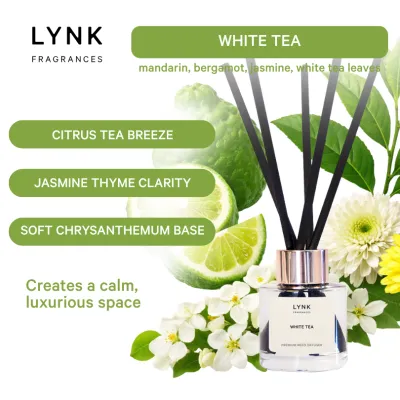
Prices are valid at publication and may change. Please refer to the product page for the latest price.
Expected Lifespan and Value Assessment
To determine whether a Lynk fragrance reed diffuser is a cost-effective choice for your home, you must first establish a baseline for its expected lifespan. The primary factor governing how long any diffuser lasts is its total liquid volume.
Standard retail sizes typically range from smaller 50ml travel or powder-room bottles to larger 100ml or 200ml vessels designed for spacious living areas. Under typical indoor conditions, a standard reed diffuser experiences an average daily evaporation rate of approximately 1 to 2 milliliters.
By dividing the total volume of the bottle by this daily rate, you can estimate that a 100ml bottle will provide continuous fragrance for roughly 50 to 100 days, or approximately 1.5 to 3 months.
Evaluating the value for money of a Lynk fragrance product involves a simple cost-per-month calculation. Take the retail price in Singapore Dollars (SGD) and divide it by the expected duration of the diffuser in months.
For example, if a 100ml diffuser costs S$35 and lasts for two and a half months, your ongoing cost is approximately S$14 per month. This metric allows you to make objective comparisons between different home fragrance formats.
When comparing reed diffusers to alternative home fragrance options like scented candles or room sprays, the cost-efficiency of diffusers becomes highly apparent. Scented candles require active monitoring, present a potential fire hazard, and only disperse scent when lit—typically offering a finite burn time of 30 to 50 hours per candle.
Room sprays provide immediate but highly transient bursts of fragrance that dissipate within minutes. In contrast, a reed diffuser operates continuously without electricity, flame, or manual intervention, delivering a steady background scent throw that makes the monthly cost highly competitive for long-term home scenting.
However, when assessing value, you should verify the net volume and specific manufacturer claims on the packaging or official brand channels. Subjective marketing terms like “long-lasting” can be misleading without standardized testing data. Checking the exact fluid ounce or milliliter measurement ensures you are comparing products on an equal footing.
Key Factors That Affect Scent Longevity
The actual lifespan of your Lynk fragrance diffuser will often vary from the baseline manufacturer estimates due to several environmental and physical factors. In Singapore, the tropical climate plays a major role in how quickly fragrance oils evaporate.

High ambient temperatures accelerate the kinetic energy of the liquid molecules, causing the carrier solvent and fragrance compounds to transition into gas at a much faster rate. If your home is not consistently air-conditioned, the natural warmth of the tropical environment will inevitably shorten the lifespan of the diffuser compared to its performance in cooler, temperate climates.
Airflow and indoor climate control systems also dramatically alter evaporation rates. Placing a diffuser directly in the path of a ceiling fan, a standing fan, or a mechanical air-conditioning unit increases the rate of air exchange over the exposed reeds.
While this active circulation distributes the scent more effectively throughout a large living room or bedroom, it also pulls moisture from the reeds rapidly, forcing the bottle to deplete much faster. Conversely, placing a diffuser in a completely sealed, unventilated room might preserve the liquid for longer, but it can lead to localized scent stagnation.
This stagnation often causes olfactory fatigue—commonly known as “nose blindness”—where you can no longer perceive the fragrance even though the liquid is still present and evaporating slowly.
The physical characteristics and quantity of the reeds inserted into the vessel are equally critical. Reeds act as microscopic straws that draw the liquid upward via capillary action.
Using a higher number of reeds increases the total surface area available for evaporation. While inserting six or eight reeds provides a robust and noticeable scent throw, it will deplete the liquid far faster than using only three or four reeds.
Additionally, the material of the reeds matters. Natural rattan reeds contain open vascular bundles that draw up oil at a steady, natural pace, whereas synthetic polyester fiber reeds are engineered to absorb and release liquid more rapidly, which can lead to a stronger initial scent throw but a shorter overall product lifespan.
Finally, placement hazards can prematurely ruin your diffuser. Direct sunlight streaming through windows or localized heat from nearby electronics, such as television consoles, computers, or kitchen appliances, can degrade the delicate chemical bonds of the fragrance oils.
This heat exposure not only accelerates evaporation but can also alter the scent profile, causing the top notes to break down and leaving behind a flat or distorted aroma.
Practical Tips to Extend the Lifespan
Maximizing the lifespan of your Lynk fragrance diffuser requires a few simple, low-risk maintenance habits that optimize the rate of evaporation without sacrificing scent quality.
Strategic Reed Management When first opening a new diffuser, avoid the temptation to insert all the included reeds at once. Start with a conservative number, such as three or four reeds. Allow them to fully saturate for 24 hours, then assess the strength of the scent in the room. If the fragrance throw is sufficient for the space, leave the remaining reeds in the packaging. By limiting the number of active reeds, you restrict the surface area of evaporation, effectively conserving the liquid and extending the life of your diffuser by several weeks.
Proper Flipping Technique To maintain a consistent scent throw, the reeds must be flipped periodically—typically once a week or whenever you notice the fragrance beginning to fade. However, improper flipping can lead to messy drips and surface damage. Always perform this task over a sink, a utility basin, or a protective layer of paper towels. Carefully lift the reeds, invert them, and place the dry ends back into the liquid. This dry end will quickly absorb the oil, while the wet end now exposed to the air will immediately resume dispersing the fragrance. Ensure you wipe any drips off the side of the glass bottle before placing it back on its display surface.
Optimal Placement Positioning your diffuser correctly is key to achieving an efficient scent throw. Place the vessel on a stable, elevated surface—such as a console table, entryway shelf, or side table—approximately waist-to-chest high. This height allows the natural movement of people walking past to create gentle air currents that disperse the fragrance naturally throughout the room. Avoid placing the diffuser in stagnant corners, behind large furniture, or directly underneath or adjacent to active air-conditioning vents and fans, which strip the moisture too quickly.
Reed Maintenance and Replacement Over time, household dust, airborne grease, and pet dander can settle on the exposed portions of the reeds, clogging their microscopic pores and blocking the capillary action. When this happens, the scent throw will drop significantly even if the bottle is full of liquid. To combat this, gently wipe the neck of the glass bottle to prevent sticky oil buildup. If the reeds appear dusty or feel completely dry and hard, they have likely become oversaturated or clogged. Replacing the old reeds with a fresh set of high-quality rattan or fiber reeds will immediately restore the diffuser’s capillary performance.
Using a Protective Coaster Fragrance oils contain concentrated aromatic compounds and carrier solvents that can act as mild solvents themselves. If these oils drip onto wooden, varnished, painted, or natural stone surfaces like marble, they can strip the finish, leave permanent dark rings, or cause discoloration. Always place a decorative ceramic coaster, glass tray, or silicone mat underneath your diffuser bottle. This protective barrier catches any accidental drips during flipping or refilling, preserving the integrity of your furniture.
Signs It Is Time to Refill or Replace
Recognizing when your Lynk fragrance diffuser has reached the end of its functional life ensures your home always smells fresh and prevents you from keeping ineffective, dusty bottles on display.
Visual Cues The most obvious sign is the liquid level inside the glass bottle. When the fluid drops to the bottom quarter of the vessel, the remaining oil may become highly concentrated and thick. At this stage, the heavy sediment and base elements do not travel up the reeds as efficiently as the lighter, freshly opened mixture did. If you notice a tiny pool of dark, viscous liquid at the bottom that refuses to evaporate, the active fragrance compounds have likely been fully depleted.
Olfactory Fatigue vs. Depletion Before assuming your diffuser is empty, rule out olfactory fatigue. If you spend several hours in the same room, your brain naturally tunes out the constant background scent. To test this, step outside your home or spend time in a different room for at least fifteen to twenty minutes, then return. If you still cannot smell the fragrance upon re-entering, or if visitors note that they cannot detect any scent, the diffuser is genuinely depleted.
Reed Condition Examine the physical state of the reeds. Reeds that have been submerged in oil for months eventually become completely saturated, losing their structural rigidity and turning dark, brittle, or greasy to the touch. Once the reeds reach this state of saturation, they can no longer draw up liquid or release scent effectively. Even if there is still liquid left in the bottle, clogged or degraded reeds mean it is time to replace them.
Scent Degradation Fragrance oils are subject to oxidation when exposed to air and light over long periods. If the remaining liquid in your diffuser begins to smell sour, metallic, chemically off, or significantly different from its original scent profile, the essential oils and aromatic compounds have oxidized and degraded. At this point, keeping the diffuser active will not provide a pleasant aroma. You should discard the remaining spoiled liquid, thoroughly wash the glass bottle with warm water and dish soap, and start fresh with a new refill and clean reeds.
Frequently Asked Questions (FAQ)
Can I reuse the same reeds for a different fragrance?
No, you should never reuse the same reeds for a different fragrance. Reeds are highly porous structures designed to absorb and hold specific fragrance oils. Once a reed is saturated with a particular scent profile, those oil molecules remain trapped within the channels. If you place these used reeds into a new, different scent, the old oil will mix with the new formulation. This blending typically results in a muddy, distorted, and often unpleasant aroma that ruins the profile of your new fragrance. Always use a completely fresh set of reeds whenever you switch scents or refill your diffuser bottle.
Is it safe to leave a reed diffuser in an air-conditioned room all day?
Yes, it is entirely safe to leave a reed diffuser in an air-conditioned room all day, as they do not require electricity or heat to operate. However, you should be aware of the physical impact of air-conditioning on the diffuser’s lifespan. Air-conditioned air is exceptionally dry, which accelerates the rate of evaporation of the liquid carrier. To prevent your diffuser from depleting too quickly, avoid placing the bottle directly in the path of the air-con’s cold air stream. Position it in a neutral area of the room where the scent can disperse naturally without being subjected to constant, direct drafts.
How do I clean up spilled diffuser liquid on wooden furniture?
If you accidentally spill diffuser liquid on wooden furniture, immediate action is required to prevent the concentrated oils from damaging the finish. First, gently blot the spill with a clean paper towel or absorbent cloth—do not rub or wipe, as rubbing can spread the oil and strip away the wood’s varnish or paint. Once the excess liquid is absorbed, wipe the area gently with a soft cloth slightly dampened with warm water and a small drop of mild dish soap. Dry the surface immediately with a clean towel. Because fragrance oils can act as solvents that damage wood, marble, and plastic, it is highly recommended to always use a protective coaster or tray under your diffuser.

Community discussion
Share your experience or ask a question. Comments are reviewed before publication.