
A standard 100ml aroma diffuser refill typically lasts between four to twelve weeks, while a larger 200ml bottle can provide continuous fragrance for three to six months. However, these timelines are not absolute guarantees. The actual lifespan of your diffuser liquid is determined by a complex interplay of environmental factors, vessel design, user habits, and the chemical composition of the carrier oil.
For many homeowners, discovering that a newly purchased refill has evaporated in a matter of weeks is a common frustration. It raises immediate questions about whether the product was defective, if the brand is low quality, or if the home environment is simply too demanding. By understanding how these variables affect the rate of evaporation, you can accurately benchmark your diffuser’s performance, optimize its placement, and decide whether it is time to invest in a different formulation.
Understanding the Expected Lifespan of a Reed Diffuser Refill
The lifespan of an aroma diffuser refill is fundamentally tied to its volume, but it is highly variable. To set realistic expectations, you must first look at the capacity of the bottle you are using. A compact 50ml refill is generally designed for small, enclosed spaces such as guest bathrooms or compact study rooms, typically lasting between two to four weeks. The standard 100ml bottle, which is the most common size for bedrooms and medium-sized living areas, has a baseline lifespan of one to three months. For spacious, open-plan living rooms, a 200ml refill is the preferred choice, offering a functional lifespan of three to six months under ideal conditions.
Products mentioned in this guide
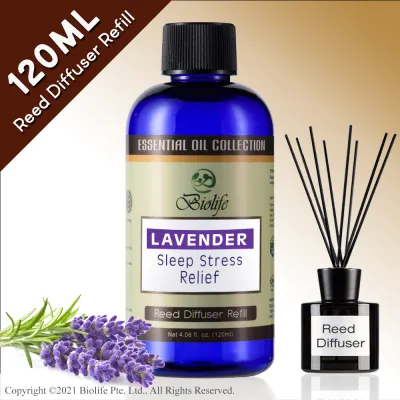
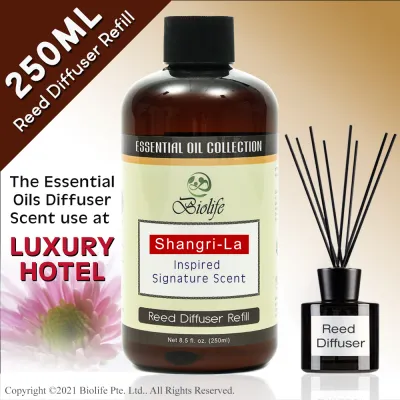
![(100+ Selections) Shangri-La Hotel/ Hilton Hotel/ Marriott Hotel/ Lavender/ Lemongrass/ Jasmine/ Rose/ Eucalyptus/ English Pear Freesia scent Premium Home Fragrance Aromatherapy Reed Diffuser (50ml) / Reed Refill (60ml) Essential Oil Scents [Re.D]](https://img.lazcdn.com/g/p/ebc5fe98e6aea39a35eb88f8aa95b792.jpg_400x400q80.jpg_.webp)
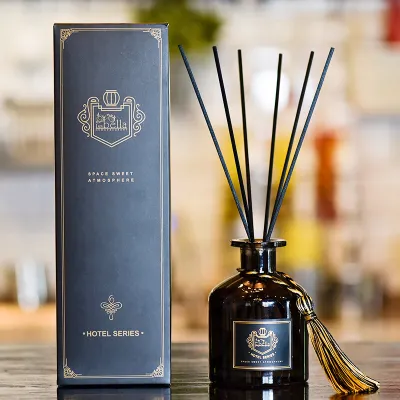
![[KIRONA SCENT] 250ML Aroma Reed Refill | Premium Quality Essential Oil | For Aroma Reed Diffusers Clay Diffusers | More than 60 Scents Available | Luxurious Hotel & Mall Fragrances](https://img.lazcdn.com/g/p/4685932625987bb431ec03fe164da9f7.jpg_400x400q80.jpg_.webp)
Prices are valid at publication and may change. Please refer to the product page for the latest price.
To establish a personal consumption benchmark, you can use a simple mathematical framework based on the manufacturer’s stated volume. If a brand asserts that a 100ml refill should last approximately ten weeks, the engineered evaporation rate is roughly 1.4ml per day. If you observe that your bottle is completely depleted within three weeks, your actual consumption rate is closer to 4.7ml per day. This significant variance indicates that external factors are accelerating the process, rather than the product itself being inherently short-lived.
It is crucial to recognize that “normal” depletion is highly subjective and varies from one household to another. A refill that lasts three months in a cool, dark hallway might only last five weeks in a bright, breezy living room. Before assuming a product is defective, check the manufacturer’s product label or official specifications. Most reputable brands provide estimated lifespans based on controlled laboratory conditions—usually a stable temperature of 21 degrees Celsius, 50% relative humidity, and minimal airflow. Using these specifications as a starting point allows you to evaluate your home’s unique conditions objectively.
Key Factors That Make Your Aroma Diffuser Refill Evaporate Faster
Environmental Conditions and Airflow
The ambient climate of your home is the primary driver of liquid evaporation. In a tropical environment like Singapore, the relationship between indoor climate and evaporation is particularly pronounced. While the natural outdoor climate is characterized by high humidity—which would theoretically slow down evaporation—the widespread use of indoor air conditioning completely alters this dynamic. Air conditioning units function by extracting moisture from the air, creating a dry indoor microclimate with low relative humidity. This dry air acts like a sponge, rapidly drawing volatile organic compounds and carrier liquids out of the diffuser bottle to balance the room’s moisture levels.

Furthermore, temperature plays a direct role in molecular movement. Higher indoor temperatures increase the kinetic energy of the fragrance molecules, allowing them to escape into the air at a much faster rate. Air circulation also compounds this effect. Placing your diffuser near ceiling fans, air conditioning vents, or open windows creates a continuous draft. This moving air sweeps away the saturated vapor boundary layer directly above the bottle and the reeds, forcing the capillary action of the reeds to work continuously to replace the lost moisture, thereby draining the refill bottle rapidly.
Reed Quantity and Flipping Frequency
Your daily habits and the physical setup of your diffuser directly control the rate of liquid consumption. Reeds function as microscopic pipelines, drawing the fragrance mixture upward through capillary action to the exposed surface, where it evaporates. The number of reeds you insert into the bottle dictates the total surface area available for evaporation. If you insert a complete bundle of eight to ten reeds, you maximize the scent throw, but you also create a massive evaporation platform that drains the liquid up to three times faster than a setup utilizing only three or four reeds.
Flipping the reeds is another habit that heavily influences longevity. When you flip the reeds, you expose the fully saturated bottom ends directly to the open air, causing an immediate, intense release of fragrance. However, doing this too frequently—such as daily or every couple of days—means you are constantly presenting fresh, wet oil to the atmosphere. This practice accelerates evaporation significantly, as the liquid on the exposed tips evaporates much faster than the oil drawn up naturally through the internal channels of dry reeds.
Bottle Neck Design and Surface Area
The physical architecture of the vessel housing your fragrance oil is an often-overlooked factor in how long a refill lasts. Passive evaporation occurs directly from the surface of the liquid inside the bottle, independent of the reeds. Vessels with wide openings or jar-like necks allow a large surface area of the liquid to interact directly with the surrounding air. This unrestricted contact permits rapid, uncontrolled evaporation of both the fragrance oils and the carrier solvents.
Conversely, bottles designed with narrow necks restrict airflow and minimize the exposed liquid surface area. In a narrow-necked bottle, almost all evaporation is forced to occur through the reeds themselves. This structural restriction regulates the release of the scent, ensuring that the volatile compounds are preserved within the bottle and only released at a controlled, steady rate. When transferring a refill, choosing a narrow-necked vessel is a simple yet highly effective way to extend the lifespan of the product.
Clear Signs Your Reed Diffuser Needs a Refill or Replacement
Loss of Scent Throw
The most obvious indicator that your diffuser setup requires attention is a noticeable loss of scent throw. If you find that you can no longer smell the fragrance when entering the room, even after flipping the reeds, the volatile top and middle notes of the oil have likely fully evaporated. Over time, the lighter molecules that carry the signature scent are depleted, leaving behind only the heavier, less aromatic base carrier oils. At this stage, even though liquid remains in the bottle, it will no longer perform its primary function of scenting the space.
Visual Changes in the Liquid
Monitoring the physical appearance of the diffuser liquid can provide critical clues about its condition. High-quality fragrance oils should remain relatively clear and free-flowing. If you notice the liquid becoming cloudy, changing colour significantly, or developing a thick, syrupy consistency, it has undergone oxidation or thermal degradation. This thick, viscous liquid cannot travel up the microscopic channels of the reeds, rendering the remaining mixture useless.
Reed Saturation and Clogging
Reeds do not last indefinitely. Whether made of natural rattan or engineered polyester fiber, reeds contain tiny porous channels that draw up the liquid. Over several months, these channels inevitably become clogged with airborne dust, pet dander, cooking grease, and the heavier, sticky elements of the fragrance oil itself. Once the reeds are fully saturated and clogged, their capillary action ceases. You can identify this when the top sections of the reeds feel completely dry and stiff to the touch, despite being submerged in liquid. At this point, simply adding more refill liquid will not resolve the issue; the reeds themselves must be replaced.
Debris Accumulation
Because reed diffusers are open vessels, they are susceptible to contamination from the surrounding environment. Dust, lint, pet hair, and even small insects can fall into the bottle neck. This debris does more than just look unsightly; it introduces bacteria and organic matter that can break down the chemical structure of the fragrance oil. This contamination can lead to rancidity, off-odours, and physical blockages at the bottom of the reeds, preventing them from drawing up the remaining refill liquid.
Practical Ways to Extend the Life of Your Diffuser Refill
Adjust Reed Count
To maximize the value of your aroma diffuser refill, start by managing the physical variables under your control. When setting up a new refill, resist the temptation to use the entire pack of reeds at once. Start with a modest count of three to four reeds. In smaller or moderately sized rooms, this is often more than enough to create a pleasant, subtle scent throw. If you find the fragrance too faint after twenty-four hours, you can add one reed at a time until you reach your desired scent intensity. This incremental approach prevents unnecessary evaporation and preserves your liquid from the outset.
Optimize Flipping Schedule
Establish a disciplined, moderate flipping routine rather than doing it on a daily whim. Flipping your reeds once every one to two weeks is generally sufficient to maintain a consistent scent throw. If you notice the fragrance fading slightly between flips, try gently swirling the bottle instead of flipping the reeds. Swirling redistributes the fragrance oils and carrier liquids inside the vessel, refreshing the scent without exposing wet reed ends to immediate, accelerated evaporation.
Strategic Placement
The physical location of your diffuser plays a massive role in its evaporation rate. Place your diffuser in a spot with natural, gentle air movement—such as a hallway, near an entryway, or on a central shelf—where the movement of people naturally circulates the scent. Crucially, keep the vessel away from direct sunlight, radiators, air conditioning vents, and ceiling fans. Avoiding these high-heat and high-draft zones stabilizes the evaporation rate, ensuring the liquid lasts as close to the manufacturer’s estimated lifespan as possible.
Maintain the Bottle Neck
Whenever you flip your reeds or add a fresh refill, take a moment to perform basic maintenance. Use a clean, dry paper towel to gently wipe any oil residue from the rim and outer neck of the bottle. This prevents dust and airborne particles from sticking to the neck and eventually migrating down into the liquid reservoir. Keeping the neck clean ensures that the oil remains uncontaminated and free-flowing, allowing the reeds to function at peak efficiency.
Safety and Care Instructions: Always place your reed diffuser on a flat, stable surface that is completely out of reach of children and pets. Diffuser oils contain concentrated fragrance compounds and solvents that are harmful if ingested and can cause skin irritation. Furthermore, spilled diffuser oil can permanently damage, stain, or strip varnished, painted, polished wood, and plastic surfaces. Always check the applied product’s label and the treated item’s manufacturer instructions before placing a diffuser on delicate furniture. If instructions conflict, or if the surface material is unidentified, place the diffuser on a protective ceramic, glass, or metal coaster to prevent accidental damage.
Is Your Refill Underperforming? How to Decide If You Should Switch Brands
Evaluating whether your current brand is underperforming requires a systematic approach. Start by comparing the actual lifespan of your refill against the brand’s advertised claims, making sure to account for your specific home environment. If you have optimized your setup—using fewer reeds, placing the bottle away from drafts, and maintaining a moderate flipping schedule—yet a 100ml bottle still vanishes within two to three weeks, the issue likely lies in the formulation.
Poor-quality refills often rely heavily on cheap, highly volatile alcohol bases or synthetic industrial solvents. These formulations are designed to evaporate rapidly to deliver an intense, overpowering initial burst of fragrance, but they deplete at an unsustainable rate. In contrast, premium refills utilize high-quality, slow-evaporating carrier oils, such as dipropylene glycol (DPG) or eco-friendly, bio-based solvents derived from soy or glycerin. These premium carriers evaporate at a highly controlled, steady rate, providing a consistent, subtle scent throw that can easily last two to three times longer than alcohol-heavy alternatives.
When deciding to switch brands, look for manufacturers that are transparent about their formulations and provide clear volume-to-lifespan estimates. Seek out brands that supply high-quality polyester fiber reeds rather than traditional rattan; fiber reeds are engineered to resist clogging and provide a more consistent draw of oil over time. Additionally, prioritize brands that package their refills in narrow-necked glass bottles, which naturally restrict passive evaporation. By isolating environmental factors first and then selecting a brand committed to high-quality, slow-evaporating carrier bases, you can ensure your home remains beautifully scented without the need for constant, costly replacements.
Community discussion
Share your experience or ask a question. Comments are reviewed before publication.