
When purchasing a home fragrance product like the Hooga White Tea and Ginger reed diffuser, understanding its actual lifespan is key to evaluating its overall value. Generally, a standard reed diffuser’s longevity is determined by its total fluid volume, the formulation of its carrier liquid, and the environment in which it is placed. While manufacturer packaging typically provides an estimated duration—often ranging from several weeks to a few months—the real-world performance in a home can vary significantly from these baseline estimates.
In typical indoor settings, a standard 100ml diffuser often lasts between four to six weeks, while a larger 200ml bottle may diffuse for eight to twelve weeks. However, because Singapore experiences high ambient humidity alongside frequent transitions to dry, air-conditioned indoor air, the rate of evaporation can fluctuate. To get an accurate expectation, you should first check the specific volume printed on your bottle and consider how your local indoor climate will influence the oil’s evaporation rate.
Variables That Affect How Long the Fragrance Lasts
Several environmental and physical factors directly influence how quickly the White Tea and Ginger fragrance oil evaporates from the bottle. Understanding these variables allows you to manage your diffuser more efficiently and avoid premature depletion of the scent.
Products mentioned in this guide
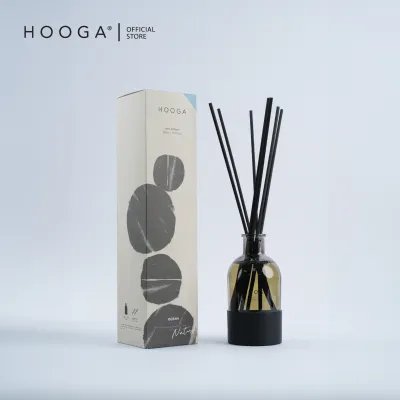
![[6 NEW SCENTS] Hooga Black Series Reed Diffuser 200ml](https://img.lazcdn.com/g/p/1ffd8c3f6be39df0f302c26adff3be23.jpg_400x400q80.jpg_.webp)
Prices are valid at publication and may change. Please refer to the product page for the latest price.
Room Size and Airflow
The rate of evaporation is highly dependent on the movement of air around the diffuser reeds. Placing the bottle in high-traffic areas, near open windows, or directly in the path of a ceiling fan or air conditioning vent accelerates the rate at which the oil is drawn up through the reeds and dispersed into the air. While this increases the immediate strength of the scent, it also shortens the overall lifespan of the product. For a more balanced diffusion rate, position the bottle in a spot with gentle, natural air circulation rather than direct drafts.
Temperature and Humidity
Singapore’s tropical climate plays a dual role in how fragrance oils behave. High ambient temperatures generally increase the rate of evaporation, meaning a diffuser kept in a non-air-conditioned room may deplete faster than one in a cooler environment. Conversely, high humidity can sometimes slow down the evaporation of certain carrier liquids, but when you switch on the air conditioning, the air becomes dry. This dry air rapidly draws moisture and oil out of the reeds, causing the liquid level in the bottle to drop more quickly during those hours of operation.
Reed Management
The number of fiber or rattan reeds you insert into the bottle acts as the primary control valve for the fragrance. More reeds create a larger surface area for the oil to evaporate, resulting in a stronger scent throw but a faster consumption of the liquid. Additionally, flipping the reeds too frequently introduces fresh, wet oil to the air, which increases immediate evaporation. If you flip the reeds daily, you will notice the oil level dropping much faster than if you flip them once every one to two weeks.
Assessing Value for Money: Cost vs. Longevity
To determine whether the Hooga White Tea and Ginger reed diffuser is a cost-effective choice for your home, you can use a simple calculation to compare its ongoing cost against other home fragrance methods.

Calculating Daily and Weekly Cost
You can evaluate the true cost of your diffuser by dividing the retail price in S$ by the number of days or weeks the product actually lasts in your specific environment. For example, if you purchase a bottle for a retail price of S$20 and find that it lasts for approximately 60 days in your living room, your daily cost is roughly S$0.33. Keeping a simple log of the purchase date and the date the oil fully depletes will help you establish an accurate personal baseline for future purchases.
Comparing Fragrance Methods
When comparing reed diffusers to alternative home fragrance options like scented candles or room sprays, consider both active run-time and convenience. Scented candles require active supervision, present an open-flame hazard, and only emit fragrance when lit, meaning their cost per hour of active scent can be relatively high. Room sprays offer immediate but temporary scent bursts. A reed diffuser, by contrast, provides continuous, passive fragrance twenty-four hours a day without requiring electricity or monitoring, making it highly cost-effective for consistent ambient scenting.
Refills vs. New Sets
Another factor in the value equation is the availability of official refill bottles. Purchasing a refill bottle is generally more economical and environmentally friendly than buying a completely new set that includes a new glass vessel. When opting for refills, you should also factor in the cost of purchasing fresh replacement reeds, as reusing old, clogged reeds with fresh oil will severely limit the scent throw and reduce the efficiency of the new oil.
Daily Habits to Maximize the Diffuser Lifespan
You can actively extend the lifespan of your White Tea and Ginger diffuser by adopting a few simple maintenance habits that preserve the oil and optimize the performance of the reeds.
Optimal Placement Strategies
Keep your diffuser out of direct sunlight and away from heat sources such as radiators, electronic appliances, or sunny windowsills. Direct heat warms the glass bottle and the oil inside, causing rapid, unproductive evaporation and potentially altering the delicate scent profile of the white tea and ginger formulation. Placing the diffuser on a stable, flat surface at waist-to-shoulder height in a shaded area of the room ensures the scent disperses naturally without wasting the product.
Best Practices for Flipping Reeds
Flipping the reeds is necessary to revive a fading scent, but doing it too often wastes oil. A good rule of thumb is to flip the reeds only when you notice the fragrance throw has significantly diminished, which is typically once every ten to fourteen days. When flipping, do so over a sink or a protective cloth to prevent oil droplets from damaging your furniture surfaces, as fragrance oils can strip paint, varnish, or synthetic finishes.
Replacing Clogged Reeds
Over time, dust and airborne particles settle on the exposed portions of the reeds, while the bottom sections can become oversaturated or clogged with heavier fragrance compounds. When this happens, the reeds lose their capillary action and can no longer draw the oil upward, even if the bottle is still half-full. If you notice the scent has vanished but the oil level has stopped dropping, it is time to discard the old reeds and insert a fresh set of compatible reeds to restore proper diffusion.
Recognizing When the Scent Has Faded or Expired
It is common to wonder whether your diffuser has stopped working or if you have simply grown accustomed to the aroma. Distinguishing between these two scenarios helps you avoid discarding perfectly good oil.
Olfactory Fatigue vs. Depletion
Olfactory fatigue, often called nose blindness, occurs when your brain acclimates to a continuous ambient scent and stops actively registering it. To test whether you are experiencing nose blindness or if the diffuser is truly depleted, step out of the room or leave your home for a few hours. If you can smell the white tea and ginger notes clearly upon your return, the diffuser is still working efficiently. If you return and smell nothing, the diffuser’s active lifespan may have come to an end.
Visual and Physical Checks
Perform a regular visual inspection of the diffuser bottle. If the liquid level has dropped to the very bottom (less than a few millimeters) or if the remaining liquid has become highly viscous and thick, the carrier solvents have evaporated, leaving behind only the heavy base oils which cannot climb the reeds. Additionally, inspect the color of the reeds; if they appear dark, dusty, or completely dry at the tips, they are no longer functioning.
Safety and Quality Limits
Fragrance oils can degrade over time due to exposure to oxygen and light. If the oil in your diffuser develops a cloudy appearance, separates into distinct layers, or begins to emit a sour, chemical, or off-odor that differs from the original fresh white tea and ginger profile, it has expired. In such cases, you should safely discard the remaining liquid according to local waste guidelines, wash the glass vessel thoroughly with warm soapy water if you plan to reuse it, and start fresh.
Pre-Purchase Verification Checklist
Before purchasing a new Hooga White Tea and Ginger reed diffuser, take a moment to verify these key specifications on the product packaging or the official retailer’s listing to ensure you get the best value:
- Fluid Volume: Confirm the exact volume (such as 100ml, 150ml, or 200ml) to accurately estimate how long the bottle should last in your home.
- Reed Material and Quantity: Check if the package includes high-quality fiber or rattan reeds, and verify that the number of reeds provided is sufficient for your desired scent intensity.
- Manufacturing Date: Look for a batch code or manufacturing date to ensure the product has not been sitting on a shelf for an extended period, which can degrade the fragrance quality.
- Return and Exchange Policies: Verify the retailer's policy regarding damaged packaging, leaking bottles, or defective reeds before completing your purchase.
Frequently Asked Questions (FAQ)
Can I mix the White Tea and Ginger oil with other scents?
It is not recommended to mix different fragrance oils directly in the diffuser bottle. Each fragrance is carefully formulated with specific carrier solvents and oil ratios to ensure stable evaporation and safety. Mixing different brands or scent profiles can disrupt this chemical balance, leading to uneven diffusion, clogged reeds, or an unpleasant, distorted aroma.
Is it safe to use this reed diffuser around pets?
You should exercise caution when using any reed diffuser in homes with pets. Many fragrance oils and essential oils can be irritating or toxic to dogs and cats if ingested, touched, or inhaled in high concentrations. Always check the product’s ingredient list, keep the diffuser completely out of reach of pets to prevent accidental spills, and consult your veterinarian if you have specific concerns about your pet’s sensitivity.
Why does the oil turn cloudy or change color over time?
Slight color changes, such as the oil turning a darker amber or yellow hue, are a natural result of oxidation and exposure to ambient light and air. However, if the oil becomes distinctly cloudy, milky, or develops visible sediment, it indicates that moisture or dust has contaminated the bottle, or the oil has degraded. If this occurs alongside a change in the scent quality, the diffuser should be replaced.

Community discussion
Share your experience or ask a question. Comments are reviewed before publication.