
Switching to a solar led light setup for outdoor spaces in Singapore completely eliminates grid electricity costs for garden, balcony, or perimeter lighting. By utilizing free solar energy, these off-grid fixtures bypass your monthly utility bill entirely. The exact amount you will save depends on the wattage of your current wired fixtures, daily usage hours, and the initial purchase price of the solar units. While outdoor lighting represents a minor portion of a Singapore household’s overall energy consumption compared to high-power appliances like air conditioning, the cumulative savings from transitioning multiple fixtures can add up to a noticeable sum over time. Beyond direct utility bill reductions, going solar also eliminates the substantial upfront costs of trenching, laying outdoor conduits, and hiring licensed professionals to install mains-powered wiring.
Wired Outdoor Lights vs. Solar LED Lights: Establishing the Energy Baseline
To understand your potential savings, you must first establish how your current outdoor lighting draws power. Traditional wired outdoor fixtures rely on continuous alternating current (AC) electricity from the Singapore power grid. This energy consumption is measured in Watts (W) and accumulated over time as kilowatt-hours (kWh), which is the standard unit of measurement appearing on your monthly SP Group utility bill. Every hour a wired fixture remains switched on, it pulls a steady stream of power that contributes directly to your household expenses.
In contrast, a solar led light operates as a self-contained, completely off-grid system. These fixtures feature integrated or connected photovoltaic (PV) panels that absorb solar radiation during daylight hours. This solar energy is converted into direct current (DC) electricity and stored within an internal rechargeable battery. When night falls, a built-in light sensor automatically triggers the battery to discharge its stored energy, powering highly efficient light-emitting diodes (LEDs) without drawing a single watt from the electrical grid.
Products mentioned in this guide
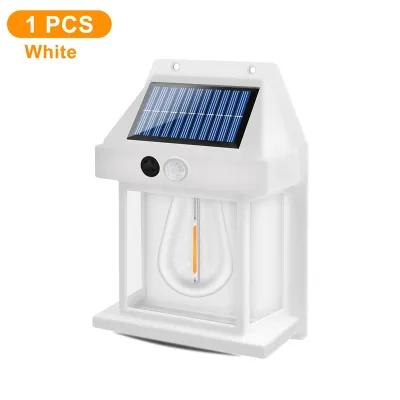
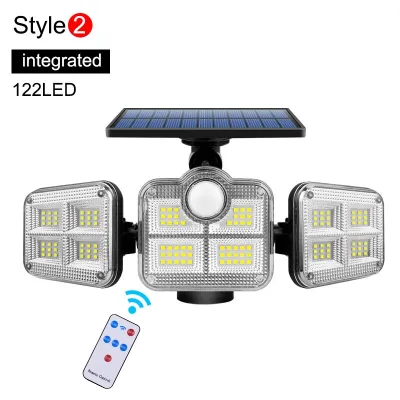
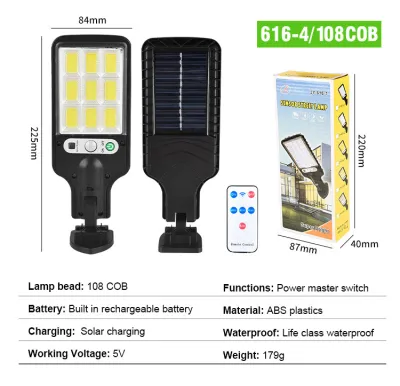
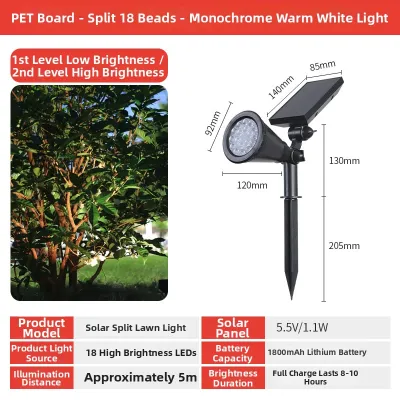
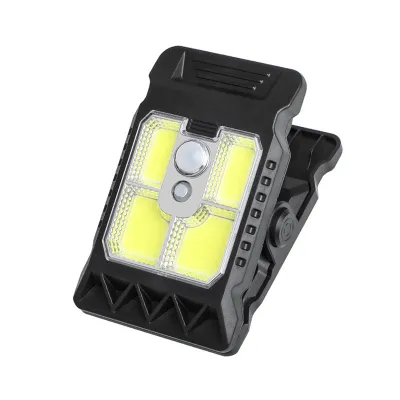
Prices are valid at publication and may change. Please refer to the product page for the latest price.
To compare these systems, determine the wattage of your existing wired fixtures by checking the bulb, the product label on the fixture housing, or the transformer rating plate for low-voltage landscape lighting. Older halogen or incandescent outdoor floodlights might draw 50W to 150W or more per bulb. Modern wired LED alternatives are much more efficient, usually drawing between 5W and 20W while delivering comparable brightness. Always isolate the power supply before inspecting or working on existing wired fixtures to ensure safety.
It is crucial to distinguish between a fixture’s power rating (Watts) and its actual energy consumption (Watt-hours) before attempting any financial calculations. The power rating simply indicates how much electricity the light draws at any given microsecond. Energy consumption, however, factors in time. For instance, a 10W light bulb left on for 10 hours consumes 100 Watt-hours (or 0.1 kWh) of electricity. Misunderstanding this distinction is a common error when estimating potential utility savings.
How to Calculate Your Exact Savings: A Step-by-Step Framework
Calculating the precise financial impact of switching to solar lighting requires a simple, adaptable mathematical formula. By using your actual household data, you can find your true return on investment. The core formula to determine the daily running cost of any wired outdoor light is:

(Fixture Wattage × Hours used per day ÷ 1000) × Electricity Tariff = Daily Running Cost
To ensure your calculation is accurate, check the latest quarterly electricity tariff published by SP Group or your specific licensed electricity retailer in Singapore. Because fuel prices and market conditions fluctuate, these regulated tariffs are adjusted every three months. For our calculations, we will use a representative residential tariff of S$0.32 per kWh (inclusive of prevailing taxes), which aligns with typical recent rates in Singapore.
Let us walk through a practical scenario to see this formula in action. Suppose you currently have a 10W wired LED porch light that runs for 12 hours every night, from 7:00 PM to 7:00 AM. Using the formula, we calculate its daily consumption:
10W × 12 hours ÷ 1000 = 0.12 kWh per day
Next, we multiply this daily consumption by our representative tariff rate:
0.12 kWh × S$0.32 = S$0.0384 daily running cost
Over a full year, this single porch light costs:
S$0.0384 × 365 days = S$14.02 per year
If you have a larger property with a garden or perimeter wall that utilizes six of these 10W wired LED fixtures, your total annual cost for outdoor lighting rises to approximately S$84.10. By replacing all six fixtures with solar LED lights, your grid energy consumption for these lights drops to zero, saving you the entire S$84.10 annually. If you are replacing older, inefficient 50W halogen spotlights instead of modern LEDs, the savings jump to S$420.48 per year for those same six lights.
While these annual savings are clear, maintain a realistic perspective on your overall household energy budget. Outdoor lighting represents a relatively small fraction of total energy use in a typical Singapore home. The vast majority of your monthly SP Group bill is driven by high-draw thermal appliances, primarily air conditioning units and electric storage water heaters. Transitioning to solar lighting will reliably lower your bills, but it should be viewed as one part of a broader home energy efficiency strategy rather than a complete solution to high utility costs.
The True Cost of Ownership: Upfront Price vs. Long-Term Payback
To determine whether going solar makes financial sense, you must weigh the initial purchase price against the long-term operational savings. High-quality solar LED lights generally carry a higher upfront cost than equivalent wired LED fixtures. This price premium exists because a solar light is not just a bulb and a housing; it is a mini power plant containing a photovoltaic panel, a sophisticated charge controller, and a lithium-based rechargeable battery, all sealed within a weatherproof enclosure.
You must also account for long-term maintenance costs that wired fixtures do not share. The internal rechargeable batteries in solar lights degrade over time due to continuous charge and discharge cycles, especially under Singapore’s high ambient temperatures. Typically, these batteries require replacement every 1 to 3 years to maintain adequate nighttime runtimes. Additionally, dust, pollen, and soot from urban traffic can accumulate on the solar panels, requiring occasional cleaning with a damp cloth to prevent a drop in charging efficiency.
To evaluate this trade-off, calculate your payback period using this formula:
Payback Period (Months) = (Upfront Cost of Solar Light – Upfront Cost of Wired Light) ÷ Monthly Electricity Savings
If a high-quality solar pathway light costs S$45 and a wired equivalent costs S$25, the upfront premium is S$20. If that light saves you S$1.17 per month in electricity, it will take roughly 17 months of zero-grid operation to recoup the extra purchase cost. After this point, every month of operation is pure financial savings.
However, this calculation ignores the single largest financial advantage of solar lighting: installation costs. Installing new wired outdoor lights requires running electrical conduits, which often involves trenching through gardens, drilling through concrete walls, and installing weatherproof outdoor junction boxes. In Singapore, working with mains electricity requires hiring a Licensed Electrical Worker (LEW) to ensure compliance with safety standards. These professional labor and material costs can easily run into hundreds or even thousands of dollars. Because solar lights are entirely self-contained, they bypass these installation expenses completely, often making them the more economical choice from day one.
Local Constraints: How Singapore’s Climate and Architecture Affect Solar Performance
While the financial math of solar lighting is appealing, local environmental and architectural factors in Singapore can directly impact how much of those savings you actually realize. Singapore’s tropical climate is characterized by high humidity, frequent sudden downpours, and prolonged overcast skies, particularly during the monsoon seasons. These weather patterns can significantly reduce the amount of solar radiation reaching your light’s PV panel, resulting in incomplete battery charging and shorter runtimes at night.
Urban architecture poses another major hurdle. High-rise buildings, including HDB blocks and condominiums, as well as dense tree canopies in landed estates, create significant shading. A solar panel must receive direct, unshaded sunlight for at least 4 to 6 hours daily to charge its battery fully. Placing a solar fixture in the shadow of a neighboring building or under a deep balcony overhang will result in poor performance, rendering the fixture dim or non-functional by midnight.
Before purchasing or installing any fixtures, you must also consider local property regulations. If you live in an HDB flat or a private condominium, you must check the Housing & Development Board guidelines or your condominium’s Management Corporation Strata Title (MCST) by-laws. There are strict rules regarding exterior modifications, drilling into common property walls, and mounting items along common corridors or building facades. Unauthorized installations can lead to fines or demands for immediate removal, wiping out any potential savings.
To overcome these architectural and spatial limitations, look for solar light designs that feature a split configuration. These systems use a separate solar panel connected to the main LED fixture via a weatherproof cable. This design allows you to mount the light fixture exactly where you need illumination—such as a shaded porch, a covered walkway, or under a balcony ceiling—while placing the solar panel several meters away in an unshaded spot that receives maximum direct sunlight throughout the day.
Frequently Asked Questions (FAQ)
Do solar LED lights work well during Singapore's monsoon season?
During the Northeast and Southwest monsoon seasons, Singapore experiences prolonged overcast skies and frequent heavy rainfall. This reduced sunlight significantly lowers the charging efficiency of solar panels, which means your solar lights may run for fewer hours or appear dimmer at night. To mitigate this seasonal drop in performance, choose solar light models equipped with oversized solar panels and high-capacity lithium batteries. Alternatively, select fixtures that feature passive infrared (PIR) motion sensors; these lights remain in a low-power standby mode or stay off entirely until motion is detected, drastically conserving battery life during periods of low sunlight.
Are solar outdoor lights safe to install without an electrician?
Yes, solar outdoor lights are completely safe for DIY installation and do not require a Licensed Electrical Worker (LEW). Because they operate on low-voltage direct current (typically 3.2V to 12V) and are entirely disconnected from the electrical grid, there is no risk of high-voltage electrical shock during installation or maintenance. However, you must ensure secure physical mounting to prevent hazards. In high-wind conditions or high-rise environments, poorly secured fixtures can fall and cause severe personal injury or property damage. Always use appropriate wall plugs, heavy-duty screws, or secure mounting brackets, and follow the manufacturer’s physical installation instructions carefully.

Community discussion
Share your experience or ask a question. Comments are reviewed before publication.